Written and reviewed by Susumu
Born and raised in Japan · Checked against Japanese law and ministry guidance
Hoikuen vs yochien in Japan — how they differ, costs, hours, and how to choose the right preschool for your family. Free for ages 3–5 since 2019.
Affiliate Disclosure: This article contains affiliate links. If you click a link and make a purchase, we may earn a small commission at no extra cost to you. We only recommend products we genuinely believe are helpful. See our Terms of Use for full details.
📌 Note: Procedures and fees vary by municipality. Always check with your local city hall for details specific to your area.
The Three Types of Preschool in Japan
If you're trying to figure out childcare in Japan, the first thing that trips most international families up is the terminology. Japan has three main types of early childhood facility, and they work quite differently from each other.
Hoikuen (保育園) — Nursery / Daycare
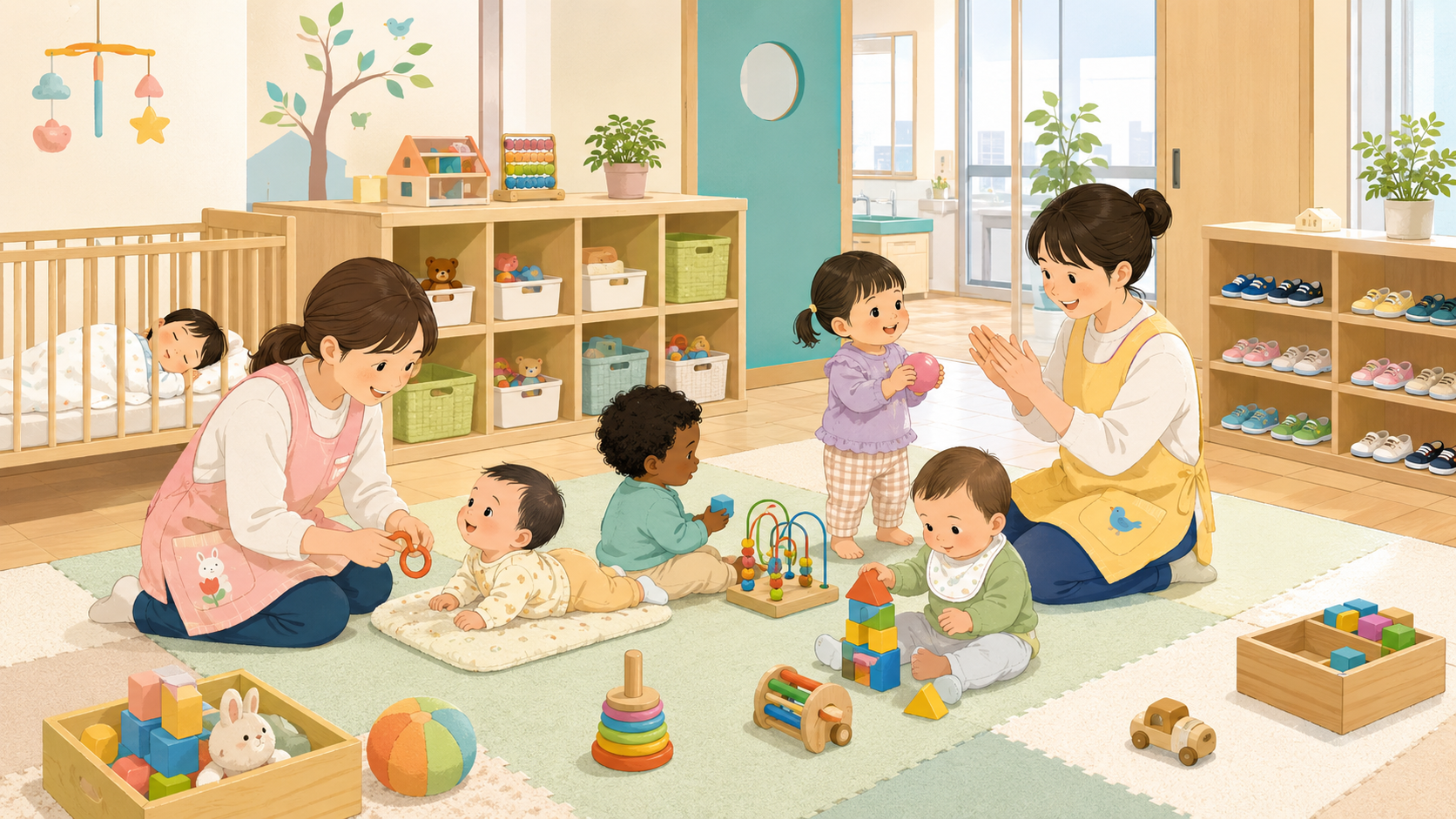
Hoikuen is a childcare facility for working families. It takes children from as young as 57 days old right through to age 5. The hours are long — typically from 7am to 7pm, though exact hours vary by facility — and it runs year-round with only short breaks. Because it's designed for parents who work, you generally need to demonstrate a "need for childcare" (保育の必要性) to qualify. This is usually straightforward if both parents are employed, but there are other qualifying reasons too, such as illness, pregnancy, or caring for a family member.
Hoikuen is managed at the national level by the Agency for Children and Families (こども家庭庁), and fees are set on a sliding scale based on household income — though the 2019 reforms mean most children aged 3 and over now attend for free.
Yochien (幼稚園) — Kindergarten
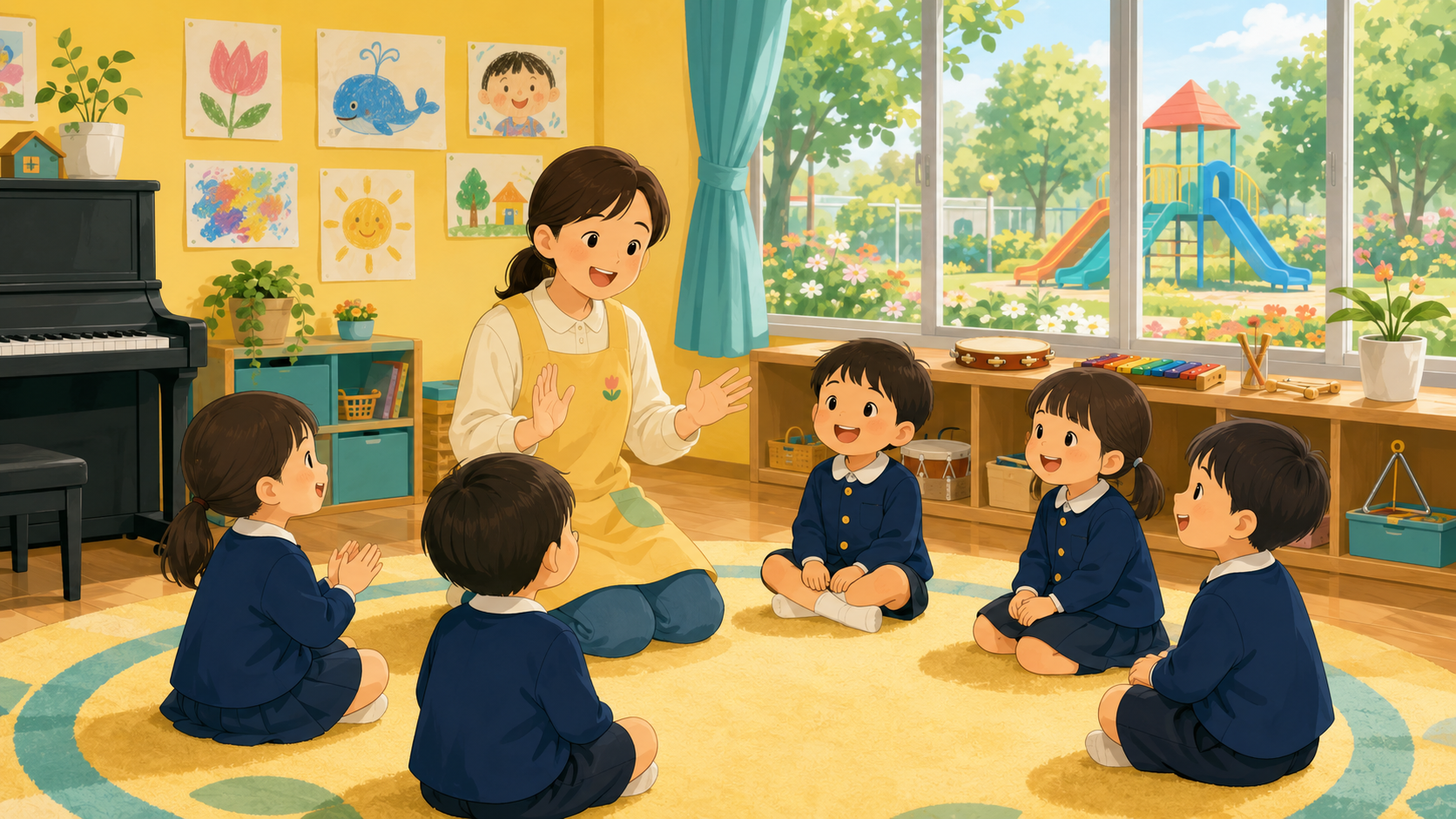
Yochien is an educational institution rather than a childcare facility. It accepts children aged 3 to 5 and focuses on early learning — play-based activities, group interaction, music, and arts. Hours are shorter (typically 9am to 2pm), and it follows the school calendar, closing during summer, winter, and spring breaks.
Because of those shorter hours, yochien works best when at least one parent is at home or has a flexible schedule. Many yochien offer extended care (預かり保育 — azukari hoiku) for an additional fee, which can bridge some of the gap.
Yochien are overseen by the Ministry of Education (文部科学省). You apply directly to each school, and competition for popular schools can be significant, especially in cities.
Kodomoen (認定こども園) — Combined Facility
Kodomoen is a hybrid that combines the functions of hoikuen and yochien. It accepts children from birth to age 5, offers long hours like a daycare, and provides the educational curriculum of a kindergarten. Application goes through city hall, similar to hoikuen.
Kodomoen has expanded significantly since 2015 and is increasingly common across Japan — particularly in areas where demand for both childcare and kindergarten is high.
Side-by-Side Comparison
| 保育園 Hoikuen |
幼稚園 Yochien |
認定こども園 Kodomoen |
|
|---|---|---|---|
| Age range | 57 days – 5 years | 3 – 5 years | 57 days – 5 years |
| Hours | 7am – 7pm | 9am – 2pm | 7am – 7pm |
| Holidays | Year-round (short breaks only) | Follows school calendar | Year-round (short breaks only) |
| Primary focus | Childcare | Education | Both |
| Who qualifies | Parents with a childcare need | Any family | Any family (childcare need for long hours) |
| Where to apply | City hall | Directly to the school | City hall |
| Overseen by | こども家庭庁 | 文部科学省 | こども家庭庁 |
* Hours are approximate. Actual opening and closing times vary by facility and municipality.
Free Preschool — What the 2019 Reform Means for You
In October 2019, Japan introduced 幼児教育・保育の無償化 — a policy that made preschool free for most families. If you weren't aware of this, it's significant.
Who pays nothing?
- Ages 3–5: Free at licensed hoikuen, yochien, and kodomoen — for all families regardless of income. Coverage starts from April 1 after the child turns 3.
- Ages 0–2: Free at licensed facilities — but only for households exempt from residential tax (住民税非課税世帯).
A few things to expect from how this works day to day:
- Meals, transport, and activity fees are not included. Even where tuition is free, you'll still be charged separately for lunches and snacks (給食費), school bus fees (通園送迎費), and event or activity costs (行事費). That said, households with an annual income under ¥3.6 million, and families with a third child or beyond, are exempt from side dish fees (副食費) — check with your city hall if this applies to you.
- Extended care at yochien (預かり保育) can be subsidized up to ¥11,300/month if you have a certified childcare need — but you need to apply for that certification at city hall.
- Unlicensed facilities (認可外保育施設) are also partially covered if you have a certified childcare need — up to ¥37,000/month for ages 3–5, and up to ¥42,000/month for ages 0–2 (住民税非課税世帯 only). Any fees above the cap are paid out of pocket.
- The "licensed" distinction matters. The free preschool policy applies to 認可施設 (licensed facilities). Some private nurseries operate outside the licensed system, so always check.
How to Apply for Hoikuen
Applying for a licensed hoikuen (認可保育所) is done through your local city or ward office, not directly with the facility. The city matches your application against available spots — and in urban areas, demand significantly outpaces supply.
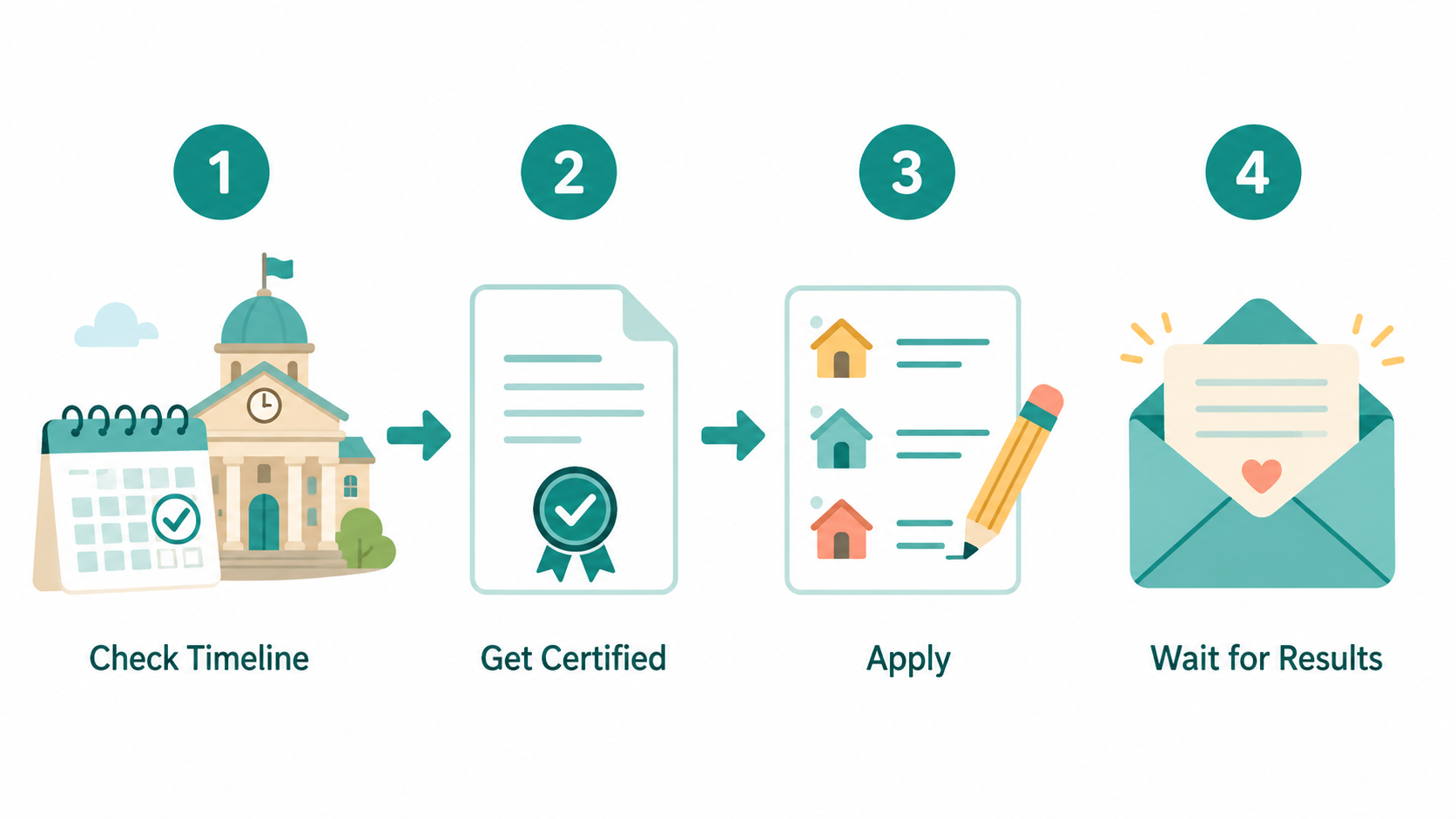
Check the timeline at your city hall
Most cities accept applications in October–November for placements starting the following April. The exact schedule varies — check your city's website early.
Get certified for childcare support (支給認定)
You'll need to obtain a 支給認定 (childcare need certification) from the city. Submit proof of your employment, and your family's situation is assessed.
Submit your application with facility preferences
You'll list your preferred hoikuen in order of priority. You can usually list multiple facilities — list as many as the form allows.
Wait for results (typically February)
The city sends results in late January or February. If you don't get a place (待機児童), you'll be put on a waiting list and can apply again mid-year if a spot opens up.
Waitlists in cities can be long.
In Tokyo and other major cities, getting into a hoikuen — especially for children under 2 — is genuinely competitive. If you're planning to return to work, apply as early as possible, list multiple facilities, and ask your city hall about mid-year openings.
What to bring when applying
- Application form (入所申込書) — available at city hall or often downloadable from the city's website
- Proof of employment (就労証明書) — issued by your employer; both parents need to submit one if both are working
- My Number Card or residence card
- Your child's health insurance card (if already enrolled)
- Any additional documents your city requires
How to Apply for Yochien
Unlike hoikuen, yochien admission is handled directly between you and the school. Each school sets its own application process and timeline.
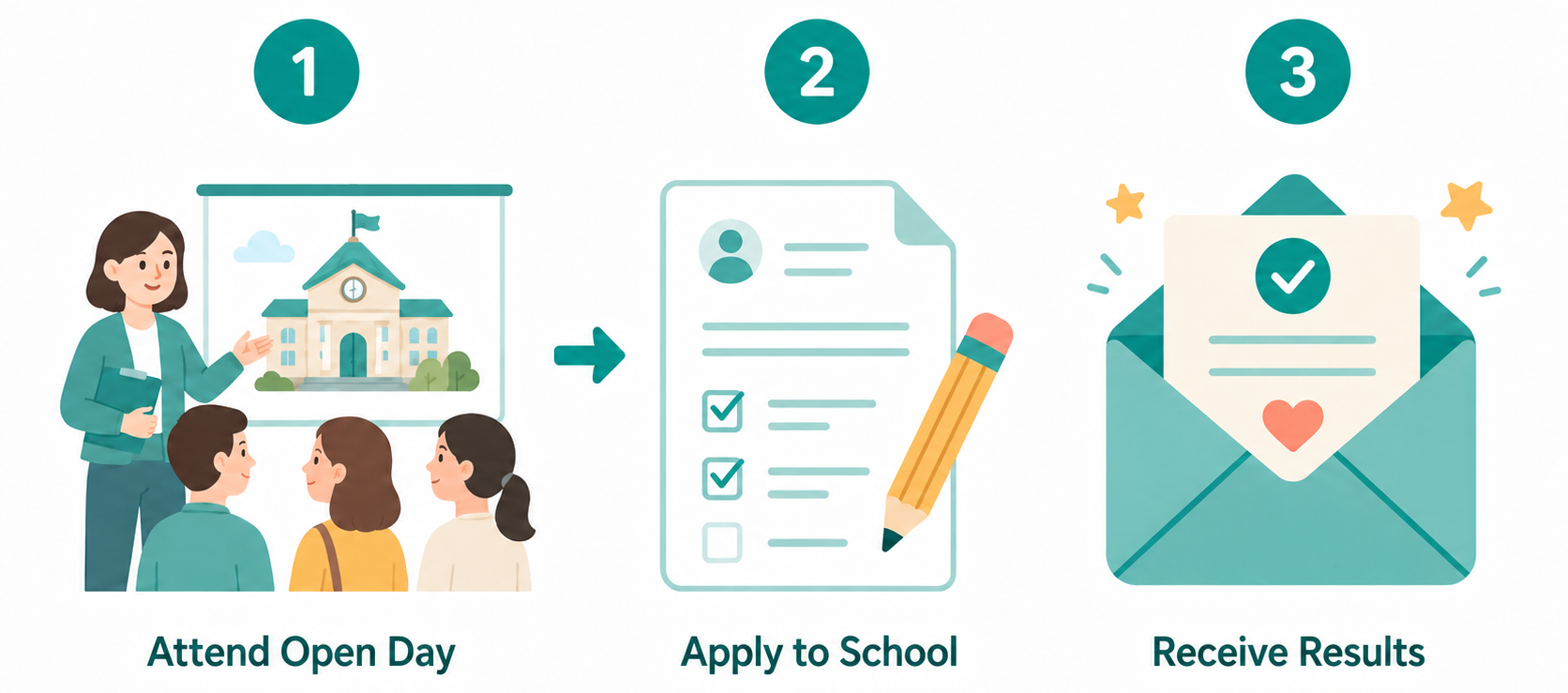
- Application period: Typically October–November, for enrollment the following April. Private yochien sometimes hold open days (説明会) in September — attend these early if you can.
- Rejections do happen. Unlike hoikuen, where you go on a waiting list if you don't get a place, yochien — especially popular private schools — can simply decline your application if they're full. Apply to more than one school, just in case.
- Documents: Usually just a simple application form and your child's health record or Boshi Techou. Some yochien require a brief interview.
- Fees: Tuition for ages 3–5 is subsidized under the 無償化 policy up to ¥25,700 per month. Public yochien fees typically fall within this cap, so most families pay nothing. Private yochien can be more expensive — any amount above ¥25,700 is paid out of pocket. Registration fees (入園料) and material fees are also not covered.
International families:
If Japanese language ability is a concern, look for yochien or kodomoen that have experience with non-Japanese-speaking families. Your local board of education (教育委員会) can advise on what's available in your area.
Which Is Right for Your Family?
Both parents working full-time
→ Hoikuen or Kodomoen. The long hours and year-round availability make these the practical choice for dual-income households.
One parent at home or working part-time
→ Yochien. Shorter hours suit a household where one parent can handle pickups and the school breaks.
Child under 3
→ Hoikuen or Kodomoen. Yochien only accepts from age 3.
Want bilingual or international-oriented education
→ International or bilingual yochien / kodomoen. These exist in major cities but vary widely in quality and approach.
Worried about getting a spot
→ Apply early and apply to multiple places. For hoikuen in urban areas, applications close months before the April start. Don't wait.
📖 Japanese Vocabulary
Useful terms when researching or applying for preschool in Japan.
| 日本語 | ひらがな | English |
|---|---|---|
| 保育園 | ほいくえん | Daycare / nursery school |
| 幼稚園 | ようちえん | Kindergarten |
| 認定こども園 | にんていこどもえん | Combined childcare and kindergarten |
| 幼保無償化 | ようほむしょうか | Free preschool policy (from Oct 2019) |
| 支給認定 | しきゅうにんてい | Childcare need certification |
| 保育の必要性 | ほいくのひつようせい | Childcare need (qualification criteria) |
| 待機児童 | たいきじどう | Children on the waiting list for daycare |
| 預かり保育 | あずかりほいく | Extended care (at yochien after regular hours) |
| 就労証明書 | しゅうろうしょうめいしょ | Employment certificate (for hoikuen application) |
| 入所申込書 | にゅうしょもうしこみしょ | Enrollment application form |