Written and reviewed by Susumu
Born and raised in Japan · Checked against Japanese law and ministry guidance
Choking, burns, falls, swallowed objects — what to do in the first moments when your baby or toddler has an accident in Japan, with first response steps based on こども家庭庁 guidance.
Affiliate Disclosure: This article contains affiliate links. If you click a link and make a purchase, we may earn a small commission at no extra cost to you. We only recommend products we genuinely believe are helpful. See our Terms of Use for full details.
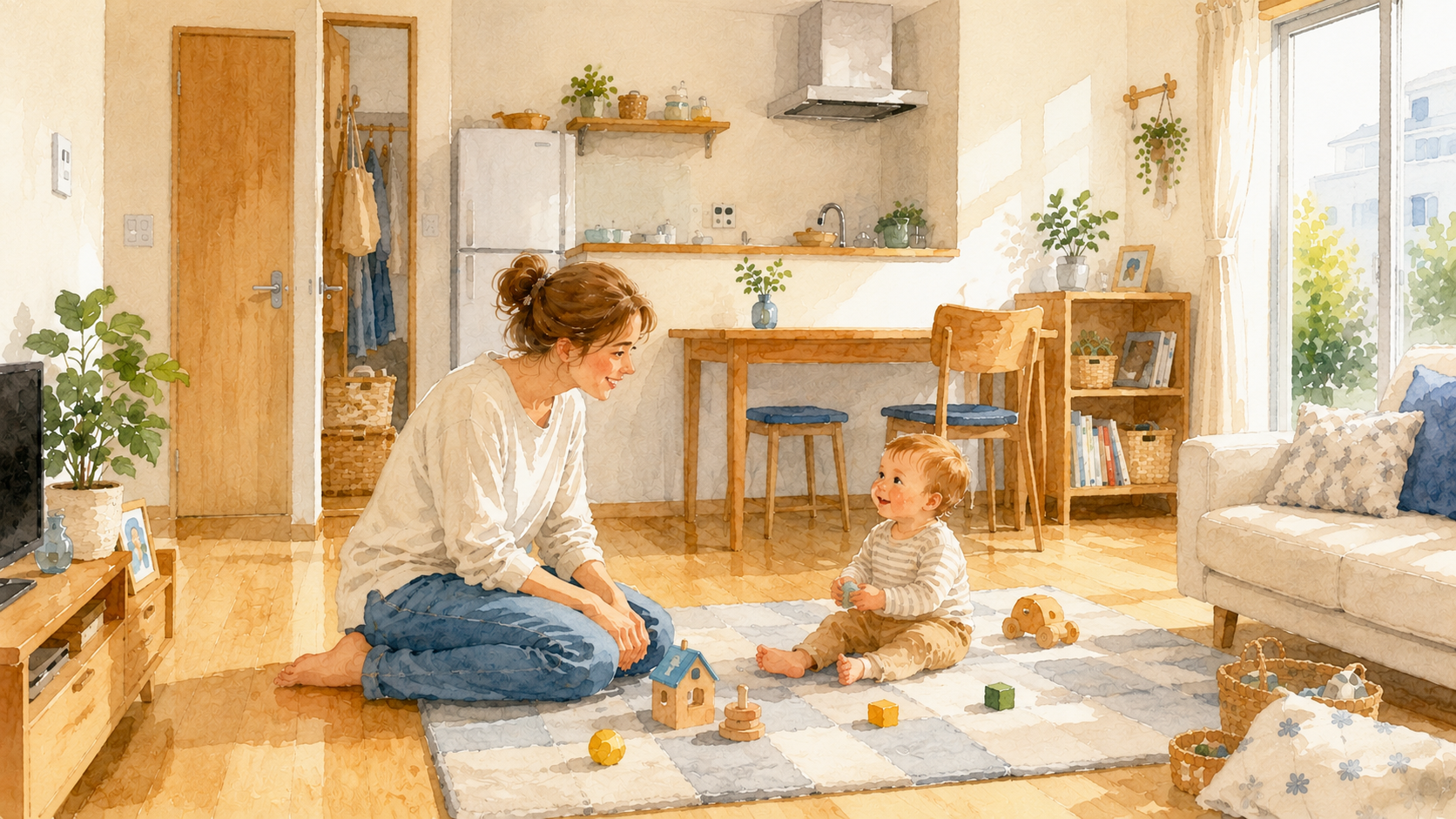
Accidents happen quickly. Knowing what to do in the first few seconds — and when to call for help — can make a real difference. This guide covers the most common accidents involving babies and toddlers in Japan, with first response steps based on guidance from Japan's こども家庭庁 (Children and Families Agency).
For information only. The first response steps in this article are drawn from official こども家庭庁 guidance. They are not a substitute for first aid training or medical advice. In any serious emergency, call 119 immediately.
When to Call 119 Immediately
In Japan, 119 connects you to both ambulance and fire services. Call straight away — without checking the guide first — if your child:
- Is not breathing, or breathing is very labored
- Is unconscious or cannot be woken
- Has swallowed something corrosive, a button battery, a magnet, or a sharp object
- Has extensive burns, or burns to the face
- Has lost consciousness after a fall, even briefly
- Is having a seizure
If your Japanese is limited, stay on the line after dialling and say: 「英語が話せる方はいますか?」 (Eigo ga hanaseru kata wa imasu ka? — Is there someone who speaks English?). Many dispatch centers can access telephone interpreting.
If your child has swallowed something and you are unsure what to do, call 119. Describe what was swallowed and the operator will advise you. See our full emergency contacts guide for more resources.
Choking (窒息・誤えん)
Choking is one of the most urgent accidents in this age group. The airway of a baby or toddler is narrow, and small objects — food pieces, coins, toy parts, button batteries — can block it completely. Call 119 immediately and begin first response at the same time.
The following steps are based on guidance published by Japan's こども家庭庁 (Children and Families Agency):
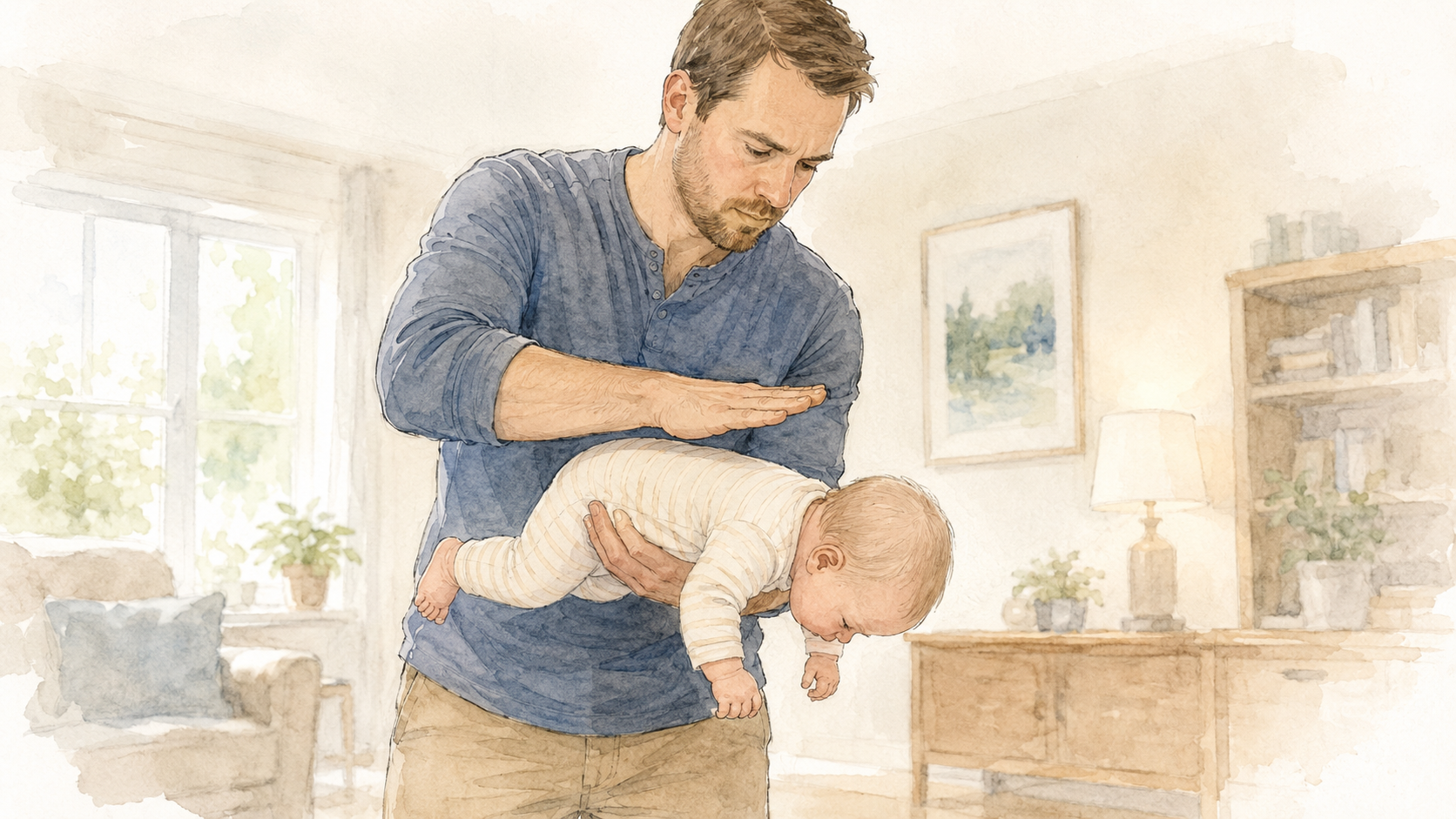
Under 1 year old — Back blows and chest thrusts
- Place the baby face-down along your forearm, supporting the head with your hand, keeping the head lower than the chest.
- Strike firmly between the shoulder blades with the heel of your hand — up to 5 times.
- Turn the baby face-up, supporting the head. Using two fingers, press down on the center of the chest (same position as CPR compressions) — up to 5 times.
- Alternate back blows and chest thrusts until the object is dislodged or help arrives.
1 year and over — Back blows and abdominal thrusts
- Lean the child forward and strike firmly between the shoulder blades with the heel of your hand — up to 5 times.
- If that does not work, stand or kneel behind the child, wrap your arms around them, make a fist just above the navel, and thrust firmly upward and inward — up to 5 times.
- Alternate back blows and abdominal thrusts until the object is dislodged or help arrives.
Do not sweep a finger blindly into the mouth. This can push the object further down. Only remove something from the mouth if you can clearly see it.
Button batteries deserve special mention. If swallowed, they can cause severe internal burns within hours, even if the child seems fine. This is a 119 situation — go to hospital immediately, and bring the battery packaging if you have it.
Burns (やけど)
The most important first step for any burn is to cool the affected area with water — and to do it straight away. According to こども家庭庁 guidance, cool for at least 10 to 20 minutes with water held in a container or basin rather than running tap water or a shower spray.
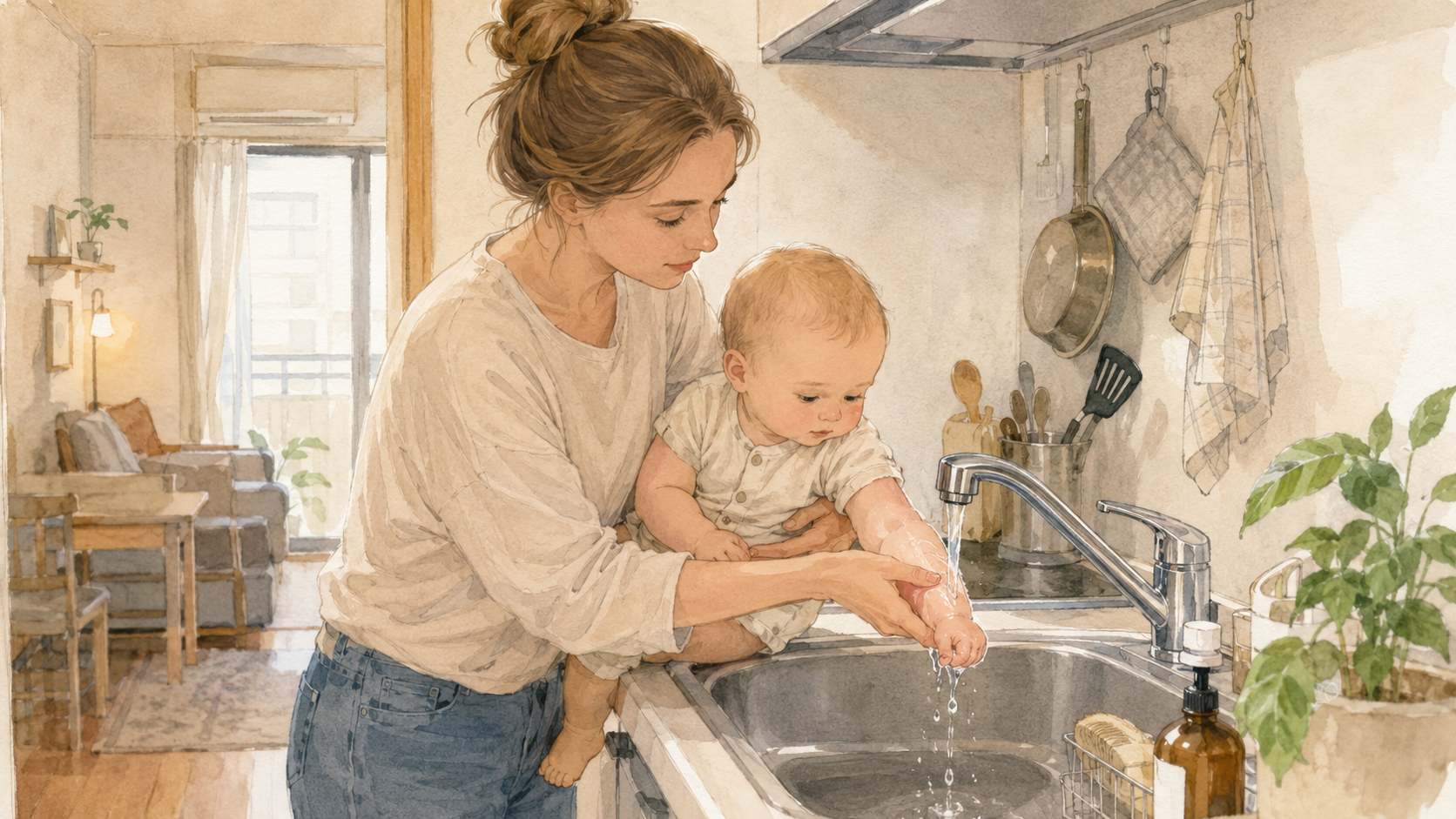
- Do not remove clothing covering the burned area — cool over it instead, and let the doctor remove it later.
- Do not apply toothpaste, soy sauce, or any household remedy — these can make burns worse.
- Do not pop blisters.
- Be cautious with commercially sold cooling sheets — these are not a substitute for water cooling.
Call 119 if: the burn covers a large area, the face is burned, or the child seems unwell. For smaller burns that have been cooled, visit a hospital or clinic on the same day.
Low-temperature burns — from a hot water bottle, heated seat, or similar — can look mild but go deep. If a child has been against a warm surface for a long time, get it checked even if the skin looks only slightly red.
Falls and Head Injuries (転落・頭部外傷)
Babies roll and toddlers climb — falls from beds, sofas, changing tables, and stairs are among the most common accidents in this age group. Most are minor, but head injuries need careful watching.
Based on こども家庭庁 guidance, call 119 immediately if the child:
- Loses consciousness, even briefly
- Has repeated vomiting after the fall
- Has severe or uncontrolled bleeding from the head
- Becomes very pale, limp, or unusually drowsy
- Has a seizure
If the child cries straight after the fall, is alert, and seems to recover quickly, monitor closely for the next 24 hours. Rest at home. If anything changes — renewed crying, unusual sleepiness, or vomiting — seek medical attention.
For bleeding from a head wound, apply firm pressure with a clean cloth or gauze. Head wounds often bleed more than the injury warrants, which is alarming but not necessarily serious on its own.
Swallowing Something (誤飲)
Babies and toddlers explore with their mouths. The most dangerous items are not always the most obvious ones.
According to こども家庭庁 guidance, call 119 or go to hospital immediately if the child has swallowed:
- Button batteries — these are a medical emergency at any size
- Sharp objects — pins, broken glass, staples
- Multiple magnets — can attract through the intestine wall
- Petrol products, pesticides, or rodent poison
For anything else — coins, small toy parts, household chemicals, tobacco, medications — call 119 if you are unsure. Describe what was swallowed and the operator will advise you.
Do not try to induce vomiting unless told to by a doctor. For some substances, vomiting causes additional harm.
When you go to hospital, bring the packaging, container, or the item itself if you can. Even a photo on your phone helps the doctor identify what was swallowed and how much.
Other Indoor Accidents
Fingers caught in doors or drawers (挟む)
Cool with water if there is swelling or bruising. If the finger looks bent at an unusual angle, or the child cannot move it, go to hospital. Fingernails sometimes fall off after this kind of injury — this heals on its own.
Drowning (溺水)
Infants can drown in very shallow water — a bath, a bucket, a paddling pool — in seconds. If the child is found in water and unresponsive, call 119 immediately and begin CPR if you are trained to do so. Do not wait to see if the child "recovers" — even a child who appears to wake up after submersion needs hospital assessment urgently.
Never leave a baby or toddler unattended near water, even for a moment.
Heat and sun (熱中症)
Japan's summers are intense. Move the child to a cool, shaded area immediately. If indoors, turn on the air conditioning. Offer water or an electrolyte drink if the child can swallow. If the child is unresponsive, not sweating despite the heat, or has a very high body temperature, call 119.
Emergency Contacts
119 — Ambulance and Fire
All emergencies. Available 24 hours.
#8000 — Pediatric Phone Consultation
Free consultation with a pediatric nurse or doctor. Available evenings and weekends. Hours vary by prefecture.
For full details on all emergency services available in Japan, including the #8000 telephone consultation line and AMDA multilingual medical support, see our complete guide to getting help when your baby is unwell.
Japanese Vocabulary
| Japanese | Reading | Meaning |
|---|---|---|
| 窒息 | chissoku | Choking / suffocation |
| 誤飲 | goin | Accidental swallowing / ingestion |
| 誤えん | goen | Choking / aspiration |
| やけど | yakedo | Burn / scald |
| 転落 | tenraku | Fall (from a height) |
| 溺水 | dekisui | Drowning / submersion |
| 熱中症 | necchuushou | Heatstroke |
| ボタン電池 | botan denchi | Button battery |
| 背部叩打法 | haibu kōda-hō | Back blow technique (for choking) |
| 胸部突き上げ法 | kyōbu tsukiage-hō | Chest thrust technique (for choking) |