
Written and reviewed by Susumu
Born and raised in Japan · Checked against Japanese law and ministry guidance
Warning signs to watch for, dehydration risks, what to give and avoid, and how to find a doctor — all based on Japan's official pediatric sources.
Affiliate Disclosure: This article contains affiliate links. If you click a link and make a purchase, we may earn a small commission at no extra cost to you. We only recommend products we genuinely believe are helpful. See our Terms of Use for full details.
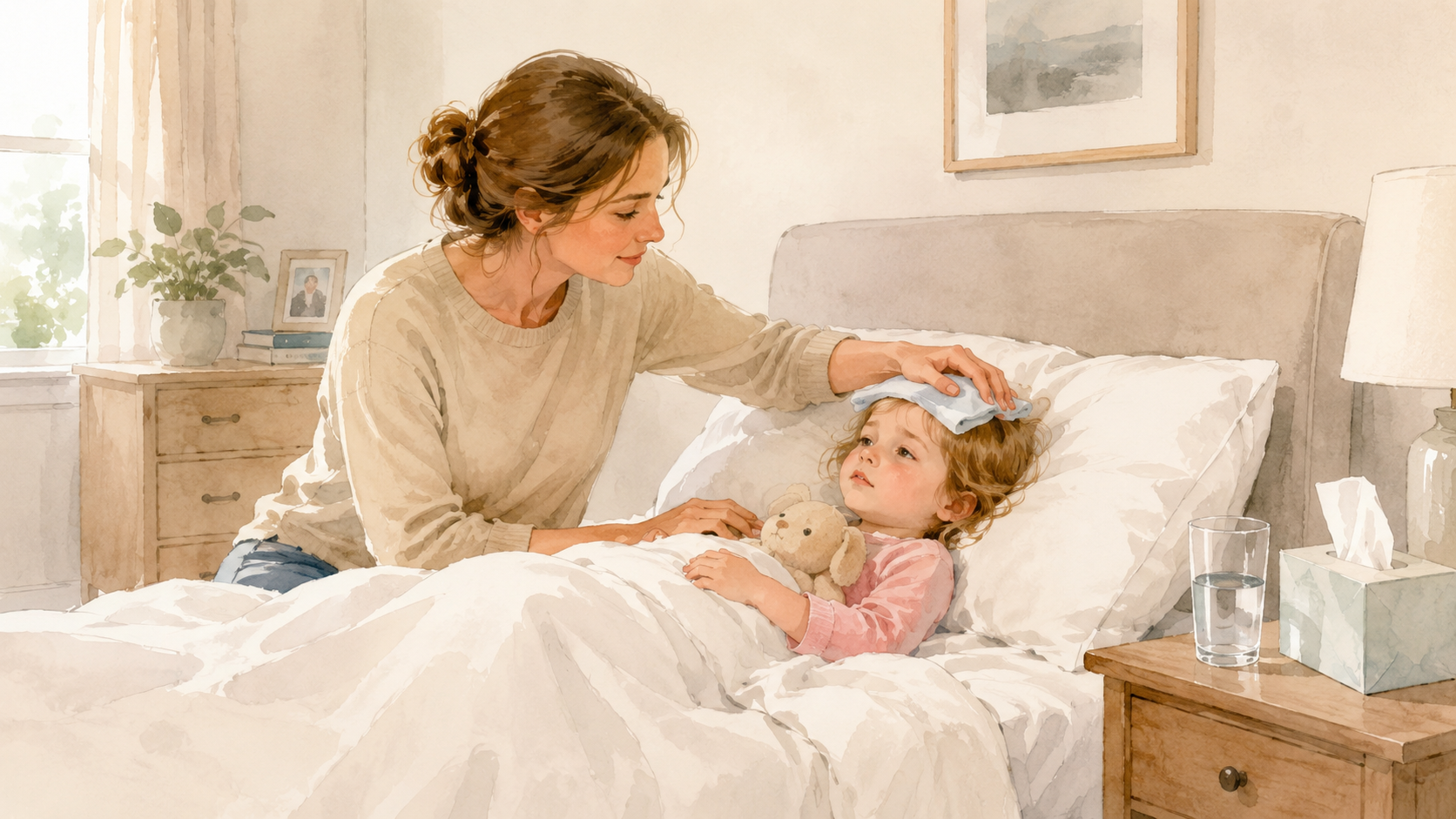
Vomiting and diarrhea are among the most common reasons parents in Japan take their baby to the doctor. This guide explains the warning signs to watch for, when to seek help, and how to manage things at home — all drawn from Japan's official pediatric sources.
For information only. This article introduces official Japanese resources and explains how to navigate the healthcare system. It does not provide medical advice. Always consult a qualified medical professional for concerns about your child's health.
Under 3 Months: Go Straight to Hospital
Both the vomiting and diarrhea checklists on こどもの救急 list age under 3 months (生後3か月未満) as a reason to seek medical attention promptly — alongside the most serious warning signs. Young babies dehydrate quickly and cannot compensate for fluid loss the way older children can. If your baby is under 3 months old and is vomiting or has diarrhea, go to hospital rather than waiting to see how things develop.
Vomiting — Signs to Watch
Most vomiting in babies and toddlers is caused by a stomach virus (ウイルス性胃腸炎) and passes without needing hospital treatment. But some signs suggest the situation is more serious. According to こどもの救急, seek medical attention promptly if your child:
- Is listless or lethargic — 元気がなく、ぐったりしている (genki ga naku, guttari shite iru)
- Has labored breathing — 呼吸があらく、苦しそう (kokyū ga araku, kurushisō)
- Has poor color — 顔色・皮膚色が悪い (kaoiro / hifuiro ga warui)
- Looks vacant or drowsy — 無表情でうとうとしている (muhyōjō de utouto shite iru)
- Keeps vomiting repeatedly — 何度も繰り返し吐く (nandomo kurikaeshi haku)
- Vomits blood or bile (yellow or green) — 血もしくは胆汁(黄色または緑色)を吐いた
- Vomit looks like coffee grounds — 吐いたものがコーヒーの残りかすのようだ
- Has blood in the stool — うんちに血が混ざった (unchi ni chi ga mazatta)
- Has severe abdominal pain — 激しくおなかを痛がる (hageshiku onaka wo itagaru)
- Has severe headache — 激しく頭を痛がる (hageshiku atama wo itagaru)
According to the Tokyo Metropolitan Children's Medical Guide, call 119 if the child is lethargic between vomiting episodes, has impaired consciousness, or has not urinated for a long time.
Reassuring signs: If the child is alert (元気がある), able to drink fluids (水分は取れている), and has normal wet diapers (おむつがいつもの通り濡れている), these suggest the child is coping and you may be able to wait for the clinic to open. If you are unsure, call #8000 to speak with a pediatric nurse.
After Vomiting: Fluids and Rest
The Tokyo Metropolitan Children's Medical Guide advises not to give fluids immediately after vomiting, even if the child asks. Wait a short while, then offer a small sip of clear fluid — plain water or weak tea. If the child keeps that down, gradually offer a little more, increasing the amount and spacing out feeds as things improve.
Diarrhea — Signs to Watch
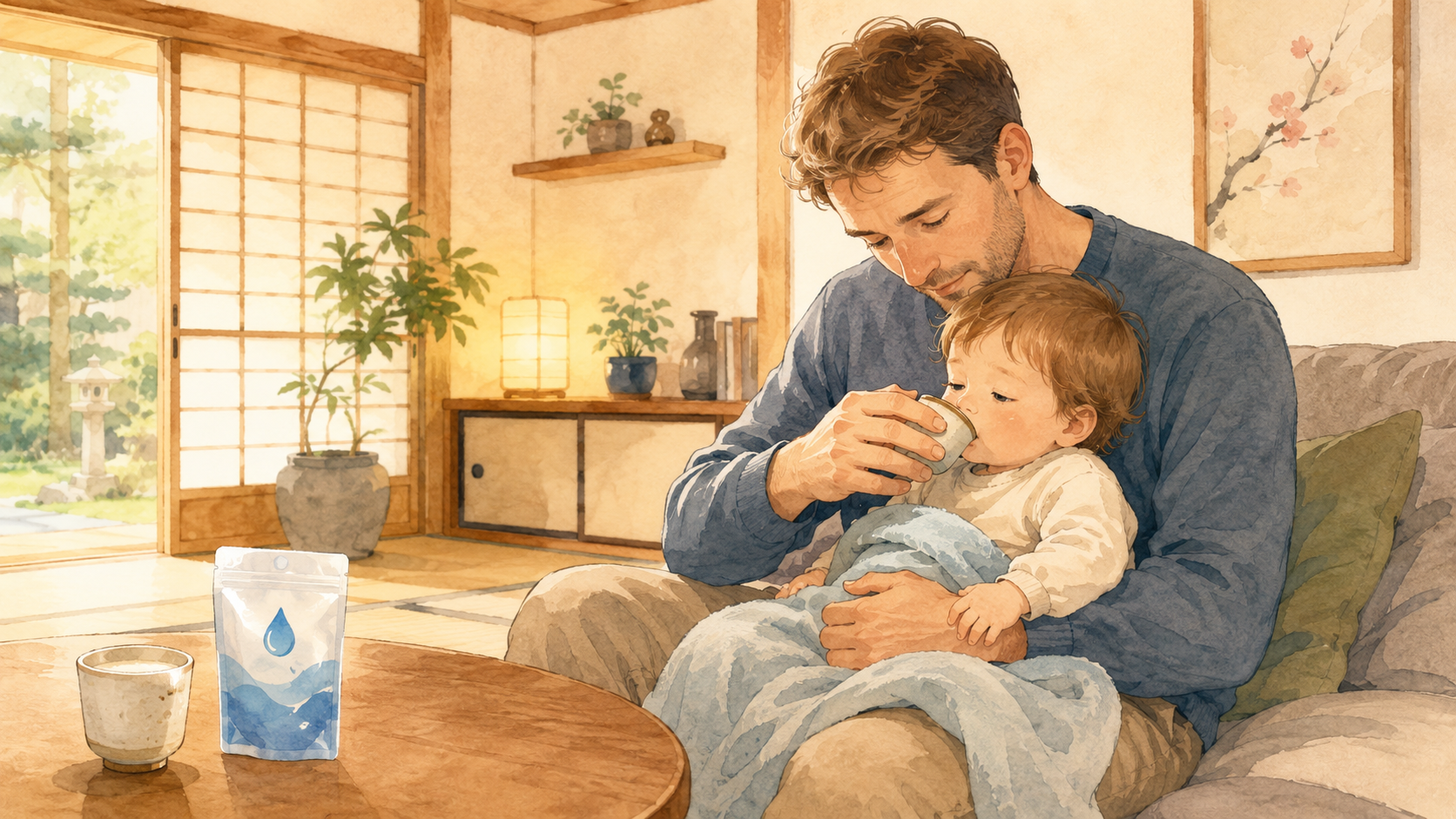
Diarrhea in young children is most often caused by a viral infection. The main risk is dehydration. According to こどもの救急, seek medical attention if your child:
- Is listless or lethargic — 元気がなく、ぐったりしている (genki ga naku, guttari shite iru)
- Has labored breathing — 呼吸があらく、しんどそう (kokyū ga araku, shindosō)
- Has poor color — 顔色・皮膚色が悪い (kaoiro / hifuiro ga warui)
- Is under 3 months old — 生後3か月未満 (seigo sankagetsu miman)
- Has sunken eyes — 目がくぼんでいる (me ga kubonde iru)
- Has dry lips or mouth — くちびるや口の中が乾燥している (kuchibiru ya kuchi no naka ga kansō shite iru)
- Is also vomiting repeatedly — 何度も吐く (nandomo haku)
- Has blood in the stool — 血便になっている (ketsuben ni natte iru)
- Has a fever of 38°C or above — 38℃以上の発熱がある (38-do ijō no hatsunetsu ga aru)
Dehydration: The Main Risk
The Tokyo Metropolitan Children's Medical Guide states clearly: the most dangerous thing with diarrhea is dehydration (一番怖いのは脱水症状になることです). Young children lose fluids quickly, and replacing them is the priority.
Signs of dehydration to watch for
- 少ないおしっこ — Less urine than usual, or dry diapers
- 機嫌が悪く、泣いても涙が出ない — Irritable, crying without tears
- 皮膚・唇・口の中が乾燥している — Dry skin, lips, or mouth
- 皮膚が冷たく白っぽい、色が悪い — Skin feels cold, looks pale or has poor color
- 目が落ちくぼんでいる — Sunken eyes
- 大泉門がくぼむ — Sunken fontanelle (the soft spot on a baby's head)
If you notice any of these signs, seek medical attention. Do not wait to see if things improve on their own.
Fluids and Food During Diarrhea
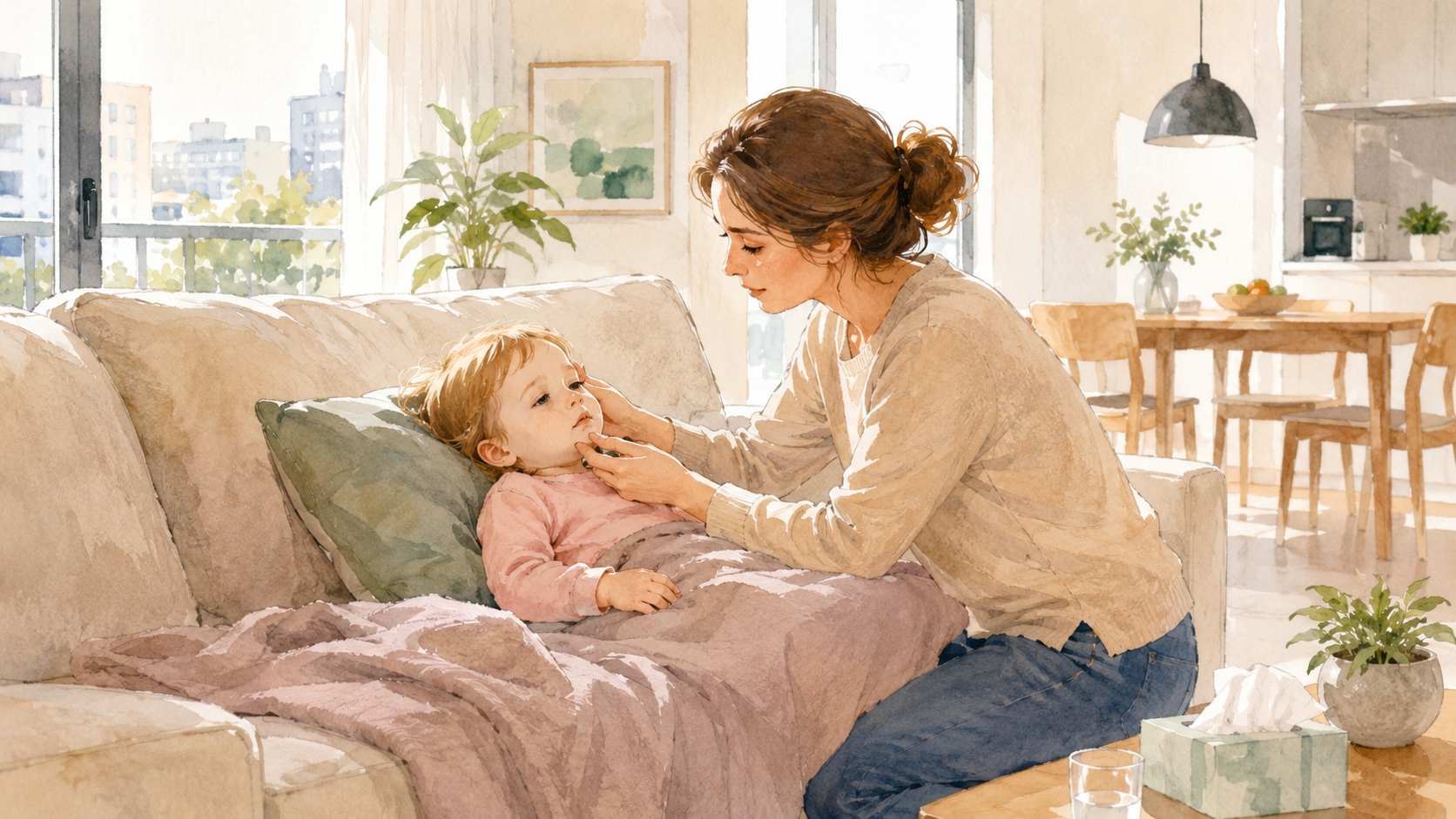
The Tokyo guide recommends giving fluids little and often. Suitable options include 経口補水液 (keikō hōsuieki — oral rehydration solution), weak tea, or apple juice (リンゴ果汁). If your child is still on breast milk or formula, continue as normal.
Drinks to avoid: The Tokyo guide specifically notes that juice, citrus drinks, and mineral water can sometimes make diarrhea worse. Stick to oral rehydration solution, plain water, or weak tea.
For food, easily digestible carbohydrates such as udon noodles (うどん) are recommended. Avoid fatty or strongly flavored foods. If the child has no appetite, do not force feeding — offer fluids as the priority.
Oral rehydration solution (経口補水液) is sold at pharmacies (薬局, yakkyoku) across Japan. Ask at the counter or look for products labeled 経口補水液 on the shelf.

Tips for Non-Japanese Speakers
- #8000 — Japan's nationwide pediatric phone consultation line. Dial from any mobile or landline. Say 「英語が話せる方はいますか?」 (Is there someone who speaks English?). Hours vary by prefecture. Our guide to deciding when a sick child needs a doctor covers how #8000 works and when to call an ambulance instead.
- AMDA International Medical Information Center — multilingual telephone support for international residents in Japan, Monday through Friday 10:00–16:00.
- At the pharmacy — to ask for oral rehydration solution, say 「経口補水液はありますか?」 (keikō hōsuieki wa arimasu ka? — Do you have oral rehydration solution?)
- Bring your 母子健康手帳 and health insurance documentation (マイナ保険証 or 資格確認書) to any doctor's visit.
Japanese Vocabulary
| Japanese | Reading | Meaning |
|---|---|---|
| 嘔吐 | ōto | Vomiting |
| 吐き気 | hakike | Nausea / feeling sick |
| 下痢 | geri | Diarrhea |
| 脱水 | dassui | Dehydration |
| 経口補水液 | keikō hōsuieki | Oral rehydration solution |
| 血便 | ketsuben | Blood in stool |
| 腸炎 | chōen | Gastroenteritis |
| ウイルス性胃腸炎 | uirusu-sei ichōen | Viral gastroenteritis |
| 大泉門 | daisen-mon | Fontanelle (soft spot on baby's head) |
| 薬局 | yakkyoku | Pharmacy |
| 小児科 | shōnika | Pediatric clinic |
| 消化の良いもの | shōka no yoi mono | Easily digestible food |