
Written and reviewed by Susumu
Born and raised in Japan · Checked against Japanese law and ministry guidance
Japan's マル乳 system covers the insurance copayment for children's medical visits from birth through elementary school entry — and international residents are eligible if they hold a residence card.
Affiliate Disclosure: This article contains affiliate links. If you click a link and make a purchase, we may earn a small commission at no extra cost to you. We only recommend products we genuinely believe are helpful. See our Terms of Use for full details.
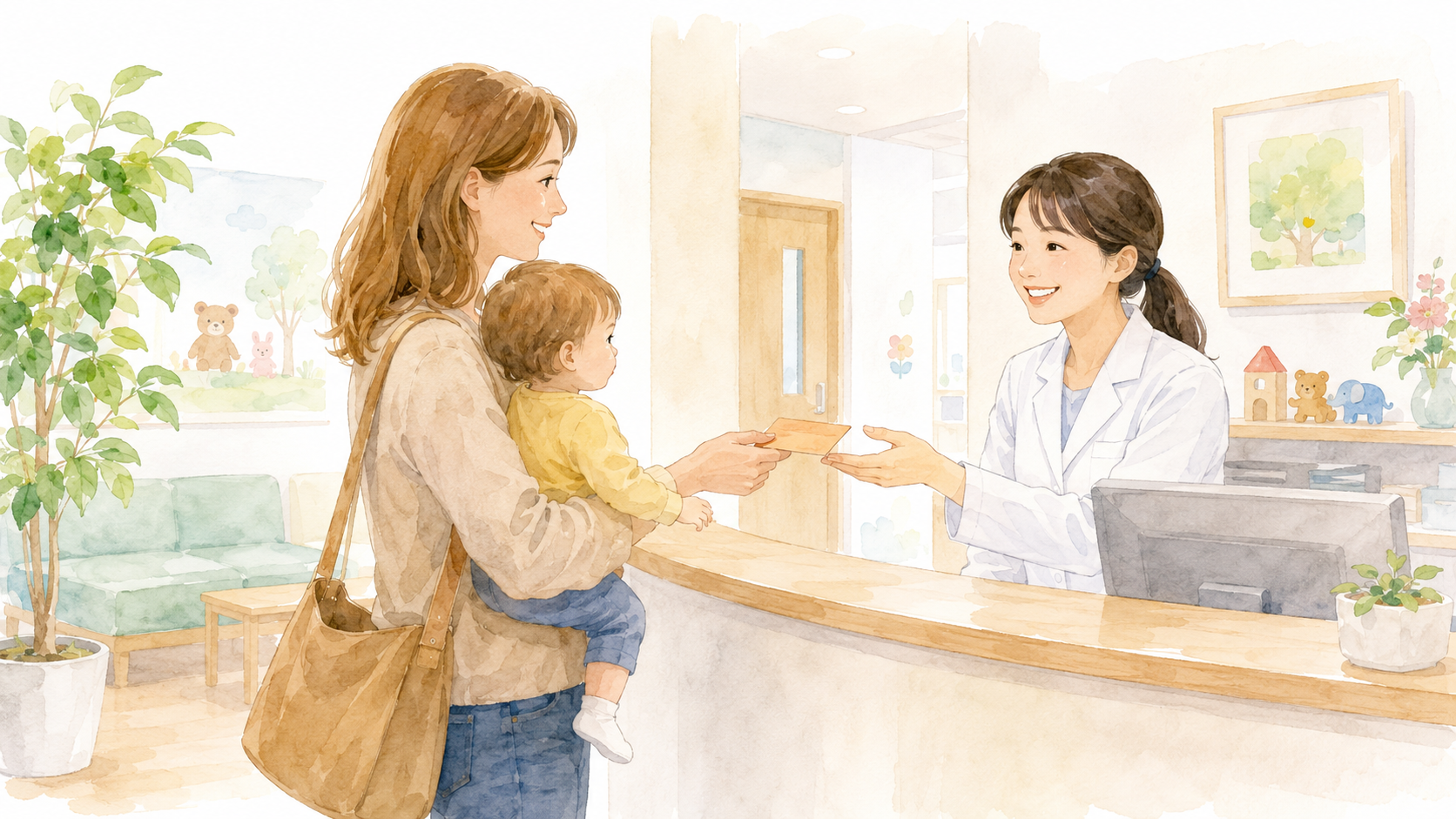
Japan's 乳幼児医療費助成制度 (マル乳) covers the out-of-pocket cost of medical care for children from birth through elementary school entry — and international residents are eligible. This guide explains what it covers, how to apply, and what documents you need under the current system.
For information only. Eligibility and procedures vary by municipality. Always confirm the details with your local ward or city office, as policies are updated regularly. This article reflects the position as of mid-2026.
What Is マル乳?
乳幼児医療費助成制度 (nyūyōji iryōhi josei seido) — known informally as マル乳 (Maru-Nyu) after the circled 乳 character printed on the certificate — is a child medical fee subsidy that covers the insurance copayment portion of medical bills for young children. It is run by individual ward, city, and town offices, within a framework set by each prefecture.
Under Japan's public health insurance system, children normally pay 20% of insured medical costs. マル乳 covers this 20% on their behalf, meaning that in most cases a visit to the doctor costs nothing at the point of care. The certificate that makes this possible is the 乳幼児医療証 (nyūyōji iryōshō) — a pale orange card issued by your local municipality.
マル子 and マル青: When children start elementary school, they move on to the 義務教育就学児医療費助成制度 (マル子 / Maru-Ko), which covers elementary and junior high school students. Many Tokyo municipalities now also offer マル青 (Maru-Ao), which extends subsidized care through high school (age 18). Together, these three programs cover children from birth through age 18 in most of Tokyo.
Who Qualifies — Including International Residents
To qualify for マル乳, a child must meet all of the following conditions:
- Age — from birth through the March 31 following their 6th birthday (i.e., until the start of elementary school)
- Resident registration — the child must be registered as a resident (住民登録) in the applying municipality
- Health insurance enrollment — the child must be enrolled in a Japanese public health insurance scheme (国民健康保険 or an employer-based 健康保険)
International residents are eligible. If your child is registered as a resident in Japan and enrolled in public health insurance, they qualify on the same basis as Japanese children. The key requirement is a valid 在留カード (zairyū kādo — residence card), which is issued to mid-to-long-term residents. Children on short-term visas (under 3 months) cannot register as residents and are therefore not eligible.
Income limits were historically part of this system, and many Tokyo municipalities have now abolished them. However, requirements vary by municipality — some areas outside Tokyo still apply income limits. Always confirm with your local ward or city office.
The following children are not eligible, regardless of other factors:
- Children receiving 生活保護 (public assistance / welfare)
- Children placed in 児童福祉施設 (child welfare institutions) as residents
- Children without any Japanese public health insurance

What Is Covered — and What Is Not
マル乳 covers the insurance copayment for medical visits, inpatient stays, and prescription medications at contracted medical facilities. In practice at most contracted clinics and hospitals, you simply present the certificate alongside your child's insurance credential, and the copayment is waived at the desk.
The following are not covered:
- Private room charges (差額ベッド代)
- Health checkups and vaccinations (健康診断・予防接種)
- Medication container fees (薬の容器代)
- First-visit surcharge at hospitals with 200 or more beds, when attending without a referral letter (選定療養費)
- Treatments not covered by public health insurance (自由診療)
- The brand-name drug premium introduced in October 2024, when a generic alternative is available (長期収載品の選定療養費)
Note on inpatient meal costs: In Tokyo's metropolitan マル乳 framework, inpatient meal costs (入院時食事療養費) are generally covered by the subsidy — meaning hospital stays are fully subsidized in most Tokyo municipalities. Outside Tokyo, coverage may differ; check with your local ward or city office.
How to Apply
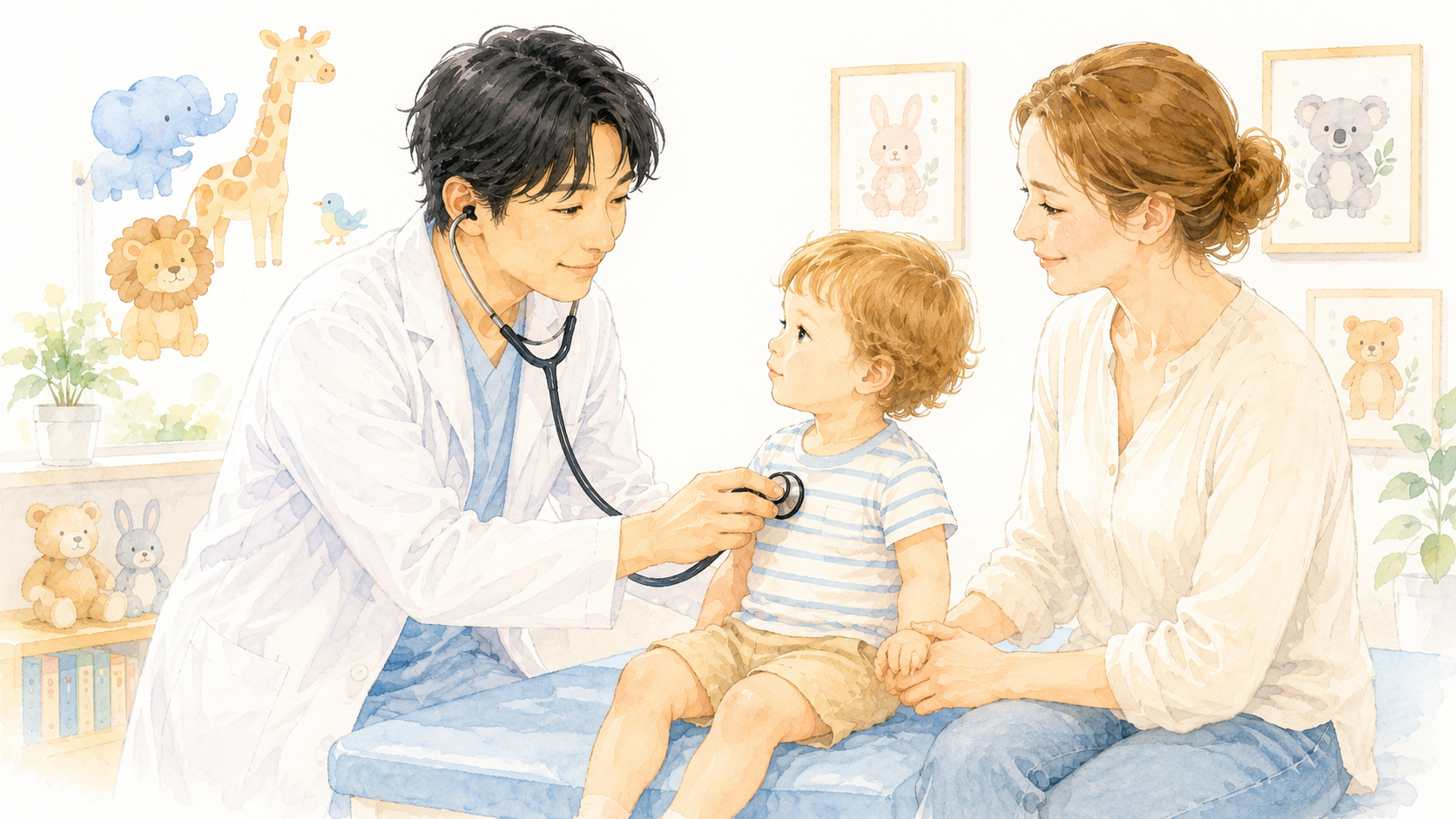
Applications are made at the child welfare or child support section (子育て支援課・子育て給付課) of your ward or city office. Many municipalities also accept applications by mail or online via マイナポータル「ぴったりサービス」 — a national government portal for childcare-related benefits.
When to apply: Apply as soon as possible after birth or after moving into the municipality. Most municipalities allow coverage to backdate to the birth date if you apply within a set window (typically 3 months). If you apply later, coverage starts from the application date. There is no penalty for a late application — you simply miss the backdated period.
Where to apply: The ward or city office (市区役所) where the child is registered as a resident. Look for the 子育て (kosodate — child-rearing) section.
Documents Required
Typical document checklist (confirm with your municipality)
- Application form — 申請書 (provided at the ward office or available to download)
- Child's insurance credential — マイナ保険証 (My Number Card registered for health insurance), 資格確認書 (qualification confirmation document), or 資格情報のお知らせ together with マイナ保険証
- Guardian's identity document — マイナンバーカード preferred; for international residents, your 在留カード (residence card) is accepted
- Guardian's My Number — マイナンバーカード, or a document showing your My Number (such as a 住民票 with My Number)
The old health insurance card (健康保険証) is no longer issued. New physical insurance cards ceased issuance on December 2, 2024. Cards issued before that date were valid until their printed expiry date, but as of 2026 all old cards have now expired. You will need a 資格確認書 or マイナ保険証. A personal seal (印鑑) is no longer required for this application.
Some municipalities can verify insurance information directly through the マイナンバー system if your My Number is linked to your insurance, which simplifies the process further. Exact requirements vary — check your ward or city office website before visiting.
How to Use the Certificate
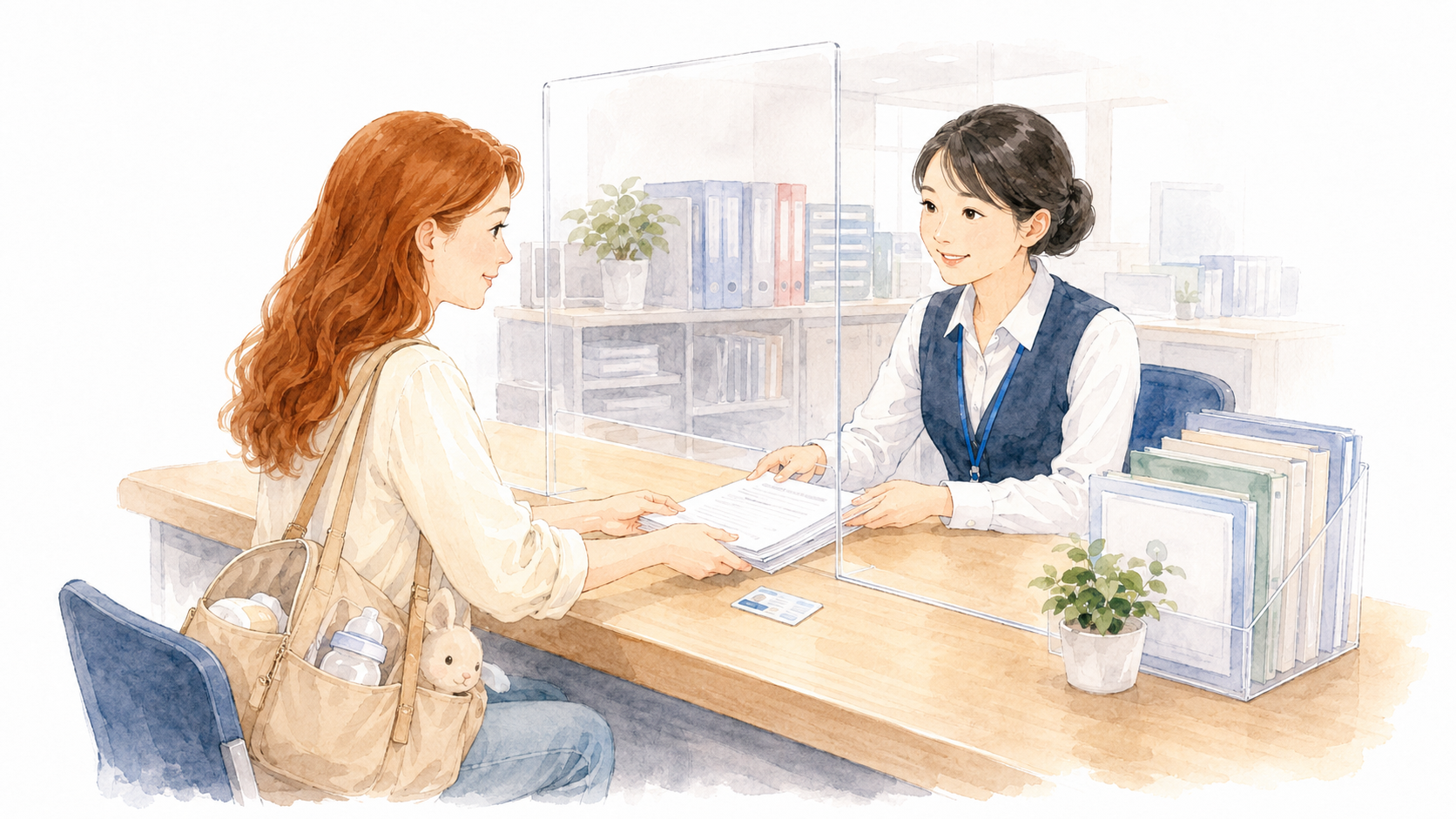
At a contracted medical facility (in your municipality), present two things at the reception desk:
- The 乳幼児医療証 (your child's pale orange medical certificate)
- The child's insurance credential — マイナ保険証 or 資格確認書
The copayment is waived at the point of care for covered services.
You will still need to pay in some cases. Certain charges are not covered by マル乳 and must be paid out of pocket — including private room fees, first-visit surcharges at large hospitals without a referral, inpatient meal costs outside Tokyo, and the brand-name drug premium. These exclusions are based on Japan's official health insurance rules. Always check your receipt carefully and ask the reception desk if you are unsure what a charge is for.
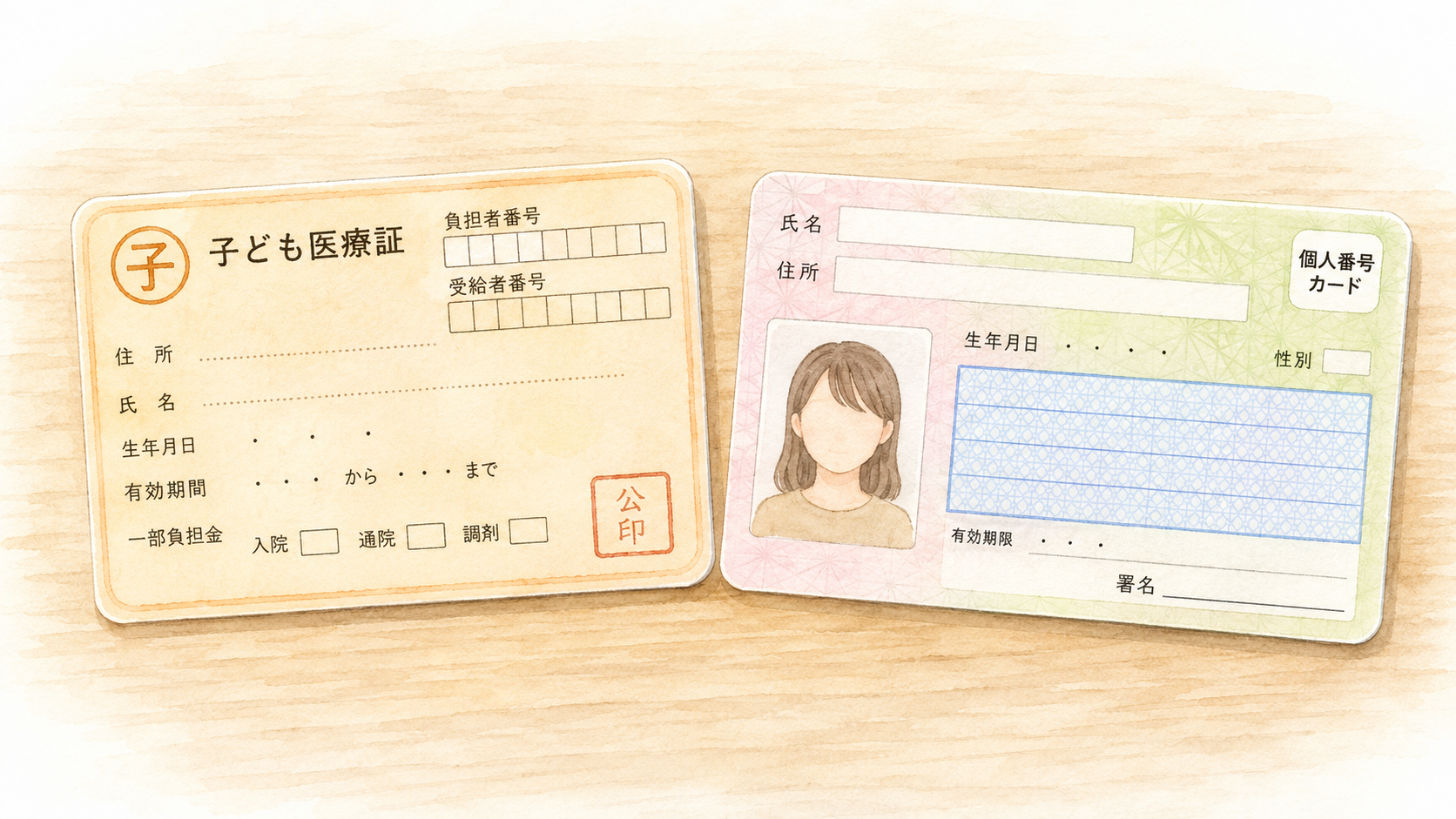
From 2026: Using マイナ保険証 without the paper certificate. In municipalities connected to the national PMH system (自治体・医療機関等をつなぐ情報連携システム), you can present your child's マイナ保険証 directly at the clinic or pharmacy — without the paper 乳幼児医療証. As of mid-2026, over 600 municipalities and 69,000 medical facilities are connected to this system. Paper certificates will continue to be issued. Check with your local ward office whether your municipality participates.
Visiting outside your municipality or prefecture: If you visit a medical facility that is not contracted with your local system — for example, when traveling or visiting a specialist in another prefecture — you pay the copayment upfront. Keep the receipt, then submit a reimbursement claim (償還払い申請) to your home ward or city office afterward. The deadline and procedure for reimbursement vary by municipality.

Validity and Renewal
The 乳幼児医療証 typically runs on an annual cycle of 1 October through 30 September — this is the standard pattern in Tokyo, though the exact cycle may vary by municipality. Renewal is automatic — your ward or city office will send a new certificate by mail in September each year. You do not need to reapply as long as your child remains eligible.
When your child starts elementary school, the マル乳 certificate expires on 31 March of that year, and a マル子 certificate takes over for the elementary school years. In some Tokyo municipalities, this transition happens automatically without a new application — check with your ward office to confirm.
When You Need to Notify Your Municipality
You must notify your ward or city office promptly if any of the following apply:
- You move out of the municipality (転出)
- The child's health insurance changes — for example, if a parent changes employer or switches between 国民健康保険 and employer insurance
- The child begins receiving 生活保護 (public assistance)
- The child moves into a 児童福祉施設 (child welfare facility)
- You are no longer supporting the child financially
If you lose or damage the certificate, apply for a replacement (再交付申請) at your ward or city office.
Tips for Non-Japanese Speakers
- Apply at the ward office with your 在留カード — this is your primary identity document and confirms your residency status. Bring your child's insurance credential and your My Number card if you have one.
- Your local international affairs office (国際交流協会) may be able to assist with translation or point you to multilingual support staff at the ward office.
- Bring your 母子健康手帳 — while not always required for the application itself, it is useful to have at hand as it contains your child's birth information and health record.
Tap 🔊 Play to hear the phrase spoken aloud in Japanese.
At the ward office (to apply)
乳幼児医療費助成の申請をしたいのですが
Nyūyōji iryōhi josei no shinsei wo shitai no desu ga
"I would like to apply for the child medical fee subsidy."
At the clinic or pharmacy (when presenting the certificate)
乳幼児医療証があります
Nyūyōji iryōshō ga arimasu
"I have the child medical certificate."
If you need to claim a reimbursement
償還払いの申請をしたいのですが
Shōkan barai no shinsei wo shitai no desu ga
"I would like to apply for a reimbursement."
Japanese Vocabulary
| Japanese | Reading | Meaning |
|---|---|---|
| 乳幼児医療費助成制度 | nyūyōji iryōhi josei seido | Child medical fee subsidy system (マル乳) |
| 乳幼児医療証 | nyūyōji iryōshō | Child medical certificate (the pale orange card) |
| 助成 | josei | Subsidy / financial assistance |
| 自己負担 | jiko futan | Out-of-pocket cost / copayment |
| 資格確認書 | shikaku kakuninsho | Qualification confirmation document (replaces old insurance card) |
| マイナ保険証 | maina hōkenshō | My Number Card registered for health insurance use |
| 国民健康保険 | kokumin kenkō hoken | National Health Insurance |
| 在留カード | zairyū kādo | Residence card (for international residents) |
| 住民登録 | jūmin tōroku | Resident registration |
| 償還払い | shōkan barai | Reimbursement (paying first, claiming back later) |
| 現物給付 | genbutsu kyūfu | In-kind benefit (copayment waived at the point of care) |
| 再交付申請 | sai kōfu shinsei | Application to reissue a lost or damaged certificate |
| 市区役所 | shiku yakusho | Ward or city office |
| 転出 | tenshutsu | Moving out of a municipality |