

Written and reviewed by Susumu
Born and raised in Japan · Checked against Japanese law and ministry guidance
Formula feeding in Japan — how to prepare powdered formula safely, sterilize bottles, choose the right teat size, and how much to feed your baby by age.
Affiliate Disclosure: This article contains affiliate links. If you click a link and make a purchase, we may earn a small commission at no extra cost to you. We only recommend products we genuinely believe are helpful. See our Terms of Use for full details.
Introduction
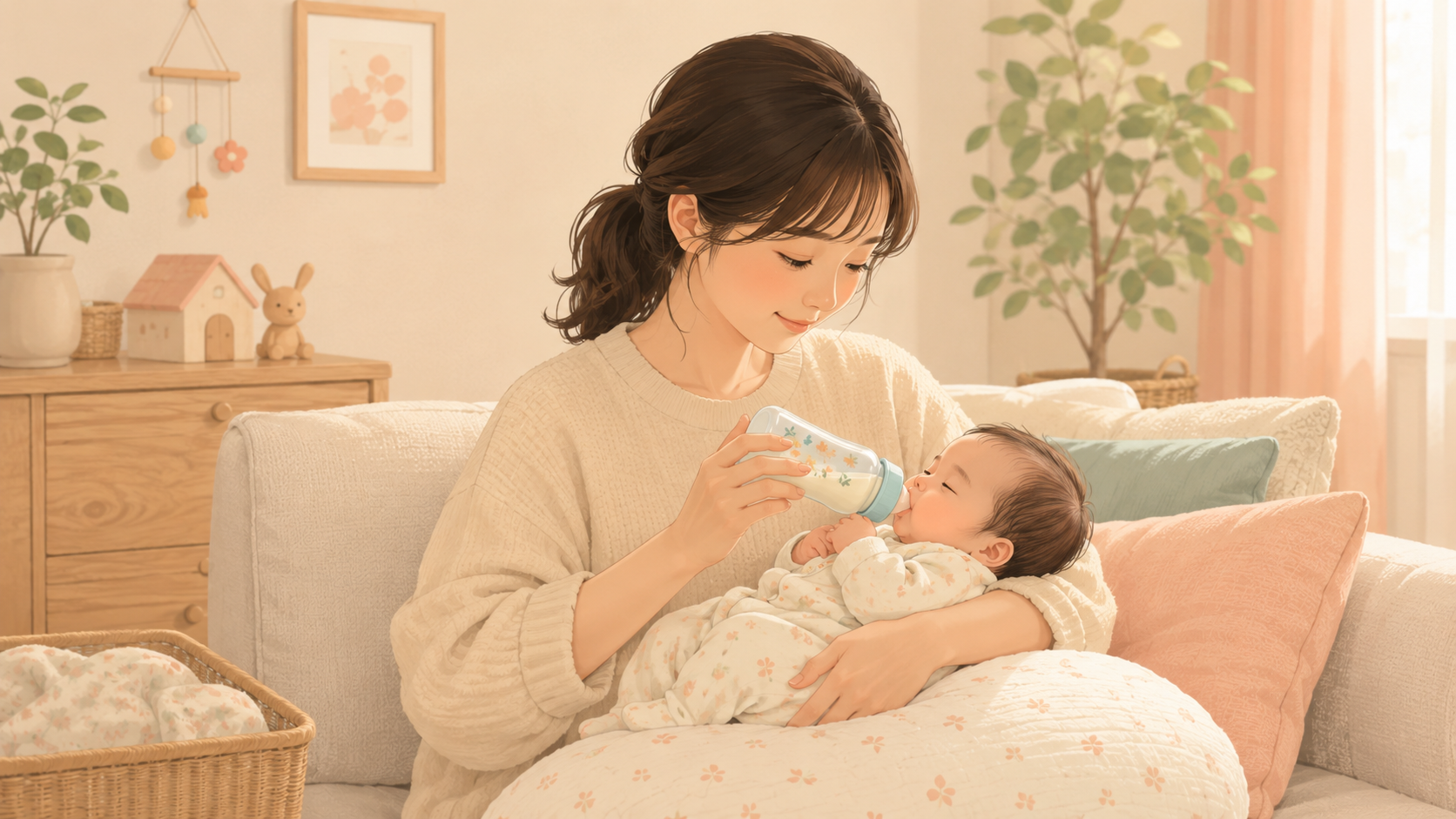
Formula feeding is a completely valid choice — and in Japan, you have access to some of the highest-quality infant formulas in the world. Whether you are formula feeding from birth, supplementing breast milk, or transitioning from breastfeeding, this guide covers everything you need to know about preparing formula safely, sterilizing bottles, and choosing the right equipment.
📌 Note: This article is for informational purposes only. Always consult your pediatrician or midwife for personalized feeding advice.
Formula in Japan (粉ミルク)
Japanese infant formula is sold in powdered form (粉ミルク) at pharmacies (薬局), supermarkets, and baby shops. Several brands are widely available across Japan. All formula sold in Japan must meet strict national safety standards set by the Ministry of Health — there is no significant nutritional difference between brands. Choose based on availability and your baby's preference.
Formula also comes in a convenient ready-to-drink liquid form (液体ミルク), available at most pharmacies and supermarkets in Japan.
How to Prepare Formula (調乳方法)
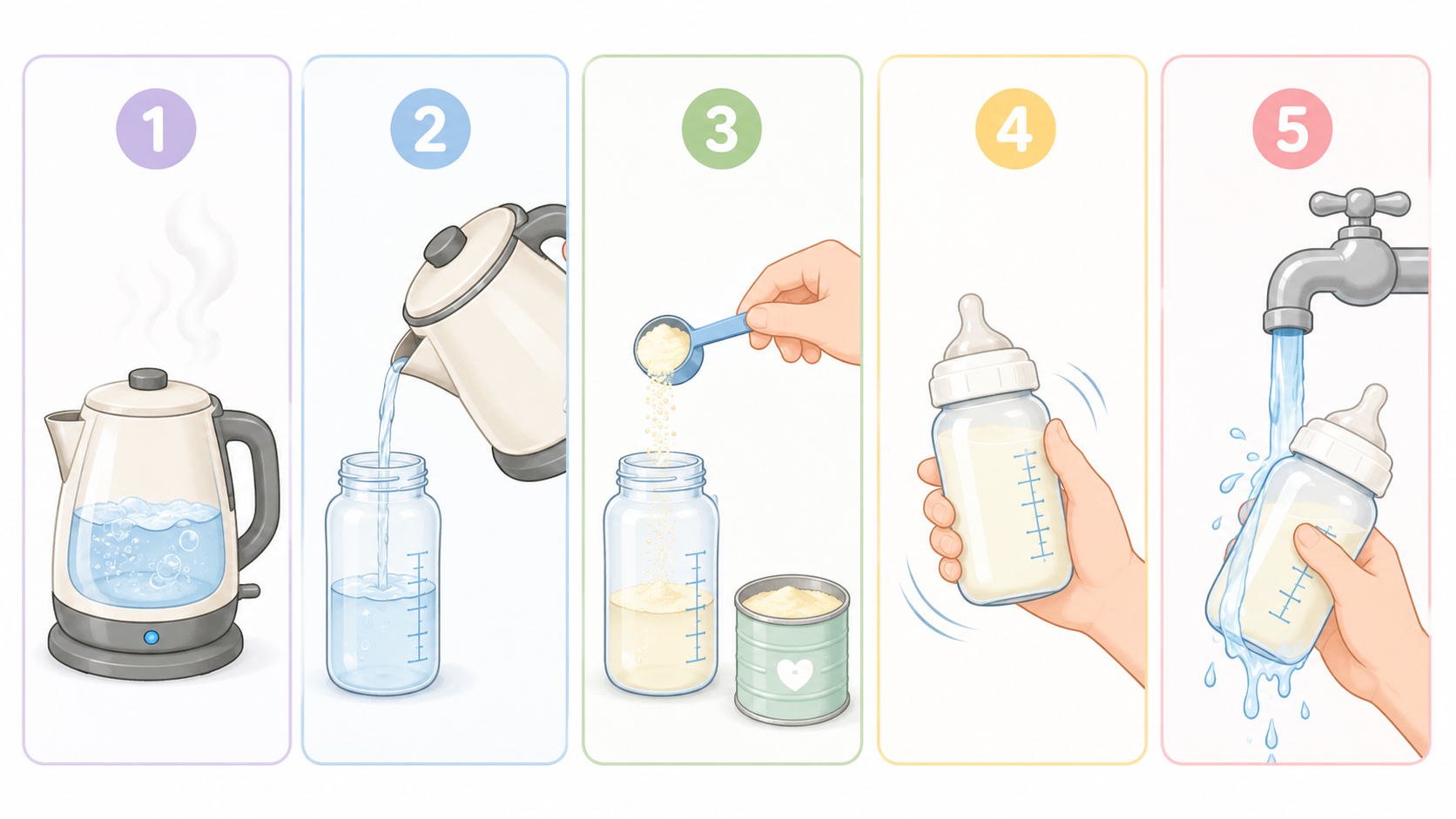
Follow these steps carefully each time. Never use cold tap water directly — hot water is needed to eliminate any bacteria that may be present in the powder.
- Boil fresh water and let it cool to around 70°C. A temperature-controlled kettle (調乳ポット) makes this easy — it keeps water at exactly 70°C and is widely available in Japan.
- Pour the correct amount of hot water into a sterilized bottle first.
- Add formula powder: Use the scoop provided and level it off with the scraper on the tin — do not pack or heap the scoop.
- Cap and swirl the bottle gently until the powder is fully dissolved. Do not shake vigorously.
- Cool to body temperature by holding the bottle under cold running water or placing it in a bowl of cold water.
- Test the temperature by dripping a few drops on the inside of your wrist. It should feel neither warm nor cool.
⚠️ Important: Discard any formula that has not been drunk within 1 hour of preparation. Never reheat leftover formula or store it in the fridge for later.
How Much Formula by Age (飲む量の目安)
| Age | Amount per feed | Feeds per day |
|---|---|---|
| 0–1 month | 60–80 ml | 7–8 times |
| 1–2 months | 80–120 ml | 6–7 times |
| 2–3 months | 120–160 ml | 6 times |
| 3–5 months | 160–200 ml | 5–6 times |
| 5+ months | 200–240 ml | 4–5 times |
Amounts are approximate guidelines. Always follow your baby's hunger cues and your doctor's advice.
Aim for roughly every 3 hours between feeds. Signs your baby is hungry include rooting, sucking their hands, and turning their head. Crying is a late hunger signal.
Sterilizing Bottles (哺乳びんの消毒)
Sterilizing bottles is standard practice in Japan for at least the first 4 months, while babies' immune systems are still developing. First wash bottles and teats thoroughly with a bottle brush and baby-safe detergent, then sterilize using one of these methods:
Electric Steam Sterilizer (電気消毒器)
The most convenient option. Bottles sterilize in around 5–10 minutes and remain sterile inside the unit until opened. Available at most baby shops and online.
Microwave Sterilizer Bag (電子レンジ消毒バッグ)
Add a small amount of water, place bottles inside, and microwave for around 3–5 minutes. Compact and inexpensive — ideal for travel or as a backup.
Boiling (煮沸消毒)
The traditional method. Submerge bottles and teats in a large pot of boiling water for 3 minutes. Glass bottles are particularly well-suited to this method.
Choosing a Bottle (哺乳びんの選び方)
Size and Material
- Plastic (プラスチック製): Lightweight and shatter-resistant. Good for outings. Scratches over time, so replace regularly.
- Glass (ガラス製): Easier to clean and inspect for residue. Stays hygienic longer. Better suited for home use.
Start with small bottles (80 ml or 160 ml) in the newborn stage. Move up to 240 ml as the amount per feed increases.
Teat Size (乳首のサイズ)
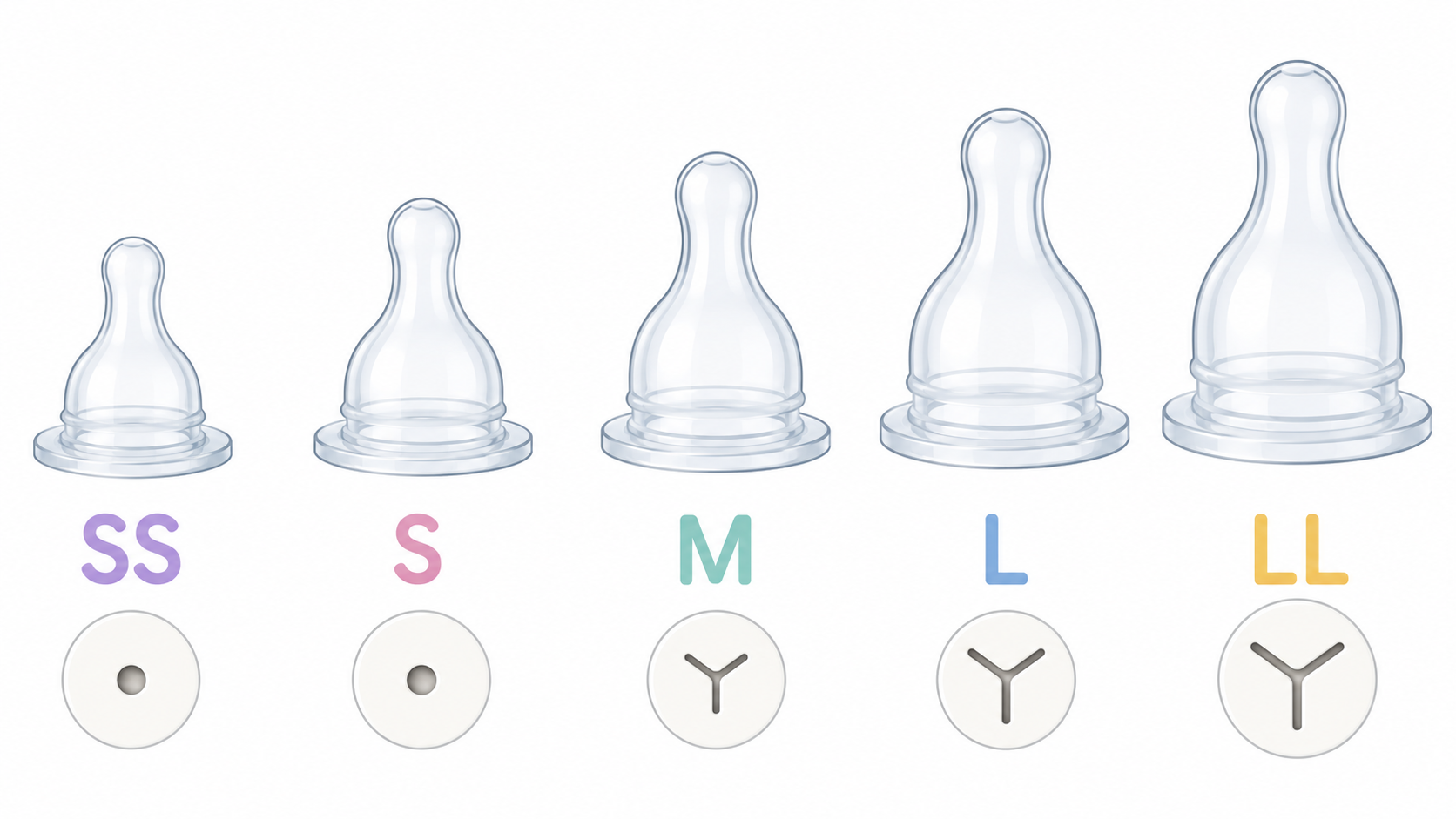
Teats come in different sizes based on the baby's age and the hole shape, which controls milk flow. Using too fast a flow too early can cause the baby to gulp and swallow excess air. A typical sizing system used by Japanese brands works as follows:
| Size | Approximate age | Hole shape |
|---|---|---|
| SS | 0 months+ | Round |
| S | 1 month+ | Round |
| M | 3 months+ | Y-shape |
| L | 6 months+ | Y-shape |
| LL | 9 months+ | Y-shape |
Time to size up when your baby takes more than 10–15 minutes to finish a feed, or seems frustrated. Size down if your baby is gulping, spluttering, or seems to be getting too much milk too quickly. Replace teats every 2 months.
Useful Tips
- Keep a thermos of 70°C water by the bed at night so nighttime feeds are quicker.
- A formula dispenser (ミルクストッカー) lets you pre-measure portions — useful when out.
- Keep a few extra sterilized bottles ready so you are never caught short.
- Keep a pack of liquid formula sachets at home for emergencies when preparation is not possible.