
Written and reviewed by Susumu
Born and raised in Japan · Checked against Japanese law and ministry guidance
Wondering what your child's day at hoikuen actually looks like? From morning drop-off and outdoor play to lunch, nap time, and pick-up — here is a complete guide to the daily routine at a Japanese licensed daycare.
Affiliate Disclosure: This article contains affiliate links. If you click a link and make a purchase, we may earn a small commission at no extra cost to you. We only recommend products we genuinely believe are helpful. See our Terms of Use for full details.
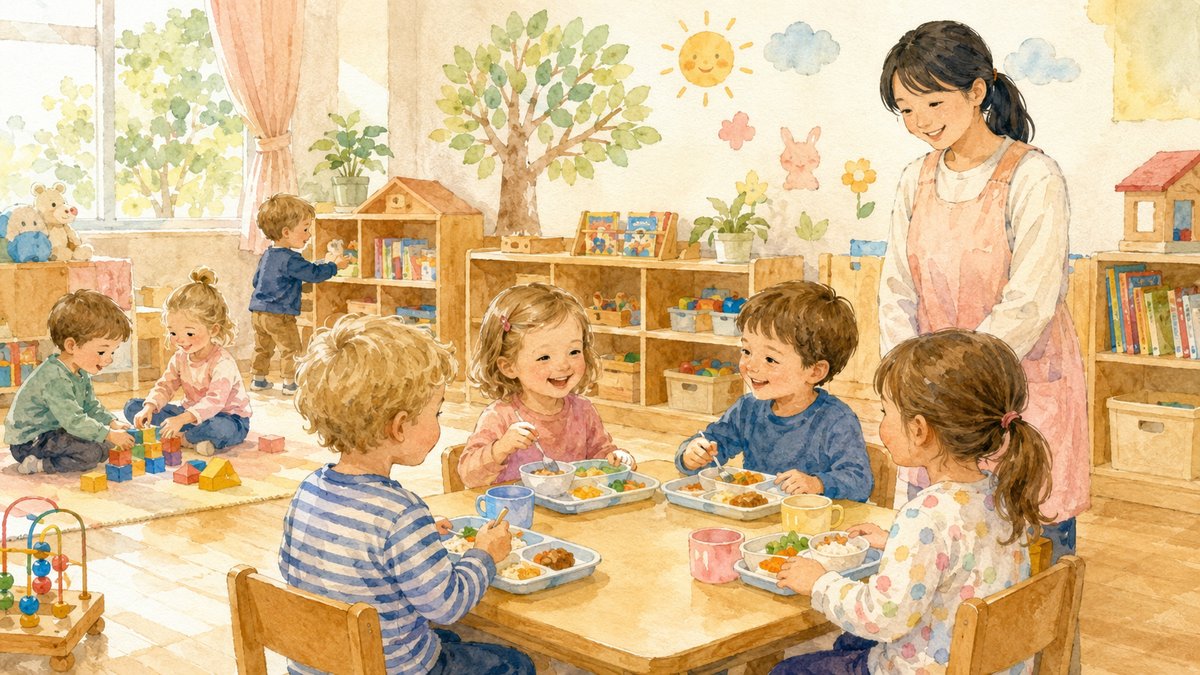
If your child is starting hoikuen in Japan, you may be wondering what actually happens during the day. The routine is structured, warm, and quite different from childcare settings in many other countries — and knowing what to expect makes the whole experience much easier for both of you.
A Typical Day at a Glance
The daily routine varies between facilities, but most licensed hoikuen (認可保育園) follow a similar structure. Times below are approximate — your facility will give you their specific schedule.
| 7:00 – 9:00 | Drop-off (登園) — staggered arrival, morning health check |
| 9:00 – 11:30 | Morning activities — free play, outdoor play, group activities |
| 11:30 – 12:30 | Lunch (給食) — hot meal provided by the facility |
| 12:30 – 15:00 | Nap time (午睡) — for younger children; older children may rest or do quiet activities |
| 15:00 – 15:30 | Snack (おやつ) |
| 15:30 – 17:00 | Afternoon free play — indoor or outdoor |
| 16:00 – 18:00 | Pick-up (お迎え) — staggered departure |
| 18:00 – | Extended daycare (延長保育) — closing time varies by facility |
Drop-off (登園)
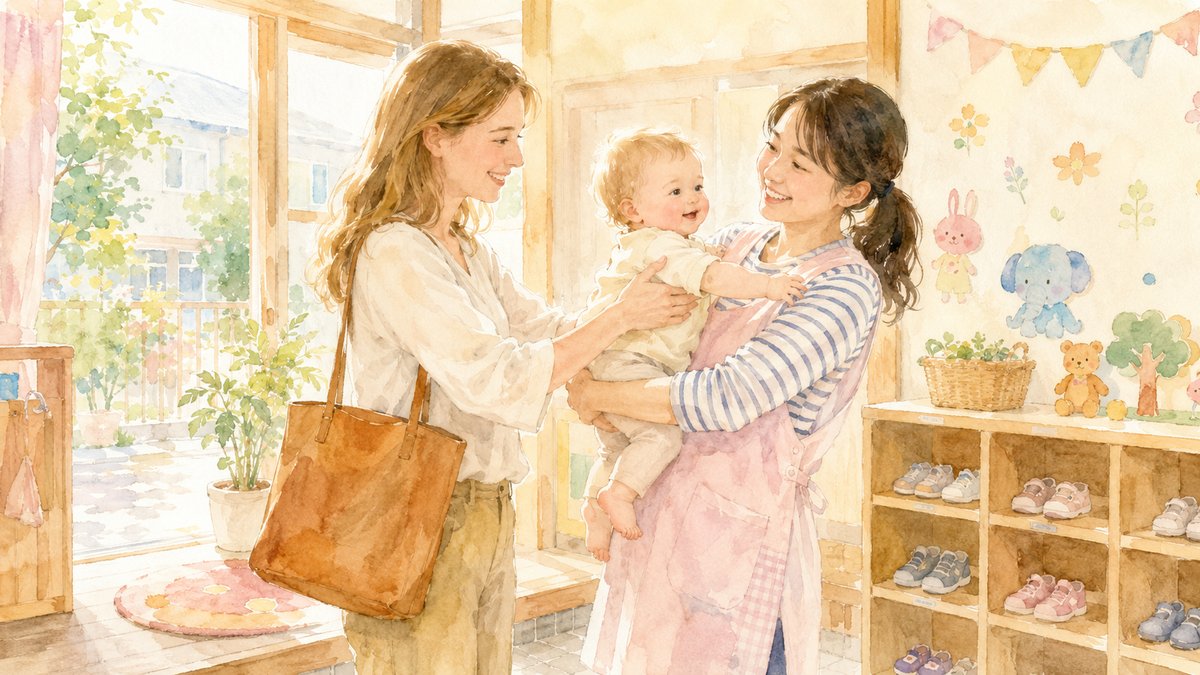
Drop-off happens over a window of one to two hours in the morning, so parents arrive at different times rather than all at once. When you arrive, the teacher will do a quick health check — looking at your child's color, eyes, and general mood — before taking over for the day.
What happens at drop-off
- Hand your child and their bag to the teacher
- Submit the 連絡帳 (renrakucho) — the daily communication notebook
- Teacher does a brief health check (顔色、目、機嫌など)
- Hand over any medicine if your child needs it during the day
- Let the teacher know about anything unusual — a poor night's sleep, a rash, an early pick-up
Temperature must be taken before you leave home
Most hoikuen require you to record your child's temperature in the renrakucho before drop-off. If your child has a fever, you will generally be asked to keep them home — the exact threshold varies by facility, but 37.5°C is commonly used as a guideline. Check your facility's own policy when you enroll. Keep a thermometer near the front door so it becomes part of your morning routine.
Morning Activities
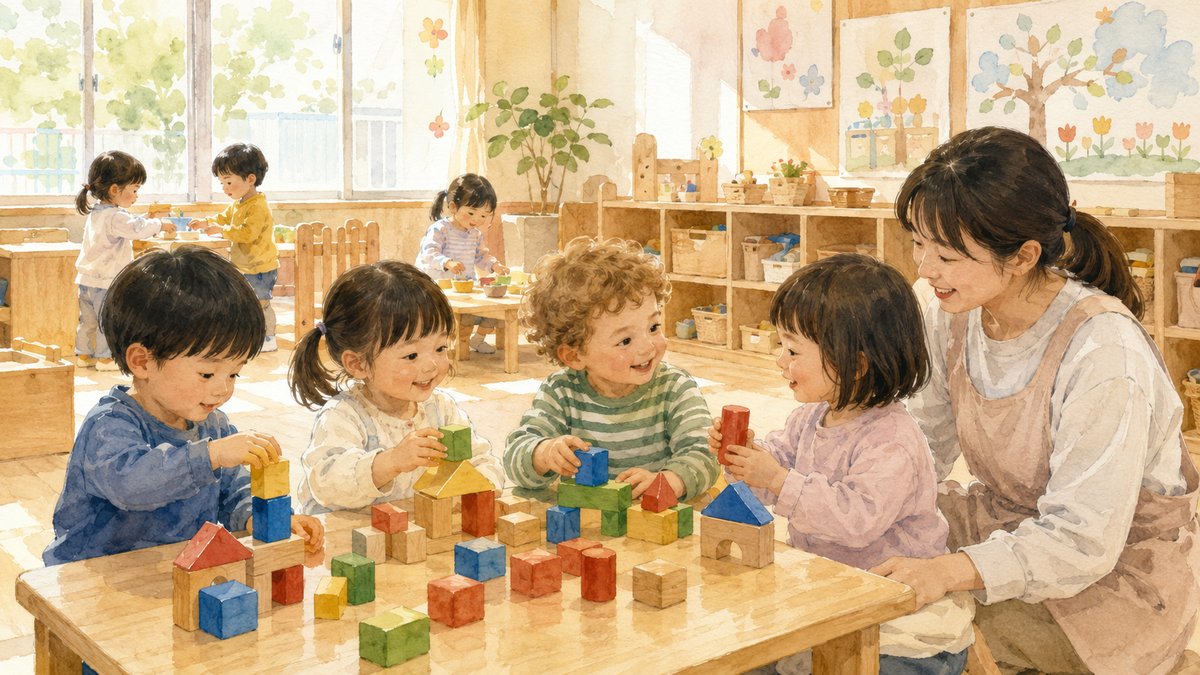
The morning is the most active part of the day. Children move between free play and structured group time, with outdoor play usually included if the weather allows.
Typical morning activities
- 自由遊び (jiyū asobi) — Free play: blocks, drawing, toys, imaginative play
- 外遊び (soto asobi) — Outdoor play in the garden or park nearby
- 製作・工作 (seisaku / kōsaku) — Arts and crafts, seasonal activities
- 体操 (taisō) — Simple exercises or movement games
- 絵本の読み聞かせ (ehon no yomikikase) — Story time with picture books
- 歌 (uta) — Songs together as a group
Japan's national childcare guidelines (保育所保育指針) emphasize supporting children's own initiative rather than directing them. In practice, this means teachers observe and gently encourage, rather than insisting every child joins every activity. That said, approaches vary between facilities and individual teachers.
Lunch (給食)
Lunch at hoikuen is called 給食 (kyūshoku) — a hot, freshly prepared meal served at the facility. In most licensed hoikuen, meals are cooked on-site or delivered from a central kitchen and are nutritionally balanced according to national guidelines.
What to know about hoikuen lunch
- A typical meal includes rice or bread, soup, a main dish, and a side dish
- Menus are planned by a 栄養士 (nutritionist) and rotated monthly
- Allergy information is collected when your child enrolls — let staff know about any dietary restrictions
- How much your child ate is recorded in the renrakucho each day
- Some facilities have occasional お弁当 (obento) days — you will be notified in advance
Food allergies
If your child has a food allergy, discuss this thoroughly with the facility before they start. Most hoikuen require a completed allergy management form (生活管理指導表) filled out by your child's doctor. The facility will provide the form. Arrangements vary, so ask specifically what their process is when you enroll.
Nap Time (午睡)
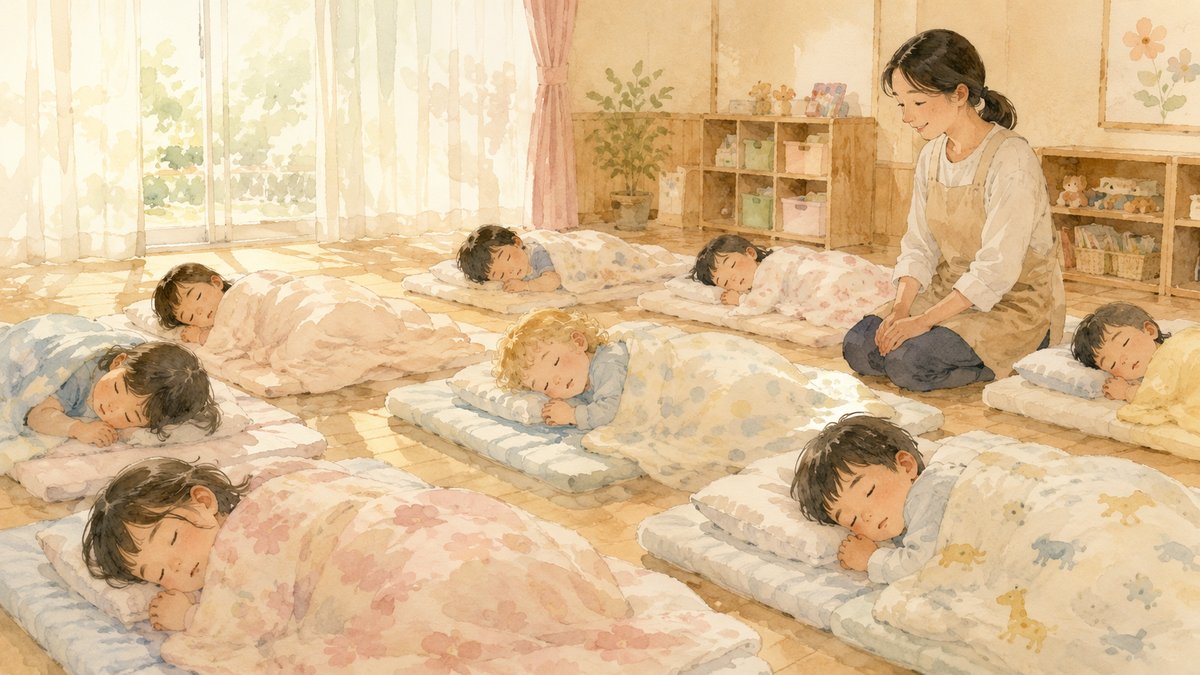
After lunch, younger children sleep for one to two hours. This midday rest is called 午睡 (gosui) and is a standard part of the hoikuen day for infants and toddlers.
How nap time works
- Children sleep on 布団 (futon) laid out on the classroom floor
- Teachers monitor children throughout and check breathing regularly
- The room is darkened and quiet music may be played
- How long your child slept is recorded in the renrakucho
Nap time by age
- 0–2 years — Nap time is standard and important for development
- 3–4 years — Most facilities still include a nap, though the length may shorten
- 5–6 years (年長) — Many facilities reduce or phase out nap time to prepare children for elementary school
Afternoon Activities & Snack
After nap time, children have a snack (おやつ, oyatsu) — typically something simple such as a piece of fruit, a small rice cracker, or bread. This is followed by free play until pick-up begins.
Afternoon at a glance
- おやつ (oyatsu) — afternoon snack, usually around 15:00
- Free play indoors or outdoors
- Tidying up and getting ready for pick-up
- Some facilities hold a short group time before the day ends
Pick-up (お迎え)
Pick-up is as relaxed and staggered as drop-off. Parents and carers arrive at different times between mid-afternoon and early evening, depending on their work schedules.
What to expect at pick-up
- The teacher will hand back the renrakucho with their notes from the day
- A brief verbal update — how your child ate, how they seemed, anything to know
- Return of any soiled or changed clothing in a bag
- Reminders about upcoming events or things to bring
Who can pick up your child
Most hoikuen maintain a list of authorized pick-up people. If someone other than the usual parent will collect your child — a grandparent, a partner, a friend — let the facility know in advance, either in the renrakucho or by phone. Facilities will not release children to unregistered individuals.
Extended Daycare (延長保育)
Most licensed hoikuen offer 延長保育 (enchō hoiku) — extended care beyond standard hours. The closing time varies by facility, but many are open until the early evening. This service is available for parents who need to work late and is usually charged as an additional fee on top of the regular monthly rate.
What to know about 延長保育
- Registration is usually required in advance — ask about the process when you enroll
- A small additional snack (補食, hoshoku) may be provided in the early evening
- The group becomes smaller as children are collected throughout the evening
- Some facilities charge per-use; others offer a monthly flat rate
How the Day Differs by Age
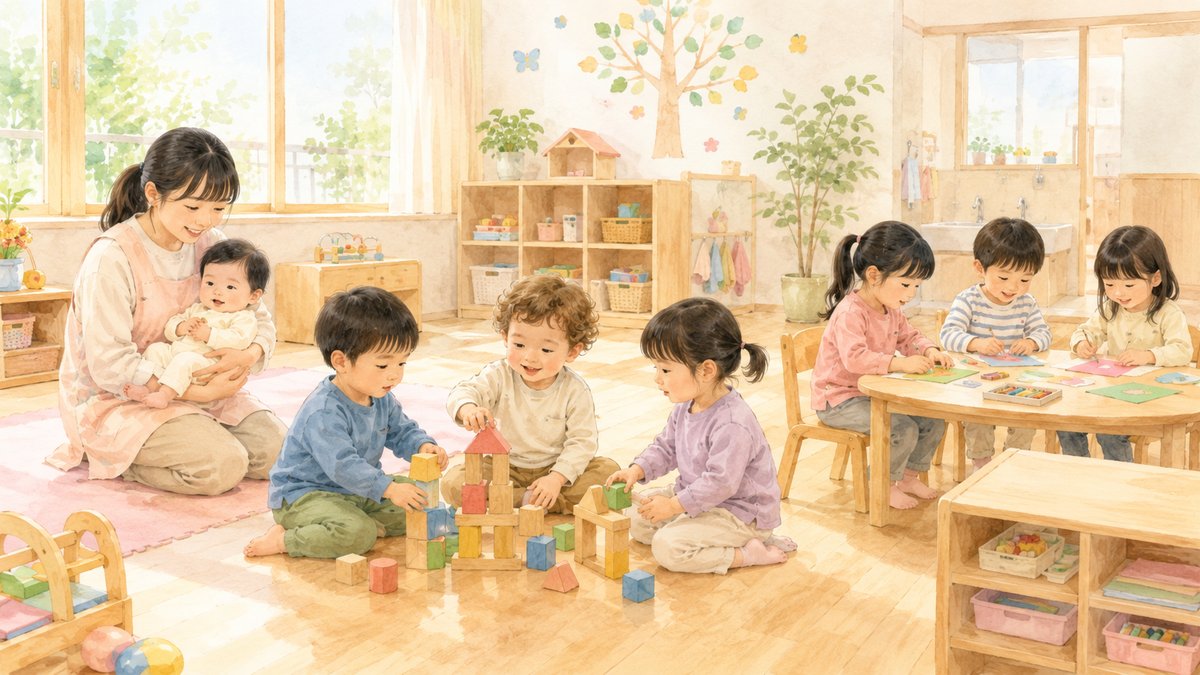
The structure above applies broadly, but the experience varies considerably depending on your child's age group.
0–1 years (乳児クラス)
The day is built around each baby's individual rhythm — feeding, sleeping, and waking at their own pace rather than following a group schedule. Diaper changes and temperature checks happen throughout the day, and teachers record everything in the renrakucho in detail.
1–3 years (1歳・2歳クラス)
Children begin to follow a shared daily rhythm. Toilet training (トイレトレーニング) typically starts around this age, and the hoikuen will support this alongside what you are doing at home. Group activities become part of the routine.
3–6 years (幼児クラス)
The day becomes more structured and social. Activities include crafts, outdoor play, music, and simple group learning. Children are more independent at mealtimes and dressing. Nap time may be reduced or replaced with quiet rest for the oldest group.