

Written and reviewed by Susumu
Born and raised in Japan · Checked against Japanese law and ministry guidance
Everything you need to pack for giving birth in Japan — the 3-bag system, Japan-specific items like postpartum underwear and donut cushion, documents checklist, and what not to bring.
Affiliate Disclosure: This article contains affiliate links. If you click a link and make a purchase, we may earn a small commission at no extra cost to you. We only recommend products we genuinely believe are helpful. See our Terms of Use for full details.
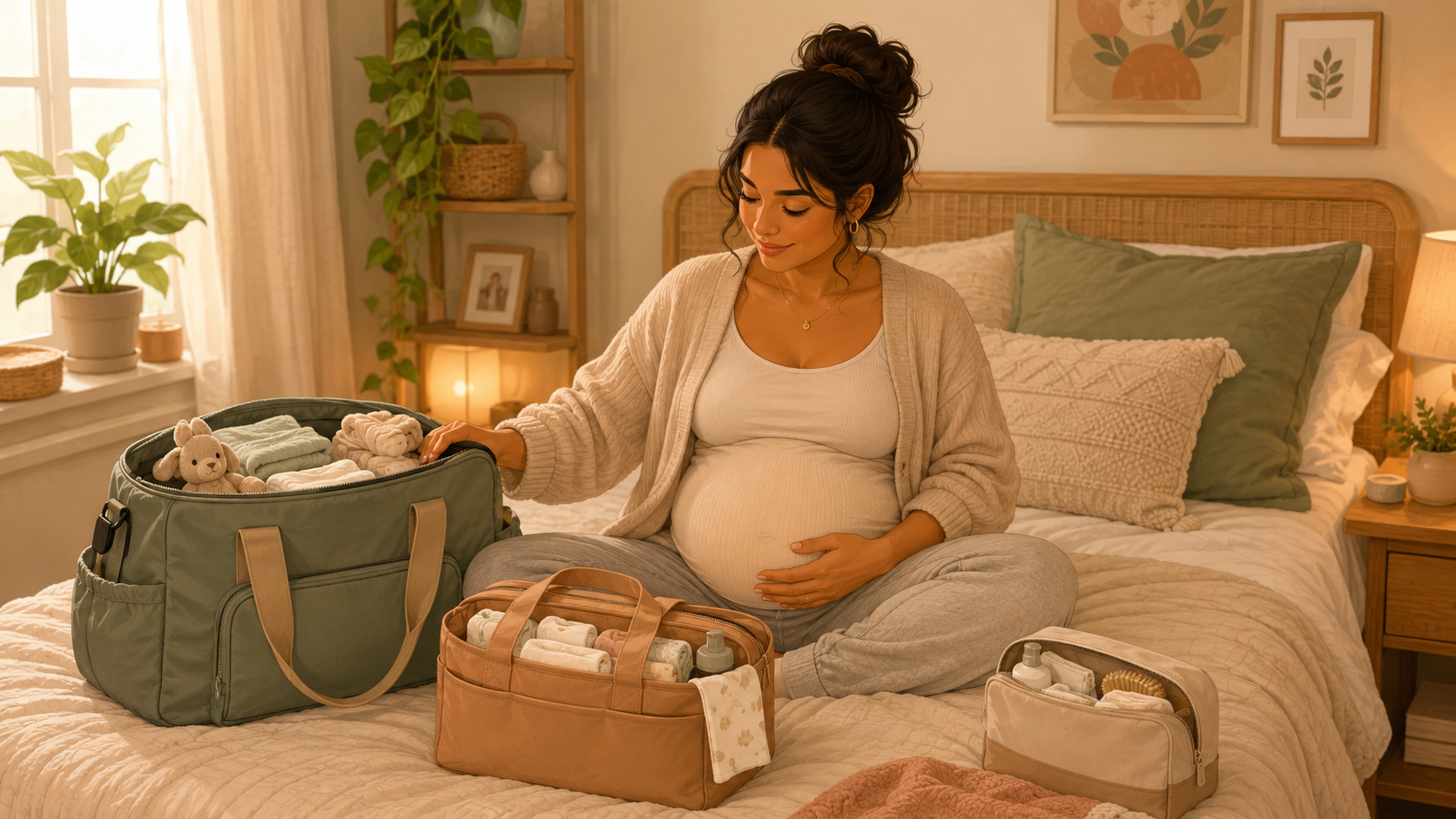
📌 Note: Every hospital in Japan is different. Always check with your hospital or midwife for their specific packing list — this guide covers the essentials that apply to most births in Japan.
When to Start Packing
In Japan, the average hospital stay after a vaginal birth is 5–7 days. For a cesarean section, it is typically 7–10 days. This is noticeably longer than in many Western countries, and it means you will need more than a single overnight bag.
Most midwives and hospitals recommend having your bags ready by week 32 of pregnancy. Labor can start unexpectedly, and you will not want to be scrambling at the last minute — or leaving it to an exhausted partner.
Tip: Your hospital will usually give you a packing list at one of your prenatal checkups. Use that as your base and supplement it with the items in this guide.
The 3-Bag System
One thing that surprises many international parents in Japan is the concept of packing three separate bags rather than one large suitcase. This approach has become the standard advice shared among mothers in Japan, and it makes a lot of practical sense.
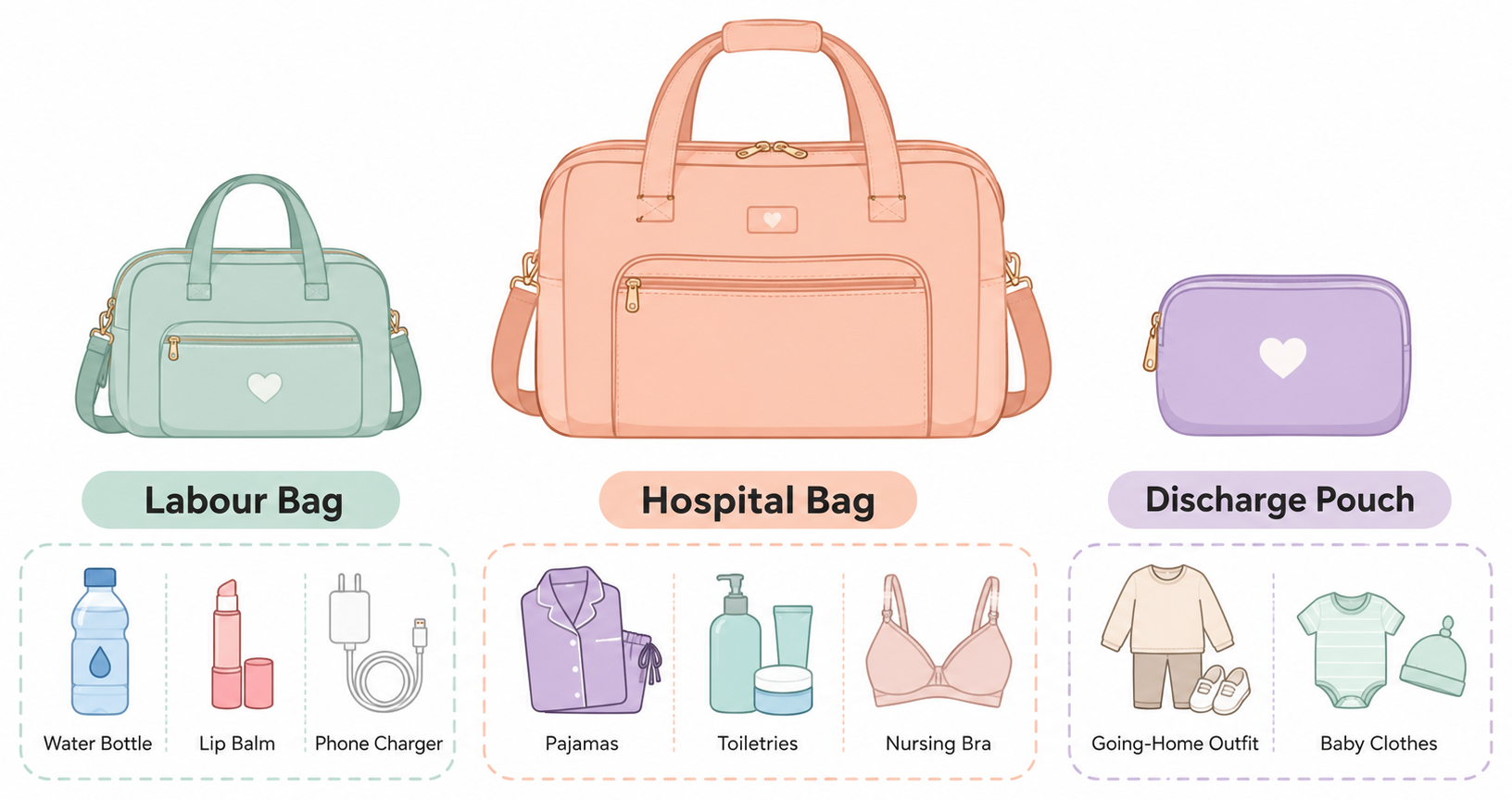
| Bag | What it's for | Size |
|---|---|---|
| 🟢 Labor Bag (陣痛バッグ) |
Items you need immediately when labor begins — easy to grab and go | Small tote or shoulder bag |
| 🟠 Hospital Bag (入院バッグ) |
Everything for your stay — clothes, toiletries, recovery items | Large bag or small suitcase |
| 🟣 Discharge Pouch (退院ポーチ) |
Your going-home outfit and baby's first outfit — kept separate so it's easy to find | Small pouch or tote |
Labor Bag (陣痛バッグ)
This is the bag you take with you the moment contractions start. Keep it small, light, and easy to carry. You will not be searching through a large suitcase in the middle of a contraction.
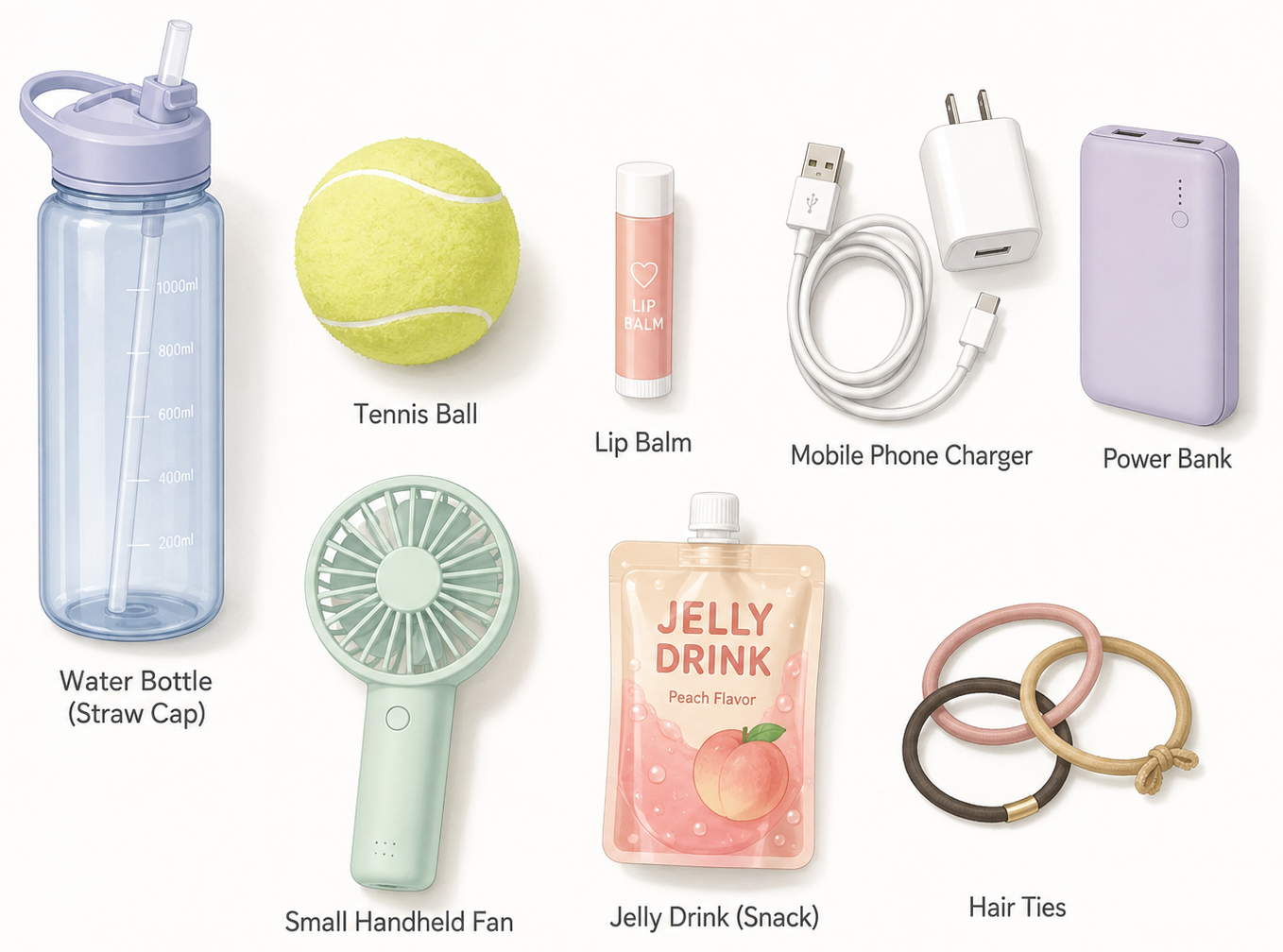
- Water bottle with a straw cap (ストローつきキャップ) — You cannot sit upright to drink during labor. A straw attachment for your bottle is essential. This is one of the most praised items by mothers in Japan.
- Tennis ball (テニスボール) — Midwives in Japan often use a tennis ball to apply firm pressure to the lower back during contractions. Bring one yourself to give your partner something to do.
- Lip balm — Hospital air conditioning dries your lips quickly. You will thank yourself for packing this.
- Phone charger and power bank — Labor can last many hours. Keep both fully charged.
- Small handheld fan — Useful during active labor to stay cool and focused.
- Jelly drink or light snack — Hospitals may not allow solid food during labor. A jelly-style pouch drink is easy to consume and provides energy.
- Hair ties — Simple but essential. Keep your hair out of your face.
- Documents — Mother and Child Health Handbook, My Number Card (マイナ保険証), and hospital registration card (see Documents section below).
Hospital Bag (入院バッグ)
This is your main bag for the hospital stay. Your partner can bring this to the room after you have been admitted. Since Japanese hospital stays are longer than in many other countries, pack generously.
Clothing
- Front-opening pajamas (前開きのパジャマ) — 2–3 sets. Front-opening tops are essential for breastfeeding and for the skin-to-skin contact encouraged in Japanese hospitals. Button-down or zip-front styles are ideal.
- Nursing bra (授乳用ブラジャー) — 3 pairs. A soft, wire-free bra that opens easily for nursing.
- Postpartum underwear (産褥ショーツ) — 3 pairs. See the Japan-Specific Items section below for why these are different from regular underwear.
- Compression socks (着圧ソックス) — Help prevent blood clots, especially after a cesarean.
- Light cardigan or robe — Hospital rooms can be cold, and you will be walking the corridors during recovery.
- Slippers (スリッパ) — Indoor shoes are required in Japanese hospitals. Bring a pair that is easy to slip on and off.
Recovery items
- Postpartum pads (産褥パッド) — 1–2 packs. Heavier than regular sanitary pads, designed for postpartum bleeding.
- Donut cushion (円座クッション) — A ring-shaped foam cushion for sitting without pressure on the perineum after birth. See the Japan-Specific Items section for more detail.
- Pelvic belt (骨盤ベルト) — Worn around the hips after birth to support the pelvis as it returns to its pre-pregnancy position.
- Nursing pads (母乳パッド) — For when your milk comes in. Disposable pads prevent leaks.
Toiletries and personal care
- Shampoo, conditioner, body wash
- Face wash and skincare (hospital air conditioning is dry)
- Toothbrush and toothpaste
- Wet wipes and body wipes — useful on days you cannot shower
- Box of tissues
- Chopsticks or spoon, cup — hospitals may not always provide cutlery
- Writing tools and small notebook
Entertainment and comfort
- Earphones — for watching videos during night feeds without disturbing others
- Tablet or phone stand — for hands-free video calls and entertainment while nursing
- Books or magazines
- Small aromatherapy item — a roll-on or a few drops of essential oil on a tissue can be calming (avoid sprays in shared rooms)
Discharge Pouch (退院ポーチ)
Keep this small pouch separate from your main bag so you can find everything easily on discharge day without unpacking everything.
- Your going-home outfit — Loose-fitting, comfortable clothes. Your belly will still be noticeably large after birth — the uterus takes several weeks to contract. Maternity wear is ideal, or a loose dress or oversized top works well.
- Baby's going-home outfit — Something warm and appropriate for the season. Include a hat.
- Baby's outerwear or blanket — For the journey home.
- Camera or phone, fully charged — For discharge photos.
Baby Items
Japanese hospitals usually provide most of what the baby needs during your stay — diapers, formula, and basic clothing. Check with your hospital in advance, but in general you will need very little for the baby while you are admitted.
- Baby clothing (肌着・ウェア) — 1–2 outfits. Hospitals often provide these but you may want your own.
- Diapers (紙おむつ) — 3–5. Again, usually provided, but worth having a small supply.
- Baby wipes (おしりふき) — 1 pack.
- Gauze squares (ガーゼ) — 2–3. Used for wiping the baby's mouth and face after feeds.
- Swaddle blanket (おくるみ) — 1. For the journey home.
- Baby moisturiser (ベビー用保湿剤) — Japanese hospitals often recommend applying moisturiser to newborn skin from day one.
Japan-Specific Items Explained
If you grew up outside Japan, some items on your hospital's packing list may be unfamiliar. Here is what they are and why they matter.
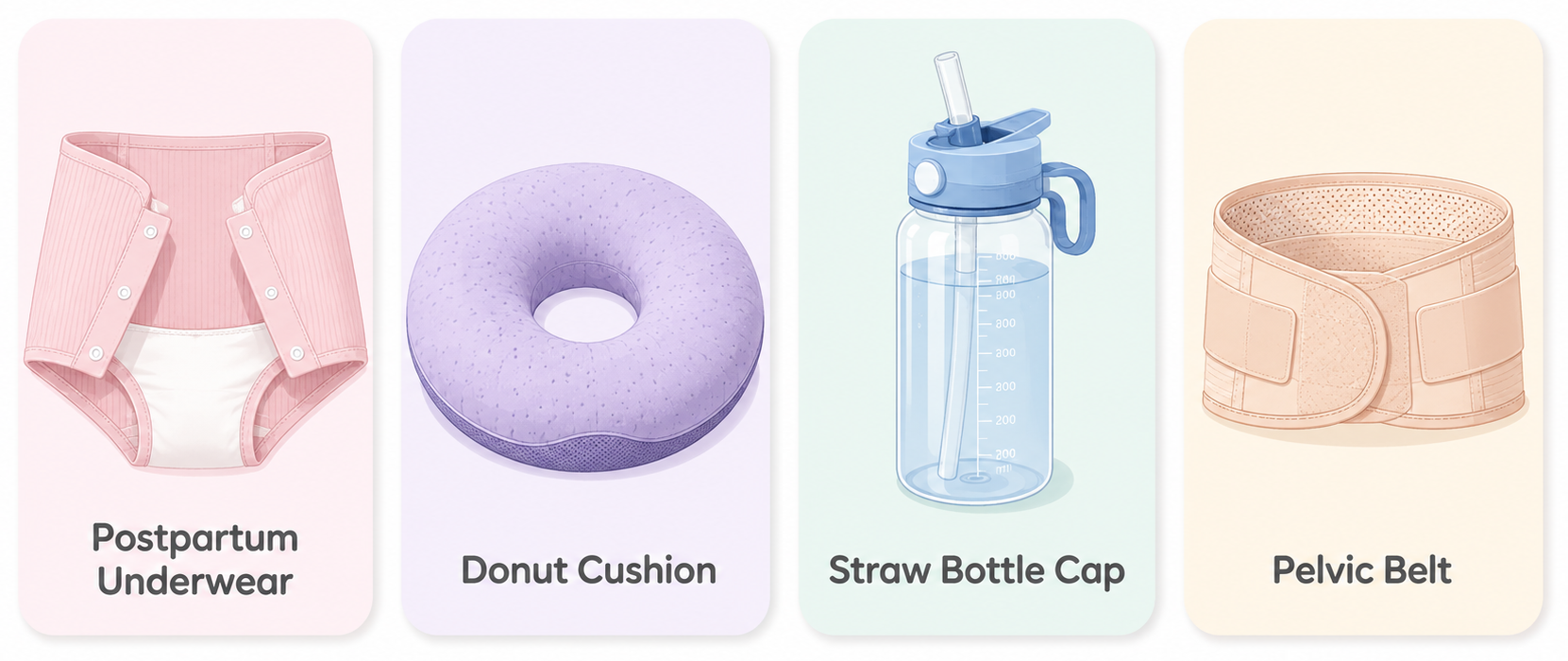
産褥ショーツ — Postpartum underwear
These are not regular underwear. They have snap-open or velcro panels on the sides and front, allowing midwives to perform postpartum checks and change pads without you having to remove the underwear. They look unusual but are extremely practical in the days after birth when movement is uncomfortable. Bring at least 3 pairs.
円座クッション — Donut cushion
A ring-shaped foam cushion with a hole in the center, similar in shape to a life ring. After a vaginal birth, sitting puts direct pressure on the perineum, which may be bruised or sutured. The donut cushion allows you to sit upright without that pressure. You will use it constantly during your stay — for meals, nursing, and any time you need to sit. Many mothers continue using it for several weeks after returning home.
ストローつきキャップ — Straw bottle cap
A cap that replaces the standard lid of a plastic bottle, with a built-in straw. During active labor, you are often lying on your side or cannot sit upright. A straw cap means you can drink without lifting the bottle. Midwives in Japan almost universally recommend this — and mothers who forget it tend to regret it.
骨盤ベルト — Pelvic belt
A wide, firm support belt worn around the hips after birth. During pregnancy, the hormone relaxin loosens the pelvic joints to prepare for delivery. After birth, the pelvis needs support as it returns to its pre-pregnancy position. The pelvic belt provides this. Japanese midwives typically show you how to put it on correctly before discharge.
Four Things Worth Ordering Before You Go
Four items from the lists above are worth ordering rather than hunting for. What each one is for is explained where it appears; here is which one to buy.
The links below are Amazon affiliate links. If you buy after clicking one, we earn a small commission at no extra cost to you. These were chosen from what Japanese families actually buy — review counts and monthly sales — not from what pays.
Straw cap — Skater long straw for 500ml bottles

Fits a standard 500ml bottle and long enough to drink from flat on your side. Skater’s is the version families keep buying — over a thousand a month.
View the Skater straw cap on Amazon.co.jp →Postpartum pads — Moony, M size, 10 per pack

Moony is a mainstream Japanese brand sold in every drugstore here. This is the M size, for the days after the first, and it is cheap enough to pack two.
View the Moony pads on Amazon.co.jp →Donut cushion — high-resilience ring cushion

High-resilience foam, so it does not flatten under you within a week. More reviews than any other donut cushion sold in Japan by a wide margin, and nothing to get wrong on sizing.
View the donut cushion on Amazon.co.jp →The hospital bag itself — comfox 30L, carries as a backpack

Thirty liters, converts to a backpack, and has a large waterproof pocket — useful when half of what comes home is damp. Carrying it as a backpack matters if the person bringing it is also carrying a car seat.
View the comfox bag on Amazon.co.jp →Not on this list: anything you wear. Postpartum underwear, nursing bras and pelvic belts are all sized for Japanese bodies — the largest pelvic belt from the leading brand stops at a 110cm hip. Buy those in person where you can check the measurement in centimeters, or bring them from home.
Documents Checklist
Do not forget these — some cannot be replaced quickly, and you will need them for admission paperwork.
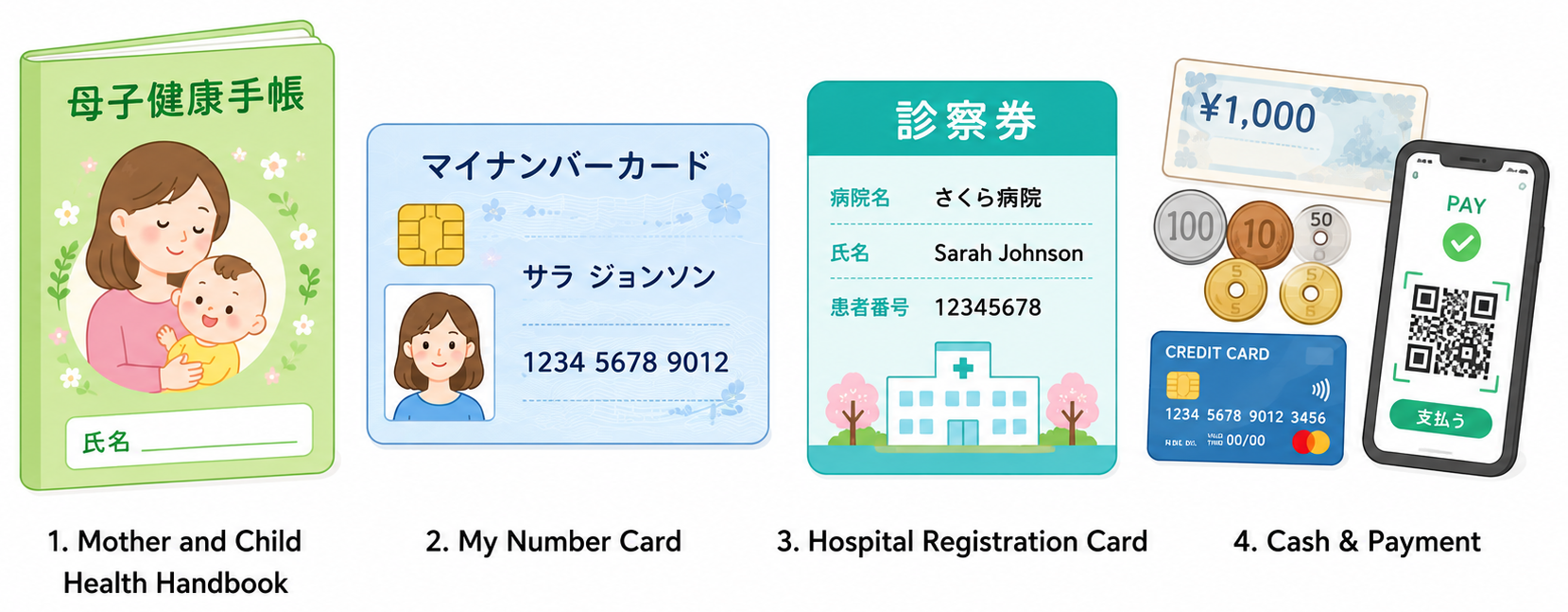
| Document | Why you need it |
|---|---|
| 母子健康手帳 Boshi Techou |
Your Mother and Child Health Handbook. The birth is recorded here, and the midwife will add the baby's details after delivery. Do not leave home without it. |
| マイナ保険証 Maina Hoken-sho |
Your My Number Card linked to health insurance. As of December 2024, the old health insurance card (健康保険証) is no longer accepted. If you haven't linked your card yet, bring your 資格確認書 (Certificate of Qualification) instead. |
| 診察券 Shinsakuken |
Your hospital registration card for the hospital where you are delivering. |
| 現金・支払い方法 Payment |
Many hospitals now accept credit cards and smartphone payments (such as PayPay). Check with your hospital in advance. Bring a small amount of cash for vending machines and taxis — but avoid large sums, as some hospitals advise against it for security reasons. |
Signing paperwork: You will be asked to sign consent forms during admission. Most hospitals in Japan accept a signature — just follow the instructions given by the staff at the time.
What NOT to Bring
Japanese maternity wards are shared spaces. Other mothers are recovering, and newborns are extremely sensitive to their environment. Please be considerate.
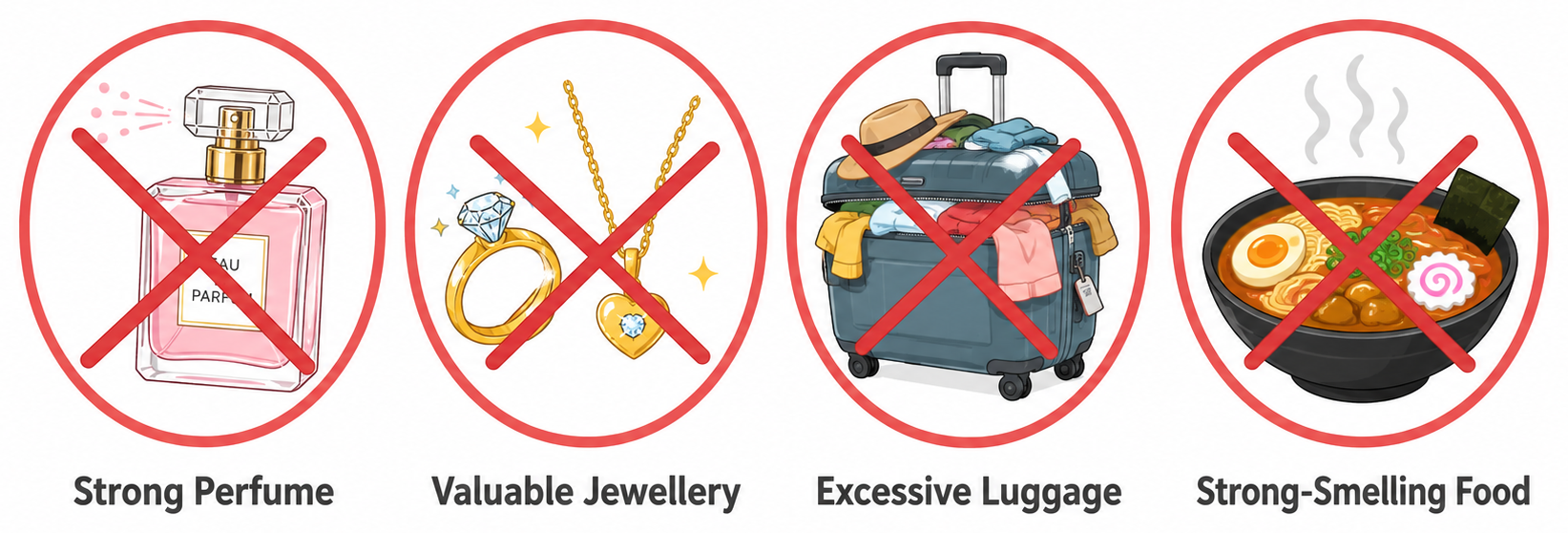
- Strong perfume or heavily scented products — Newborns are sensitive to strong scents, and other mothers may feel nauseous. Keep all products fragrance-free or lightly scented.
- Valuable jewelry — Rings, necklaces, and watches are not allowed in the delivery room. Leave them at home to avoid losing them.
- Strong-smelling food — Japanese hospitals have strict rules about outside food, and strong smells in shared rooms are inconsiderate to recovering neighbors.
- Excessive luggage — Hospital rooms have limited storage. A large suitcase that barely fits through the door will cause you and the staff unnecessary stress. Keep it manageable.
Pro Tips
These are the items that mothers in Japan say they were glad they packed — things that don't appear on the official hospital list but make a real difference.
Insider recommendations from experienced mothers in Japan:
- 🪝 S-hooks (S字フック) — Hang your small bags and pouches on the bed frame. Hospital beds have rails perfect for this. It keeps everything within reach without cluttering the bedside table.
- 💰 Plenty of 100-yen coins — Vending machines are your lifeline during a long hospital stay, especially at night.
- 🧴 Body wipes (体ふきシート) — On days when showering is not possible — particularly the first day after a cesarean — body wipes let you feel clean and refreshed.
- 🍱 Furikake or light seasoning — Hospital meals are healthy but can feel bland if you are not used to Japanese food. A small packet of furikake (rice seasoning) can help.
- 📱 Phone stand or holder — Hands-free video calls with family overseas, watching shows during night feeds, following nursing tutorials — a phone stand is more useful than you expect.
- 🤲 Magic reach tool (マジックハンド) — Particularly for mothers recovering from a C-section, bending down to pick things up is painful. A long-handled grabber solves this.
📋 Always follow your hospital's instructions: This guide covers items that are useful at most Japanese hospitals, but every hospital has its own packing list. Your hospital will usually provide one at a prenatal checkup — use that as your primary reference and supplement it with the items here.
📖 Japanese Vocabulary
Useful words for communicating with midwives and hospital staff.
| 日本語 | ひらがな | English |
|---|---|---|
| 陣痛バッグ | じんつうばっぐ | Labor bag |
| 入院バッグ | にゅういんばっぐ | Hospital bag |
| 退院ポーチ | たいいんぽーち | Discharge pouch |
| 産褥ショーツ | さんじょくしょーつ | Postpartum underwear |
| 産褥パッド | さんじょくぱっど | Postpartum pads |
| 円座クッション | えんざくっしょん | Donut cushion |
| 骨盤ベルト | こつばんべると | Pelvic belt |
| 授乳用ブラジャー | じゅにゅうようぶらじゃー | Nursing bra |
| 母乳パッド | ぼにゅうぱっど | Nursing pads |
| 前開きのパジャマ | まえあきのぱじゃま | Front-opening pajamas |
| 退院 | たいいん | Hospital discharge |
| 助産師 | じょさんし | Midwife |