
Written and reviewed by Susumu
Born and raised in Japan · Checked against Japanese law and ministry guidance
Japan has a bento culture that runs deeper than most outsiders expect. キャラ弁 — character bento — sits at the heart of it: a lunchbox shaped into animals or anime characters, made for a field trip, a sports day, or a birthday. Understanding when it appears, and why some schools have banned it, tells you something important about childhood in Japan.
Affiliate Disclosure: This article contains affiliate links. If you click a link and make a purchase, we may earn a small commission at no extra cost to you. We only recommend products we genuinely believe are helpful. See our Terms of Use for full details.
Japan's school calendar has a rhythm that parents new to the country quickly learn: the 遠足 notice slipped into the monthly schedule, the 運動会 preparations that take over the school grounds for weeks, the occasional お弁当の日 marked in the newsletter. On these days, some parents open their kitchens before dawn to make something that goes well beyond lunch — and that something is キャラ弁.
What Is キャラ弁 (Kyaraben)?
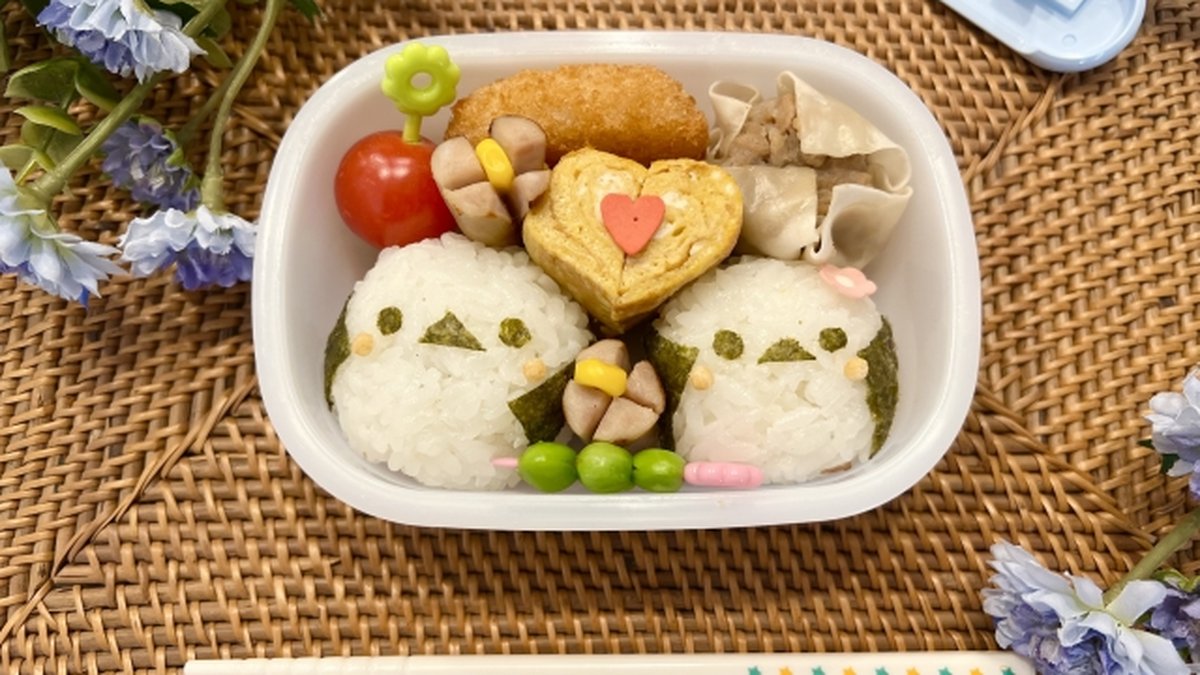
キャラ弁 is a contraction of kyarakutā bento (キャラクター弁当) — a packed lunch in which food is shaped or arranged to resemble a character, animal, or recognizable face. The designs range from a simple smiley face — cut from nori (the thin, roasted seaweed sheets used in Japanese cooking) and pressed onto a rice ball — to elaborate recreations of anime characters assembled piece by piece before breakfast. What counts as キャラ弁 is broad: any bento where the food itself has been turned into something character-like qualifies.
Common キャラ弁 designs
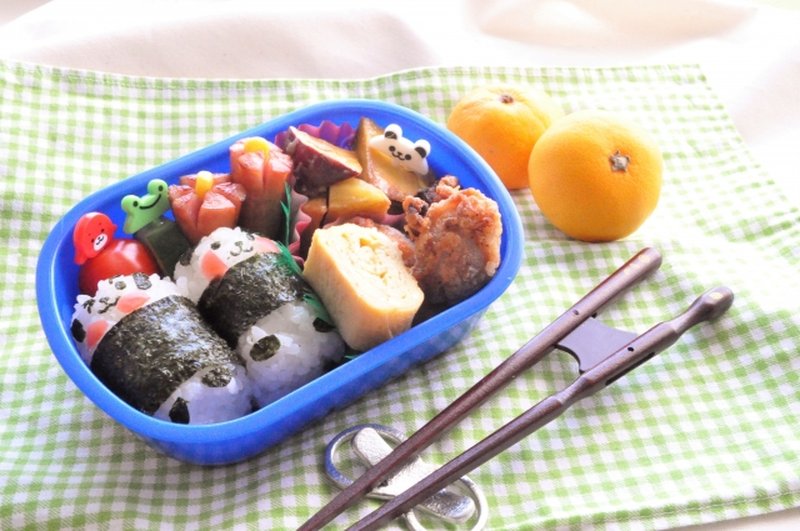
- Animals — pandas, chicks, rabbits, and bears; the rounded shapes work well in rice and are forgiving for beginners
- Simple faces — tiny eyes and a smile cut from nori and placed on an onigiri; achievable in a few minutes, still unmistakably キャラ弁
- Food characters — たこさんウインナー (octopus sausage), flower-shaped carrots, bunny-cut apple slices
- Anime and pop culture — Pokémon, Sanrio characters, and whatever a child is currently obsessed with; more time-consuming, but widely attempted
- Seasonal themes — sakura in spring, Halloween in autumn, Christmas figures in December
Two related terms you will see: デコ弁 (dekōben) is a broader category for any decorated bento, of which キャラ弁 is the most character-focused subset. 愛妻弁当 (aisai bentō) — literally "loving wife bento" — refers to a handmade lunch prepared for a husband, applying the same culture of care to adult life.
When Do Families Make キャラ弁?
For most families, キャラ弁 is reserved for occasions that feel worth the effort. Japan's school calendar provides several of these each year.
遠足 (ensoku) — School Excursions
Field trips are the occasion most strongly associated with キャラ弁. Children travel to a park, zoo, aquarium, or mountain and eat outdoors with classmates — and opening a lunchbox in that setting makes its contents part of the memory. Most schools hold a spring excursion in May and an autumn one in October or November; yochien often add a graduation trip in March for the oldest group. A character bento on 遠足 day is a deliberate gesture by a parent — and children notice.
運動会 (undōkai) — Sports Day
Sports day is the largest bento event of the year. The whole family attends, and at lunchtime everyone eats together on the school grounds. The bento brought on this day is typically a full family picnic spread — not just the child's individual box. キャラ弁 often appears in the child's portion, while the adults' food is kept simple. See the next section for a full picture of what 運動会 bento involves.
お弁当の日 — Scheduled Bento Days
Most licensed hoikuen provide 給食 (hot school lunch) daily, but many set aside occasional お弁当の日 as a food education (食育) initiative. Yochien vary more widely — some require bento every day, others have one dedicated bento day per week. Either way, the schedule is communicated in advance, and these announced days are when キャラ弁 is most likely to appear.
誕生日 — Birthdays
At yochien where bento is a daily routine, some parents mark their child's birthday with a character design — a small private celebration tucked inside the lunchbox. No school asks for this. It is entirely a choice, and the kind children remember.
Sports Day: Japan's Biggest Bento Occasion
運動会 (undōkai) is unlike any school sports day most people from outside Japan will have seen. The whole family attends — parents, grandparents, siblings — and the school grounds fill with families staking out spots on blue tarps laid out before the first event starts. When lunchtime comes, the program pauses and everyone eats together, right there.
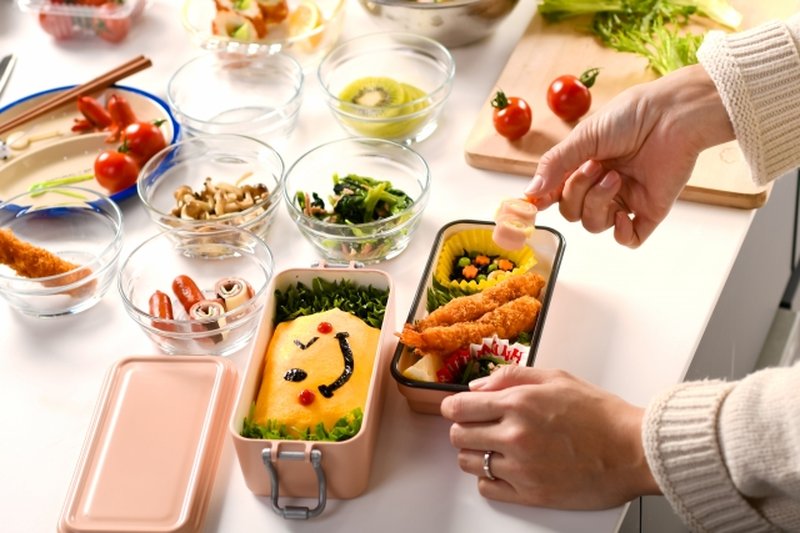
The bento prepared for 運動会 is a full family meal: onigiri, tamagoyaki, karaage, salad, fruit — packed for three or four people. Many families spend the evening before in the kitchen. Grandparents often arrive with their own contribution. The meal is not an afterthought to the athletics program; it is part of the day itself, and families talk about both.
What to know about 運動会 bento
- Pack for every person attending — grandparents included; this is a family picnic, not a school lunch
- Families claim spots early in the morning; bring a picnic sheet and a cooler bag in warmer months
- Timing is usually September or October, though some schools hold it in May or June
- For adult portions, ready-made bento from a convenience store or 弁当屋 is entirely normal — nobody expects a handmade spread for everyone
愛情弁当 — Bento as an Expression of Care
Central to Japanese bento culture is a concept called 愛情弁当 (aijō bentō) — a "love bento," a lunchbox understood as a physical expression of the time and care a parent has given. The idea is that making lunch by hand is itself a form of communication.
This is the cultural lens through which キャラ弁 makes complete sense. A parent who shapes rice into a character their child loves is not just decorating food — they are making something unmistakably for this particular child, on this particular day. An empty lunchbox returned at the end of the day carries a quiet confirmation: the child ate, was happy, and the effort landed.
Japan even has a term for the bento a mother packs for a child going off to university or a new job — and the emotional weight carried by that box is understood by everyone who receives one. キャラ弁 is the most visible version of this tradition, but the feeling behind it runs through every carefully packed lunch.
School Bans, Bullying, and Social Pressure
キャラ弁 culture has a side that most English articles on the subject overlook.
Some schools have banned キャラ弁
A number of preschools and daycare facilities have introduced rules against elaborate character bento. The reasons cited vary. Hygiene is one: food shaped and handled over an extended period sits at room temperature longer than a quickly assembled lunch, even when hands are clean. Nutritional balance is another: designs centered on rice tend to crowd out vegetables. But the most significant concern is social. When lunchboxes become elaborate, children compare them — and the gap between a carefully decorated キャラ弁 and a plain onigiri can become a source of embarrassment or exclusion. There are documented cases of children crying after a classmate laughed at a misshapen character in their box. Some schools responded by asking all parents to keep lunches simple and undistinguished.
Social media and the pressure to compete
Instagram, X, and social media have amplified キャラ弁 culture considerably. The elaborate designs that circulate online can feel like a benchmark, as if this is what bento is supposed to look like. In reality, most Japanese parents make straightforward, practical lunches on ordinary days. The extraordinary creations online represent a special occasion and significant preparation time — not a Tuesday morning. Some parents have described spending upward of 45 minutes on a single character design. That is a choice, not an expectation.
What International Parents Need to Know
キャラ弁 is not expected of you. It is something some families do on some occasions — a cultural option, not a requirement. A well-packed, balanced bento is entirely appropriate anywhere a bento is needed. If you want to try a character design, 遠足 or a birthday is a natural starting point. If it does not appeal, that is a choice Japanese parents make all the time too.
Practical things worth checking with your facility
- How many bento days are there per year, and how far in advance are they announced?
- Are there rules about allergens or foods to avoid? (Some facilities apply restrictions for all children)
- Are decorated or character bentos specifically discouraged or banned?
- For 運動会: where do families eat, and what do you need to bring for the whole group?
Japanese Bento Vocabulary
Key words that come up regularly around キャラ弁 and bento culture in Japan.
| Japanese | Reading | Meaning |
|---|---|---|
| キャラ弁 | kyaraben | character bento — a lunchbox in which food is shaped to resemble a character or animal |
| お弁当 | obentō | packed lunch / bento box |
| 愛情弁当 | aijō bentō | love bento — the idea that a handmade lunchbox is an act of parental care |
| 愛妻弁当 | aisai bentō | a bento made by a wife for her husband — the same culture of handmade care, applied to adult life; widely used and very commonly seen |
| 遠足 | ensoku | school excursion / field trip — the occasion most associated with キャラ弁 |
| 運動会 | undōkai | sports day — a whole-family event where a large shared bento is part of the occasion |
| 給食 | kyūshoku | school lunch — a hot meal provided by the facility; the everyday alternative to bento |
| お弁当の日 | obentō no hi | bento day — a scheduled day when children bring their own packed lunch |
| デコ弁 | dekōben | decorated bento — the broader category that includes キャラ弁 |
| 食育 | shokuiku | food education — a government initiative promoting healthy eating from early childhood |
| たこさんウインナー | takosan uinnā | octopus sausage — a mini sausage cut to look like an octopus; one of the most iconic キャラ弁 elements |