

Written and reviewed by Susumu
Born and raised in Japan · Checked against Japanese law and ministry guidance
Japan's Maternity Mark (マタニティマーク) signals to people around you that you are pregnant and may need a seat or some consideration. Here is what it is, where to get one, and how to use it as an international resident.
Affiliate Disclosure: This article contains affiliate links. If you click a link and make a purchase, we may earn a small commission at no extra cost to you. We only recommend products we genuinely believe are helpful. See our Terms of Use for full details.
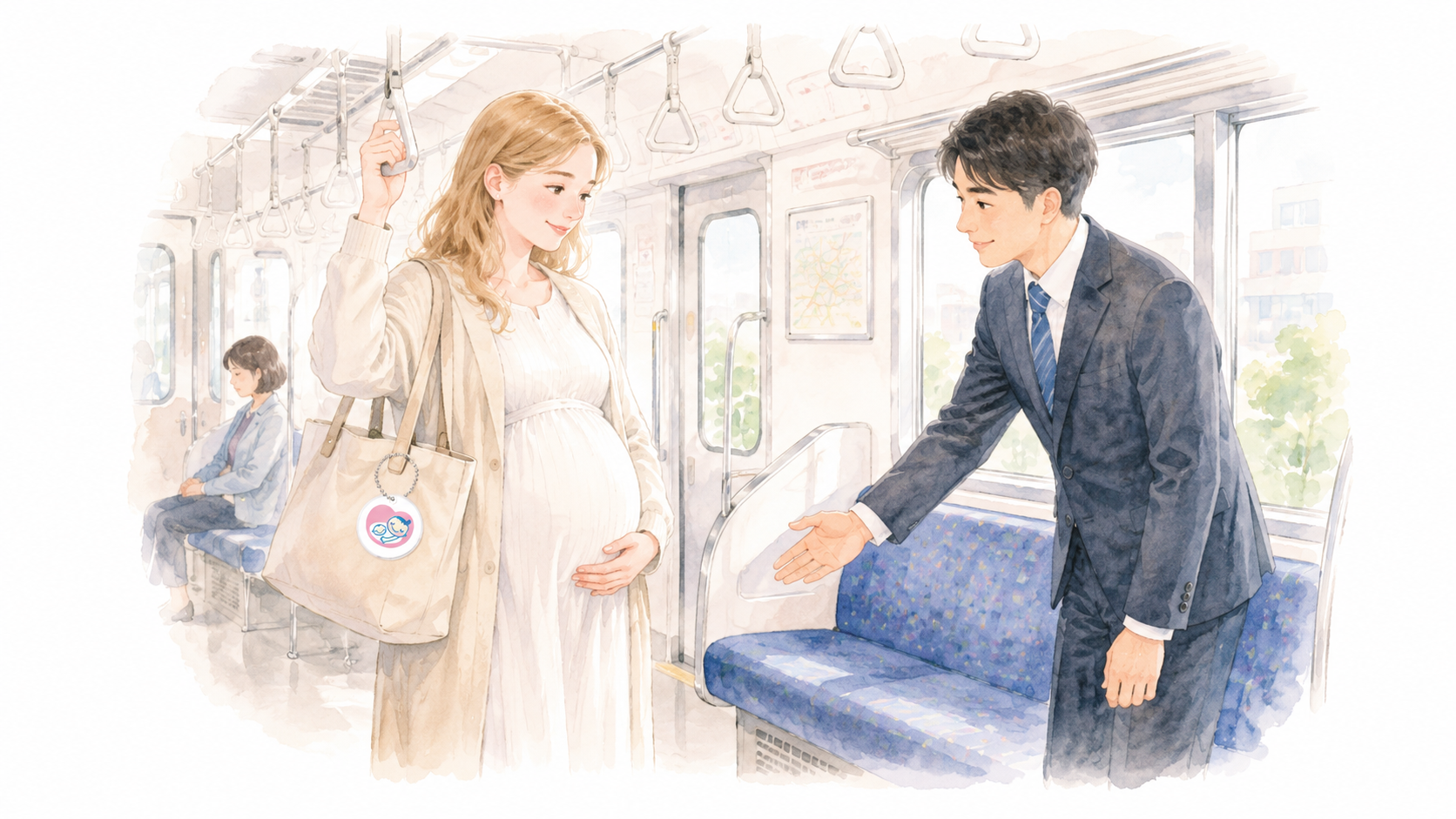
If you are pregnant in Japan, the Maternity Mark (マタニティマーク) lets people around you know — so they can offer a seat, step away if smoking, or simply keep an eye out for you. This guide explains what the mark is, how to get one, and what to expect when you wear it.
For information only. Distribution methods may vary by municipality and transport operator. This article reflects information as of mid-2026, based on こども家庭庁 official sources.
What Is the Maternity Mark?
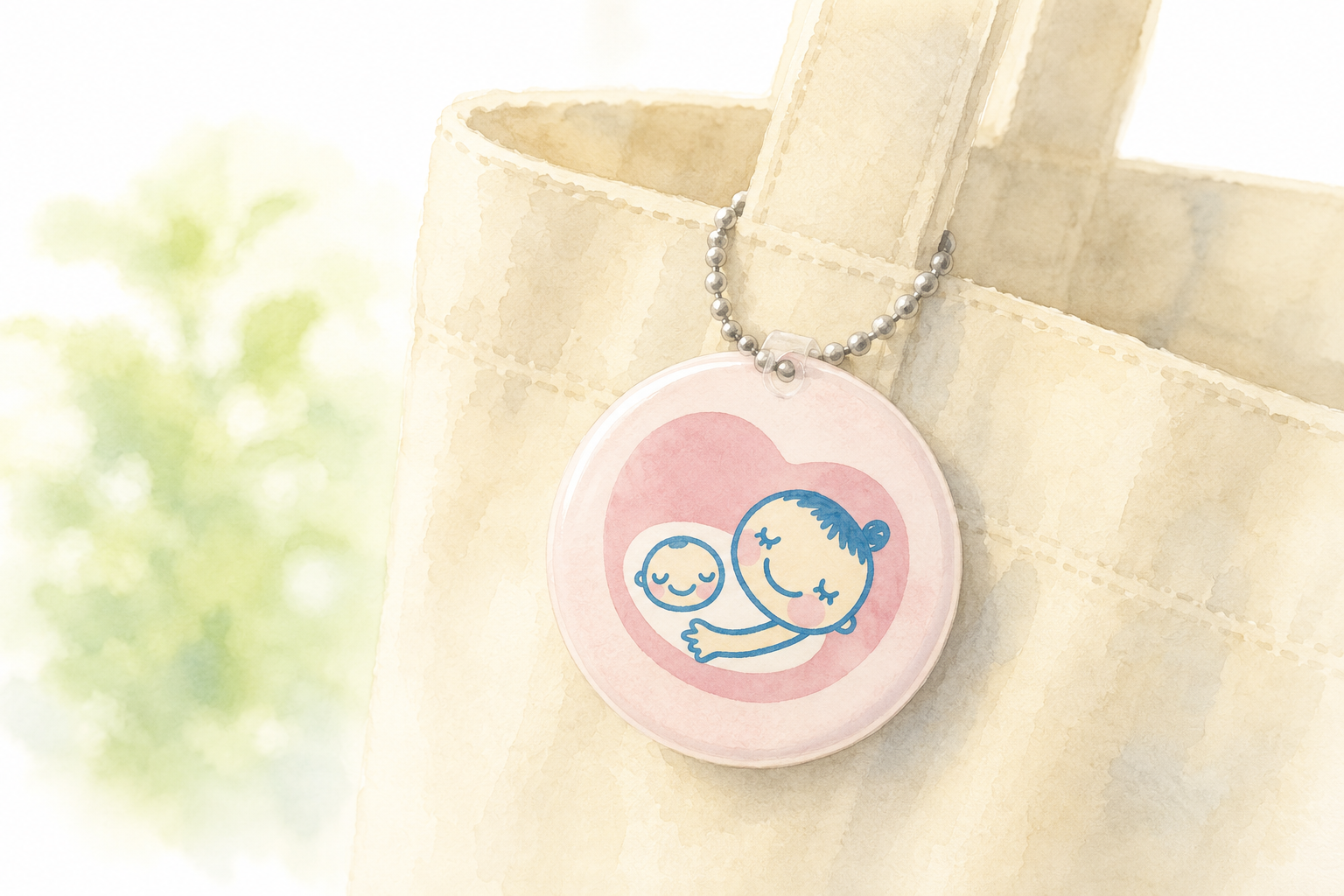
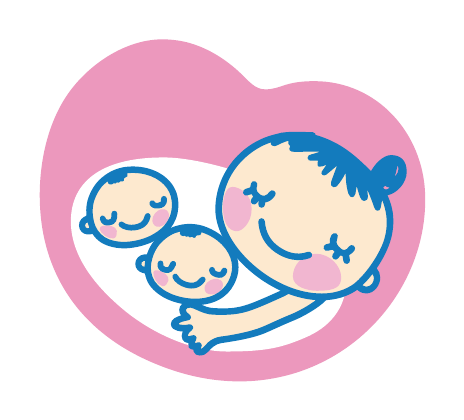
The Maternity Mark (マタニティマーク) is an official symbol that has been promoted in Japan since 2006. It was originally established by the Ministry of Health, Labour and Welfare (厚生労働省) and is now administered by the Children and Families Agency (こども家庭庁). It shows a stylized pregnant woman inside a heart shape, with the words お腹に赤ちゃんがいます — "There is a baby in my tummy" — printed around the edge.
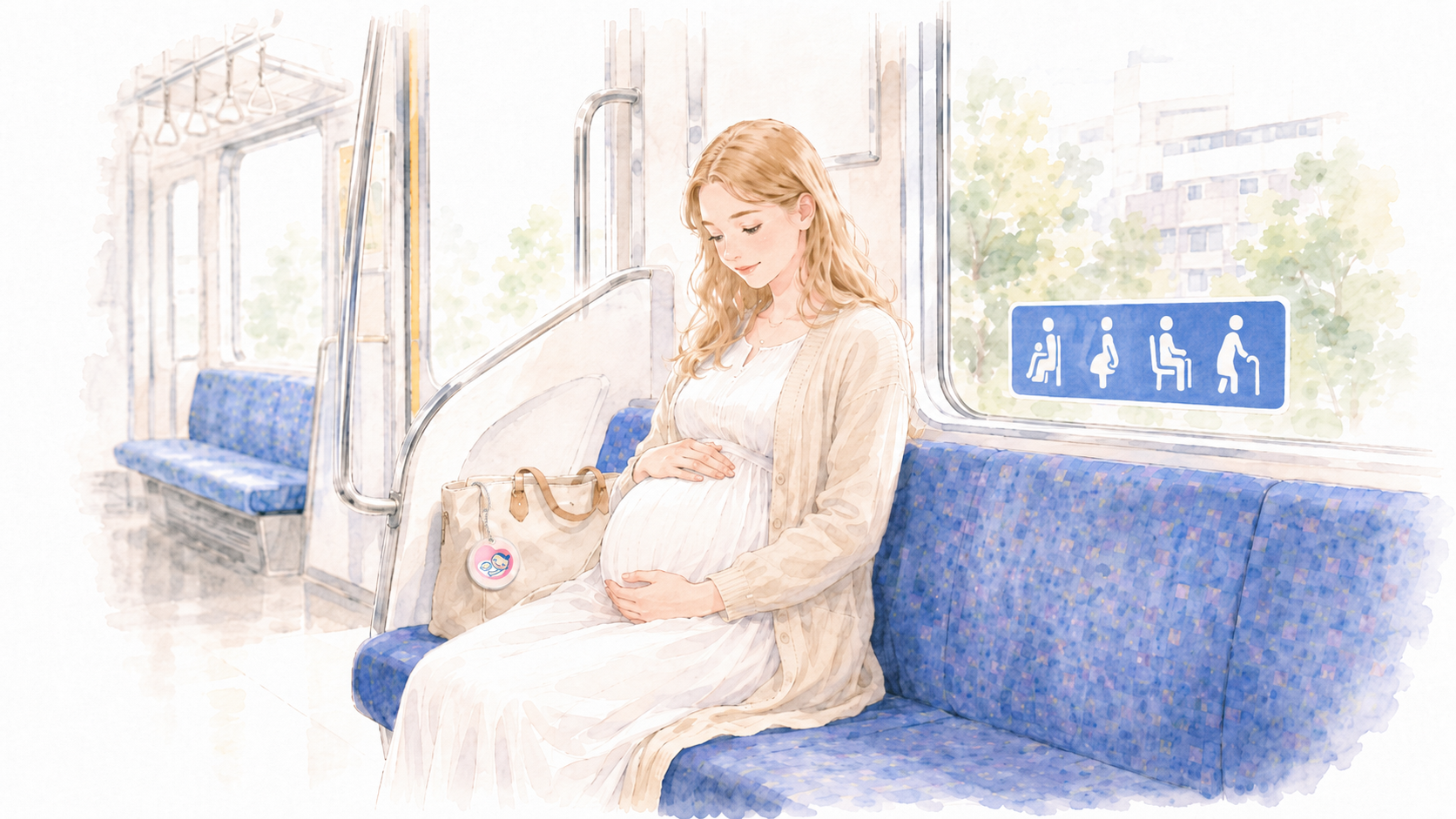
The mark is worn on a bag or clothing, usually attached as a keyring charm or a sticker. Early pregnancy is invisible from the outside — the mark tells people nearby that you are pregnant and may need a seat on the train, a smoke-free space, or a helping hand.
It is not a legal document or a ticket to any specific service. It is a social signal, widely recognized across Japan.
What It Asks of Others
The official こども家庭庁 campaign asks three specific things of people who see the mark:
- Offer your seat on trains and buses (電車やバスで席を譲りましょう)
- Speak to her if she looks unwell (体調の悪そうな妊婦さんがいたら声をかけましょう)
- Stop smoking near her (妊婦さんの近くでは喫煙をやめましょう)
Priority seating areas (優先席 / yūsen seki) on trains and buses in Japan display the Maternity Mark alongside other symbols. If you wear the mark and stand near priority seats, it is entirely reasonable to expect that passengers nearby will notice.
When to Start Wearing It
There is no fixed rule. You can start wearing the mark from the moment you find out you are pregnant. Many women begin around the time they register their pregnancy at the ward office and receive their 母子健康手帳 (boshi kenkō techō — the Mother and Child Health Handbook), as this is also when they often receive a mark for the first time.
Early pregnancy — when morning sickness can be severe and the bump is not yet visible — is actually when the mark is most useful. It is also a period when sitting down on a crowded train can make a real difference to how you feel.
Where to Get One
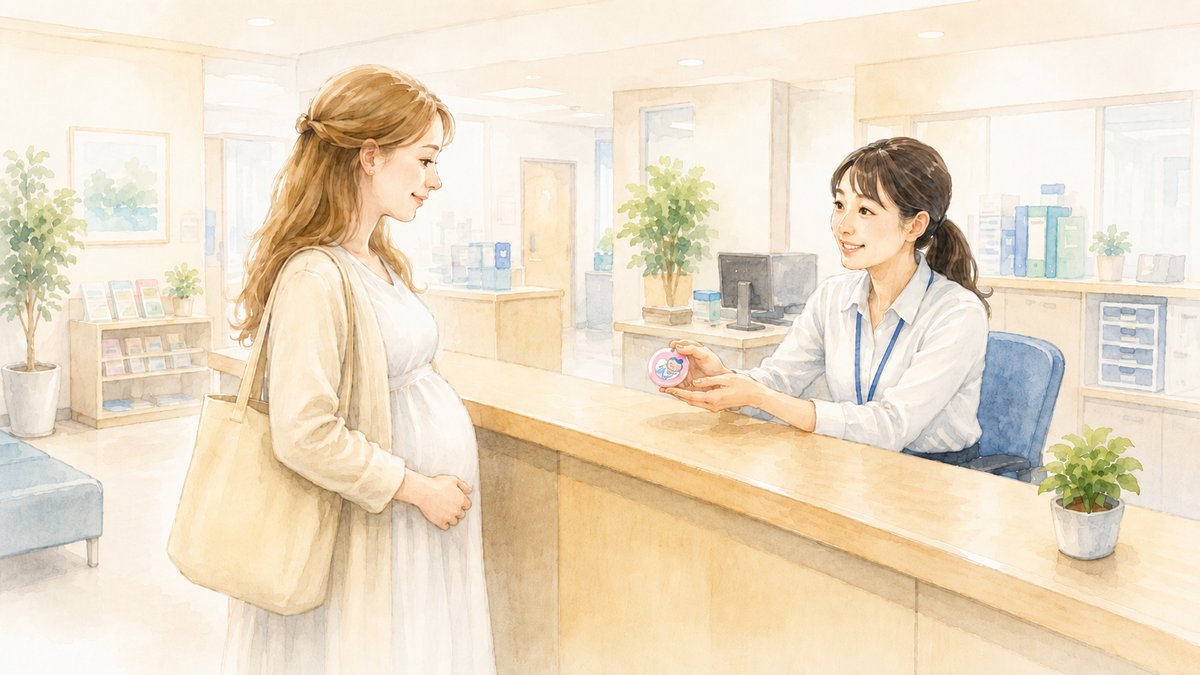
There are three main ways to get a Maternity Mark:
① Ward or city office (区市役所)
When you register your pregnancy and receive your 母子健康手帳, many ward and city offices give you a Maternity Mark at the same time. Ask at the 子育て (kosodate) or 母子保健 (boshi hoken) counter. Note that some offices may occasionally be out of stock — if so, you can download the mark from the official site or pick one up at a train station.
② Train station ticket windows (駅窓口)
20 metropolitan railway operators in the greater Tokyo area distribute the mark at staffed ticket windows. Simply ask: 「マタニティマークをいただけますか」 (Could I have a Maternity Mark?) — no proof of pregnancy is required.
③ Official download (こども家庭庁)
The mark is available to download free of charge from the こども家庭庁 website. Multiple formats are provided — color and mono, PDF and JPEG — for printing on stickers or cards. Usage rules apply.
Twin and Triplet Versions
In November 2024, こども家庭庁 released official Maternity Mark designs for women carrying twins or triplets. The new designs show two or three baby silhouettes within the heart shape, making the situation immediately visible to others. If you are expecting multiples, look for these versions at your ward office or download them from the official site.
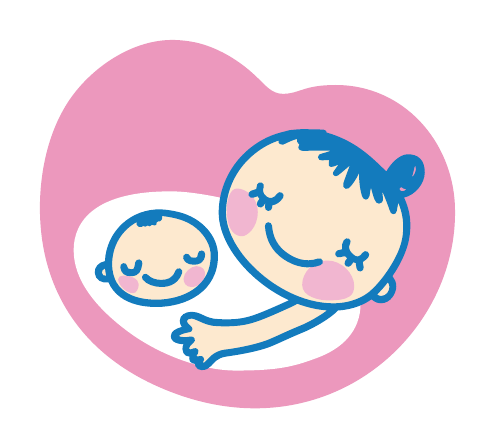
Pattern 1 — single
Pattern 2 — twins
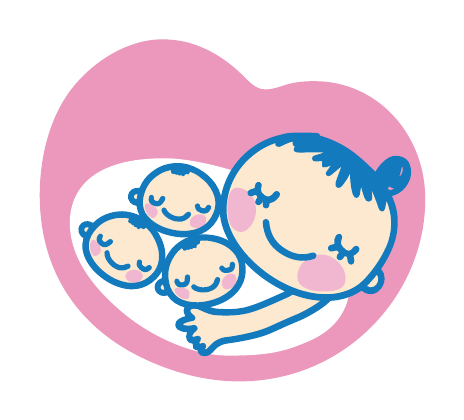
Pattern 3 — triplets
© こども家庭庁 — official Maternity Mark designs
Why It Helps
Japan's trains get crowded, and asking for a seat in Japanese is not easy when you are still learning the language. The mark handles that for you — no words needed. Women who have used it mention a few things that made a real difference:
- Getting a seat on the train during morning sickness, when the bump is not yet showing
- Being noticed quickly if you feel faint or unwell in public
- People stepping back or moving away if they are smoking nearby
- Receiving offers of help with heavy bags or on staircases
If You Feel Uncomfortable Wearing It
Some women prefer not to wear the mark visibly — for personal reasons or because of unwanted attention. This is entirely valid. One practical option is to keep the mark inside your bag rather than on the outside. The keyring design makes this easy: it clips inside a zip pocket and can be quickly shown to a staff member or fellow passenger if you need help.
You do not need to wear it at all times. Many women keep it for train journeys and remove it in other settings.
The Help Mark
Japan also has a separate ヘルプマーク (Help Mark) — a red rectangular tag with a white cross and heart. It is designed for anyone who needs assistance that is not visible from the outside: people with disabilities, invisible conditions, or others who may need support in public. Pregnant women who prefer a less pregnancy-specific symbol can use the Help Mark instead.
The Help Mark is distributed at metropolitan government offices and many train stations. Ask at your ward office or at the station for details.
Tap 🔊 Play to hear the phrase spoken aloud in Japanese.
At the ward office or train station (to request a mark)
マタニティマークをいただけますか
Mataniti māku wo itadakemasu ka
"Could I have a Maternity Mark, please?"
If you need a seat on public transport
妊娠中なので、席を譲っていただけませんか
Ninshin-chū na node, seki wo yuzutte itadakemasen ka
"I am pregnant — could I please have your seat?"
Japanese Vocabulary
| Japanese | Reading | Meaning |
|---|---|---|
| マタニティマーク | mataniti māku | Maternity Mark |
| 妊婦 | ninpu | Pregnant woman |
| 妊娠中 | ninshin-chū | Currently pregnant |
| 優先席 | yūsen seki | Priority seating (on trains and buses) |
| 席を譲る | seki wo yuzuru | To give up one's seat |
| つわり | tsuwari | Morning sickness |
| 母子健康手帳 | boshi kenkō techō | Mother and Child Health Handbook |
| 配慮 | hairyo | Consideration / thoughtfulness |
| ヘルプマーク | herupu māku | Help Mark (for those needing assistance) |
| 駅窓口 | eki madoguchi | Station ticket window |