
Written and reviewed by Susumu
Born and raised in Japan · Checked against Japanese law and ministry guidance
Japan is replacing the traditional health insurance card with the My Number Card. As an international resident, understanding how マイナ保険証 works — and what happens if you choose not to switch — can save you time and confusion at the hospital.
Affiliate Disclosure: This article contains affiliate links. If you click a link and make a purchase, we may earn a small commission at no extra cost to you. We only recommend products we genuinely believe are helpful. See our Terms of Use for full details.
📌 Note: Japan's traditional health insurance cards (健康保険証) stopped being issued on December 2, 2024, and expired on December 1, 2025. As of now, the マイナ保険証 (My Number Card used as health insurance) or a 資格確認書 (eligibility confirmation document) is required at all medical facilities.
What Is マイナ保険証?
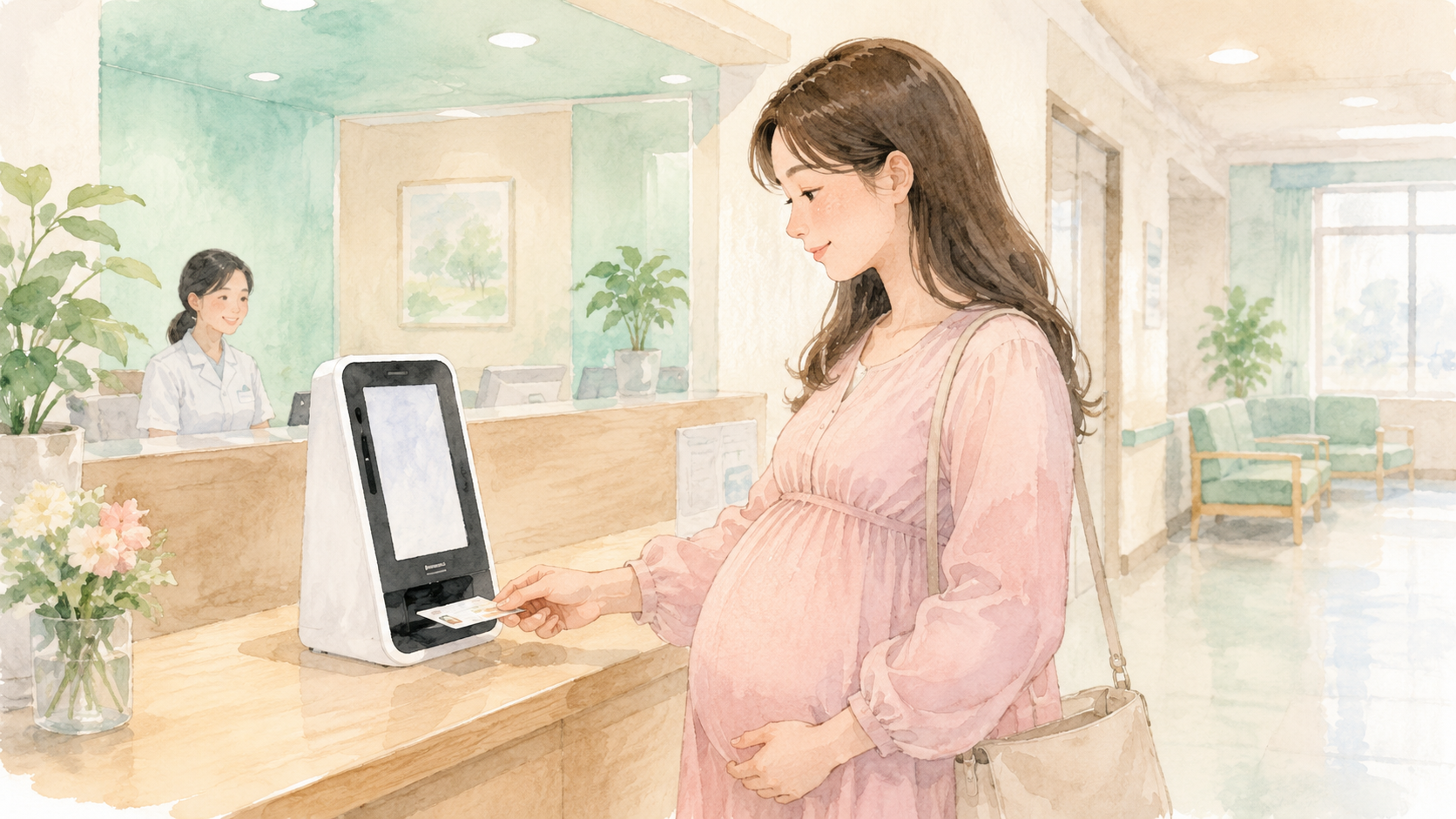
マイナ保険証 (maina hokensho) is your My Number Card (マイナンバーカード) registered as a health insurance credential. Instead of carrying a separate insurance card, you tap your My Number Card at a card reader when you arrive at a hospital, clinic, or pharmacy — and your insurance details are verified instantly online.
Japan phased out traditional health insurance cards in December 2024. The old cards expired on December 1, 2025. Anyone visiting a medical facility now needs either a マイナ保険証 or a 資格確認書 (an eligibility confirmation document issued by your insurer while you wait for your My Number Card).
For pregnant women and parents in Japan, understanding マイナ保険証 matters beyond just carrying the right card. It unlocks several concrete benefits that the old insurance card did not offer — and there are a few steps to get right, especially if you are new to the Japanese healthcare system.
Benefits During Pregnancy
Your medical history travels with you
When you give consent at the reception kiosk, your doctor can immediately see your past prescription history (薬剤情報), health checkup results (特定健診等情報), diagnosis records, and surgical history — all in one place. This is particularly useful if you have visited multiple clinics or moved between municipalities. Your ob-gyn can check what medications you have previously taken, flag potential drug interactions, and make better-informed decisions — without you needing to recall every detail from memory or explain your history in Japanese.
High-cost medical care is applied automatically
One of the biggest practical advantages of マイナ保険証 is how it handles high-cost medical expenses (高額療養費, kougaku ryouyouhi). Under Japan's health insurance system, your monthly out-of-pocket costs are capped at a limit based on your income. With an old insurance card, you had to apply for a 限度額適用認定証 (expense limit certificate) in advance — or pay the full amount upfront and claim it back later.
With マイナ保険証, this certificate is no longer needed. At medical facilities that use online eligibility verification (オンライン資格確認) — now mandatory for the vast majority of hospitals, clinics, and pharmacies in Japan — the system reads your income bracket automatically and caps your payment at the limit. You simply pay what you owe at the window, with no paperwork before or after. This is particularly valuable during pregnancy and fertility treatment, where monthly medical costs can reach tens of thousands of yen.
Note on 2026 changes: From August 2026, the monthly out-of-pocket limits under the 高額療養費 system will be revised upward for the first time in years. The automatic application via マイナ保険証 will reflect the new amounts — no action is needed on your part.
Medical expense deductions become much easier
If your annual medical costs exceed ¥100,000, you may be eligible for a tax deduction (医療費控除, iryouhi koujyo) when you file your taxes. Previously this required keeping every receipt and tallying them manually. With マイナ保険証, your medical expense records are stored in マイナポータル (the government's online portal) and can be automatically imported into your tax return via e-Tax. No receipts to track, no manual totals.
Pre-filling prenatal checkup questionnaires
Municipalities connected to the government's maternal health system allow pregnant women to fill in their prenatal checkup questionnaires (問診票, monshinhyo) via マイナポータル on their smartphone before the appointment. Rather than arriving early to fill out forms at the clinic, you can submit answers in advance and walk straight in. Nationwide rollout began in FY2026, though availability still varies by municipality — check with your local clinic.
Benefits When Raising Children

Your child's medical history is accessible to their doctor
Each time your child visits a pediatrician, the doctor can — with your consent — view your child's prescription history from any clinic or pharmacy they have previously visited. This removes a common friction point: you no longer need to verbally explain your child's medical background in Japanese at every new clinic. The record speaks for itself.
High-cost coverage for situations the child subsidy doesn't fully cover
Most municipalities provide a child medical expense subsidy (乳幼児医療費助成) that covers much or all of your child's co-payments — in many areas, children's clinic visits are effectively free. However, 高額療養費 still plays a role in cases the subsidy does not fully cover, such as private room fees, treatments outside the standard insurance schedule, or your own postnatal medical care as a mother. At facilities with online eligibility verification, the cap is applied automatically when you scan your マイナ保険証 — no advance certificate needed.
Simplified medical expense deductions for the household
Medical expenses across your entire household can be combined for the purpose of the 医療費控除 deduction. With マイナポータル, records for all family members who have linked their cards can be pulled together automatically, making it much easier to claim the deduction at tax time.
Setting Up Your Baby's マイナ保険証
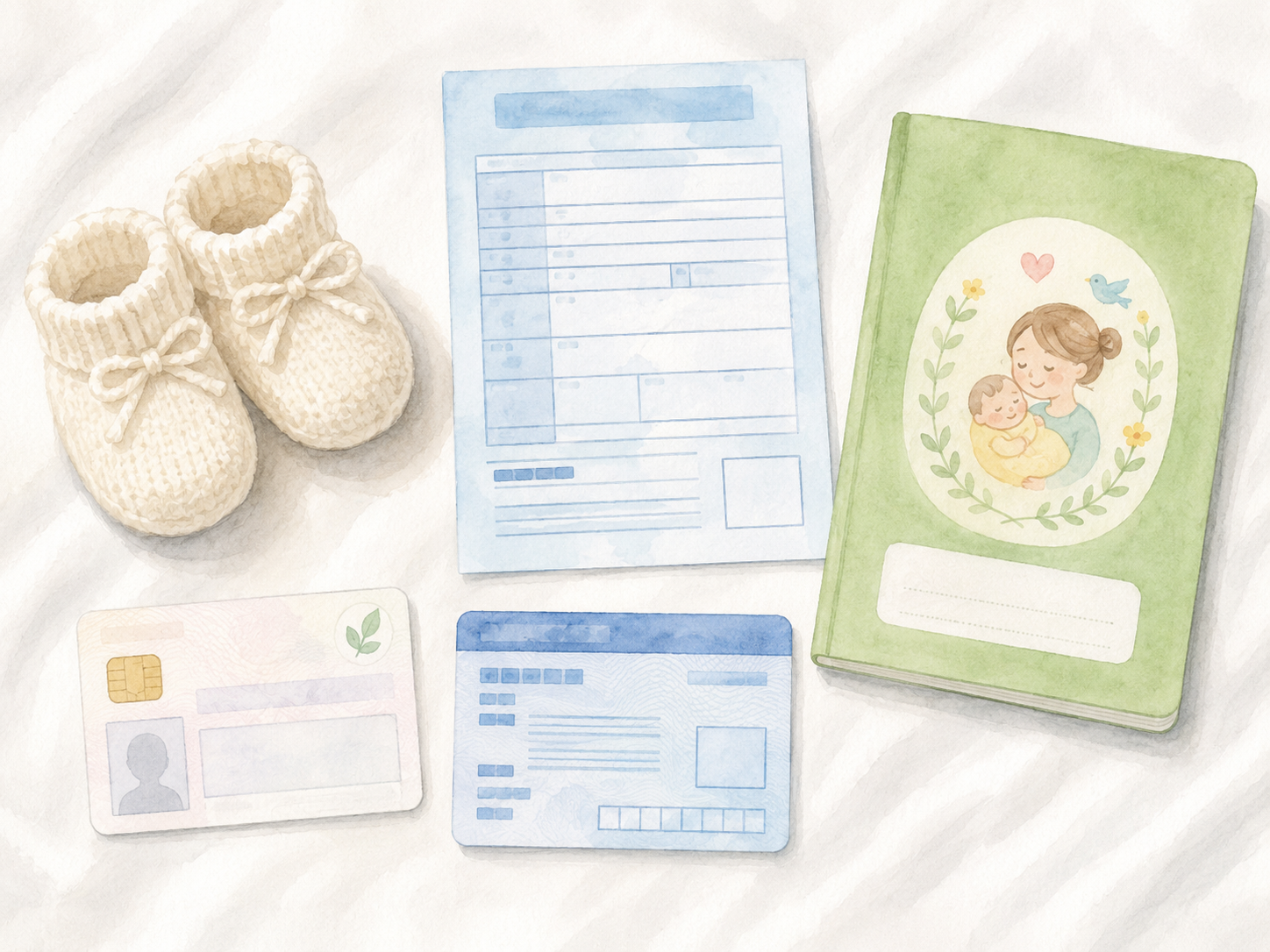
Your newborn does not have a My Number Card automatically — you need to apply for one. Here is how the process works.
| Step | What to do |
|---|---|
| 1. File birth registration + apply for My Number Card | When you submit your 出生届 (birth registration) at the municipal office, you can apply for your baby's My Number Card at the same window. Since December 2024, infants under one year old qualify for express issue (特急発行) — the card arrives within one week by mail. To use 特急発行, submit the application within 30 days of birth. |
| 2. Enroll baby in health insurance | Add your baby as a dependent on your workplace insurance (社会保険) or enroll them in the National Health Insurance (国民健康保険) at the municipal office. Do this as soon as possible after birth — ideally at the same visit as the birth registration. |
| 3. Get a 資格確認書 while waiting | Once enrolled in health insurance, a 資格確認書 (eligibility confirmation document) will be issued. This is issued free of charge and is valid for up to one year (the exact period is set by your health insurer). Use it at hospitals and pharmacies while the My Number Card is in the mail. |
| 4. Register the card for health insurance use | Once the My Number Card arrives, register it as a health insurance credential. You can do this via マイナポータル (using a compatible smartphone), at a card reader terminal in a hospital or pharmacy, or at a Seven Bank ATM. You will need to enter the card's four-digit PIN. |
| 5. Use at medical facilities | Tap the baby's My Number Card at the card reader when you arrive. You will be asked whether you consent to sharing medical data — select your preference on the touchscreen. The card reader will verify your baby's insurance coverage instantly. |
For International Residents
If you are living in Japan on a visa, you are eligible for a My Number Card and can use マイナ保険証 in exactly the same way as anyone else. Your nationality is not a factor — what matters is that you are enrolled in Japanese health insurance and registered as a resident at your local municipal office.
The new 特定在留カード — one card for everything
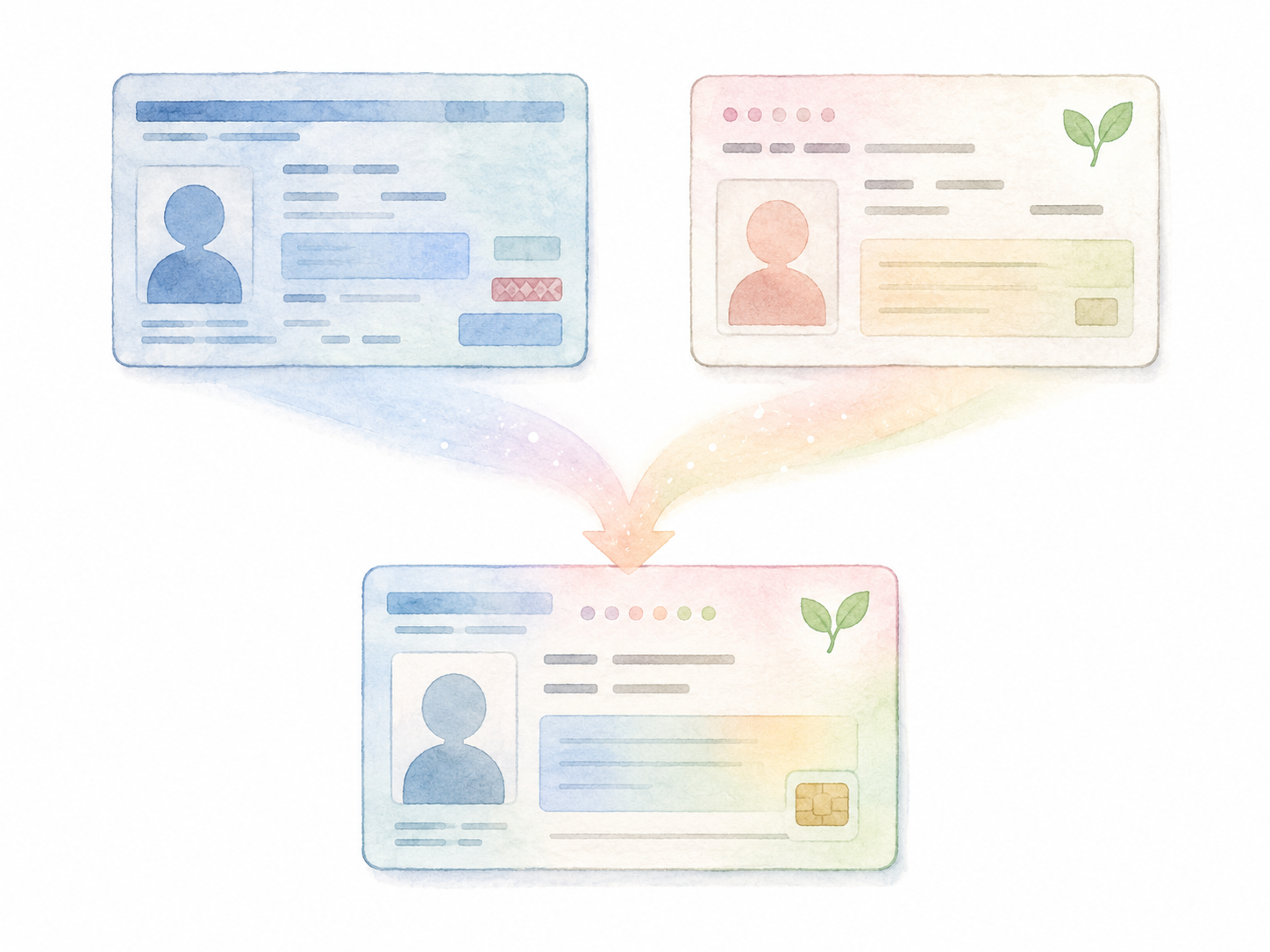
From June 14, 2026, a new combined card called the 特定在留カード (tokutei zairyu card, or specified residence card) became available for international residents. This single card integrates your:
- 在留カード (residence card)
- マイナンバーカード (My Number Card)
- マイナ保険証 (health insurance credential)
Switching to the 特定在留カード is entirely voluntary — you can continue using your separate 在留カード and マイナンバーカード if you prefer. But for those who want to carry fewer cards and simplify their paperwork, applying for the combined card is worth considering. Applications can be made at your local municipal office or the nearest immigration office (出入国在留管理局).
Important: For most visa holders, your My Number Card's validity is tied to your 在留カード expiry date. When you renew your visa and residence card, you will also need to update your My Number Card. This does not apply to permanent residents (永住者) or special permanent residents (特別永住者), whose My Number Card follows the standard 10-year validity period.
If You Don't Have a My Number Card Yet
If you have not yet obtained a My Number Card, your health insurer will issue a 資格確認書 (shikaku kakuninsho) automatically. This document confirms your insurance eligibility and is accepted at all medical facilities in place of a My Number Card. It is issued free of charge.
The 資格確認書 does not give you access to the data-sharing or automatic 高額療養費 benefits described above. To access those, you need to obtain a My Number Card and register it for health insurance use.
You can apply for a My Number Card:
- Online via the マイナンバーカード総合サイト (using a smartphone)
- At your local municipal office
Japanese Vocabulary
| Japanese | Reading | Meaning |
|---|---|---|
| マイナ保険証 | maina hokensho | My Number Card used as health insurance credential |
| マイナンバーカード | mainanbaa kaado | My Number Card (national ID with IC chip) |
| 資格確認書 | shikaku kakuninsho | Eligibility confirmation document (issued while waiting for My Number Card) |
| 高額療養費 | kougaku ryouyouhi | High-cost medical expense benefit — monthly cap on out-of-pocket costs |
| 限度額適用認定証 | gendogaku tekiyou ninteisho | Expense limit certificate (no longer required when using マイナ保険証) |
| 医療費控除 | iryouhi koujyo | Medical expense tax deduction |
| マイナポータル | maina pootaru | Government online portal for My Number services |
| 特急発行 | tokkyuu hakkou | Express issue (fast-track card delivery for newborns, within one week) |
| 特定在留カード | tokutei zairyu kaado | Specified residence card — combined residence card and My Number Card for international residents (from June 2026) |
| 乳幼児医療費助成 | nyuuyooji iryouhi jossei | Municipal medical expense subsidy for infants and young children |