
Written and reviewed by Susumu
Born and raised in Japan · Checked against Japanese law and ministry guidance
Most families encounter Japan's PTA within the first few weeks of elementary school. Here's how the committee system works, how roles are assigned, and what to expect as an international parent.
Affiliate Disclosure: This article contains affiliate links. If you click a link and make a purchase, we may earn a small commission at no extra cost to you. We only recommend products we genuinely believe are helpful. See our Terms of Use for full details.
What Is the PTA?
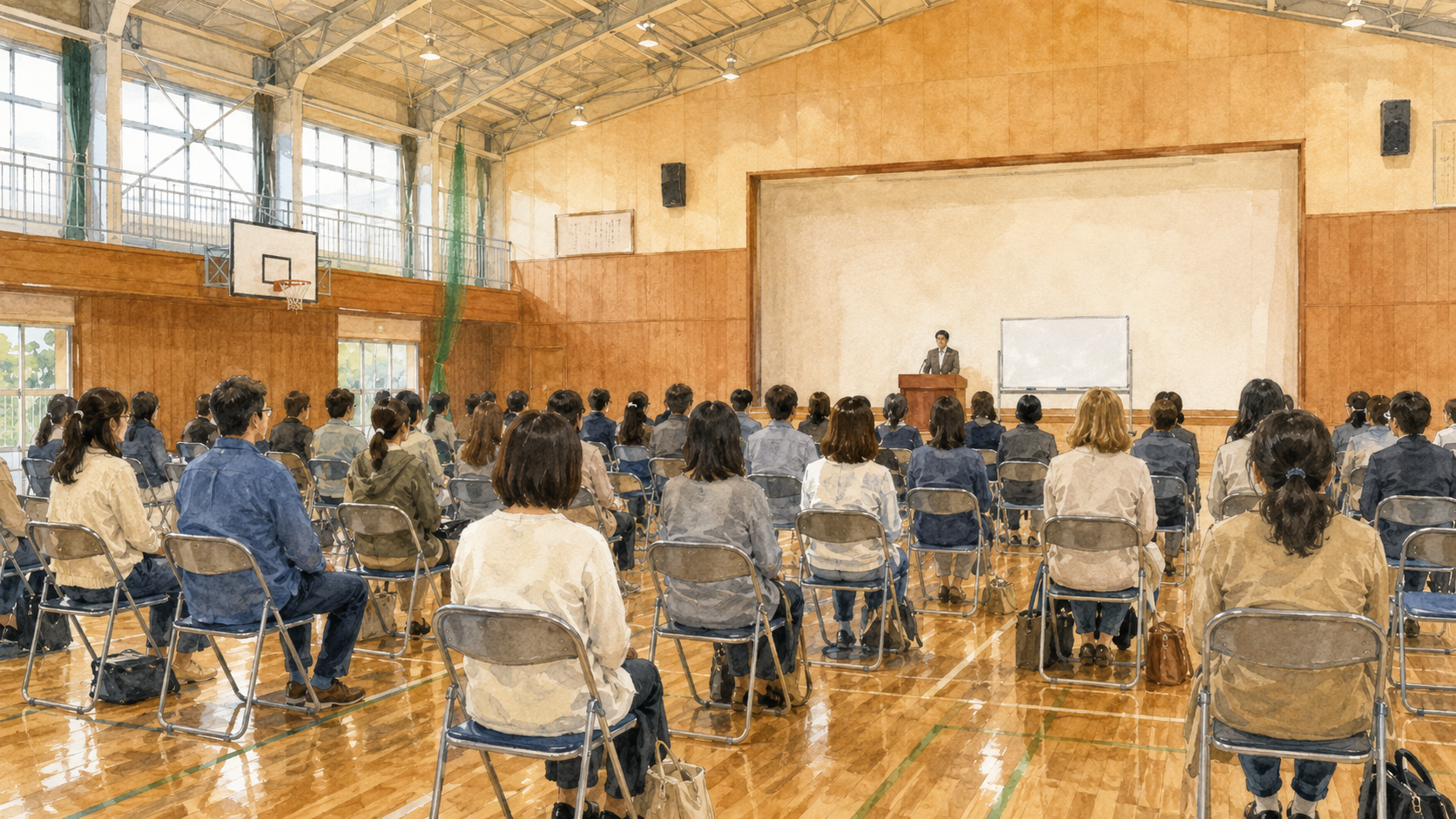
PTA stands for Parent-Teacher Association. In Japan, it exists at most public elementary and junior high schools and is run by parents, not the school itself. While teachers are involved, the PTA is its own organization — one that works alongside the school to support children's education and keep the community connected.
In practice, that means organizing morning safety patrols, producing the school newsletter, coordinating parent support at school events, and keeping communication flowing between families and teachers. Most families with a child enrolled at the school are considered members from the day their child starts.
When does it start?
April is enrollment month, and PTA activity begins almost immediately. The spring general meeting and committee selection typically happen in April or May — so most families encounter the PTA within the first few weeks of elementary school.
How Is It Different from Back Home?
If you grew up somewhere that PTA was optional and run by a handful of dedicated volunteers, Japan's version will feel different. Here, the expectation is that every household takes a turn. There's a structured committee system — not because the school mandates it by law, but because that's how it has worked for decades and most schools operate accordingly.
Participation is also more active than passive. Rather than attending the occasional bake sale, most parents will be assigned to a specific committee at some point during their child's time at school, and that committee will have real tasks to carry out.
The other thing that surprises many international parents is the pace. Elementary school starts and PTA expectations arrive at the same time. There's no gradual introduction — by May of first grade, most parents already have a committee assignment for the year.
Officers and Committees
PTA roles divide into two groups: executive officers (役員, yakuin) and committee members (委員, iin).
Executive officers form the PTA leadership board. Typical positions are the president (会長), one or more vice presidents (副会長), a secretary (書記), a treasurer (会計), and an auditor (監査). Officers coordinate across committees, represent the PTA at school functions, and are involved throughout the year. These roles usually go to parents who volunteer or are elected at the spring general meeting.
Committee members are where most parents end up. Each committee has a specific function — safety, communications, grade-level coordination — and meets several times a year to carry out that work. The time involved varies by committee, but for many parents it amounts to a few meetings and one or two projects over the course of the school year.
It's common for first-year parents to take on a committee role while getting their bearings, rather than stepping into an officer position right away. Most schools expect each household to serve at least once during the child's six years at elementary school — then the rotation continues with the next year's families.
What Each Committee Does
Committee types vary by school, but these are the most common ones you're likely to encounter.
学年委員 — Grade-Level Committee
Works directly with the homeroom teacher to support the class across the year. Tasks typically include passing along information to families, helping with class events and outings, and serving as a point of contact between parents and teachers. Parents who've served on this committee often mention getting to know their child's classmates and their families — something that can be hard to do otherwise in the school setting.
広報委員 — Public Relations Committee
Produces the school newsletter — typically two to three issues per year. The work involves writing short articles, collecting contributions from teachers or students, laying out the pages, and arranging printing and distribution. Some schools have moved to digital formats in recent years, which shifts the production side but keeps the core work much the same. It's a role that suits parents who are organized and comfortable meeting a deadline.
交通安全・見守り委員 — Traffic Safety Committee
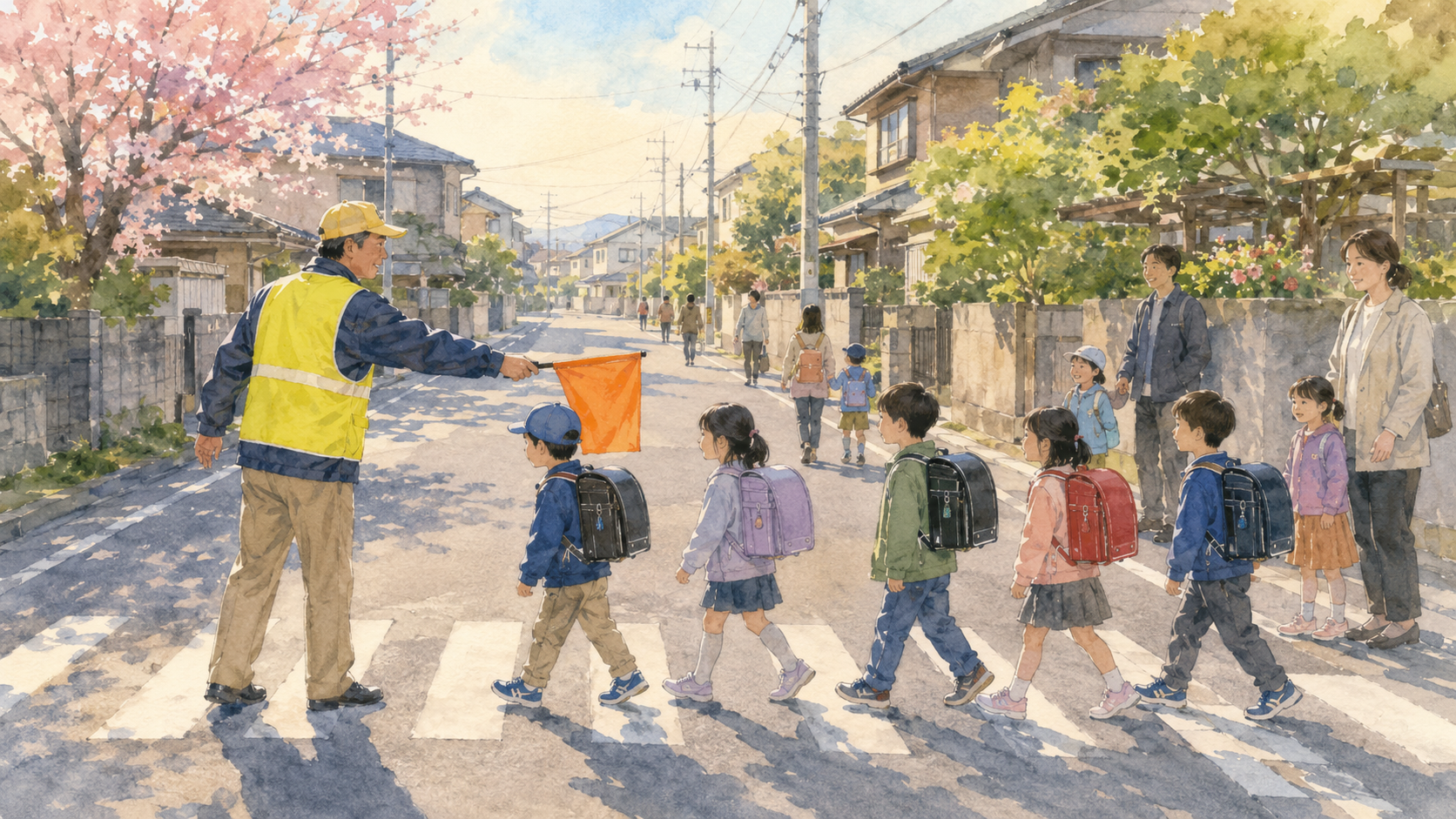
Coordinates the morning school patrol system — the parent volunteers who stand at crossings near the school to help children arrive safely. The committee organizes the roster, recruits parents to take shifts, and liaises with local traffic wardens or the police. Individual parents rotate through crossing duty on a schedule, which means the commitment is spread across the group rather than falling on the same people repeatedly.
保健委員 — Health Committee
Supports health-related communications between the school nurse and families. This can include distributing information about seasonal illnesses, coordinating health screenings, and other health-related school communications. Meeting frequency is typically modest compared to other committees.
ベルマーク委員 — Bellmark Committee
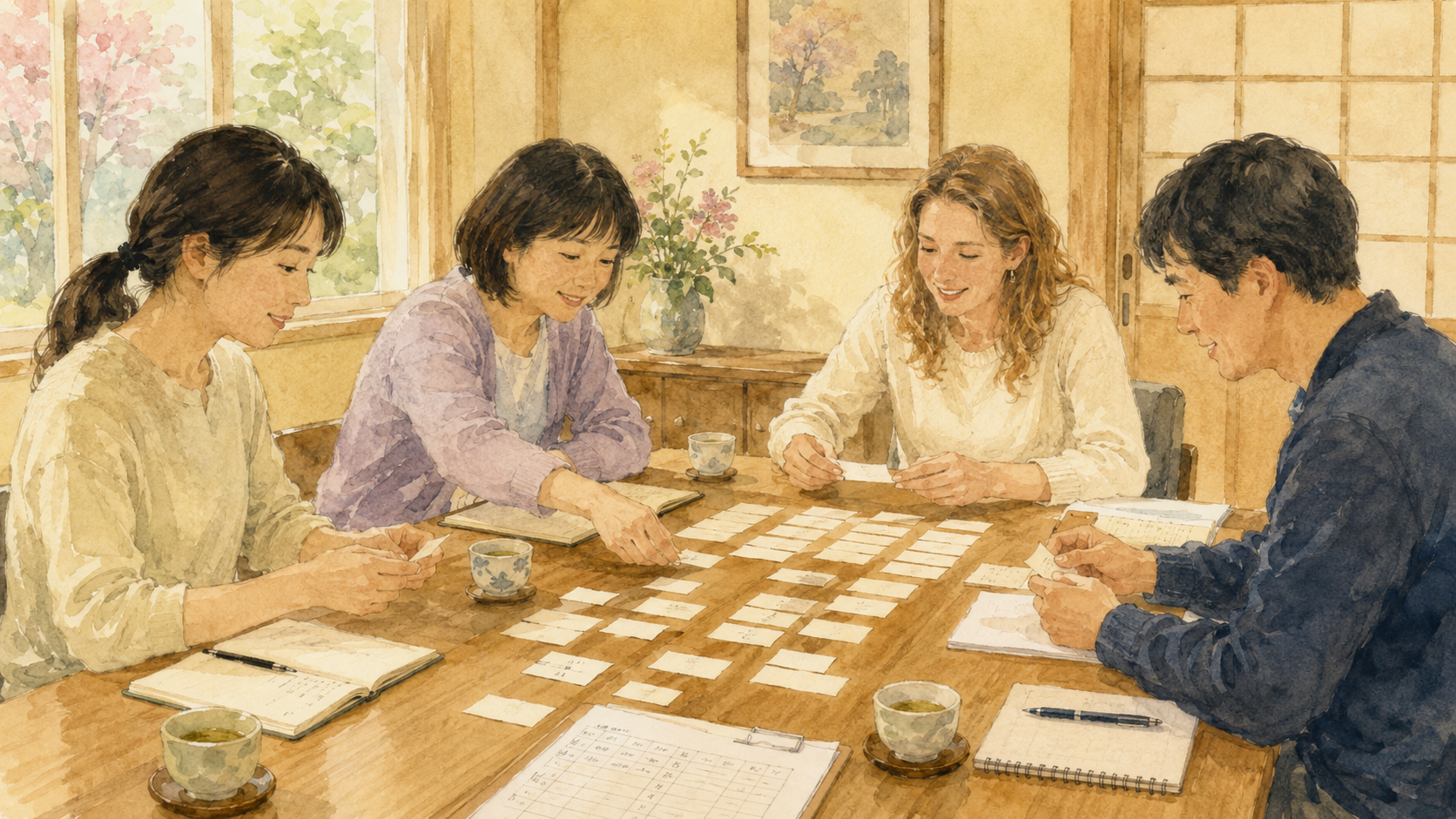
Japan has a long-running program in which small printed marks on food packaging and school supplies can be collected and exchanged for school equipment — everything from gym mats to music instruments. The Bellmark Committee collects these marks from families, then sorts, counts, and tallies them by brand code. It's methodical, hands-on work that takes patience and a steady eye for detail. The sessions can take a while, but the results are concrete — the points go directly toward things the school needs.
How You Get Assigned a Role
Role assignments typically happen in April or May, at the first class meeting of the year (学級懇談会, gakkyū kondankai). This meeting covers several things at once — meeting the homeroom teacher, hearing about the year ahead, and sorting out PTA committee slots for the class.
The usual process runs like this:
- The committee chairs or outgoing members explain what each role involves
- Parents are invited to volunteer for a specific committee
- If more parents want the same slot than there are spaces, rock-paper-scissors (じゃんけん) or a lottery (くじ引き) decides
- If there aren't enough volunteers to fill all slots, a lottery is held among all remaining parents
If you can't attend the class meeting
Most schools accept a proxy form (委任状, inin-jō) if you can't attend. This lets you leave your preferences with someone else or delegate the decision. Be aware that absent parents can still be selected through the lottery — submitting the form is the way to make sure your situation is on record.
If you know you'd like a particular committee — or one that fits better around your schedule — it's worth speaking up early. Volunteering at the start of the meeting gives you the best chance of landing where you'd prefer.
Meetings and Events
The number of meetings varies considerably by committee and by school. For most regular committee members, it works out to a handful of meetings across the school year — a few hours each time. Committee chair positions involve more: coordinating between members, communicating with the school, and keeping things on track throughout the year.
One thing most parents notice quickly is that PTA meetings are held on weekdays, usually during daytime hours. Evening or weekend meetings exist at some schools, particularly those that have started adapting to working families, but they're not the norm. If you work full time, ask your child's school early in the year how meetings are scheduled.
Beyond committee meetings, there are a few school-year events where PTA involvement is expected:
- 総会 (sōkai) — the annual general meeting, held in spring. Covers the year's budget, plans, and officer changes. Most schools expect members to attend.
- 学校行事のサポート — school events like sports day or graduation often call for parent volunteers in supporting roles, coordinated through the PTA.
- 見守り当番 — if you're on the traffic safety committee, you'll have scheduled patrol shifts at crossings near the school.
Tips for International Parents
- Meetings are conducted in Japanese. This is probably the biggest adjustment for international parents. Bring a notepad, write down words you don't catch, and look them up afterward. Most parents are understanding if you're clearly making the effort.
- Tell the homeroom teacher early. Letting your child's teacher know at the start of the year that your Japanese is limited means the school can keep you in mind when questions or documents come up. Many schools are more accommodating than you might expect.
- Translation apps help with printed materials. Committee notices, meeting agendas, and newsletters come in printed form. Camera translation on your phone can get you most of the way there with the written materials.
- Look for other international families at your school. In larger cities especially, you're unlikely to be the only non-Japanese parent in the school. Finding even one other family in a similar situation can make meetings much more manageable.
- Reach out to the committee chair when you're selected. If you end up in a committee role, contacting the chair before the first meeting and briefly explaining your situation — language limitations, schedule constraints — gives them a chance to support you in a way that works for everyone.
- Showing up matters more than saying the right things. Being present and willing counts for a lot. You don't need to lead the discussion to contribute.
Japanese Vocabulary
| Japanese | Reading | Meaning |
|---|---|---|
| PTA | P · T · A | Parent-Teacher Association — the parent organization attached to the school |
| 役員 | yakuin | Executive officers — the PTA leadership board (president, vice president, etc.) |
| 委員 | iin | Committee member — most parents serve in this role at some point |
| 学年委員 | gakunen iin | Grade-level committee — supports the class and homeroom teacher |
| 広報委員 | kōhō iin | Public relations committee — produces the school newsletter |
| ベルマーク委員 | berumāku iin | Bellmark committee — collects and tallies Bellmark points for school equipment |
| 総会 | sōkai | Annual general meeting — held in spring, covers plans and budget for the year |
| 学級懇談会 | gakkyū kondankai | Class meeting — where committee roles are often assigned at the start of the year |
| 委任状 | inin-jō | Proxy form — submitted when you can't attend the class meeting |
| くじ引き | kuji-biki | Lottery — used to fill committee slots when volunteers fall short |
| 見守り | mimamori | School patrol / watching over — the morning safety duty at crossings near school |