
Written and reviewed by Susumu
Born and raised in Japan · Checked against Japanese law and ministry guidance
When a cough or runny nose needs prompt attention, and how to care for your child at home — including the nasal aspirator and humidifier tips used across Japan.
Affiliate Disclosure: This article contains affiliate links. If you click a link and make a purchase, we may earn a small commission at no extra cost to you. We only recommend products we genuinely believe are helpful. See our Terms of Use for full details.
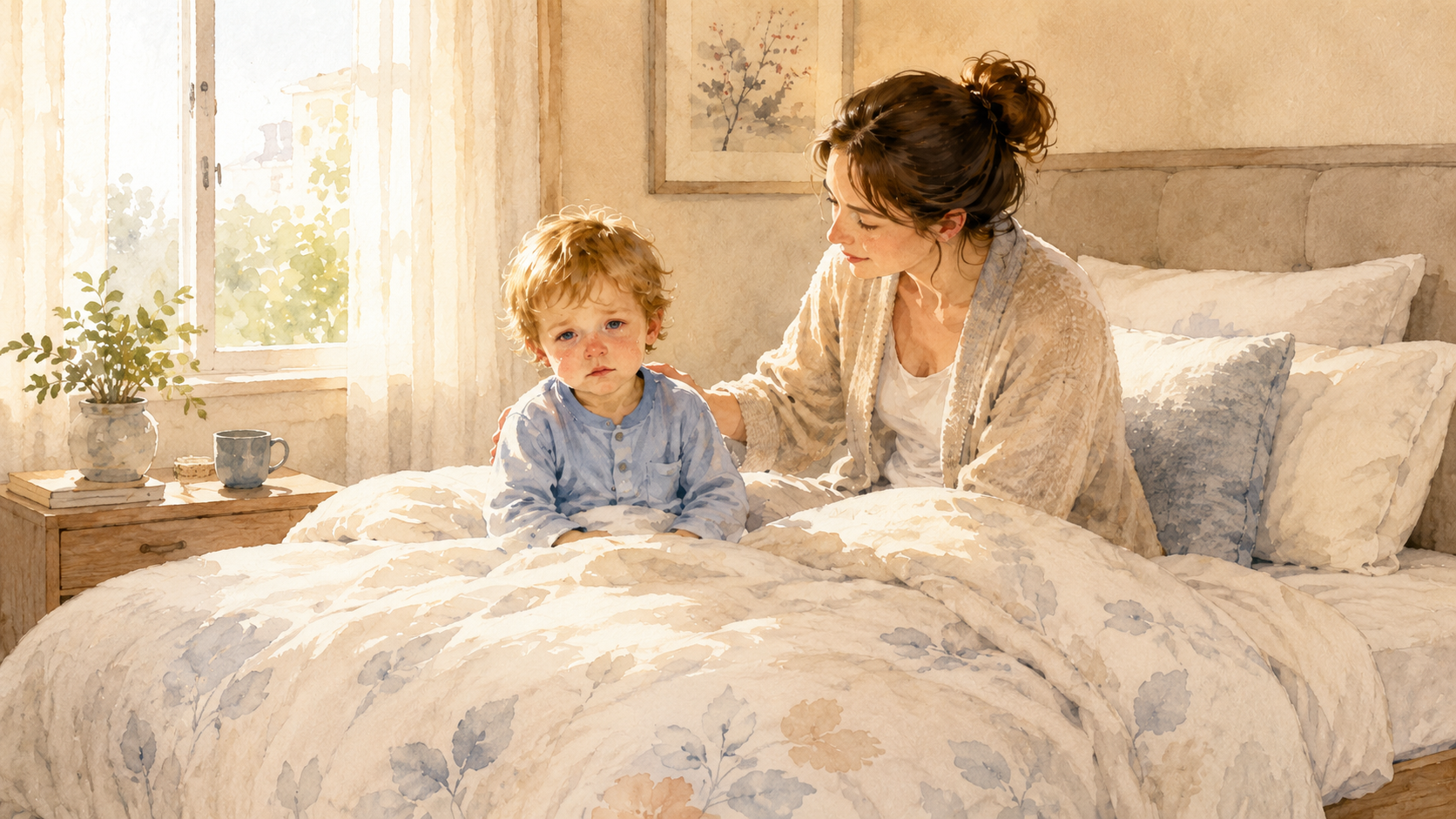
Coughs and runny noses are among the most common reasons parents visit a pediatrician in Japan. Most resolve on their own, but some signs need prompt attention. This guide explains what to watch for, when to seek help, and how to care for your child at home — based on Japan's official pediatric sources.
For information only. This article introduces official Japanese resources and explains how to navigate the healthcare system. It does not provide medical advice. Always consult a qualified medical professional for concerns about your child's health.
Young Babies: When to Be Extra Cautious
Young babies have narrower airways than older children, and they tire more easily when breathing is harder work than usual. Something that looks mild can deteriorate faster than you'd expect.
- Under 3 months — こどもの救急 lists age under 3 months (生後3か月未満) as an independent risk factor for cough. If your baby is under 3 months and is coughing or congested, go to hospital rather than waiting to see how things develop.
- Under 6 months — The Tokyo Metropolitan Children's Medical Guide advises that even if symptoms seem mild, babies under 6 months with a cough should be seen by a doctor at least once.
- Under 1 year with a blocked nose — Young babies breathe mainly through their nose. Even moderate congestion can make feeding difficult and breathing labored. The Tokyo guide specifically notes this as a reason to seek prompt care if breathing appears to be affected.
Cough — Signs to Watch
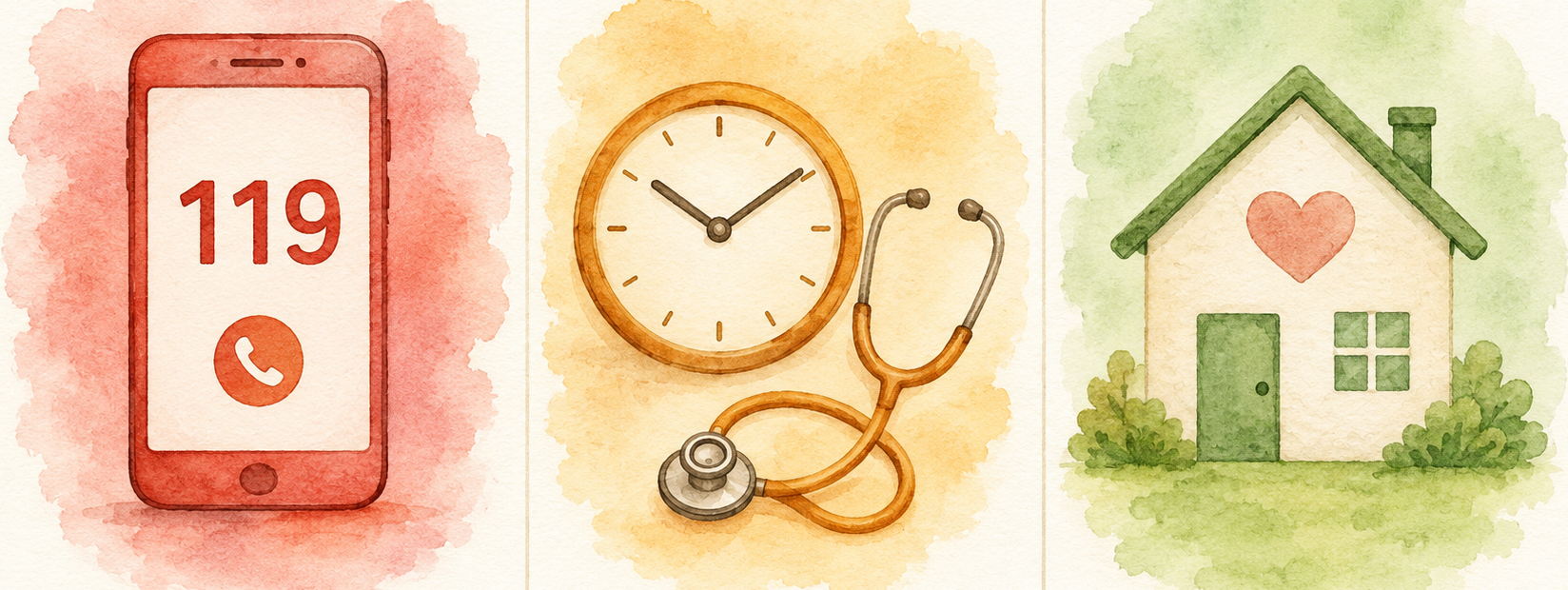
Most coughs in young children are caused by a viral upper respiratory infection and pass without hospital treatment. According to the Tokyo Metropolitan Children's Medical Guide, call 119 immediately if your child:
- Is listless or lethargic — ぐったりして元気がない
- Has blue or purple lips or fingernails — 唇や爪の色が青や紫色をしている
- Looks clearly distressed — 苦しそう
Seek medical attention the same day — without waiting for the clinic to open — if your child:
- Has a cough that won't stop — せきが連続して出て治まらない
- Makes an unusual sound when coughing — 変な音のせきをしている (see Special Cough Types below)
- Has a cough with a fever of 38°C or above — ひどいせきと38℃以上の熱がある
- Has chest that sucks in with each breath — 息を吸うと胸がべコベコ凹む (陥没呼吸, kanbotsu kokyū — a sign of breathing difficulty)
- Nostrils flare with each breath — 息を吸うと小鼻が開く
- Is struggling to speak or eat — 話すのが苦しい、水分や食事がとれない
- Cannot walk or lie down comfortably — 歩けない、横になれない
- Looks vacant or is unusually agitated — ボーっとしている、興奮している
- Started coughing suddenly after eating — 食べた後にきゅうにせきこんだ (possible choking or aspiration)
Reassuring signs: If the child is alert (元気がある), able to drink fluids (水分は取れている), and diapers are normally wet (おしっこが出ている), these suggest the child is coping. If you are unsure, call #8000 to speak with a pediatric nurse.
Special Cough Types to Know
The Tokyo Metropolitan Children's Medical Guide highlights a few cough patterns that are useful to know:
クループ (Croup) — 喉頭炎 (kōtōen)
A harsh, barking cough — the Tokyo guide describes it as 甲高いせき (a high-pitched cough) or 犬が吠えるようなせき (a cough that sounds like a dog barking). It is caused by inflammation around the voice box and typically comes on at night. If the cough sounds like this and your child seems distressed, seek medical attention promptly.
ゼーゼー・ヒューヒュー (Wheezing)
A wheezing or whistling sound when breathing, particularly when breathing out. This can be a sign of bronchiolitis in young babies, or the beginning of asthma in older children. If your child has been told they have 気管支が弱い (weak airways) or ぜんそく (asthma) and begins wheezing, follow the guidance from their regular doctor and seek prompt help if symptoms worsen.
百日せき (Whooping Cough — Pertussis)
A prolonged cough that comes in intense bursts, sometimes followed by a whooping intake of breath. The Tokyo guide notes that a cough lasting a long time may suggest 百日せき (hyakunichi seki) or asthma. Whooping cough is particularly dangerous in babies under 1 year old.
Runny Nose — Signs to Watch
A runny nose on its own is rarely an emergency in older children. In babies under 1 year, however, nasal congestion can make breathing and feeding difficult. According to the Tokyo Metropolitan Children's Medical Guide, seek medical attention the same day if your baby:
- Is under 1 year and breathing seems labored — 1歳以下で呼吸が苦しそう
- Cannot feed due to congestion — ミルクが飲めない (congestion is preventing feeding)
- Is persistently irritable — 機嫌が悪い (if this continues or worsens)
For older children, a runny nose with fever, ear pain, or symptoms lasting more than 10 days without improvement is worth a clinic visit — these can sometimes indicate a sinus infection (副鼻腔炎, fuku biku kūen) or ear infection (中耳炎, chūji-en).
Caring for Your Child at Home
For most mild coughs and runny noses, the main thing you can do at home is keep fluids going and let the child rest. The Tokyo Metropolitan Children's Medical Guide specifically recommends:
- Fluids — Keep offering drinks little and often. This helps keep mucus manageable and stops things getting worse.
- Rest — Skip unnecessary outings and keep things calm. Toddlers especially need more sleep when they're under the weather.
- Humidity — Keep the room humid, especially in winter (冬場は乾燥するのでウイルスが繁殖しやすい — dry winter air lets viruses spread more easily). Running a humidifier (加湿器, kashitsuki) overnight helps.
- Sore skin under the nose — Wiping repeatedly can irritate the skin under the nose. The guide suggests using a clean piece of gauze and applying a gentle ointment (軟膏, nankō) to protect the skin.

The Nasal Aspirator (鼻水吸引器)
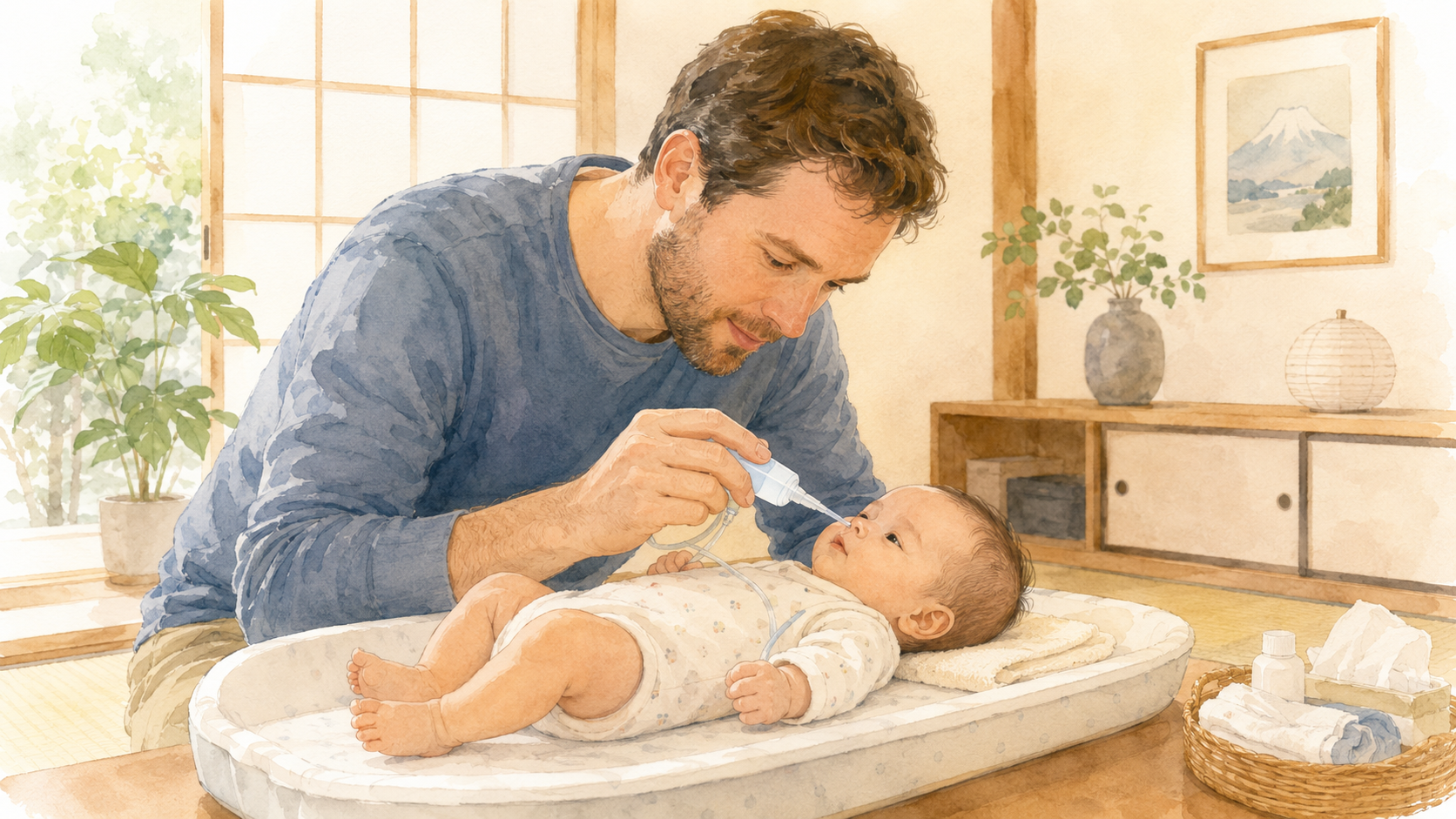
Nasal aspirators are widely used in Japan and sold at most pharmacies (薬局, yakkyoku). The Tokyo Metropolitan Children's Medical Guide mentions them as a safe home option, alongside the traditional approach of a parent placing their mouth over the baby's nostril and gently suctioning (covering the other nostril at the same time).
Aspirators come in two main types: a simple bulb syringe (スポイト状の器具) and electric versions that provide stronger suction. Both are safe to use. If you are unsure which to choose, ask at the pharmacy counter, or see our guide to the aspirators sold in Japan.
To ask for a nasal aspirator at a pharmacy, say: 「赤ちゃんの鼻水吸引器はありますか?」 (Akachan no hanamizu kyūinki wa arimasu ka? — Do you have a nasal aspirator for babies?)
Tips for Non-Japanese Speakers
- #8000 — Japan's nationwide pediatric phone consultation line. Dial from any mobile or landline. Say 「英語が話せる方はいますか?」 (Is there someone who speaks English?). Hours vary by prefecture. Our guide to deciding when a sick child needs a doctor covers how #8000 works and when to call an ambulance instead.
- AMDA International Medical Information Center — multilingual telephone support for international residents in Japan, Monday through Friday 10:00–16:00.
- At the clinic — describing your child's cough to a Japanese doctor is easier if you can mimic the sound. Saying 「犬が吠えるようなせき」 (inu ga hoeru yō na seki — a cough like a dog barking) or 「ゼーゼーしている」 (zē-zē shite iru — wheezing) will be immediately understood.
- Bring your 母子健康手帳 and health insurance documentation (マイナ保険証 or 資格確認書) to any doctor's visit.
Japanese Vocabulary
| Japanese | Reading | Meaning |
|---|---|---|
| せき | seki | Cough |
| 鼻水 | hanamizu | Runny nose |
| 鼻づまり | hanazumari | Blocked / stuffy nose |
| ゼーゼー | zē-zē | Wheezing sound |
| 喉頭炎 | kōtōen | Croup / laryngitis |
| 百日せき | hyakunichi seki | Whooping cough / pertussis |
| 副鼻腔炎 | fuku bikū-en | Sinus infection / sinusitis |
| 中耳炎 | chūji-en | Ear infection / otitis media |
| 陥没呼吸 | kanbotsu kokyū | Chest retractions (chest sucking in on breathing) |
| 鼻水吸引器 | hanamizu kyūinki | Nasal aspirator |
| 加湿器 | kashitsuki | Humidifier |
| 喘息 | zensoku | Asthma |
| 上気道炎 | jōkidō-en | Upper respiratory tract infection |
| 小児科 | shōnika | Pediatric clinic |