

Written and reviewed by Susumu
Born and raised in Japan · Checked against Japanese law and ministry guidance
How to breastfeed your newborn in Japan — getting a good latch, best nursing positions, how much to feed by age, and how to burp your baby.
Affiliate Disclosure: This article contains affiliate links. If you click a link and make a purchase, we may earn a small commission at no extra cost to you. We only recommend products we genuinely believe are helpful. See our Terms of Use for full details.

Introduction
Breastfeeding is a skill — for both mother and baby. The early weeks can be challenging, but with the right technique and support, most mothers are able to establish a comfortable feeding routine. In Japan, hospital midwives (助産師) are trained to help from the very first feed, and many hospitals offer a breastfeeding clinic (母乳外来) after discharge.
📌 Note: This article is for informational purposes only. Always consult your midwife, hospital nurse, or pediatrician for personalized advice.
How to Get a Good Latch (飲ませ方のコツ)
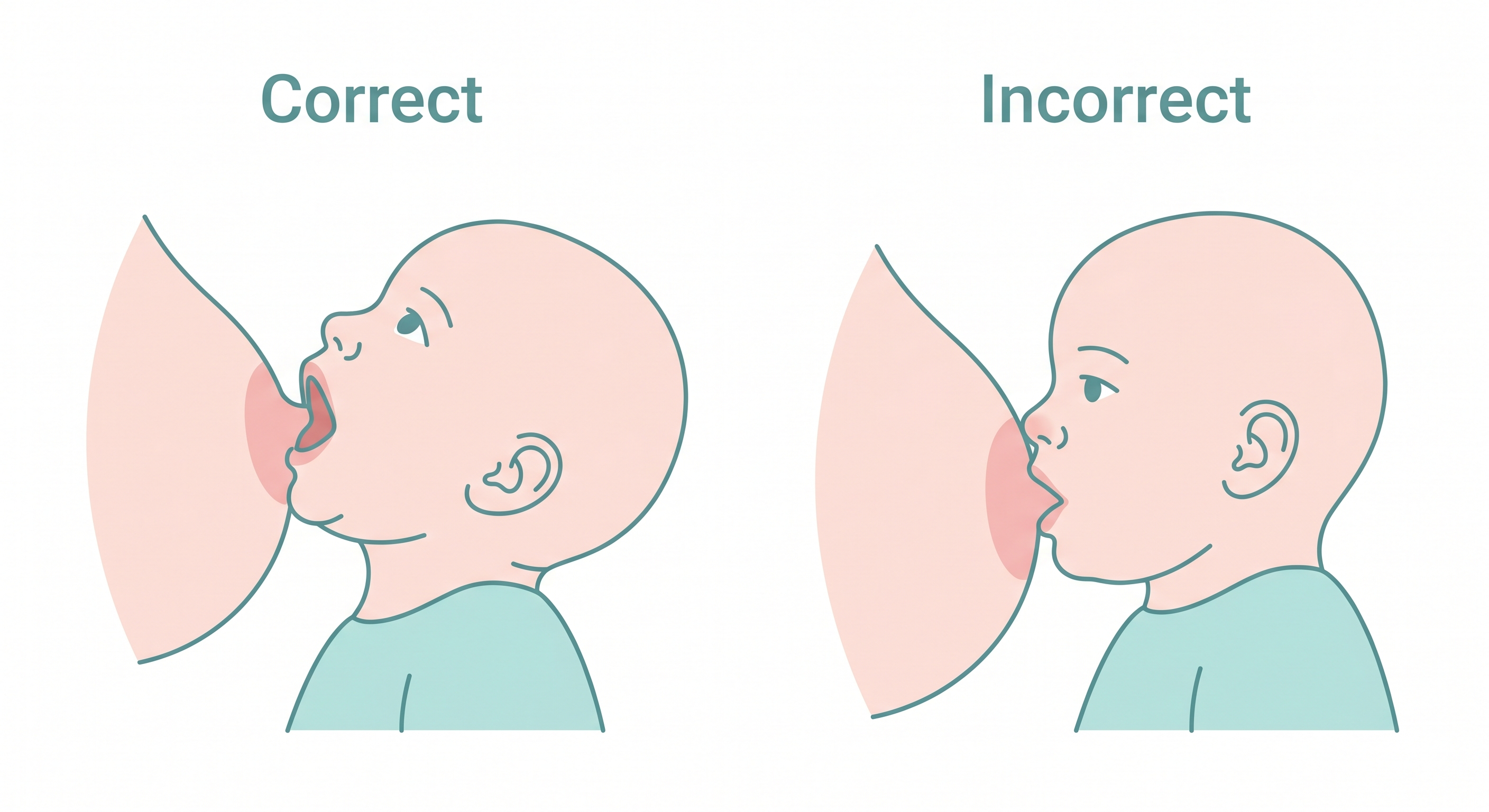
A correct latch is the foundation of comfortable, effective breastfeeding. Most nipple pain and low milk supply issues come from a shallow latch.
- Wait for a wide open mouth: Tickle the baby's lips with your nipple and wait until they open their mouth wide — like a yawn — before bringing them to the breast.
- Bring baby TO the breast: Move the baby toward you, not the breast toward the baby.
- Deep latch: The baby should take in not just the nipple but a large part of the areola (乳輪). Their chin should be pressed into the breast and their nose should be just clear.
- Check for good signs: You should feel a strong drawing sensation — not pain. You should hear swallowing. The baby's cheeks stay rounded (not sucked in).
- Breaking the latch: To remove the baby, gently insert a clean finger into the corner of their mouth to release the suction first. Never pull them off directly.
Breastfeeding Positions (授乳姿勢)
There is no single correct position — the best one is whatever feels comfortable for you and allows the baby to latch well. A nursing cushion (授乳クッション) is helpful for all positions, reducing strain on your arms and back.
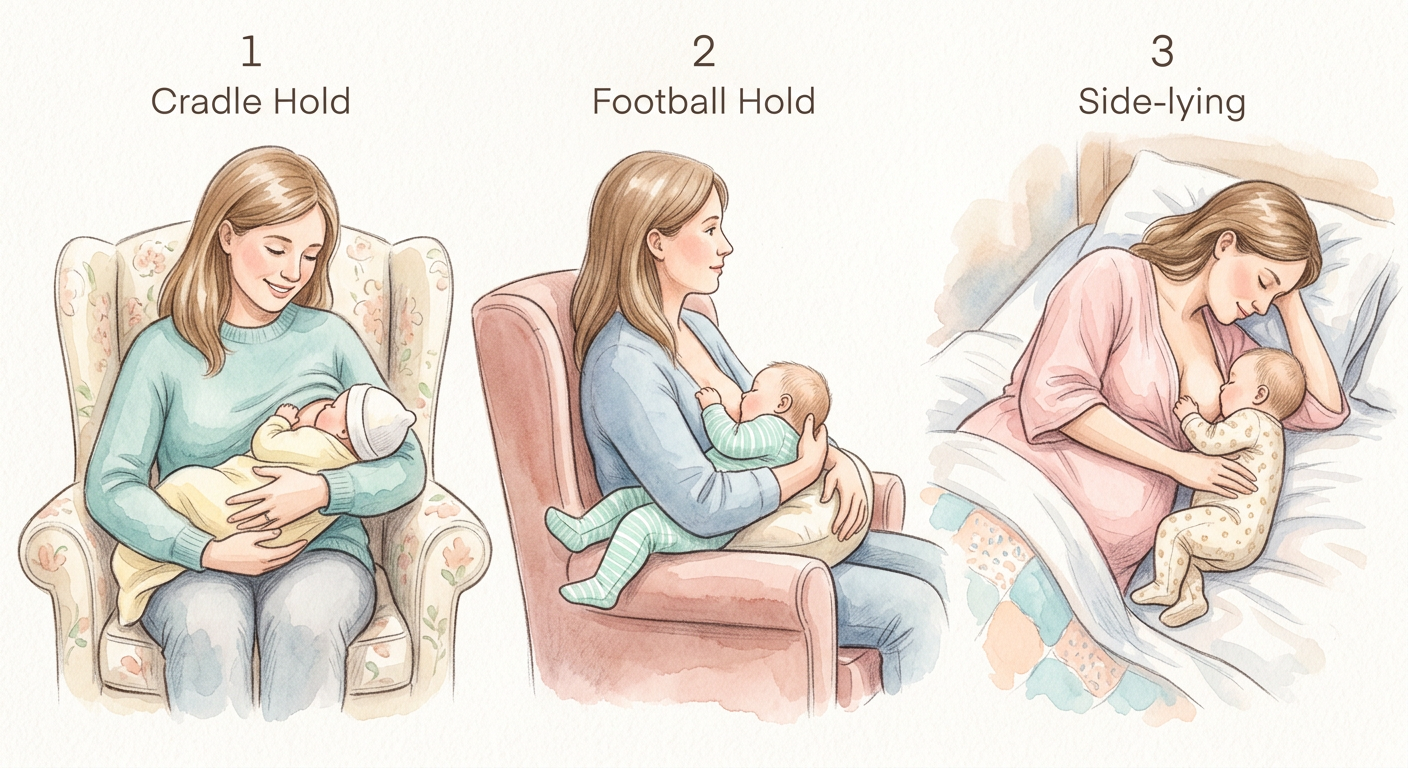
Cradle Hold (横抱き)
The most common position. Baby lies across your front, their head resting in the crook of your arm, body supported along your forearm. Make sure the baby's ear, shoulder, and hip are in a straight line.
Football Hold (わきの下抱き)
Baby is tucked under your arm like a rugby ball, legs pointing behind you. Their body is supported along your forearm, and you support their head with your hand. Good for mothers recovering from a cesarean section, or for babies who struggle with the cradle hold.
Side-Lying (添い乳)
Mother and baby both lie on their sides facing each other. Popular for nighttime feeds as it allows the mother to rest. Only use this position when you are fully awake — do not fall asleep while feeding in this position.
How Often to Feed (授乳の回数)
Breast milk is digested quickly, so newborns feed frequently. In the early weeks, feed on demand — whenever the baby shows hunger cues such as rooting (turning head and opening mouth), sucking on hands, or making small fussing sounds. Crying is a late hunger signal.
- 0–1 month: 8–12 times in 24 hours is normal.
- 1–3 months: Gradually settles to around 7–8 times per day.
- 3 months+: Many babies settle into a more predictable pattern of every 3 hours or so.
Frequent feeding in the early weeks is not a sign that something is wrong — it is what establishes your milk supply. The more the baby feeds, the more milk your body produces.
How Much to Feed (授乳量の目安)
Unlike formula, you cannot measure how much milk a breastfed baby drinks. Instead, look at these signs that your baby is getting enough:
- Steady weight gain (your baby will be weighed at regular 乳幼児健診 checkups)
- 6 or more wet diapers per day (from around day 5)
- Baby seems satisfied and relaxed after feeds
- Regular bowel movements
Each feed typically lasts 10–15 minutes per breast. Offer both breasts at each feed, starting with the side you finished on last time.
How to Burp Your Baby (げっぷのさせ方)
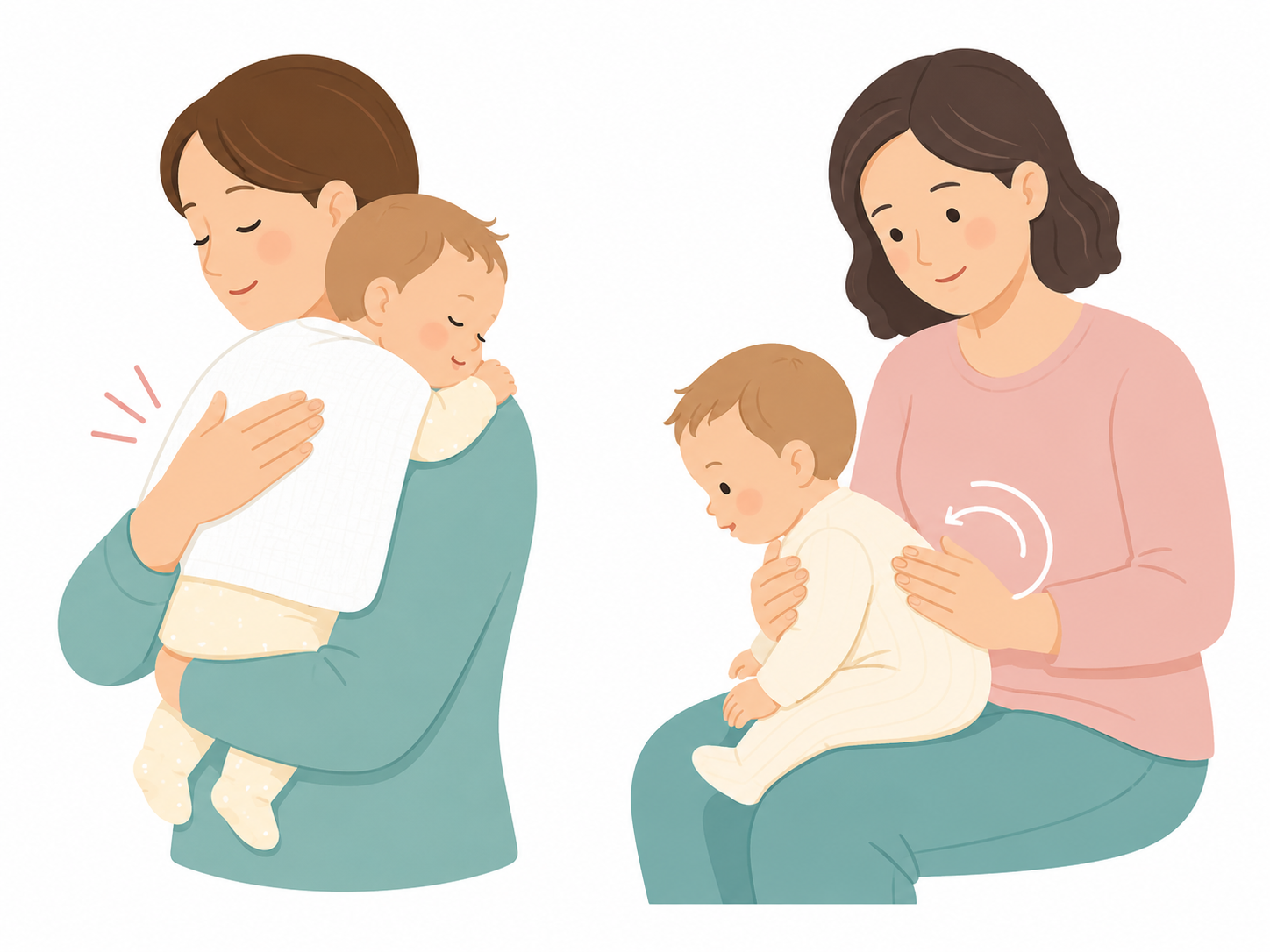
Babies swallow air during feeding. Burping after every feed helps prevent discomfort and reduces spitting up. In Japan, burping is considered standard practice for the first 4 months.
Over the Shoulder
Hold baby upright against your shoulder, supporting their bottom with one hand. Gently pat or rub their back with the other hand. Place a muslin cloth (ガーゼ) over your shoulder first.
Sitting Upright on Your Lap
Sit baby upright on your lap, leaning slightly forward. Support their chest and chin with one hand, and rub their back in circular motions with the other. This position tends to produce quicker burps.
If no burp comes after 5 minutes, don't worry — not every baby burps every time. Laying baby slightly on their side for a few minutes after feeding is also fine.