
Written and reviewed by Susumu
Born and raised in Japan · Checked against Japanese law and ministry guidance
When your child starts elementary school in Japan, hoikuen is no longer an option. Gakudo hoiku — government-funded after-school care — fills that gap. Here is how it works, how to apply, and what the 小1の壁 means for working parents.
Affiliate Disclosure: This article contains affiliate links. If you click a link and make a purchase, we may earn a small commission at no extra cost to you. We only recommend products we genuinely believe are helpful. See our Terms of Use for full details.
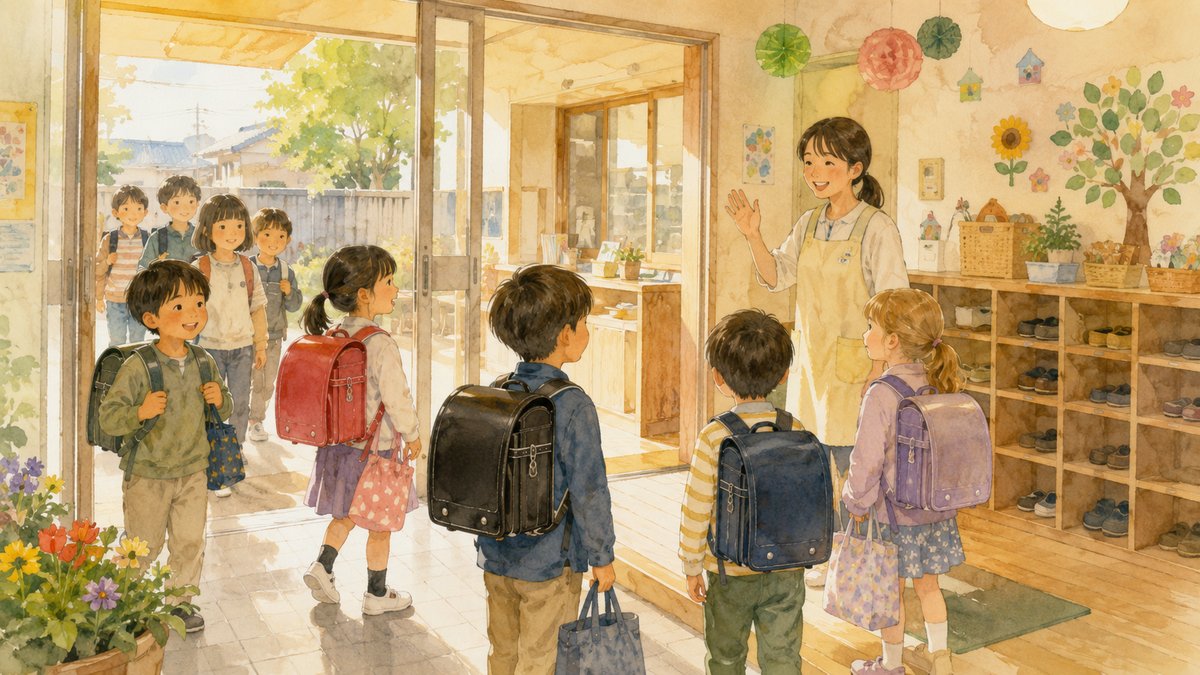
When your child starts elementary school in Japan, hoikuen is no longer an option. After-school care becomes a separate system entirely — and for many working parents, navigating it is one of the biggest surprises of the transition. This guide explains how 学童保育 (gakudo hoiku) works and what you need to do before your child enters 小学校 (shōgakkō).
What Is Gakudo Hoiku?
学童保育 (gakudo hoiku — literally "school-age childcare") is Japan's after-school care system for elementary school children. It covers the gap between the end of the school day and the time a parent finishes work.
It is also known by the official name 放課後児童クラブ (hōkago jidō kurabu — after-school children's club), and you will often see both terms used interchangeably. The legal name is 放課後児童健全育成事業 (hōkago jidō kenzen ikusei jigyō), established under Article 6-3 of the Child Welfare Act (児童福祉法). The facility may be located within the school building, in an annex on school grounds, or in a separate building nearby.
By the numbers (こども家庭庁, May 2025)
- 1,570,645 children enrolled nationwide — a record high
- 25,928 clubs operating across Japan
- 16,330 children on waiting lists and unable to secure a place
- Over 51% of clubs are located within elementary school grounds
The 小1の壁 — The Elementary School Cliff
Japanese parents talk about the 小1の壁 (shōichi no kabe — "the first-grade wall") — the sudden drop in childcare coverage that happens when a child transitions from hoikuen to elementary school. It is one of the most stressful moments in the working parent calendar.
Why the transition is harder than it looks
- Shorter covered hours — Gakudo hoiku hours vary by facility and may not match what you were used to at hoikuen. Check the closing time of your specific club before applying.
- Separate application — Gakudo hoiku is a completely separate system from hoikuen. You must apply independently, and the process, deadlines, and eligibility criteria differ by municipality.
- No guarantee of a place — Demand exceeds supply in many areas. Nationally, 16,330 children were unable to secure a place as of May 2025 (こども家庭庁). Tokyo, Saitama, Hyogo, Chiba, and Kanagawa together account for roughly half of all waiting children.
- School breaks — Elementary school has a long summer break, plus winter and spring breaks. Check with your facility whether all-day care runs through the breaks and whether it requires a separate application or incurs different fees.
For international parents, navigating the application system, deadlines, and eligibility criteria all requires reading Japanese-language documents. Contact your ward or city office early for guidance.
Who Can Use It?
Gakudo hoiku is for children enrolled in 小学校 (elementary school), grades 1–6, whose parents or guardians are working or otherwise unable to supervise them after school. The Child Welfare Act defines the target as children whose parents are unavailable at home during the day due to work or other qualifying reasons (労働等).
Standard eligibility
- Child is enrolled in 小学校 (grades 1–6)
- Parent or guardian is unavailable at home during the day — for example, due to employment, illness, or caring for another family member
- Exact qualifying reasons and catchment area rules are set by each municipality
Higher grades are harder to get into
Gakudo hoiku covers all six years of elementary school nationally, but in practice securing a place becomes harder in upper grades. Official data shows that grade 4 children account for the single largest share of waiting list numbers — 5,589 of the 16,330 children nationally unable to secure a place in 2025. Lower grades (1–3) account for around 78% of all enrolled children. Check your municipality's policy on upper-grade availability before your child reaches grade 4.
Types of Gakudo Hoiku
There are two main types — public (公設) and private (民設). All licensed 放課後児童クラブ must meet national minimum standards set under the Child Welfare Act.
National minimum standards (厚生労働省省令)
- At least 2 staff members per group, one of whom must hold a certified 放課後児童支援員 qualification
- A minimum of 1.65m² of floor space per child
- Open for at least 250 days per year
- Open for at least 3 hours on school days, and 8 hours on school breaks
公設学童 (Kōsetsu gakudo) — Municipal
Run by the local municipality or a commissioned operator. Fees are subsidized and set by each municipality. These are the facilities that have waiting lists (待機児童). As of 2025, public clubs make up around 75% of all 放課後児童クラブ nationwide (こども家庭庁).
民設学童 (Minsetsu gakudo) — Private
Privately run and not subsidized. Fees are higher and vary by facility. Private clubs account for around 25% of clubs nationally (こども家庭庁, 2025). They may be an option if you cannot secure a public place, but confirm hours, fees, and services directly with the facility.
How to Apply
Applications are made through your local municipal office (市区町村). Each municipality sets its own deadlines, required documents, and selection criteria.
Apply well in advance — do not wait until your child starts school
For April entry (the start of the Japanese school year), applications are generally submitted in the preceding autumn or winter — but deadlines vary significantly by municipality. As a general guide, contact your ward or city office around autumn before your child's first year of elementary school to confirm the exact schedule for your area.
What you will typically need to submit
- Application form (申請書) — available from the municipal office or its website
- Proof of employment or study (就労証明書 / 在学証明書)
- Proof of address (住民票など)
- Other documents as required by your municipality
Note for international residents
Application forms and supporting documents are in Japanese. Ask your ward office whether multilingual support is available (多言語相談窓口), or bring a Japanese-speaking friend or colleague.
Hours and What Children Do
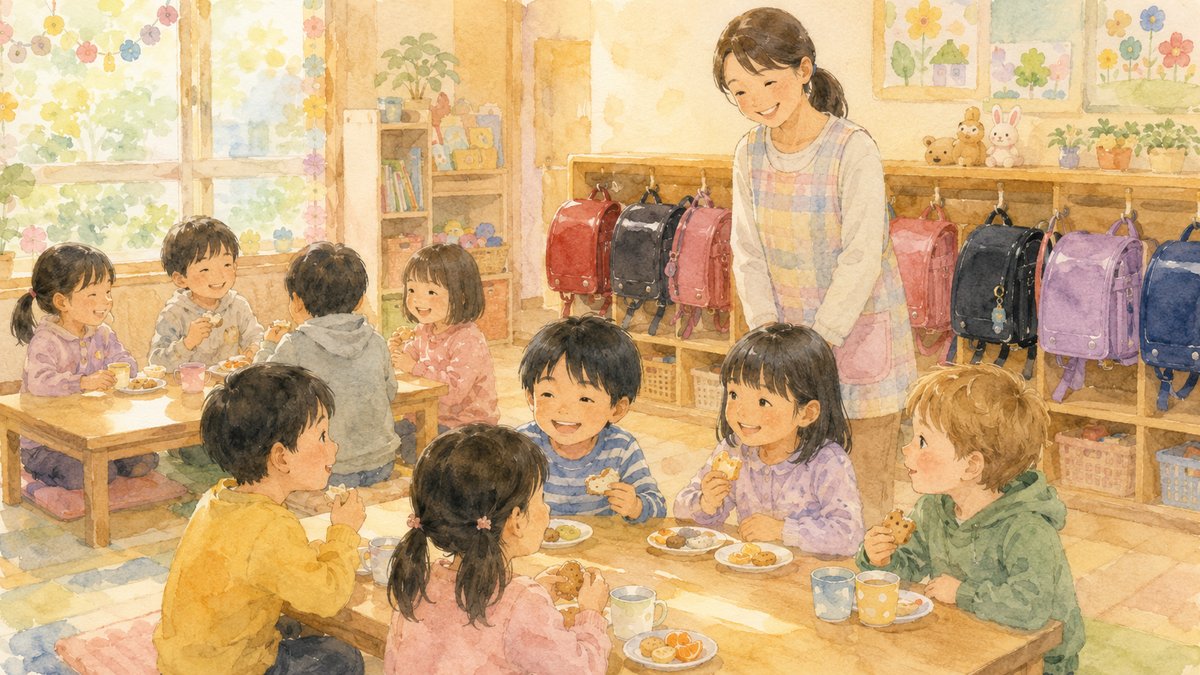
On school days, children go to the gakudo hoiku facility after school ends. During long school breaks, most facilities provide all-day care. Hours vary by facility — confirm with your specific club.
Closing times on school days (こども家庭庁, May 2025)
- By 18:00 — 16% of clubs
- 18:01–18:30 — 22% of clubs
- 18:31–19:00 — 55% of clubs
- Past 19:00 — 7% of clubs
During school breaks, around 61% of clubs open from 8:00, with closing times following a similar pattern.
What children do at gakudo hoiku
Under the Child Welfare Act, gakudo hoiku must provide children with an appropriate environment for play and daily life (遊び及び生活の場). The specific program varies by facility, but official survey data shows:
- 89.7% of clubs provide a snack (おやつ) during the afternoon
- 52.1% of clubs provide lunch during school breaks
Source: こども家庭庁 放課後児童クラブ実施状況調査, May 2025
Fees
There is no single national fee for gakudo hoiku — fees vary by municipality and facility. The table below shows the monthly fee distribution across all clubs nationally (こども家庭庁, 2025).
Monthly fees across all clubs (こども家庭庁, May 2025)
| Monthly fee | Share of clubs |
|---|---|
| Under ¥2,000 | 1.2% |
| ¥2,000–¥4,000 | 17.3% |
| ¥4,000–¥6,000 | 26.2% — most common |
| ¥6,000–¥8,000 | 20.0% |
| ¥8,000–¥10,000 | 16.0% |
| ¥10,000–¥12,000 | 8.4% |
| ¥12,000 and above | 8.8% |
Note: This data covers all licensed clubs, including both public and private. Around 80% of clubs charge under ¥10,000 per month.
Fee reductions are widely available
89.2% of clubs that charge fees offer some form of reduction (減免). Common qualifying categories include single-parent households (ひとり親), life protection recipients (生活保護世帯), non-taxable households (市民税非課税世帯), and families with siblings using the same club. Ask your municipality what reductions apply in your case.
Source: こども家庭庁 放課後児童クラブ実施状況調査, May 2025
Sources
- こども家庭庁「放課後児童健全育成事業(放課後児童クラブ)の実施状況」令和7年5月1日現在
- 児童福祉法 第6条の3第2項(放課後児童健全育成事業の定義)
- 放課後児童健全育成事業の設備及び運営に関する基準(厚生労働省省令)
Japanese Vocabulary
| Japanese | Reading | Meaning |
|---|---|---|
| 学童保育 | gakudō hoiku | After-school childcare for elementary school children |
| 放課後児童クラブ | hōkago jidō kurabu | After-school children's club (official name) |
| 小1の壁 | shōichi no kabe | The "first-grade wall" — childcare gap at school entry |
| 小学校 | shōgakkō | Elementary school |
| 放課後 | hōkago | After school |
| 申請書 | shinseisho | Application form |
| 就労証明書 | shūrō shōmeisho | Proof of employment |
| 待機児童 | taiki jidō | Children on the waiting list |
| 延長保育 | enchō hoiku | Extended care hours |
| 宿題 | shukudai | Homework |
| おやつ | oyatsu | Snack |
| 高学年 | kōgakunen | Upper grades (grades 4–6) |