

Written and reviewed by Susumu
Born and raised in Japan · Checked against Japanese law and ministry guidance
Japan's HPV vaccine is free for girls from grade 6 to high school year 1. It covers 80–90% of cervical cancer causes. Here's the full schedule, dose count by age, side effects, history of the 2013 suspension, and what international families need to know.
Affiliate Disclosure: This article contains affiliate links. If you click a link and make a purchase, we may earn a small commission at no extra cost to you. We only recommend products we genuinely believe are helpful. See our Terms of Use for full details.

Free for girls from grade 6 to high school year 1: Japan's HPV vaccination is a routine free vaccination targeting girls from around age 11 to 16. It protects against the strains of HPV responsible for 80–90% of cervical cancer cases, and is offered free at the standard schedule at your local public health window.
What Is HPV and Cervical Cancer?
HPV — human papillomavirus (ヒトパピローマウイルス) — is a very common virus spread through sexual contact. Most women are infected at least once in their lifetime, and in the majority of cases the immune system clears the virus on its own with no lasting effects. But in some people, the infection persists, and over a period of years or even decades it can cause cells in the cervix to change, eventually leading to cervical cancer.
The link between HPV and cervical cancer was confirmed in 1982 by German virologist Harald zur Hausen, who was awarded the Nobel Prize in Physiology or Medicine in 2008 for the discovery. There are more than 200 types (genotypes — meaning distinct strains of the virus) of HPV, and at least 15 are known to cause cervical cancer.
How common is cervical cancer in Japan?
In Japan, approximately 11,000 women are diagnosed with cervical cancer each year, and around 3,000 die from it. Cases begin increasing from age 20 and peak in the 30s — a life stage when many women are raising young children. About 900 women under the age of 30 lose their uterus to cancer treatment every year. National data estimates that, over a lifetime, roughly 130 in every 10,000 women will develop cervical cancer, and 31 in every 10,000 will die from it.
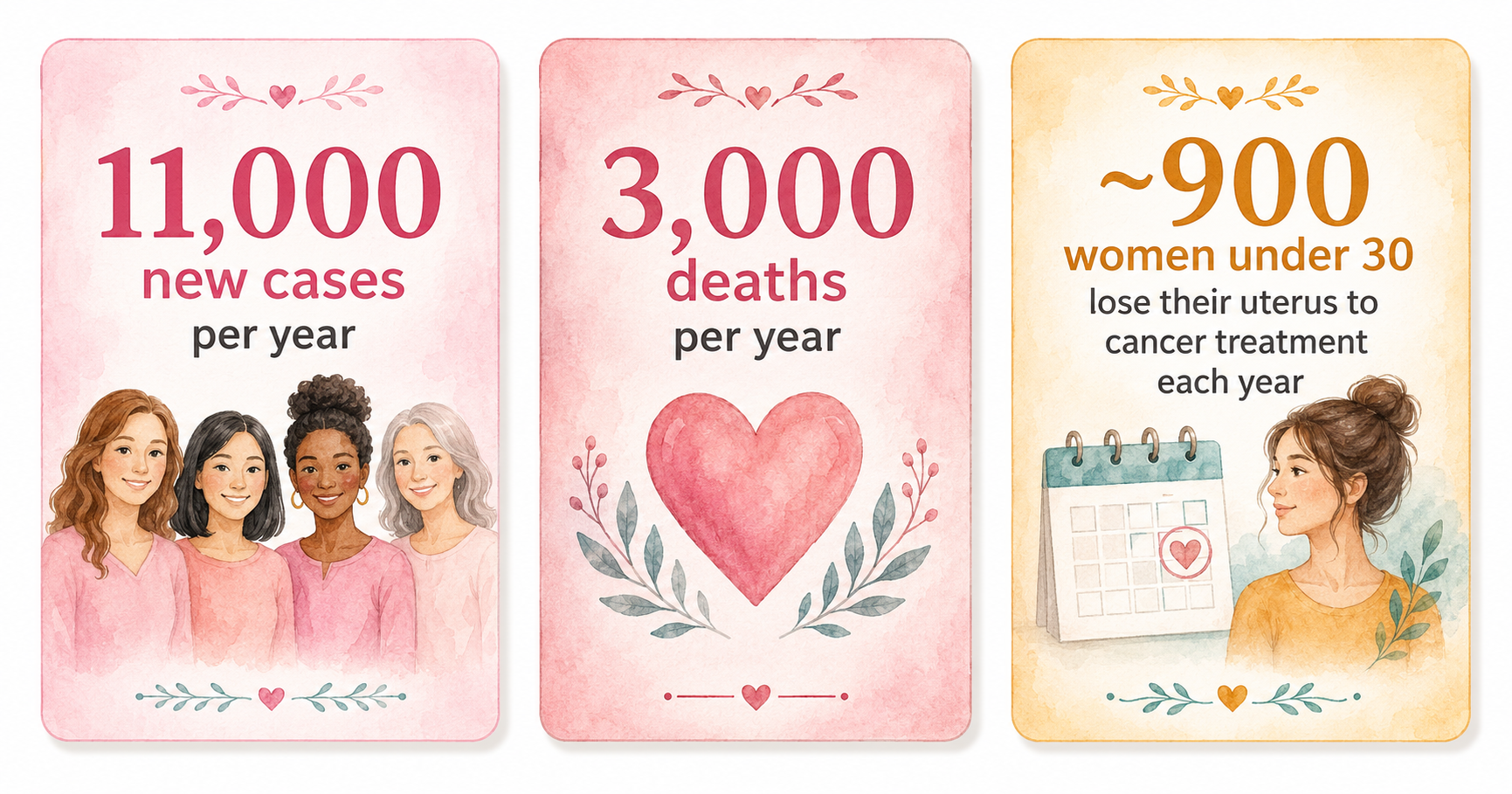
Why it matters for young families: Cervical cancer is more common in women in their 20s and 30s than most people expect. It is one of the few cancers that can be substantially prevented through vaccination before exposure to the virus — which is why Japan's routine program targets girls before sexual debut.
How does cervical cancer develop?
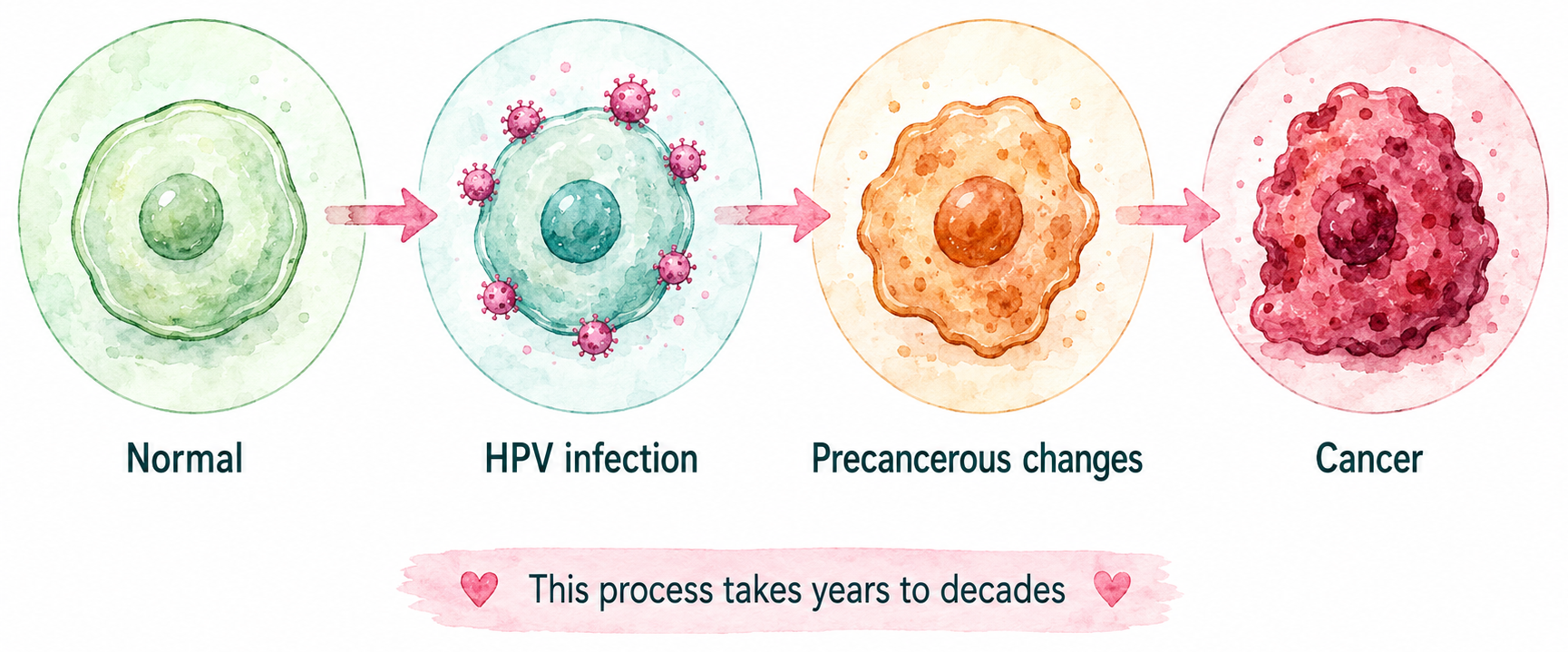
HPV infection alone does not immediately cause cancer. The progression moves through several stages: initial HPV infection → persistent infection → precancerous changes (前がん病変, pre-cancerous lesions where cells begin to appear abnormal) → cervical cancer. This process typically takes years to decades. Cervical cancer screening (子宮頸がん検診) can detect precancerous changes before they become cancer, which is why regular screening remains important even after vaccination.
About the Vaccine

Currently, Japan's publicly funded routine HPV vaccination program uses only the 9-valent vaccine (9価ワクチン), Silgard 9 — a recombinant vaccine (made from lab-produced proteins rather than the virus itself, so it cannot cause HPV infection) that targets nine HPV types: the two most strongly linked to cervical cancer (HPV16 and HPV18), plus five additional cancer-causing types and two types responsible for genital warts. Together, these cover the strains responsible for 80–90% of cervical cancer cases in Japan.
The vaccine works by stimulating the immune system to produce protective antibodies before any exposure to HPV. Research has shown that protective antibody levels are maintained for at least 12 years after vaccination, and ongoing studies continue to monitor long-term durability.
In addition to preventing the infection itself, the vaccine also reduces the likelihood of precancerous lesions developing — an earlier-stage benefit that helps prevent cancer before it has a chance to take hold.
Vaccination Schedule
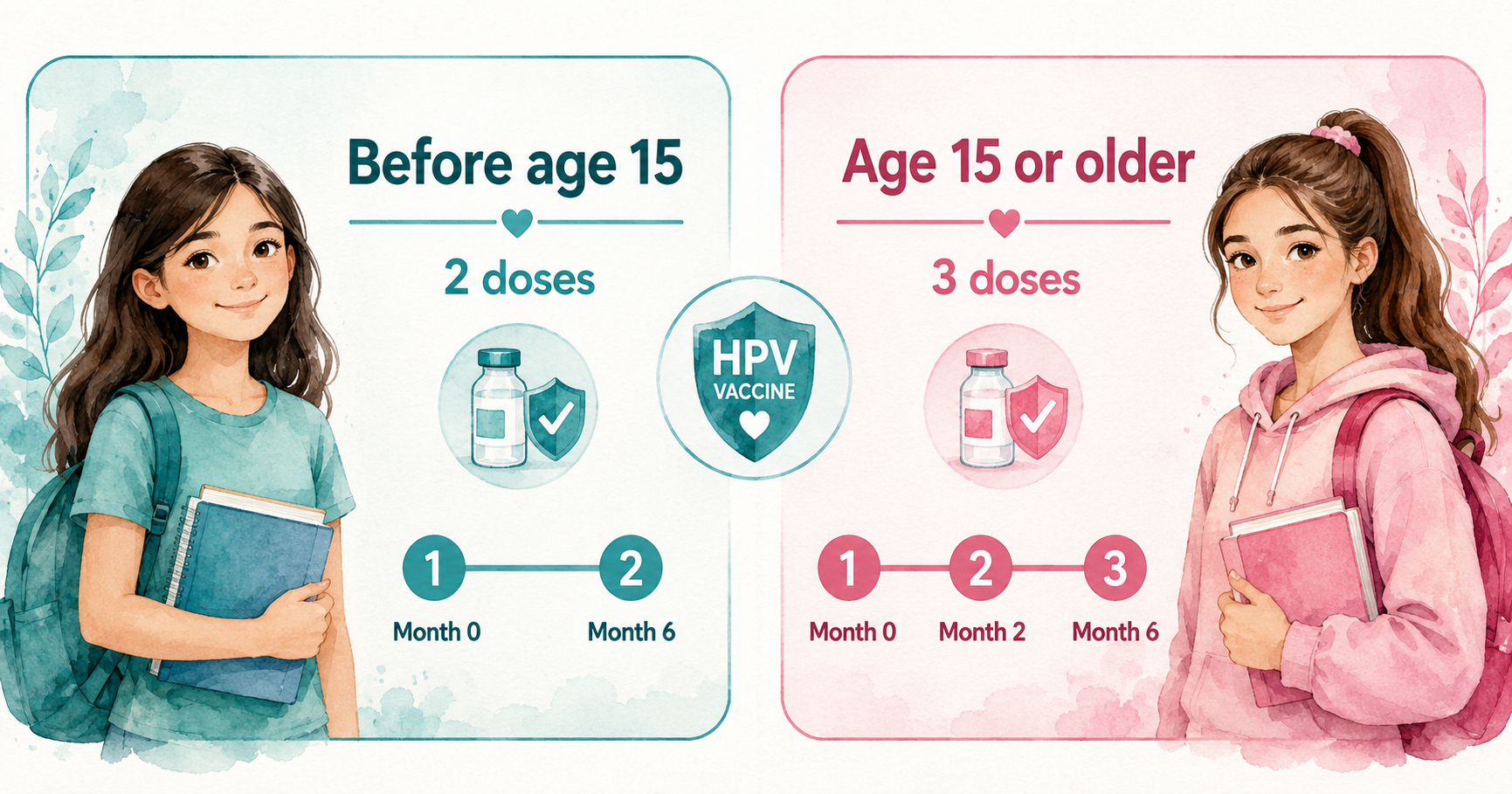
Routine HPV vaccination is available for girls from elementary school year 6 through high school year 1, with the standard timing around middle school year 1 (中学1年生), usually age 12–13. The number of doses depends on the age at which the first dose is given.
| Age at first dose | Total doses | Timing |
|---|---|---|
| Before 15th birthday | 2 doses | Dose 1 → at least 5 months later → Dose 2 (typically given at month 6) |
| From 15th birthday onward | 3 doses | Dose 1 → at least 1 month later → Dose 2 → at least 3 months later → Dose 3 (typically months 0, 2, and 6) |
The full course is ideally completed within one year. Parental consent is required for all doses — a consent form will be provided by your municipality or clinic.
Practical note: Getting the first dose before the 15th birthday means only 2 doses are needed instead of 3. If your daughter is approaching 15 and has not yet started, schedule the first dose before her birthday if you can to reduce the total number of appointments.
Is It Free?
Yes — for girls who fall within the routine vaccination window (grade 6 to high school year 1 equivalent), HPV vaccination is fully funded by the municipality. You book through your local public health window (保健センター) or a participating clinic, just as you would for other routine vaccines.
Outside the funded window — for example, if your daughter is older than the standard schedule — vaccination is available as voluntary vaccination (任意接種) and is paid out of pocket. The cost varies by clinic, but a two-dose course typically runs around ¥50,000–¥100,000 in total.
The 2013 Suspension and 2022 Resumption
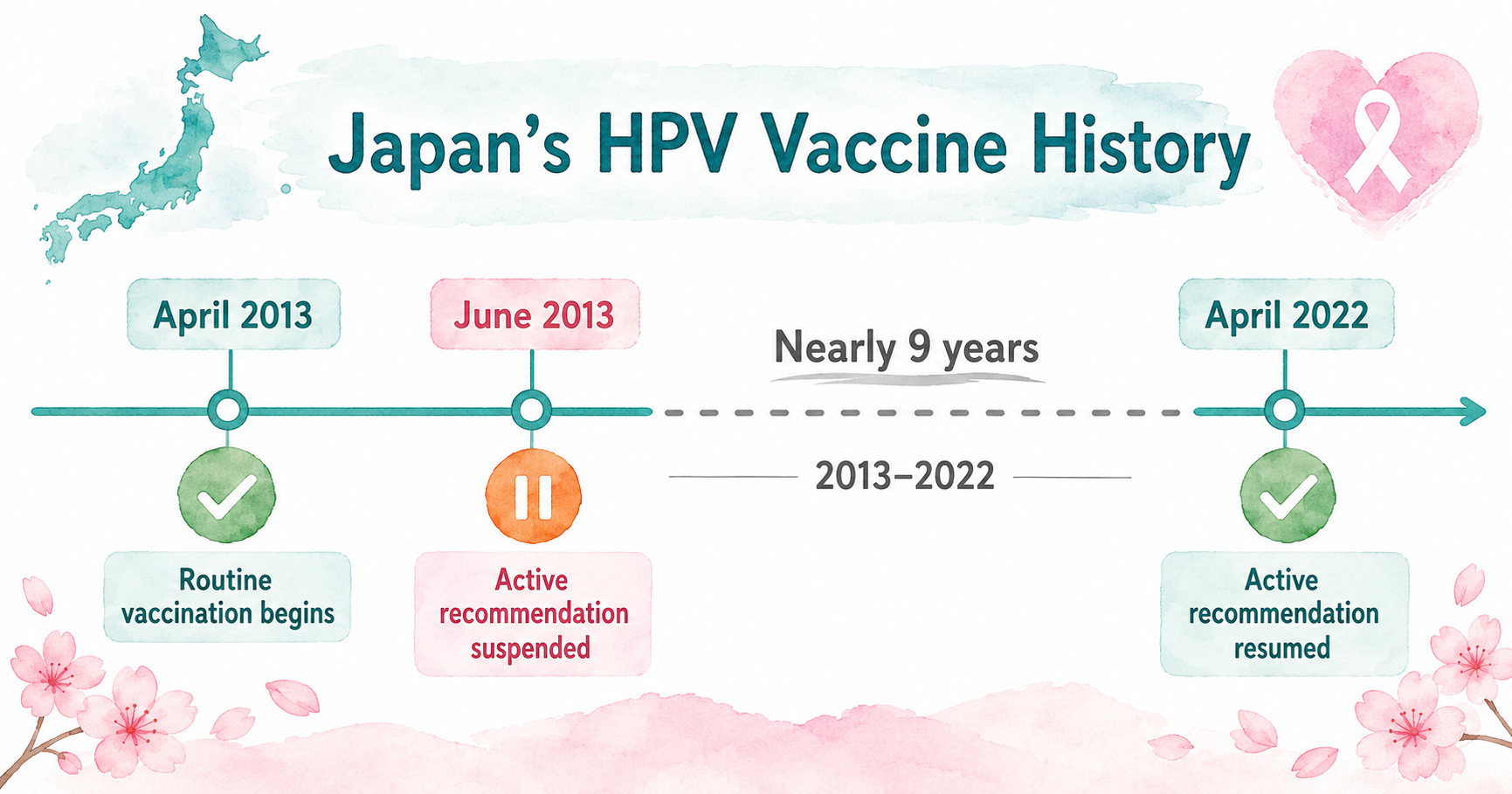
Japan was one of the first countries in Asia to add HPV vaccination to its national routine schedule, in April 2013. However, just two months later — in June 2013 — the Ministry of Health, Labour and Welfare suspended its active recommendation (積極的勧奨の差し控え) after reports of a range of physical symptoms in some vaccinated girls, including widespread pain and difficulty moving limbs.
The suspension lasted nearly nine years. During that time, vaccination rates dropped sharply and Japan's cervical cancer burden remained a concern, while many comparable countries that maintained their programs saw cervical cancer rates decline. In April 2022, following extensive safety reviews by independent expert committees, the Ministry reinstated the active recommendation. The scientific consensus, consistent with the conclusions of WHO and health agencies in other countries, is that a causal relationship between the vaccine and the reported symptoms has not been established.
To address the gap created by the suspension, a free catch-up program (キャッチアップ接種) was offered to women who had missed routine vaccination during those years — specifically, those born between April 2, 1997 and April 1, 2008. The catch-up program ended in March 2025, but people who had received at least one dose by then may be able to complete the remaining doses with public funding until March 2026. Women who have not started the series and still need vaccination can do so as voluntary (paid) vaccination.
Side Effects
HPV vaccination is given by intramuscular injection (a shot delivered into the muscle of the upper arm, rather than under the skin), and injection-site reactions are the most common side effects. The following frequencies are from the package insert for the 9-valent vaccine, based on clinical trial data.
| Frequency | Symptoms |
|---|---|
| 50% or more | Pain at injection site |
| 10–50% | Swelling and redness at injection site, headache |
| 1–10% | Dizziness, nausea, mild fever, fatigue, bruising at injection site |
| Less than 1% | Vomiting, stomach pain, muscle aches, joint pain, injection-site bleeding or hardening |
| Rare (frequency unknown) | Numbness (感覚鈍麻), fainting |

Fainting and dizziness shortly after injection are not uncommon, and are thought to be related to pain and anxiety rather than the vaccine itself. Clinics are required to have your daughter remain seated and rest for at least 30 minutes after each dose. If she feels strong pain or numbness immediately after the needle is inserted, tell the doctor straight away.
Serious but rare reactions
Serious adverse reactions are known but very rare:
- Anaphylaxis (アナフィラキシー) — a sudden, severe whole-body allergic reaction that requires immediate medical attention
- Guillain-Barré syndrome (ギラン・バレー症候群) — a rare nerve condition in which the immune system attacks the nerves, causing muscle weakness or paralysis
- ADEM (急性散在性脳脊髄炎, acute disseminated encephalomyelitis) — sudden inflammation of the brain and spinal cord, affecting movement and awareness
- ITP (免疫性血小板減少性紫斑病, immune thrombocytopenic purpura) — a condition where the immune system mistakenly attacks platelets (the cells that help blood clot), leading to easy bruising or unusual bleeding
The Ministry monitors safety data on a rolling basis through an independent expert committee and publishes its reviews. If your daughter experiences a health change after vaccination, contact the clinic where the injection was given, or reach out to your prefectural health department (衛生局).
Vaccination injury compensation
Japan operates a vaccination injury compensation scheme (予防接種健康被害救済制度) for all publicly funded vaccines. If a serious health problem arises after vaccination, compensation — including medical costs and disability allowances — can be applied for without having to prove strict medical causation. The premise is that if symptoms cannot be ruled out as vaccine-related, the person should not be left without support. As of March 2025, 636 cases had been reviewed under this scheme in connection with HPV vaccination, of which 384 had been approved.
About the Reported "Diverse Symptoms"
During the suspension period and since, some vaccinated girls reported symptoms that went beyond typical injection-site reactions: widespread pain, difficulty moving limbs, involuntary movements, dizziness, difficulty concentrating, and irregular periods, among others. These were widely covered in Japanese media.
Specialists categorize these as functional somatic symptoms (機能性身体症状) — a recognized medical category describing real, sometimes serious physical symptoms that do not have a clear structural or tissue-level cause that shows up on scans or tests. The symptoms are not "imagined" — they are genuine — but the mechanism is not yet fully understood. Independent research has found that similar patterns of symptoms appear in unvaccinated girls of the same age group at comparable rates, which complicates the question of causation. The current medical and regulatory consensus, including that of the WHO and Japan's own expert committee, is that a causal relationship between the HPV vaccine and these symptoms has not been established.
That said, the symptoms are real for those affected, and the Ministry of Health, Labour and Welfare has established specialized clinics (協力医療機関) in each prefecture to evaluate and support anyone who develops health concerns following HPV vaccination. If symptoms arise more than one month after vaccination and persist, a specialist evaluation is recommended.
Boys and HPV Vaccination
Routine HPV vaccination in Japan is currently offered to girls only. Boys are not part of Japan's national routine immunization program (定期接種). Some municipalities offer subsidies for voluntary (paid) HPV vaccination for boys as a local initiative, but there is no national standard. Check with your municipality for current local arrangements.
Cervical Cancer Screening After Vaccination
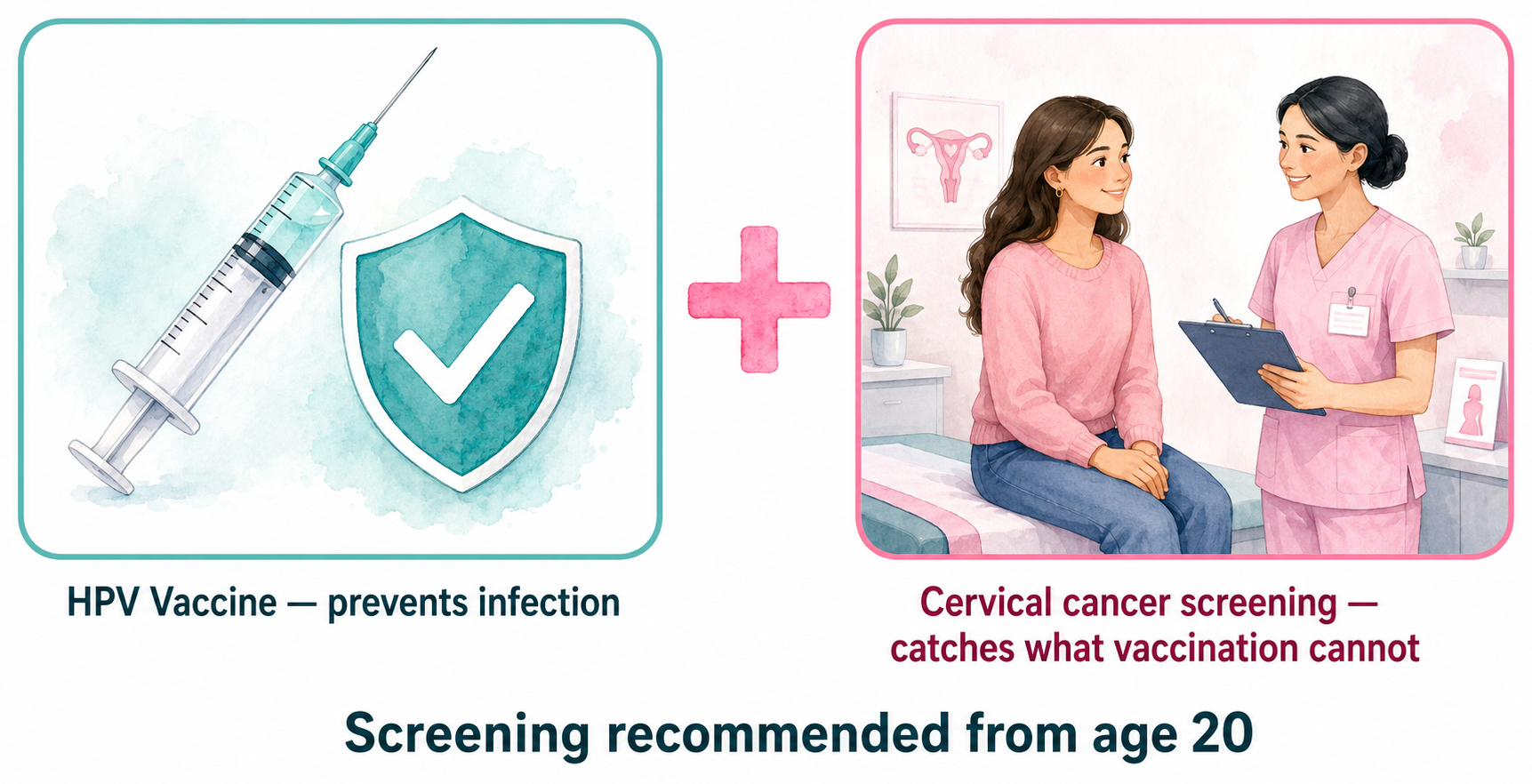
Even with full vaccination, cervical cancer screening remains essential. The vaccine covers 80–90% of cancer-causing HPV types — not all of them. Regular cervical cancer check-ups (子宮頸がん検診) from age 20 can detect precancerous changes early, before they develop into cancer.
Key point: Vaccination and screening work together. The vaccine reduces infection risk; screening catches changes that vaccination cannot prevent. Both are recommended by Japan's Ministry of Health, Labour and Welfare.
Notes for International Families

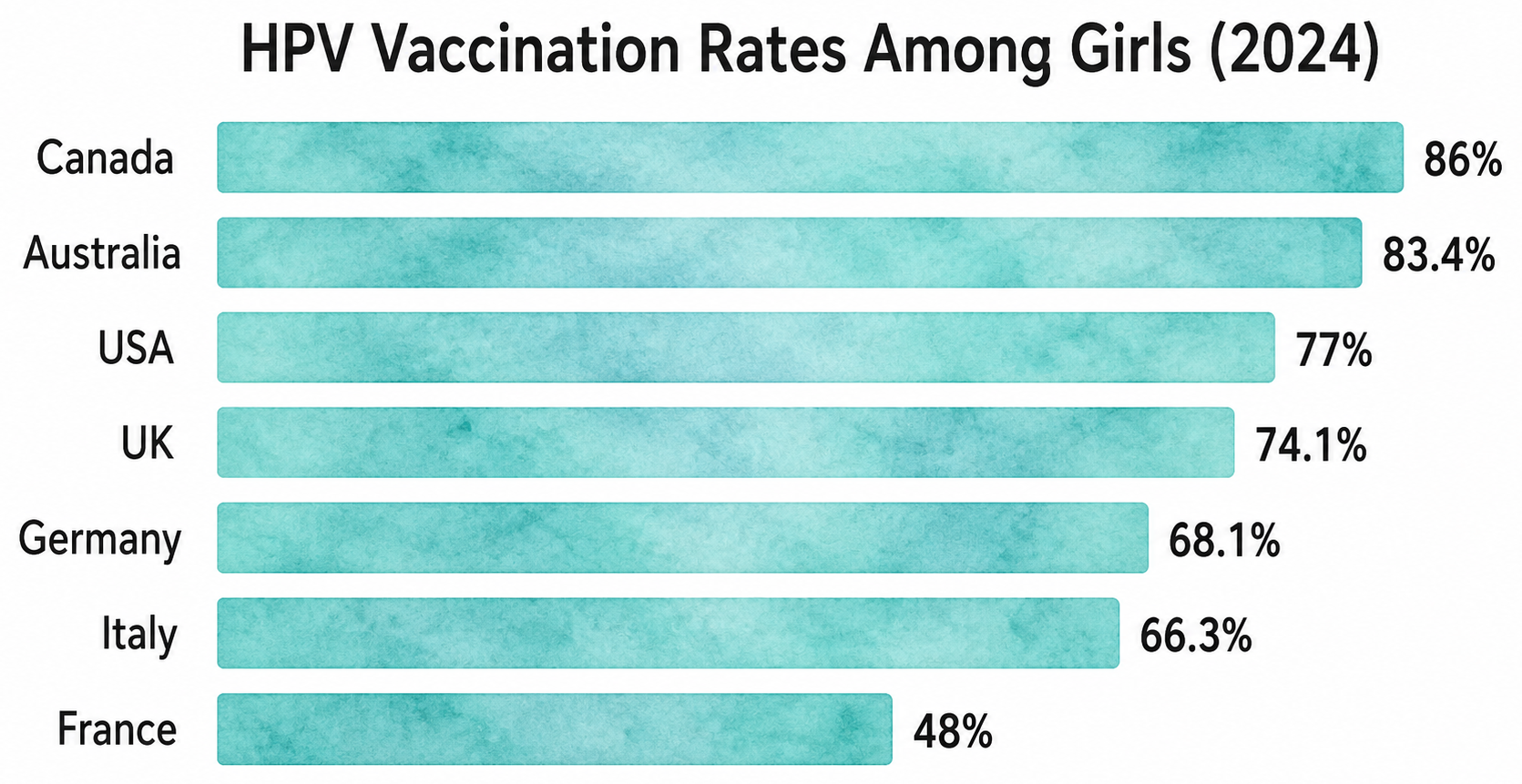
HPV vaccination is one of the most widely adopted vaccines in the world. As of early 2025, 148 of the 194 WHO member countries include it in their national immunization programs. In Canada and Australia, vaccination rates among girls exceed 80%. Japan's rate declined sharply during the suspension years but has been climbing since the 2022 resumption.
If your daughter received HPV doses in another country before coming to Japan, those doses count — you do not need to restart the series. Bring your child's vaccination record (母子手帳 or overseas equivalent) to your public health center. The staff will assess which doses, if any, remain and whether they can be completed under the routine program. In most cases, where and when the previous doses were given is sufficient information for them to advise you.
If your daughter has not been vaccinated and falls within the routine age window (grade 6 to high school year 1), she is eligible for free vaccination. Contact your municipality's public health center (保健センター) to register and book an appointment. A residence card (在留カード) is required, and your daughter must be registered as a resident (住民登録, juumin touroku).
Older daughters: If your daughter is older than the routine window but has not been vaccinated, she can receive HPV vaccination as voluntary vaccination (任意接種) at her own cost. Some clinics have English-speaking staff or can arrange translation — ask when you book.
What to Bring
- 母子手帳 (boshi techou) — your Mother and Child Health Handbook, or overseas vaccination record if applicable.
- 予診票 (yoshin hyō) — the pre-vaccination health questionnaire. Usually sent in advance by the municipality; some clinics provide it on arrival.
- 在留カード (zairyū kādo) — your residence card.
- マイナ保険証 — your My Number health insurance card. If you don't have one, bring your 資格確認書 (shikaku kakunin-sho), the alternative certificate issued by your insurer. The old health insurance card (健康保険証) was abolished in December 2024.
- 接種券 / 助成券 — any public funding voucher or letter from your municipality, if issued.
- 保護者同意書 (hogo-sha dōi-sho) — parental or guardian consent form. Usually included as part of the 予診票.
HPV sits at the far end of a schedule that begins in infancy. To see the routine shots that come before it, and which vaccines stay optional, see our guide to Japan's childhood vaccination schedule.
Japanese Vocabulary
| Japanese | Reading | Meaning |
|---|---|---|
| 子宮頸がん | shikyūkei gan | Cervical cancer |
| HPVワクチン | HPV wakuchin | HPV vaccine |
| 定期接種 | teiki sesshu | Routine (publicly funded) vaccination |
| 任意接種 | nin'i sesshu | Voluntary (paid) vaccination |
| 前がん病変 | zen-gan byōhen | Precancerous lesion |
| 子宮頸がん検診 | shikyūkei gan kenshin | Cervical cancer screening |
| 積極的勧奨 | sekkyokuteki kan'yō | Active recommendation (by the government) |
| 予防接種健康被害救済制度 | yobō sesshu kenkō higai kyūsai seido | Vaccination injury compensation scheme |
| 保健センター | hoken sentā | Public health center |
| 予診票 | yoshin hyō | Pre-vaccination questionnaire |