
Written and reviewed by Susumu
Born and raised in Japan · Checked against Japanese law and ministry guidance
Japan's flu vaccine is voluntary for healthy children but strongly recommended. Children under 13 need two doses each season. Here's the full schedule by age, recommended timing, cost, the new nasal spray option, and what international families need to know.
Affiliate Disclosure: This article contains affiliate links. If you click a link and make a purchase, we may earn a small commission at no extra cost to you. We only recommend products we genuinely believe are helpful. See our Terms of Use for full details.
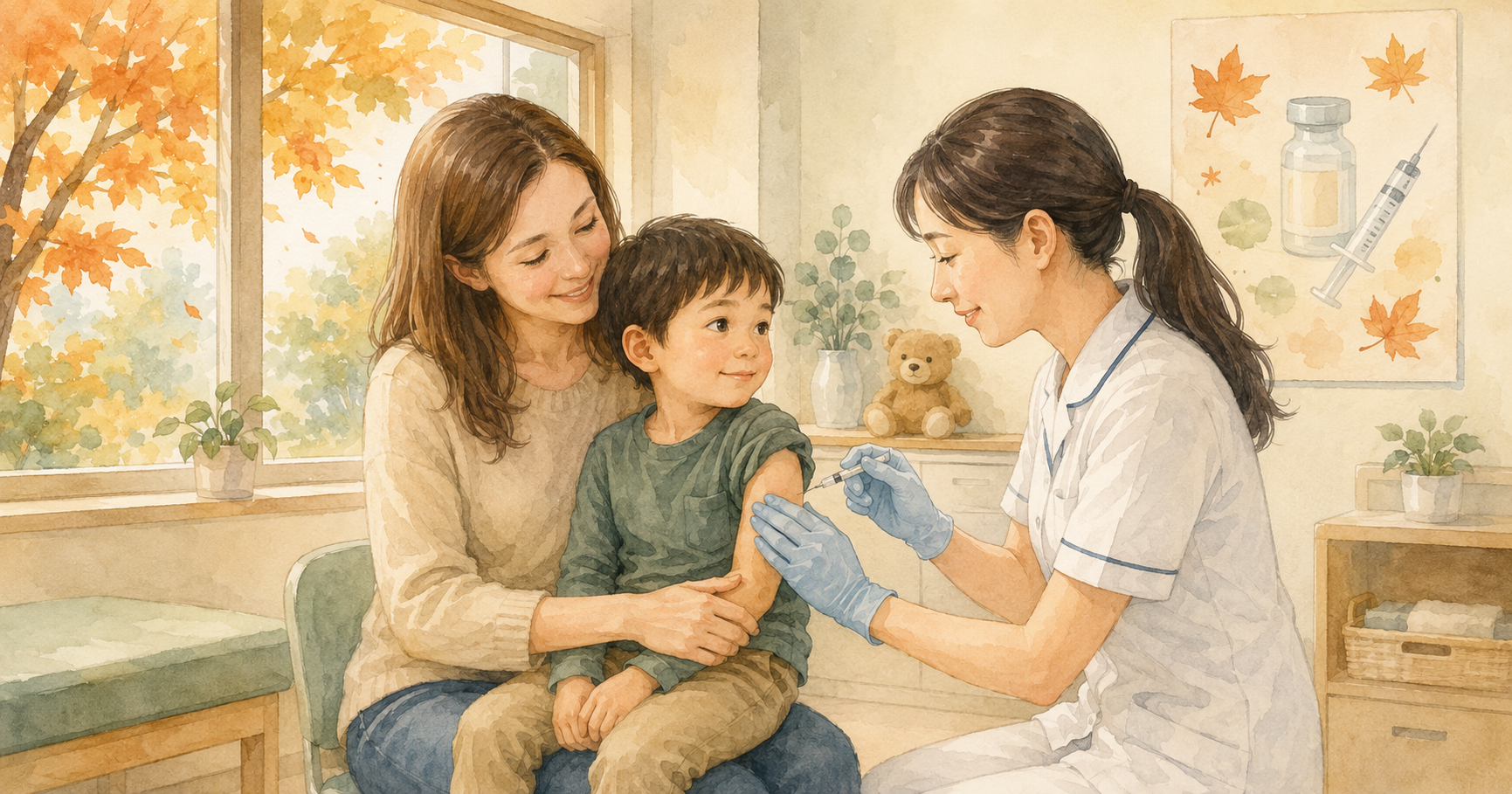
Annual vaccination, two doses for children under 13. Unlike most vaccines in this guide, the flu vaccine needs to be given every year. Children under 13 need two doses each season, spaced two to four weeks apart. For teenagers and adults, one dose per season is standard. The vaccine is voluntary for healthy children — but widely recommended.
What Is Influenza?
Influenza — インフルエンザ — is an acute respiratory illness caused by the influenza virus. It spreads through droplets and direct contact, making it highly contagious in schools, nurseries, and households. Unlike a common cold, flu tends to come on suddenly: high fever (often 38–39°C or higher), aching muscles, headache, and fatigue — on top of the usual runny nose and cough.
For most healthy children and adults, influenza resolves within a week. For infants, the elderly, and those with underlying health conditions, complications such as pneumonia or febrile convulsions (熱性けいれん) can be serious. Japan's flu season typically runs from December through March, with a peak in January and February.
Under Japan's School Health and Safety Act (学校保健安全法), influenza is a Category II infectious disease. Children must stay home for at least five days from the onset of symptoms, and until the fever has been gone for at least two days — or three days for young children at nursery or kindergarten (幼児).
About the Vaccine
Two types of influenza vaccine are available in Japan:
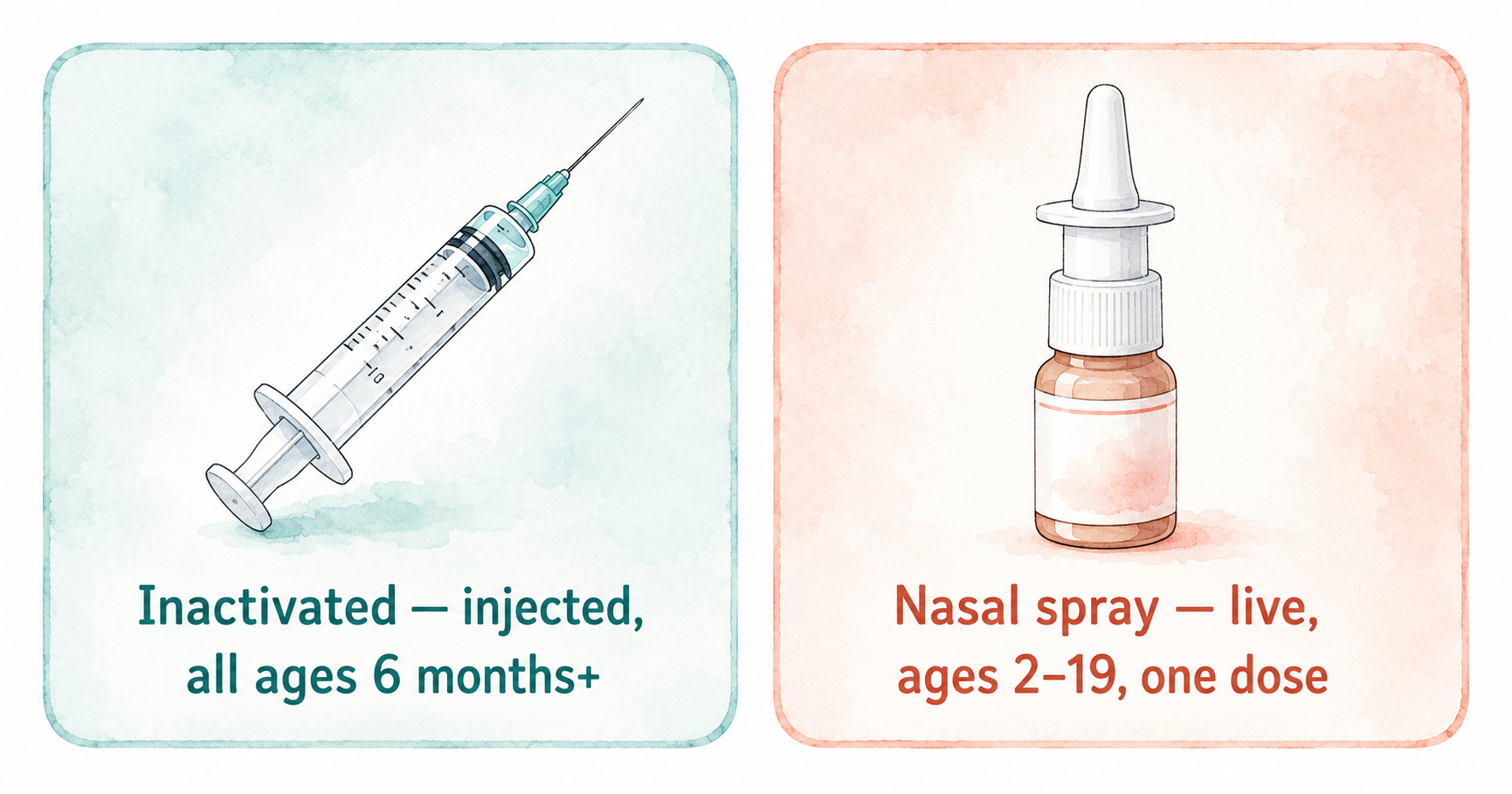
Inactivated injectable vaccine (不活化ワクチン) — standard
This is the standard flu vaccine used across Japan. It is an inactivated vaccine — containing killed virus particles — injected into the upper arm. Because it is inactivated, it can be given at any time alongside or after other vaccines without waiting periods. The current formulation is trivalent (3価), covering three strains: A/H1N1, A/H3N2, and B/Victoria. The composition is updated each year based on WHO and domestic surveillance data.
Live attenuated nasal spray vaccine (経鼻弱毒生ワクチン) — approved 2023
A nasal spray flu vaccine was approved in Japan in 2023. It is a live attenuated vaccine (生ワクチン), administered as a spray into each nostril. It is approved for ages 2 to 19, and one dose per season is sufficient. As a live vaccine, the standard 27-day gap applies if it is given close to another live vaccine (such as MR or varicella) — unless they are given on the same day. Availability and adoption of the nasal spray is still growing in Japan; check with your clinic to see whether it is offered.
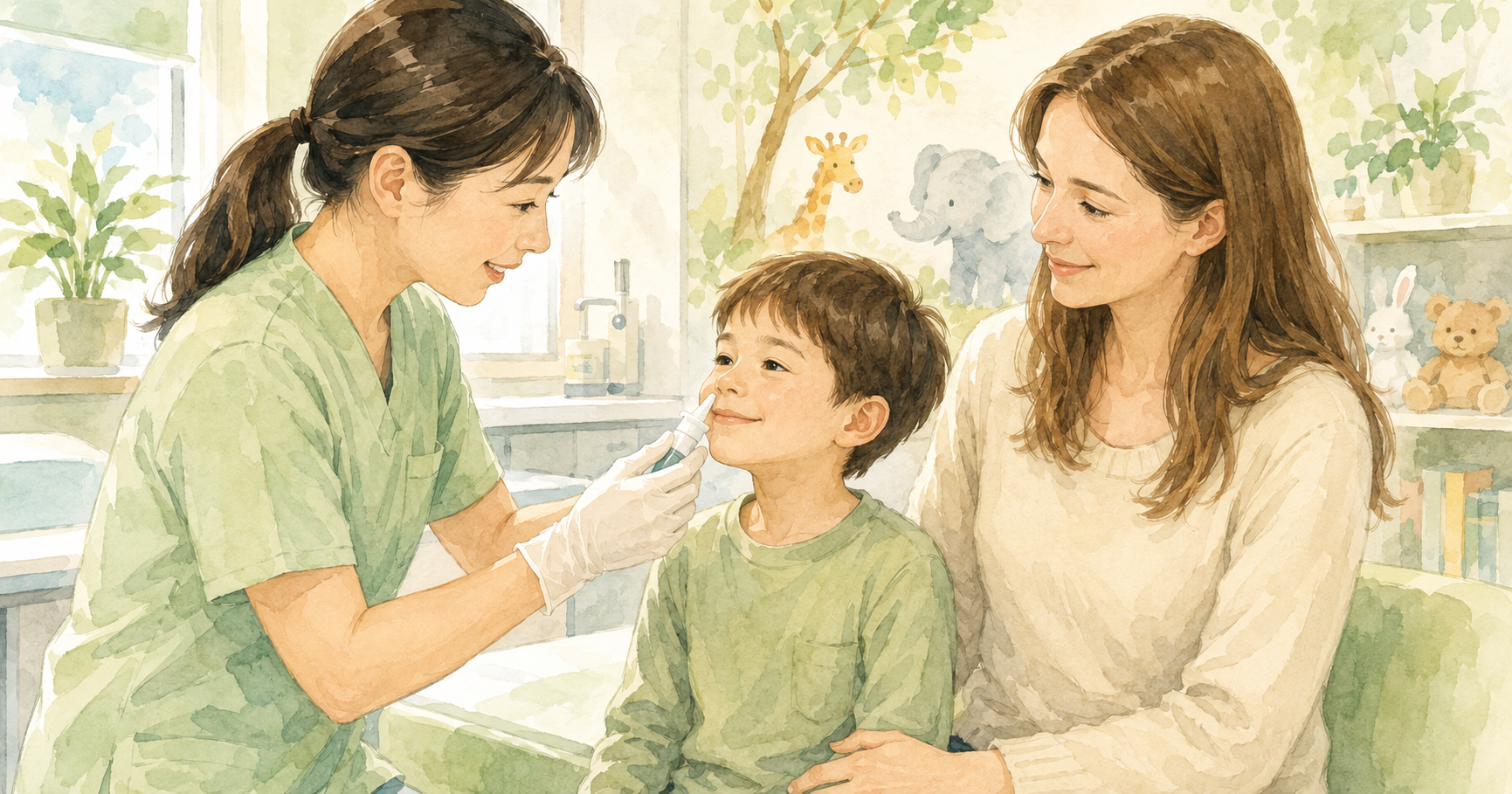
Which vaccine will my child get? In most clinics, the inactivated injectable vaccine is the default. If you would prefer the nasal spray for your child (ages 2–19), ask the clinic in advance — not all clinics stock it yet.
Who Should Get Vaccinated?
In Japan, the flu vaccine is recommended for everyone six months of age and older. The groups for whom it is most strongly advised are:
- Young children (6 months – 12 years) — Children under 13 need two doses and are at higher risk of severe complications, including febrile convulsions.
- Pregnant women — Flu during pregnancy carries a higher risk of complications, and vaccination helps protect the newborn in early infancy before they can be vaccinated themselves.
- People with underlying conditions — Including asthma, heart disease, diabetes, or immune-compromising conditions.
- Older adults (65 and over) — Eligible for publicly funded vaccination under Japan's routine program.
- Anyone who lives with or cares for an infant under 6 months — Babies under 6 months cannot be vaccinated; protecting the people around them is the best way to reduce their risk.
Doses and Schedule
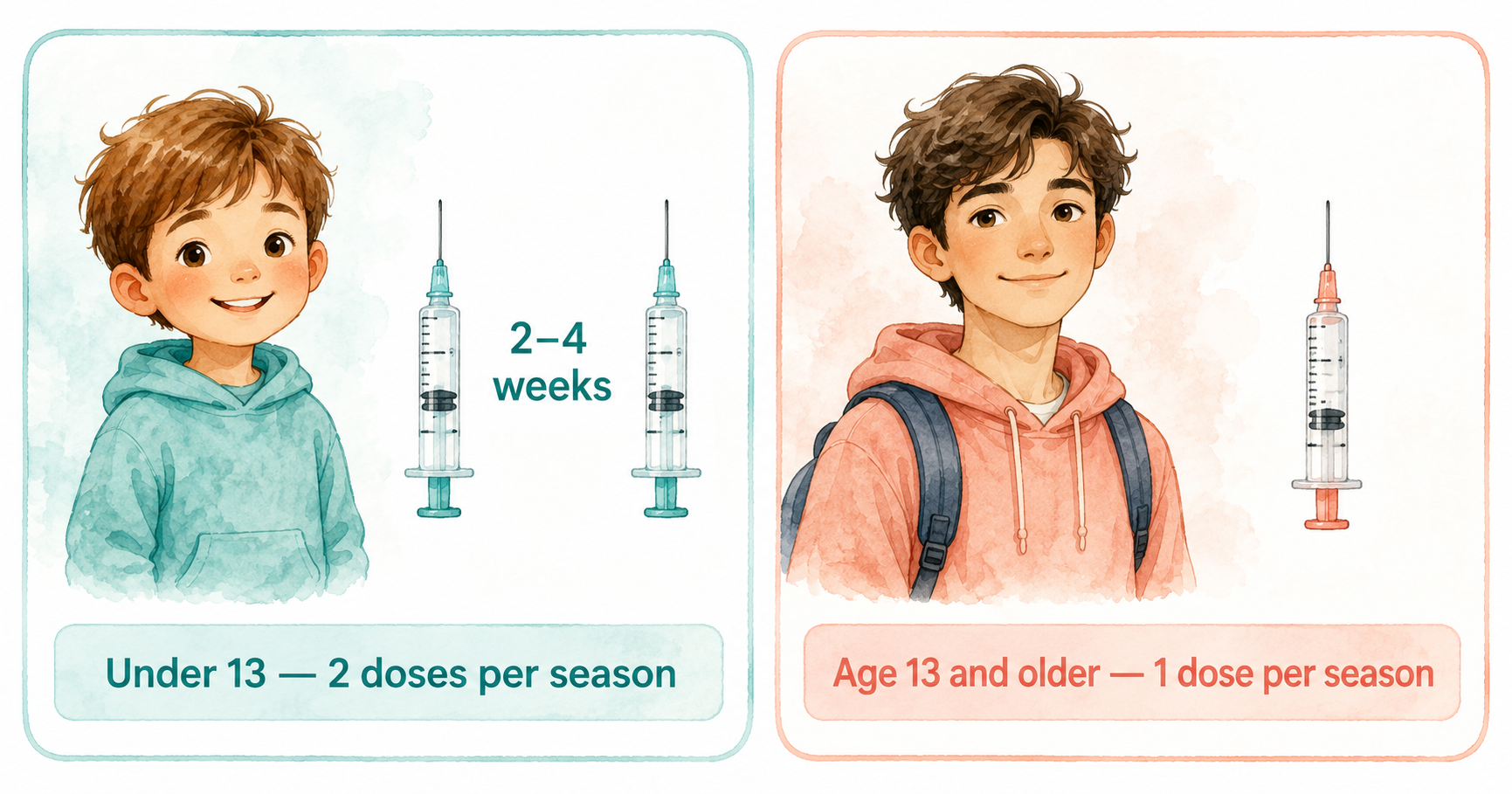
| Age group | Doses per season | Dose volume | Interval |
|---|---|---|---|
| 6 months – 2 years | 2 doses | 0.25 mL each | 2–4 weeks apart |
| 3 – 12 years | 2 doses | 0.5 mL each | 2–4 weeks apart |
| 13 years and older | 1 dose | 0.5 mL | — |
Two doses means two clinic visits for younger children. Plan ahead — if you want both doses completed by mid-December, the first dose should be given by late October or early November at the latest, leaving four weeks before the second dose.
When to Get Vaccinated
Japan's flu season typically peaks between January and February, with cases beginning to rise in December. The Ministry of Health, Labour and Welfare recommends completing vaccination by mid-December (12月中旬) to allow time for immunity to build before the peak.
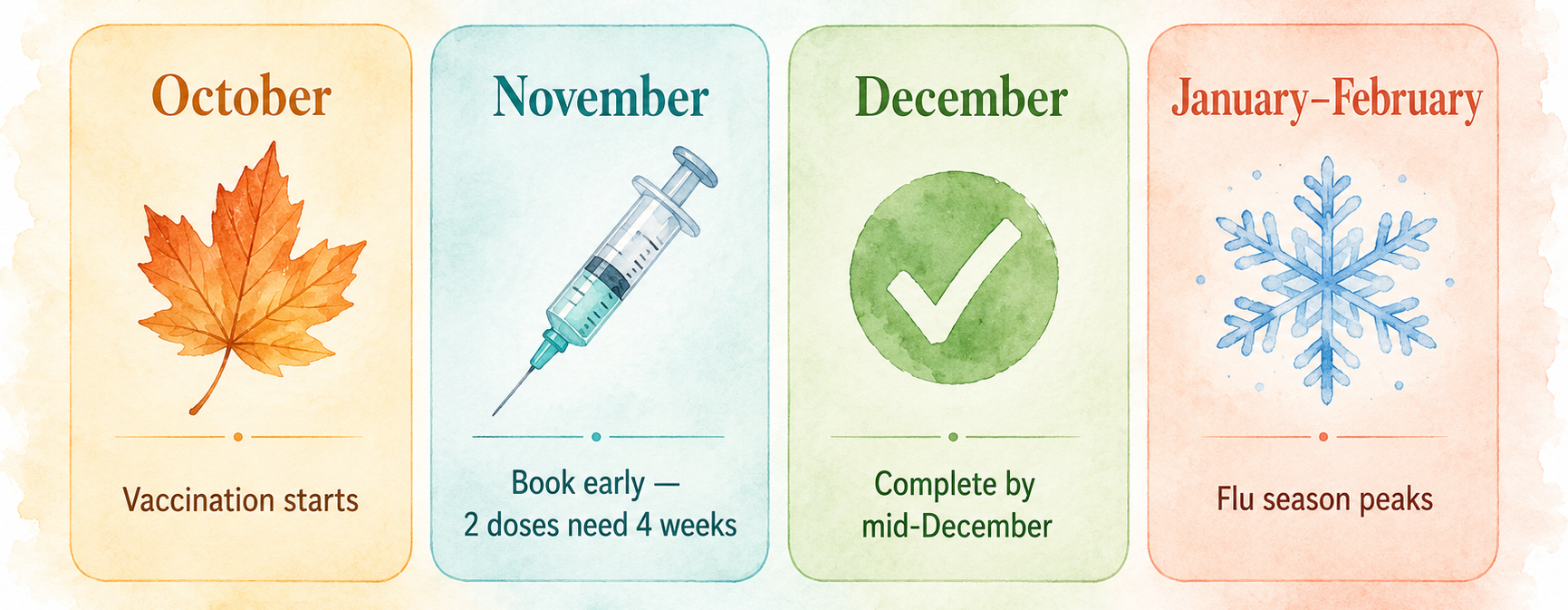
Vaccination clinics in Japan typically begin offering the flu vaccine from October. Demand can be high in October and November — booking early is advisable, especially for families with young children who need two doses.
Practical tip for two-dose families: Book both appointments at the same time. Aim for the first dose in late October, and the second dose around four weeks later in late November — leaving time to build immunity before December.
Cost
Whether the vaccine is free or self-funded depends on age:
Publicly funded (定期接種) — eligible groups only
The following groups are entitled to publicly funded vaccination under Japan's routine immunization program:
- Adults aged 65 and over
- Adults aged 60–64 with a severe underlying condition affecting the heart, kidneys, or respiratory system, or with HIV-related immune deficiency
For these groups, the municipality covers all or most of the cost. Eligibility is based on resident registration (住民登録), not nationality. Contact your local health center (保健センター) or municipality for the voucher and details.
Self-funded (任意接種) — everyone else
For healthy children, working-age adults, and pregnant women, the flu vaccine is a voluntary vaccination and the cost is paid out of pocket. The price varies by clinic. Some municipalities and employers offer a partial subsidy — check with your municipality's website or your employer's health insurance provider.
Note for families with young children: Two doses per child per season adds up. Check whether your municipality offers any subsidy for children before booking — some local governments subsidize flu vaccination for infants and young children even though it is not nationally mandated.
Side Effects
The inactivated flu vaccine is generally well tolerated. Most reactions are mild and resolve within two to three days.
Local reactions (reported in 10–20% of recipients): redness, swelling, or tenderness at the injection site. These are a normal immune response and not a cause for concern.
Systemic reactions (reported in 5–10% of recipients): mild fever, headache, chills, or general fatigue. These typically resolve within two to three days without treatment.
Rare but serious reactions: Anaphylaxis (a severe, sudden allergic reaction) can occur with any vaccine — which is why clinics ask patients to wait 15–30 minutes after the injection. Guillain-Barré syndrome (ギラン・バレー症候群 — a neurological condition causing muscle weakness) has been reported in rare cases following influenza vaccination. If your child develops unusual weakness, difficulty walking, or neurological symptoms in the weeks after vaccination, seek medical attention promptly.
Notes for International Families
The flu vaccine formulation differs from country to country. Each year, flu vaccine strains are selected based on regional surveillance. Japan's current vaccine is trivalent (3価), covering A/H1N1, A/H3N2, and B/Victoria. Some countries use a quadrivalent (4価) vaccine that also covers B/Yamagata. Getting vaccinated in Japan each season provides protection against the strains circulating locally — which is what matters most.
Annual vaccination means starting fresh each year — for everyone. The flu vaccine needs to be repeated every season because the circulating strains change year to year and immunity from the previous season's vaccine wanes. For children under 13, this means two doses again every season. For teenagers and adults, one dose per season is standard.
The nasal spray vaccine may be familiar to families from abroad. In countries such as the UK and USA, a live attenuated nasal spray flu vaccine is widely used for children. Japan approved a nasal spray vaccine in 2023, and it is gradually becoming available — ask your clinic if it offers this option for your child.
Egg allergy. The inactivated flu vaccine is produced using egg-based manufacturing and contains small traces of egg protein. Children with a severe egg allergy (anaphylaxis to egg) should discuss this with a pediatrician before vaccination. In most cases, vaccination is still possible with appropriate monitoring.
What to Bring
- 母子手帳 (boshi techou) — your Mother and Child Health Handbook. The clinic records every vaccination here.
- 予診票 (yoshin hyō) — the pre-vaccination health questionnaire. Some clinics send this in advance; others provide it on the day.
- 在留カード (zairyū kādo) — your residence card.
- マイナ保険証 — your My Number health insurance card. If you don't have one, bring your 資格確認書 (shikaku kakunin-sho), the alternative certificate issued by your insurer. The old health insurance card (健康保険証) was abolished in December 2024.
- 接種券 / 助成券 — any subsidy voucher from your municipality or employer's health insurance, if applicable.
Flu is an optional vaccine rather than a routine one, which changes both the cost and how you book it. Our guide to Japan's childhood vaccination schedule explains the difference between the two categories.
Japanese Vocabulary
| Japanese | Reading | Meaning |
|---|---|---|
| インフルエンザ | infuruenza | Influenza / flu |
| インフルエンザワクチン | infuruenza wakuchin | Influenza vaccine |
| 不活化ワクチン | fukatsuka wakuchin | Inactivated vaccine (injected) |
| 経鼻弱毒生ワクチン | keibi jakudoku nama wakuchin | Live attenuated nasal spray vaccine |
| 任意接種 | nin-i sesshu | Voluntary vaccination (self-funded) |
| 定期接種 | teiki sesshu | Routine vaccination (publicly funded) |
| 熱性けいれん | nessei keiren | Febrile convulsions |
| インフルエンザ流行期 | infuruenza ryūkōki | Flu season |
| ギラン・バレー症候群 | giran barē shōkōgun | Guillain-Barré syndrome |
| 保健センター | hoken sentaa | Local health center |