
Written and reviewed by Susumu
Born and raised in Japan · Checked against Japanese law and ministry guidance
Japan's standard prenatal check-ups include 8 infection screening tests — most done at the first visit. Here is what each test looks for, when it happens, and what a positive result means for your pregnancy.
Affiliate Disclosure: This article contains affiliate links. If you click a link and make a purchase, we may earn a small commission at no extra cost to you. We only recommend products we genuinely believe are helpful. See our Terms of Use for full details.
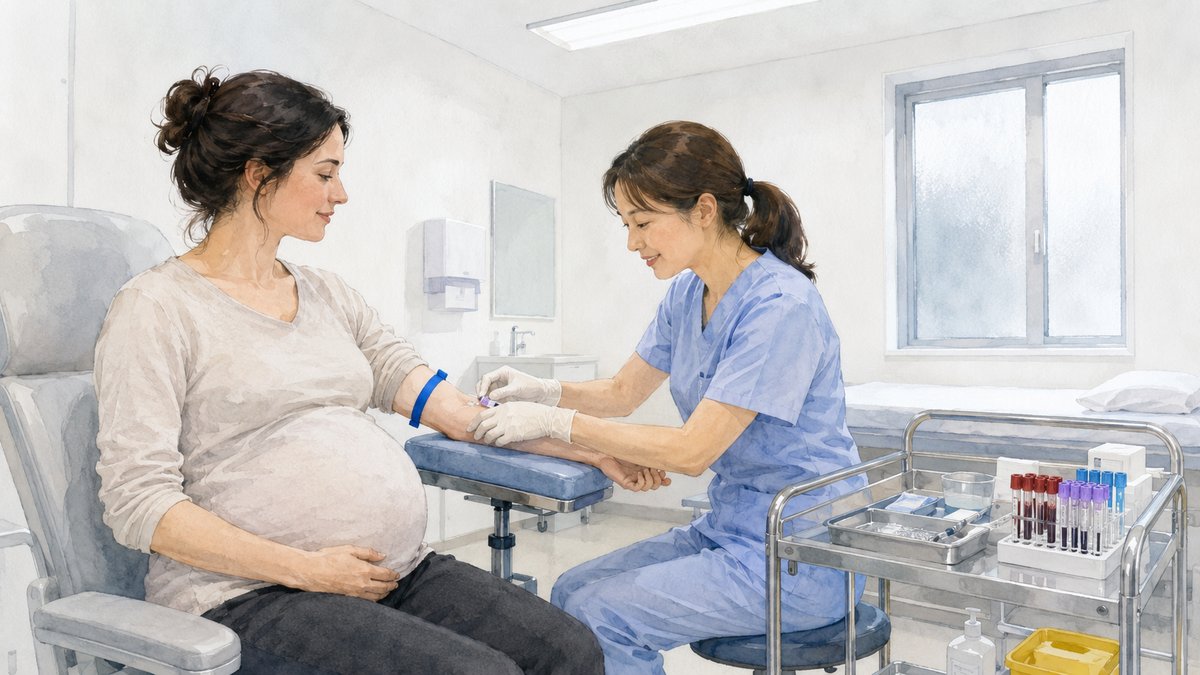
Japan's standard prenatal check-ups include 8 infection screening tests — all covered by your 妊婦健診 coupons. Most are done at the very first visit. This guide explains what each one looks for, why it matters in pregnancy, and what happens if a result comes back positive.
For information only. Talk to your obstetrician about your own results and care. This article is based on the 厚生労働省 prenatal care standards (告示第226号, 平成27年).
How Screening Works in Japan
Infection screening is part of the standard 妊婦健診 (にんぷけんしん, ninpu kenshin — prenatal check-up) schedule in Japan. The tests are subsidized through the 妊婦健診受診票 — the coupon booklet you receive when you register your pregnancy at the ward office and pick up your 母子健康手帳.
The Ministry of Health, Labour and Welfare (厚生労働省) specifies 8 infection-related tests as part of the baseline for prenatal care. Most are done at the first clinic visit. Two can be done any time up to week 30, and one comes at the very end of pregnancy.
If you have not yet registered your pregnancy at your ward office, these tests may not be fully covered. See our guide to the first steps when pregnant in Japan for how to register.
First Trimester Tests
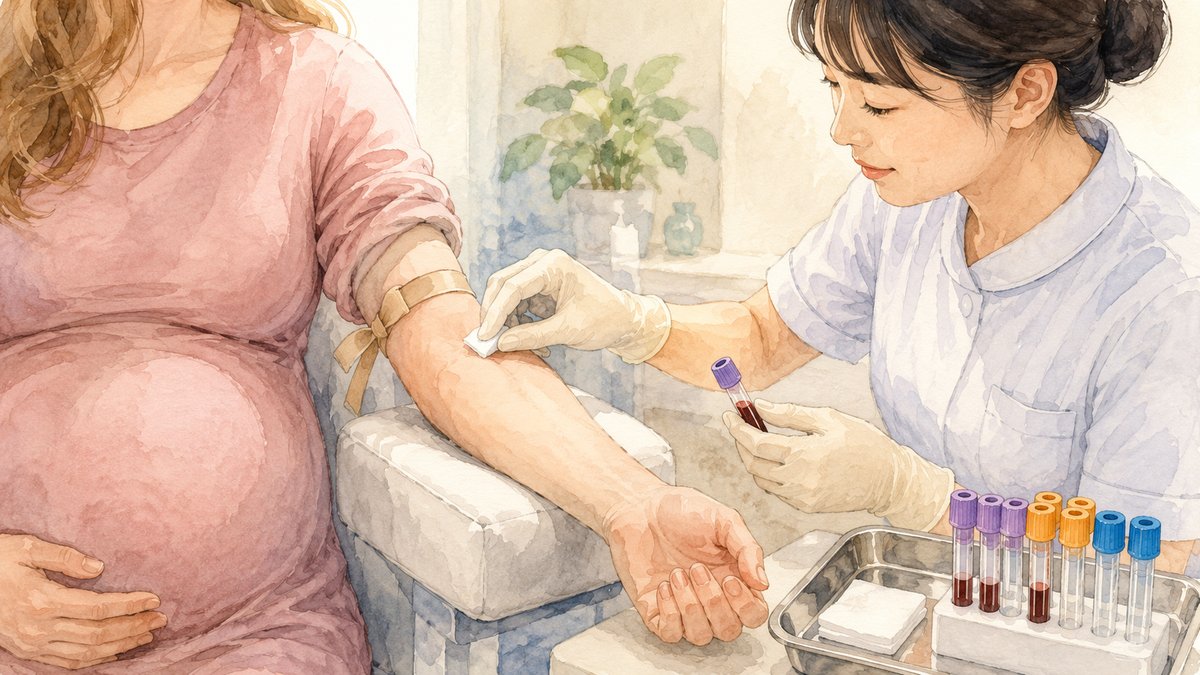
Five of the 8 tests are carried out once in the first trimester. All are blood tests. Results usually come back at the next visit or within a few days.
① B型肝炎抗原検査 — Hepatitis B
What it checks: Whether the mother carries the hepatitis B surface antigen (HBsAg).
Why it matters: Hepatitis B passes easily from mother to baby during birth. Without any intervention, a high proportion of exposed babies go on to develop a chronic infection.
If positive: The baby receives hepatitis B immunoglobulin and the first vaccine dose within 12 hours of birth, followed by the rest of the vaccine course over the coming months. This prevents transmission in the great majority of cases.
② C型肝炎抗体検査 — Hepatitis C
What it checks: Antibodies to hepatitis C in the mother's blood.
Why it matters: Hepatitis C can pass from mother to baby, though less readily than hepatitis B. Unlike with B, there is no vaccine or preventive treatment available during pregnancy or at birth.
If positive: The baby is monitored closely after birth and tested in early childhood. Your care team will talk through what ongoing management looks like.
③ HIV抗体検査 — HIV
What it checks: Antibodies to HIV in the mother's blood.
Why it matters: HIV can be passed to the baby during pregnancy, birth, or breastfeeding. Finding it early gives the most options.
If positive: Antiviral treatment during pregnancy substantially reduces the risk of the baby being infected. Delivering by cesarean section and feeding with formula rather than breast milk are usually recommended. With this combination of measures, the risk to the baby is very small.
④ 梅毒血清反応検査 — Syphilis
What it checks: Antibodies that indicate a syphilis infection.
Why it matters: Syphilis crosses the placenta and can cause serious harm — including stillbirth. Syphilis cases in Japan have risen significantly in recent years, which is part of why this test is taken seriously even in low-risk pregnancies.
If positive: Penicillin treatment works well and should start as early as possible in pregnancy.
⑤ 風疹ウイルス抗体検査 — Rubella
What it checks: The level of rubella antibodies (titre) in the mother's blood.
Why it matters: Rubella infection in the first trimester carries a high risk of congenital rubella syndrome in the baby — hearing loss, cataracts, and heart problems are among the possible effects. Vaccination history helps, but immunity levels vary from person to person.
If immunity is low: The rubella vaccine cannot be given during pregnancy, so the focus shifts to avoiding exposure — busy indoor spaces, and contact with anyone who might be unwell. After the birth, vaccination before the next pregnancy is recommended.
Mid-Pregnancy Tests (by Week 30)
Two more tests are done between the first visit and week 30. The exact timing is left to the clinic, so do not be surprised if these happen at a different appointment from the others.
⑥ HTLV-1抗体検査 — Human T-cell Leukaemia Virus Type 1
What it checks: Antibodies to HTLV-1, a retrovirus that, in a small number of carriers, can lead to adult T-cell leukaemia/lymphoma or a neurological condition called HAM much later in life.
Why it matters: HTLV-1 is uncommon in most of the world but more prevalent in certain parts of Japan — particularly Kyushu and Okinawa. The main route of transmission from mother to baby is prolonged breastfeeding.
If positive: Breastfeeding is not recommended, or is kept to a very limited period. Formula feeding takes its place. The virus does not pass readily during pregnancy or birth.
⑦ 性器クラミジア検査 — Genital Chlamydia
What it checks: The presence of Chlamydia trachomatis bacteria, usually via a cervical swab.
Why it matters: Chlamydia in pregnancy is linked to premature birth. A baby born to an untreated mother can develop a chlamydia eye infection (新生児結膜炎) or chlamydia pneumonia during delivery.
If positive: A course of antibiotics safe to use in pregnancy clears the infection. Treatment is reliable.
Late Pregnancy: GBS Test
⑧ GBS検査 — Group B Streptococcus (B群溶血性レンサ球菌)
When: Once, between weeks 33 and 37.
What it checks: Whether Group B Streptococcus bacteria are present in the vagina or rectum. GBS lives there in many healthy adults without causing any symptoms. The test is a swab — quick and not painful.
Why it matters: GBS causes no harm to the mother, but a baby exposed to it during delivery can — in a small number of cases — develop meningitis or sepsis.
If positive: Antibiotics given through a drip during labor bring the risk to the baby right down. Aside from that, the birth proceeds normally.
TORCH Infections — Not Routinely Screened in Japan
TORCH is a shorthand used by clinicians for a group of infections that can harm a baby in the womb or during birth. Rubella — the R — is already on Japan's standard list. The others below are not routinely tested for in Japan, but they come up often enough in pregnancy to be worth a short explanation.
Toxoplasma (トキソプラズマ)
A parasite picked up from raw or undercooked meat and from cat faeces. An infection during the first trimester carries the greatest risk to the baby. Practical steps help a lot: cook meat until there is no pink, get someone else to deal with the cat litter, and wash hands carefully after handling raw meat or gardening.
Cytomegalovirus / CMV (サイトメガロウイルス)
Most adults have already had CMV at some point and carry it without knowing. In healthy people it causes no real illness. The concern during pregnancy is a first-time infection — if a mother catches CMV for the first time while pregnant, there is a small chance it will affect the baby's hearing or neurological development. The virus travels easily in the saliva and urine of young children, so thorough handwashing after diaper changes, and not sharing food or spoons with toddlers, is the practical advice.
Herpes simplex virus / HSV (単純ヘルペスウイルス)
If there is an active genital herpes outbreak at the time of delivery, the virus can be passed to the baby during a vaginal birth. This is something your obstetrician manages based on what is happening at the time. Let them know if you have a history of genital herpes so they can factor it into your birth plan.
If a Result Comes Back Positive
A positive result does not mean something has gone wrong with the baby. These tests exist precisely to catch things early — and for every infection on this list, there is a clear clinical path: treatment, closer monitoring, a change in how the birth is managed, or precautions after the baby arrives.
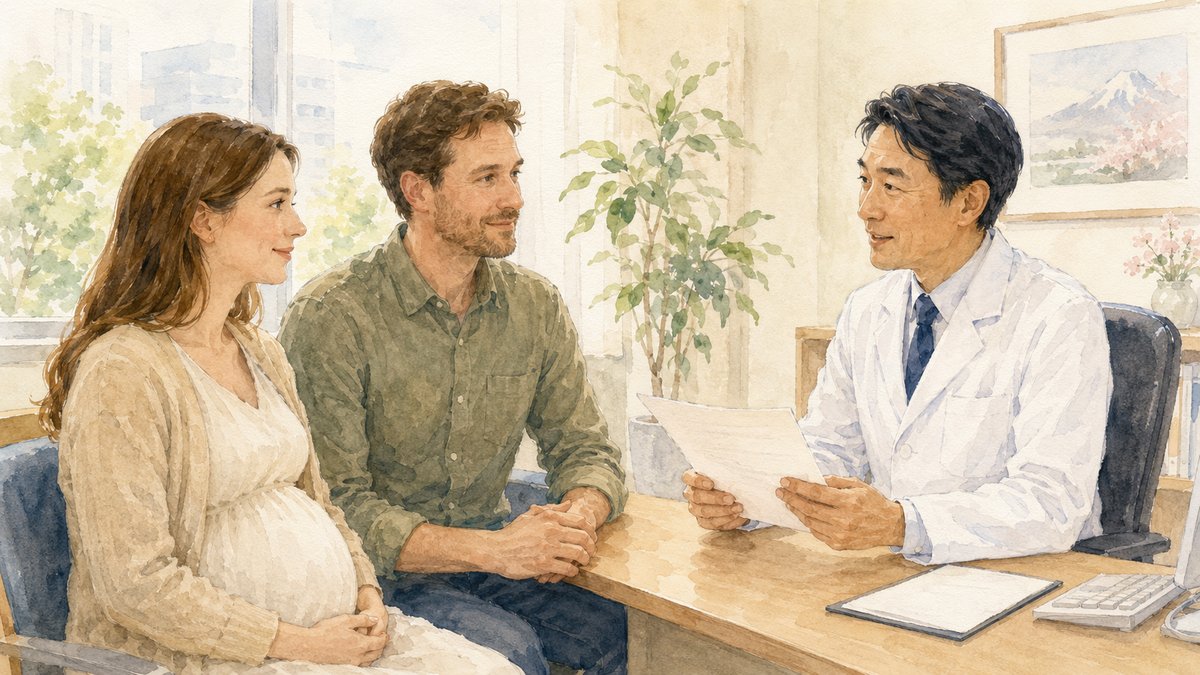
Your obstetrician (産婦人科医) will talk you through what the result means in your situation. If Japanese is a barrier, ask in advance whether the clinic has access to an interpreter, or bring someone who can help.
Everyday Prevention
- Food: Avoid raw or undercooked meat. Wash fruit and vegetables well. These habits go a long way in reducing toxoplasma risk.
- Around young children: Wash hands after diaper changes and after wiping a child's face or nose. CMV spreads easily in children's saliva and urine.
- Cat litter: Ask someone else to handle it if you can. If not, gloves and careful handwashing afterward keep the risk low.
- Rubella: If your antibody level came back low, give crowded indoor spaces a wide berth — especially if there is a local outbreak.
- Masks and handwashing: Standard practice in Japan, and genuinely useful during pregnancy for limiting exposure to a range of infections.
Useful Phrases at the Clinic
Tap 🔊 Play to hear the phrase spoken aloud in Japanese.
To ask what a test is for
この検査は何のためですか
Kono kensa wa nan no tame desu ka
"What is this test for?"
To ask about a positive result
陽性の場合、どうなりますか
Yōsei no baai, dō narimasu ka
"What happens if the result is positive?"
To ask when results will be ready
結果はいつわかりますか
Kekka wa itsu wakarimasu ka
"When will the results be ready?"
Japanese Vocabulary
| Japanese | Reading | Meaning |
|---|---|---|
| 感染症検査 | kansenshō kensa | Infection screening test |
| 陽性 | yōsei | Positive (test result) |
| 陰性 | insei | Negative (test result) |
| 抗体 | kōtai | Antibody |
| 採血 | saiketsu | Blood draw |
| B型肝炎 | B-gata kan'en | Hepatitis B |
| 梅毒 | baidoku | Syphilis |
| 風疹 | fūshin | Rubella |
| 性器クラミジア | seiki kuramidia | Genital chlamydia |
| 産婦人科 | sanfujinka | Obstetrics and gynaecology |