
Written and reviewed by Susumu
Born and raised in Japan · Checked against Japanese law and ministry guidance
Two free doses with strict age windows — one around the first birthday, one in the final preschool year. Miss a window and you pay yourself. Both windows, and how to catch up.
Affiliate Disclosure: This article contains affiliate links. If you click a link and make a purchase, we may earn a small commission at no extra cost to you. We only recommend products we genuinely believe are helpful. See our Terms of Use for full details.
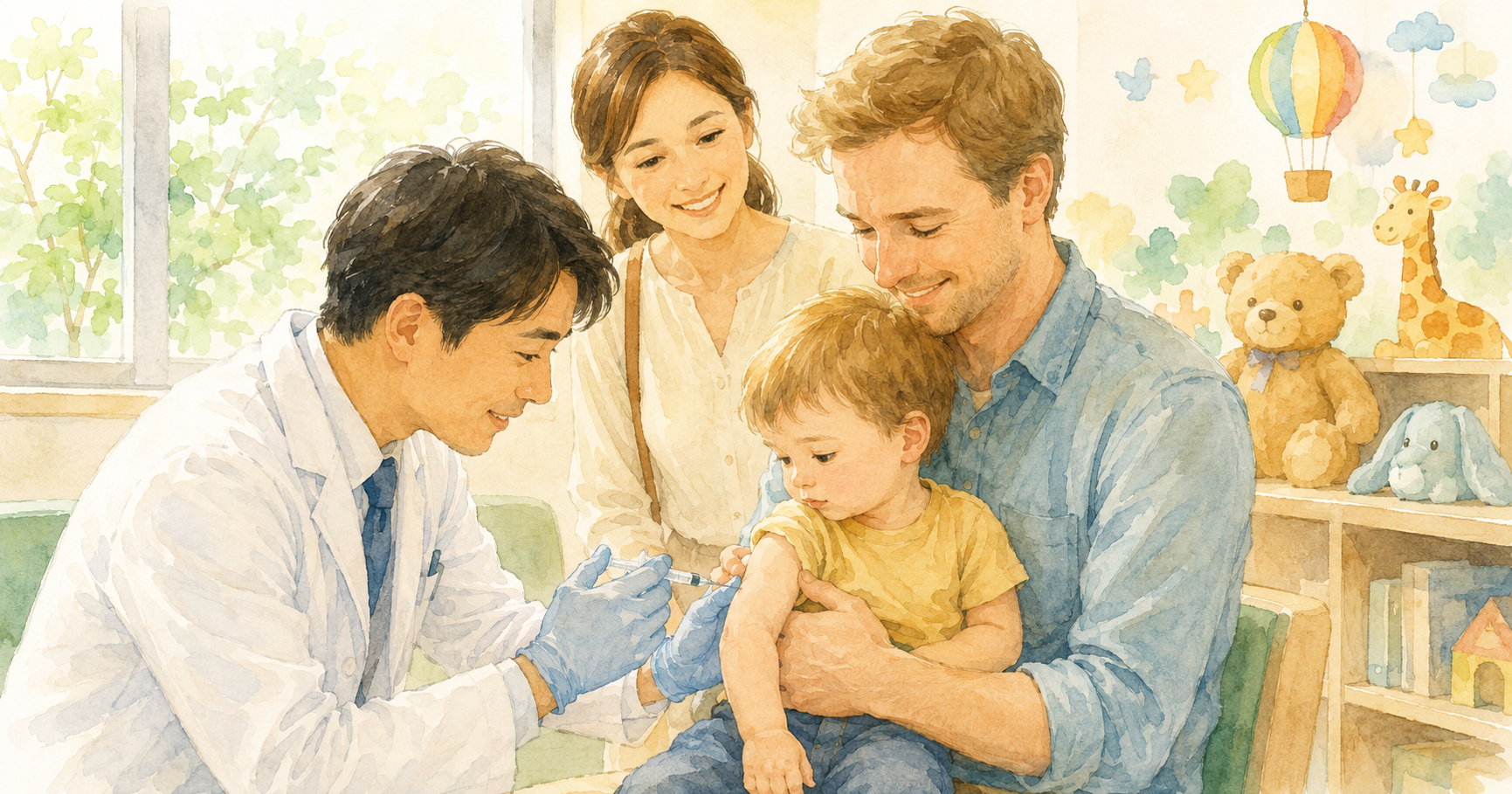
Two doses, two different age windows: The MR (measles-rubella) vaccine is given free as part of Japan's routine vaccination schedule. Dose 1 is given between your child's first and second birthday. Dose 2 is given during the year before elementary school entry. Both windows are strict — missing them means the vaccine is no longer free.
What Are Measles and Rubella?
The MR vaccine protects against two separate viral diseases: measles and rubella. They are unrelated viruses, but both are preventable through vaccination.
Measles (麻疹 / はしか)
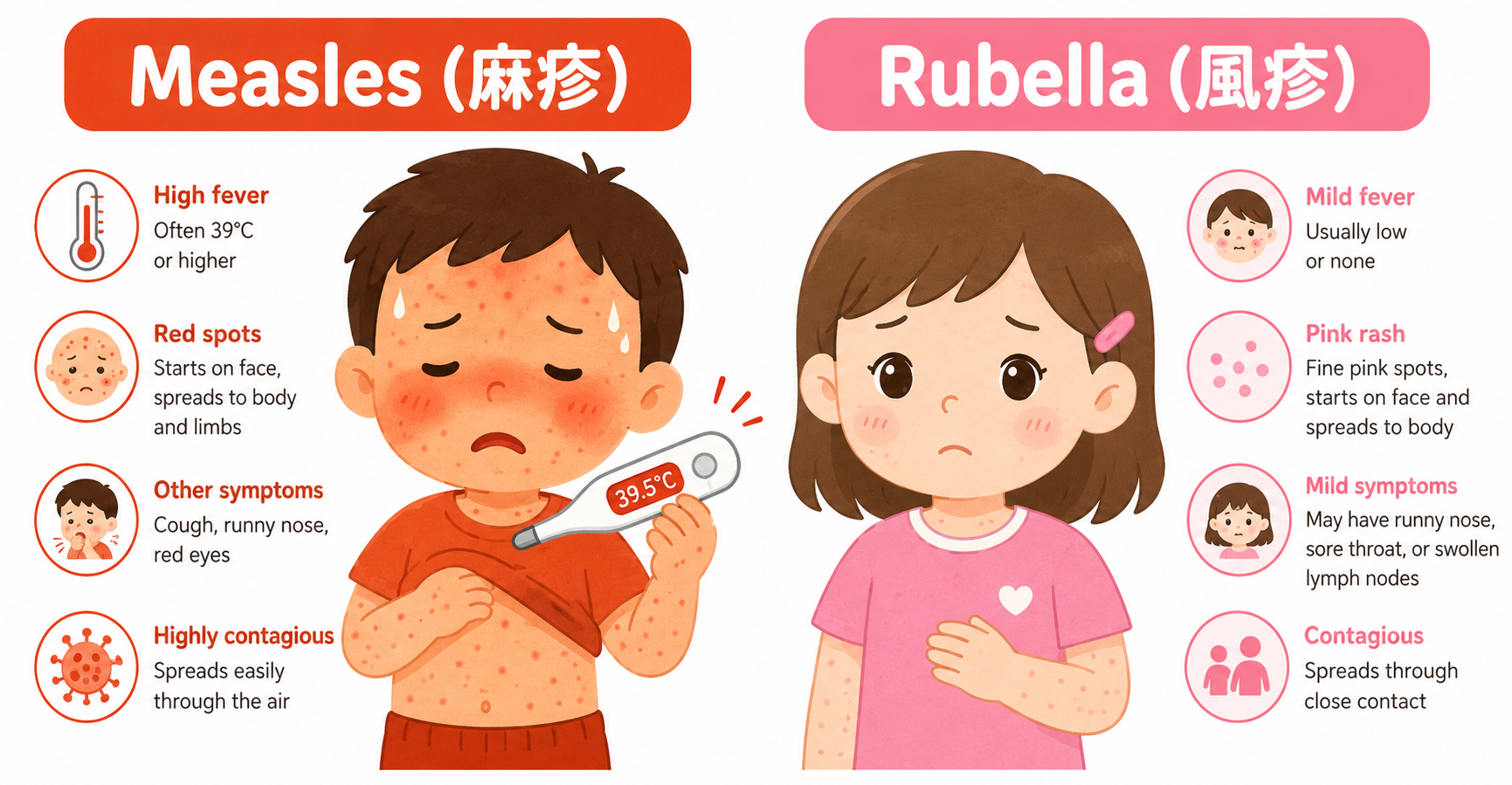
Measles — 麻疹 (mashin) in formal Japanese, or はしか (hashika) in everyday speech — is one of the most contagious infectious diseases known. It spreads through the air — simply being in the same room as an infected person is enough to catch it if you're not immune. Symptoms begin with several days of high fever (above 39°C), cough, runny nose, and red eyes, followed by a characteristic rash.
In children, measles is often more serious than people expect. About 1 in 20 children develop pneumonia — the most common cause of measles-related death. Around 1 in 1,000 develop encephalitis (inflammation of the brain), which can cause permanent brain damage. A rare but fatal complication called SSPE (subacute sclerosing panencephalitis — progressive brain damage that can appear years after infection) occurs in roughly 7–11 per 100,000 measles cases — around 1 in 10,000. The risk is higher for children infected before age 2.
Japan eliminated measles in 2015, meaning there is no longer domestic transmission. However, the country remains vulnerable to imported cases, particularly from parts of Asia where measles is still circulating. Outbreaks do occur.
Rubella (風疹 / 三日はしか)
Rubella — 風疹 (fuushin) in formal Japanese, or 三日はしか (mikkahashika, literally "three-day measles") in everyday speech — is generally mild in children: a low-grade fever, a rash that starts on the face and spreads downward, and swollen lymph nodes, usually clearing within three days. Adults may experience joint pain that can last for a week or more.
The real danger of rubella is to unborn babies. If a pregnant woman — particularly in her first trimester — contracts rubella, the consequences for the fetus can be severe. See the section below on rubella and pregnancy.
About the Vaccine
Japan uses a combined MR vaccine (麻しん風しん混合ワクチン) that protects against both measles and rubella in a single injection. It is a live attenuated vaccine — meaning it contains weakened but living viruses that trigger an immune response without causing the disease. Two doses provide protection in approximately 95% of recipients.
The vaccine is given as a subcutaneous injection (皮下注射) — just under the skin, not into muscle.
Note on MMR: Japan used an MMR (measles-mumps-rubella) vaccine from 1989 to 1993, but it was discontinued after the mumps component caused an unacceptably high rate of aseptic meningitis (inflammation of the membranes surrounding the brain and spinal cord). Japan has used the MR (measles-rubella, without mumps) vaccine ever since. A new MMR vaccine was approved in Japan in May 2026, but has not yet been added to the routine vaccination schedule — the standard routine vaccine remains MR. Mumps vaccination is available separately as an optional (paid) vaccine.
⚠️ Supply shortage notice: One manufacturer suspended MR vaccine shipments in December 2024 due to a quality issue. Shipments are expected to resume around June 2026. As a result, the Ministry of Health extended the free vaccination window by two years for children who missed their scheduled dose in FY2024 — those children have until March 31, 2027 to receive their dose as a free routine vaccination. Contact your local health center (保健センター) if you were affected.
Vaccination Schedule
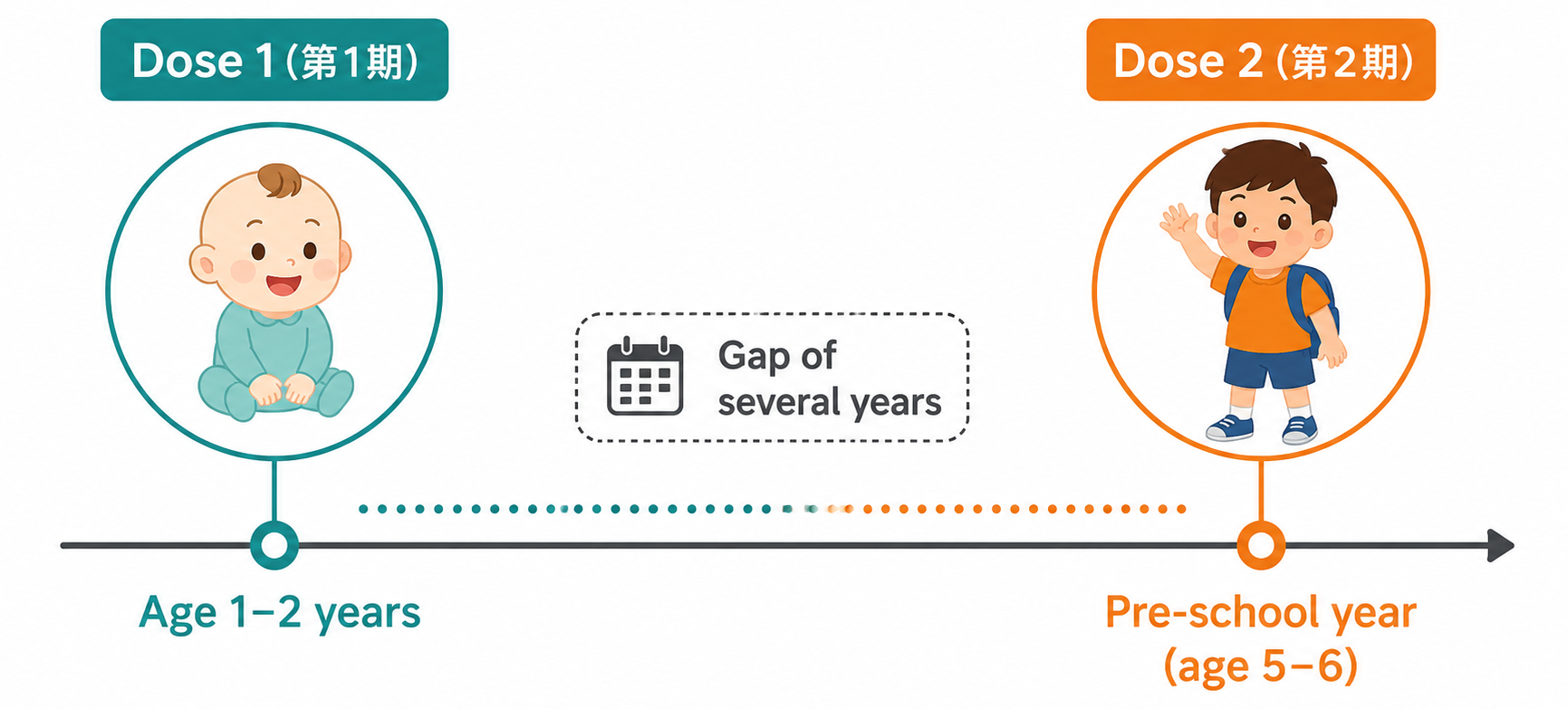
The MR vaccine is given in two doses at very different points in childhood. Unlike most other routine vaccines, the two doses are not given close together — there is a gap of several years between them.
| Dose | Age Window | Notes |
|---|---|---|
| Dose 1 第1期 |
From the first birthday to the day before the second birthday | Give as early as possible after turning 1. Often given at the same appointment as the varicella vaccine |
| Dose 2 第2期 |
The one-year period before elementary school entry (April 1 – March 31 of the year before starting school) | The final year of preschool / kindergarten (年長). Age is approximately 5–6 years old |
⚠️ The windows are strict. Unlike the pneumococcal or hepatitis B vaccines, the MR free vaccination windows are tied to specific age and school-year criteria. A dose given even one day outside the window is no longer covered as 定期接種 and must be paid for out of pocket. Give Dose 1 as soon as possible after your child's first birthday, and arrange Dose 2 early in the preschool year (年長).
Is It Free?
Yes — the MR vaccine is a 定期接種 (teiki sesshu), meaning it's part of Japan's national routine vaccination program. Both doses are free, provided they are given within the correct age windows described above.
Eligibility is based on 住民登録 (juumin tooroku), not nationality. If your child is registered at your local city or ward office, they're entitled to the same free routine vaccines as any Japanese child. Your municipality will send vaccination vouchers (接種券, sesshuken) by mail — one for each dose period.
If you haven't received a voucher for Dose 1 around your child's first birthday, or for Dose 2 at the start of the preschool year, contact your local health center (保健センター, hoken sentaa).
What Happens at the Appointment
Before the injection, the doctor will go through a pre-vaccination questionnaire (予診票, yoshinhyou) and give your child a brief check-over. The vaccine is given as a subcutaneous injection — a small shot just under the skin, usually in the outer upper arm. After vaccination, you'll be asked to wait at the clinic for 15–30 minutes before leaving.
At the Dose 1 appointment (around age 1), the varicella (chickenpox) vaccine is often given at the same visit. Both are live vaccines and can be given simultaneously without any problem. If they are not given on the same day, a gap of at least 27 days between any two live injectable vaccines is required.
Side Effects
Because the MR vaccine contains live viruses, side effects tend to appear later than with other vaccines — typically around one week after the injection, not the next day. This is normal and reflects the vaccine working as intended.
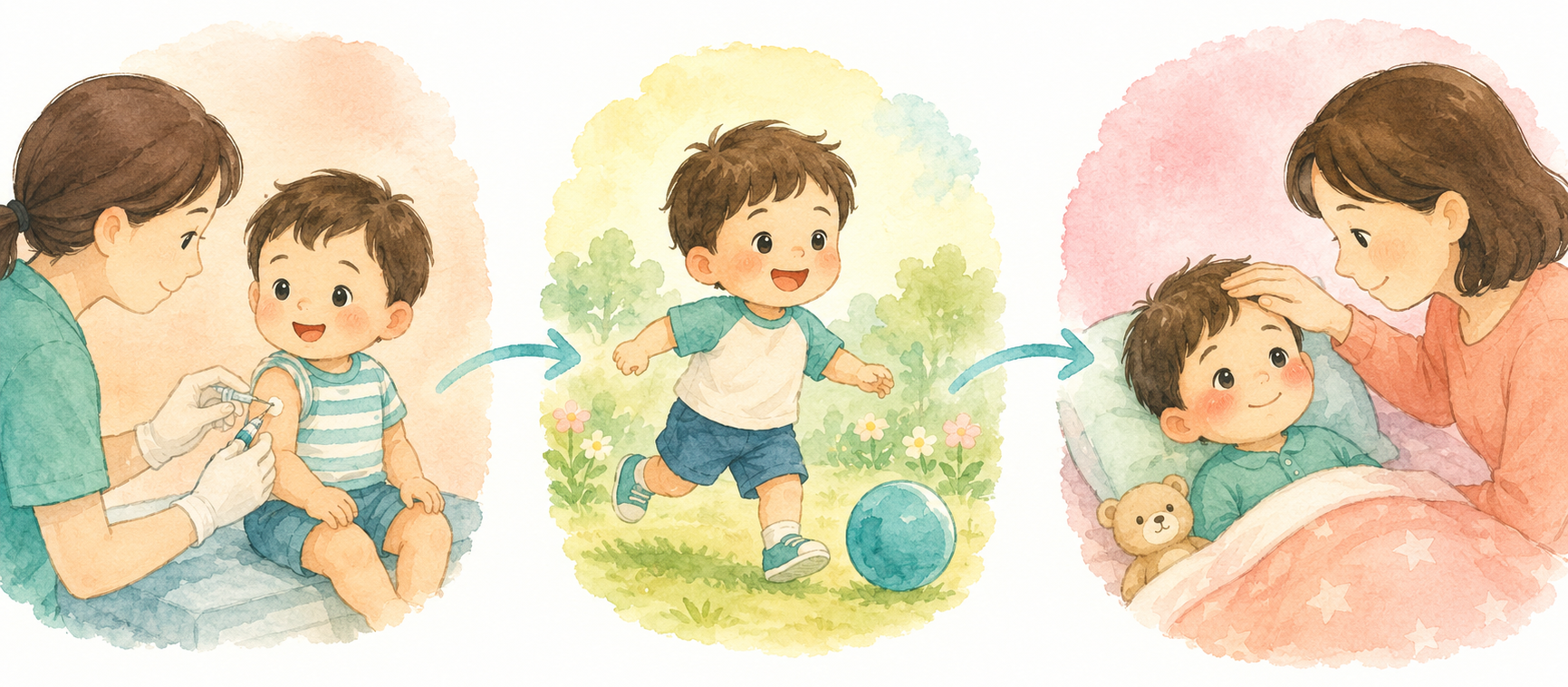
Common reactions include fever — affecting around 16% of children after Dose 1 and around 6% after Dose 2 — and a mild rash in a small number of children. Redness or mild swelling at the injection site is also common. These generally settle within a few days.
Serious reactions are rare. Febrile convulsions (convulsions triggered by fever) occur in approximately 0.3% of recipients. Reports of encephalitis following MR vaccination are extremely rare — approximately 1 per million doses or fewer — and available data cannot confirm whether the vaccine was the cause. Anaphylaxis (severe allergic reaction) can occur with any vaccine, which is why clinics ask you to wait 15–30 minutes after vaccination. If your child develops a high fever, unusual behavior, or a rash spreading rapidly in the week after vaccination, contact your doctor.
Rubella and Pregnancy
Rubella is mild in children, but for a pregnant woman it can be devastating — the virus can pass to the fetus and cause serious, lifelong harm.
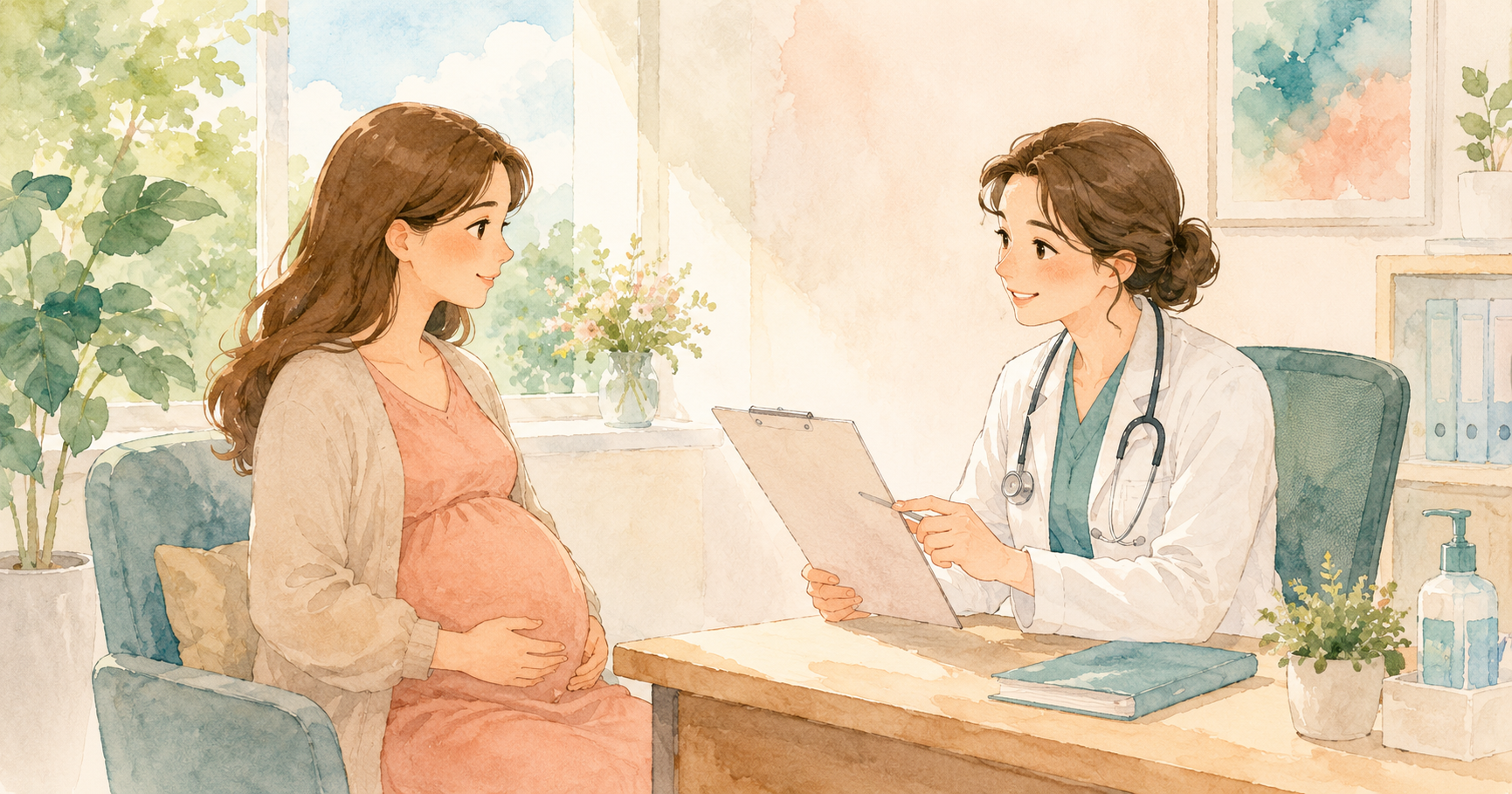
If a woman contracts rubella during the first 20 weeks of pregnancy — especially the first trimester — the virus can pass to the fetus. In the first trimester, the risk of transmission is around 90%. The resulting condition is called congenital rubella syndrome (先天性風疹症候群, CRS — a condition present from birth), and it can cause hearing impairment, congenital heart defects, cataracts (clouding of the lens of the eye, which can cause blindness), intellectual disability, and other serious problems. It can also result in miscarriage or stillbirth.
Japan experienced rubella outbreaks in 2012–2013 and again in 2018–2019, both primarily affecting adult men. 45 CRS cases were confirmed during the 2012–2013 epidemic. The reason adult men were at risk: women born 1962–1979 received routine rubella vaccination in school, but men born in the same period did not — leaving a large pool of susceptible adults.
If you are planning a pregnancy: Ask your doctor to check your rubella antibody level (a blood test that shows whether you are immune to rubella). If your immunity is low, get vaccinated with the MR vaccine before conceiving. Because it is a live vaccine, you should wait at least 2 months after vaccination before trying to conceive. The MR vaccine cannot be given during pregnancy.
If you have just given birth: If you're not immune, the hospital will typically offer the MR vaccine before you're discharged — take it.
Notes for International Families
If your child received MMR abroad, the measles and rubella components count toward protection — but overseas vaccination does not formally satisfy Japan's 定期接種 requirements. In practice, your pediatrician and local health center will review your overseas vaccination records and advise whether additional doses are recommended. Bring original documentation of all vaccinations your child has received.
Japan uses MR, not MMR. Most countries — including the US, UK, and Australia — use an MMR (measles-mumps-rubella) vaccine. Japan's routine vaccine does not include mumps (though a new MMR was approved in May 2026 and may be added to the schedule in coming years). Children vaccinated with MMR abroad are protected against all three diseases, but in Japan the mumps component does not count toward the 定期接種 schedule.
Different dose timing abroad. Many countries give MMR Dose 1 at 12–15 months (similar to Japan) and Dose 2 at 4–6 years — which is earlier than Japan's second-period window. If your child received Dose 2 abroad before the Japanese second-period window, speak with your pediatrician about whether an additional dose is recommended.
If you are a non-immune adult — particularly a woman of childbearing age — voluntary MR vaccination is available at private clinics in Japan at your own expense (typically 5,000–10,000 JPY). Some clinics serving international families also offer the MMR vaccine as a paid voluntary option.
Note for parents of premature babies: Dose 1 of the MR vaccine is given based on chronological age (actual weeks since birth), not corrected age (which adjusts for prematurity). Discuss timing with your pediatrician if your baby was born very early.
What to Bring
- 母子手帳 (boshi techou) — your Mother and Child Health Handbook. The clinic records every vaccination in here.
- 接種券 (sesshuken) — the vaccination voucher sent by your municipality. Without this, you may be charged.
- 予診票 (yoshinhyou) — the pre-vaccination health questionnaire. Some municipalities send this with the voucher; others provide it at the clinic.
- マイナ保険証 — your My Number health insurance card. If you don't have one, bring your 資格確認書 (shikaku kakunin-sho), the alternative certificate issued by your insurer. The old health insurance card (健康保険証) was abolished in December 2024.
- A spare set of clothes for your child — just in case.
MR is given in two doses several years apart, which is easy to lose track of. Our complete guide to Japan's childhood vaccination schedule sets out both windows alongside the other routine shots.
Japanese Vocabulary
| Japanese | Reading | Meaning |
|---|---|---|
| 麻しん風しん混合ワクチン | mashin fuushin kongou wakuchin | MR combined vaccine |
| 麻疹(はしか) | mashin (hashika) | Measles |
| 風疹(三日はしか) | fuushin (mikkahashika) | Rubella (German measles) |
| 先天性風疹症候群 | senten-sei fuushin shoukougun | Congenital Rubella Syndrome (CRS) |
| 定期接種 | teiki sesshu | Routine (free) vaccination |
| 第1期 | daiichi-ki | First period (Dose 1 — age 1) |
| 第2期 | daini-ki | Second period (Dose 2 — pre-school year) |
| 皮下注射 | hika chuusha | Subcutaneous injection |
| 接種券 | sesshuken | Vaccination voucher |
| 保健センター | hoken sentaa | Local health center |