
Written and reviewed by Susumu
Born and raised in Japan · Checked against Japanese law and ministry guidance
Japan has an official postpartum care program — overnight stays, day visits, and home visits by midwives — subsidized by your municipality. Most international families never hear about it. Here's what it is and how to access it.
Affiliate Disclosure: This article contains affiliate links. If you click a link and make a purchase, we may earn a small commission at no extra cost to you. We only recommend products we genuinely believe are helpful. See our Terms of Use for full details.
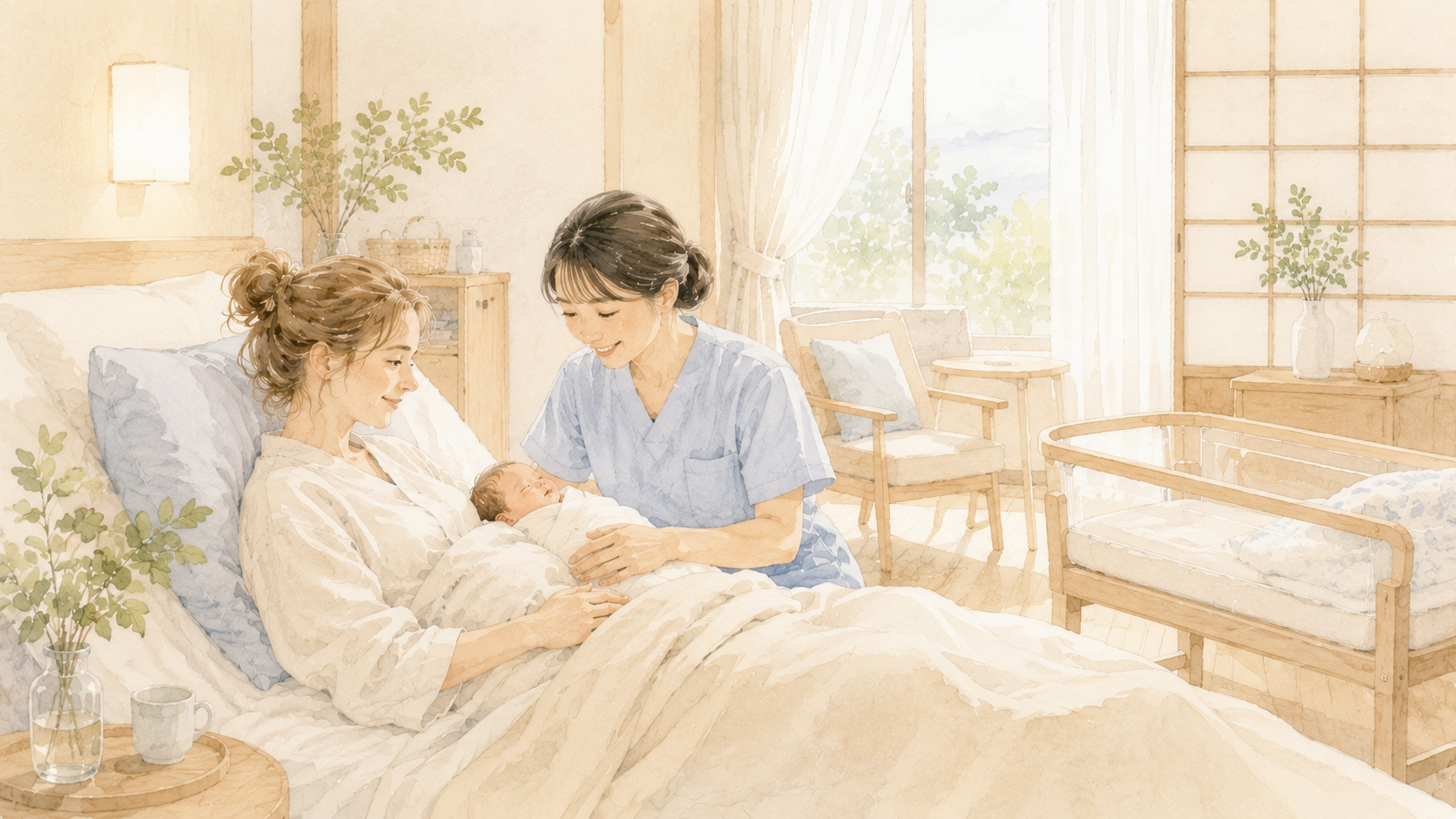
Many families in Japan never hear about postpartum care — and that includes a lot of international families. Japan has an official postpartum care program run by municipal governments, providing professional support for mothers and babies after birth. This guide explains what it is, how it works, and how to access it as an international resident.
What Is Postpartum Care in Japan?
産後ケア事業 (sango kea jigyō) is a support program run by municipal governments across Japan, based on guidelines from the こども家庭庁 (Children and Families Agency). It gives mothers and newborns access to professional care during the weeks after birth, the same period covered by your one-month checkup — when the body is still healing, sleep is hard to come by, and questions about feeding and baby care keep piling up.
Sessions are run by midwives (助産師, josanshi) and nurses. It is not medical treatment — it is a place to rest, ask the questions you have been carrying around, and get hands-on guidance from people who do this every day. For families without grandparents or relatives nearby — which is most international families in Japan — it fills a gap that is otherwise very hard to fill.
Postpartum care is not just for people who are struggling. It is for any mother who wants professional support during the early weeks — whether that means a proper night's rest, help with breastfeeding, or simply someone to ask about the things that feel uncertain.
The Three Types of Care
Japan's postpartum care program comes in three formats. Which one makes sense depends on where you are in the early weeks and what kind of support you actually need.
🏨 宿泊型 (Shukuhaku-gata) — Overnight Stay
Mother and baby stay at a care facility — often a maternity clinic or designated hospital — for one or more nights. Midwives are available around the clock. Good for mothers who need uninterrupted rest, who have concerns about night feeds, or who have limited support at home.
🏥 通所型 (Tsūsho-gata) — Day Visit
Mother and baby visit a facility for the day and return home in the evening. A midwife or nurse provides care and consultation during the visit. Useful if you want in-person professional support but do not need to stay overnight.
🏠 訪問型 (Hōmon-gata) — Home Visit
A midwife or nurse visits you at home. Practical for the first weeks when getting out feels difficult, and allows the professional to see your actual home environment — feeding position, sleeping setup, and so on.
Not all municipalities offer all three types, and the number of sessions available varies. Some areas may offer only one or two formats. Check with your local city or ward office to see what is available where you live.

What You Receive
What is on offer varies by facility and municipality, but most postpartum care sessions cover:
- Rest — time and space for the mother to sleep or lie down, with the baby looked after by staff if needed
- Breastfeeding support — help with latch, positioning, supply concerns, breast engorgement, and switching between breast milk and formula
- Baby checks — weight measurement, feeding assessment, and a general health check by a midwife or nurse
- Baby care guidance — bathing (沐浴, mokuyoku), diaper changing, settling, and carrying technique
- Mental health support — a space to talk through anxiety, low mood, or feelings of isolation without judgement
- Partner participation — fathers and partners are often welcome, particularly at day-visit and home-visit sessions
Postpartum care is not a substitute for medical treatment. If you have symptoms that concern you — heavy bleeding, high fever, signs of infection, or severe low mood — contact your obstetrician or midwife directly rather than waiting for a scheduled care session.
Postpartum Care Hotels vs the Municipal Program
Private postpartum care hotels have become more common in Japanese cities, and they are often marketed using the same term — 産後ケア. They are not the same thing as the municipal program, and the difference matters.
| Municipal program | Private care hotel | |
|---|---|---|
| Run by | City or ward (subsidized) | Private company |
| Cost | Reduced by subsidy; varies by municipality | Full commercial rate |
| Focus | Medical support, feeding, baby care | Rest, meals, comfort, recovery |
| Staffed by | Midwives and nurses | Varies by facility |
Both have their uses. Some families use the municipal program for professional support and a private hotel for rest and recovery — they serve different purposes. Just keep in mind that a private hotel is not covered by the municipal subsidy, and the eligibility rules do not apply.
How to Access It as an International Resident
The postpartum care program is available to all residents registered in a municipality — nationality does not affect eligibility. If you have registered your address at the ward or city office, you are generally entitled to apply.
The process typically works like this:
- Register your pregnancy at your local ward or city office and receive your 母子健康手帳 (Boshi Kenkō Techō — Maternal and Child Health Handbook). This is usually when postpartum care is first mentioned.
- Apply for the program — often from around 28 weeks of pregnancy. Some municipalities use an online form; others require an in-person visit. Ask at your local office.
- After approval, you are issued vouchers or authorization to book sessions at registered facilities.
- Contact the facility directly to make a reservation.
Important: details vary by municipality
The eligible age of the baby, number of sessions allowed, cost after subsidy, and application process are all set by each municipality independently. Always check the official website for your city or ward for the exact rules that apply to you. Search for 「[your city/ward name] 産後ケア事業」 to find the right page.
Language support: Most postpartum care facilities operate in Japanese. If you need help in English or another language, your municipality's international affairs office (国際交流協会, kokusai kōryū kyōkai) may be able to assist, or you could bring a bilingual support person along. The AMDA International Medical Information Center offers telephone support in multiple languages and can help you find your way through the system.
Japanese Vocabulary
| Japanese | Reading | Meaning |
|---|---|---|
| 産後ケア事業 | sango kea jigyō | Postpartum care program (municipal) |
| 宿泊型 | shukuhaku-gata | Overnight stay type |
| 通所型 | tsūsho-gata | Day visit type |
| 訪問型 | hōmon-gata | Home visit type |
| 助産師 | josanshi | Midwife |
| 授乳支援 | junyū shien | Breastfeeding support |
| 沐浴 | mokuyoku | Baby bathing (newborn bath) |
| 産後うつ | sango utsu | Postnatal depression |
| 国際交流協会 | kokusai kōryū kyōkai | International affairs / exchange association |