

Written and reviewed by Susumu
Born and raised in Japan · Checked against Japanese law and ministry guidance
Japan recommends around 14 prenatal checkups during pregnancy, all partially subsidized through a municipal voucher system. Here's how the schedule works, what gets tested, and what to expect at each visit.
Affiliate Disclosure: This article contains affiliate links. If you click a link and make a purchase, we may earn a small commission at no extra cost to you. We only recommend products we genuinely believe are helpful. See our Terms of Use for full details.

What Is 妊婦健診?
妊婦健診 (にんぷけんしん, ninpu kenshin) means prenatal checkup. It refers to the series of regular health assessments that run from early pregnancy through to delivery. The appointments track the health of both mother and baby — monitoring blood pressure, fetal growth, blood markers, and more.
In Japan, these checkups are standardized by national guidelines set by the Ministry of Health, Labour and Welfare. Every municipality in the country subsidizes the cost of at least 14 visits, which means the structure is consistent regardless of where you live, though the exact subsidy amount varies by area.
Not covered by health insurance
Prenatal checkups are not covered under Japan's standard health insurance. They are subsidized separately through a voucher system administered by each municipality. Your My Number card (マイナ保険証) is used at the clinic only when a medical issue arises during the visit — for medication, treatment, or additional tests ordered for a medical reason.
Your First Visit
The initial visit — where pregnancy is confirmed — works differently from everything that follows. At this stage you haven't yet registered your pregnancy with the municipal office, so you have no 母子健康手帳 and no vouchers. This visit is paid entirely out of pocket.
Out-of-pocket costs for this first consultation typically range from 10,000 to 20,000 yen, depending on the clinic and what tests are performed. Once the doctor or midwife confirms the pregnancy and advises you to register, you move to the next step.
Registering Your Pregnancy
After confirmation, you register at the maternal and child health section of your local municipal office (市区町村役所). This is when you receive two things you'll use throughout the rest of your pregnancy:
- 母子健康手帳 (boshi kenkō techō) — the maternal and child health handbook. A running record of your health and your baby's development, starting in pregnancy and continuing through early childhood.
- 受診票 (jushinhyō) — the prenatal checkup vouchers. These are submitted at each visit so the municipal subsidy is deducted from your bill at the counter.
Most municipalities issue 14 vouchers, matching the national recommended standard of approximately 14 visits. They are handed over on the same day as the handbook, so they're ready to use at your next appointment. Unused vouchers at the end of pregnancy cannot be refunded.
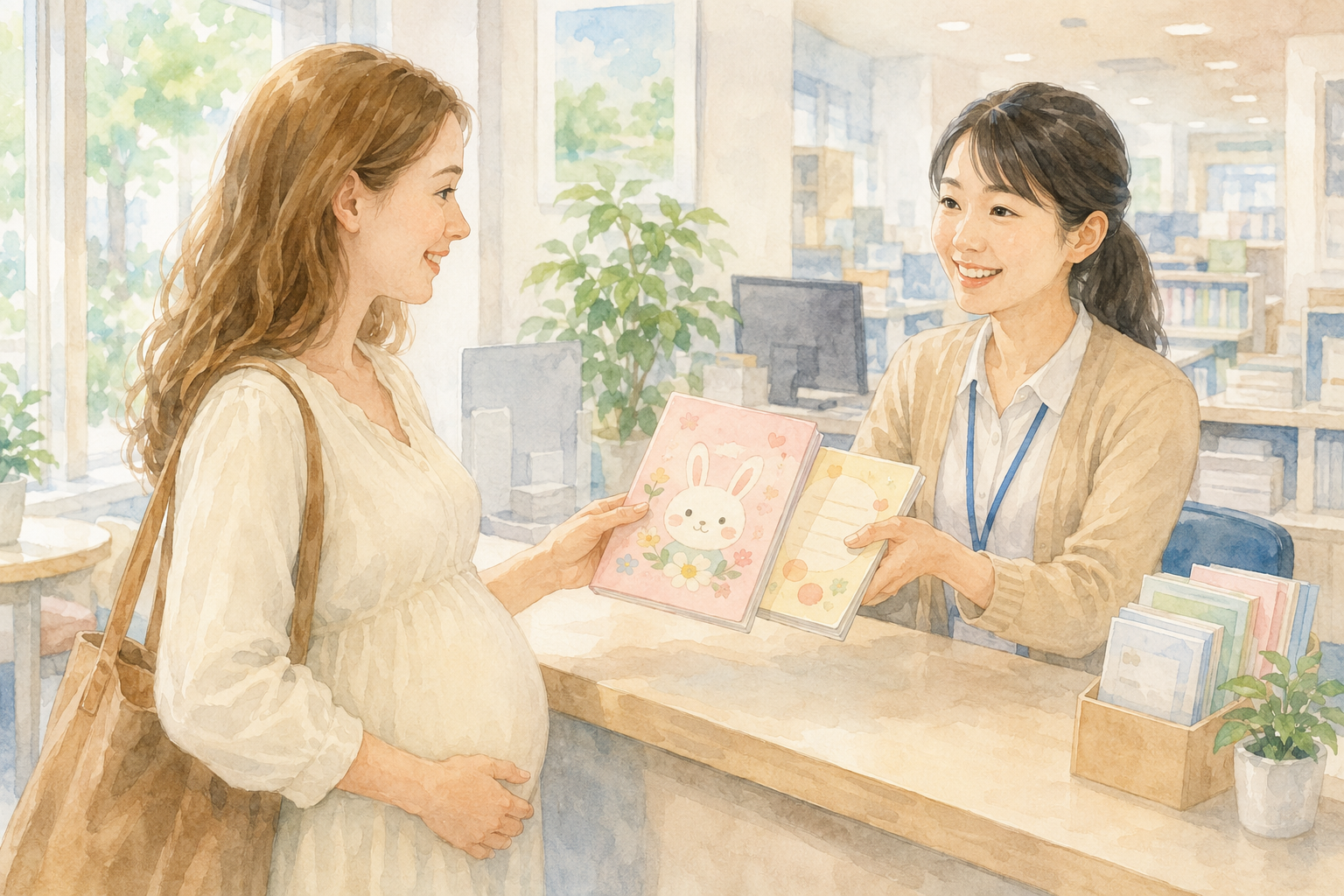
What you need at the municipal office
Bring a completed 妊娠届 (pregnancy notification form — available at the office or downloadable from your municipality's website) along with your My Number card, or your notification card plus a photo ID such as a driver's license or passport.
The Checkup Schedule
Japan's prenatal checkup schedule is defined by a Ministry of Health, Labour and Welfare notification (告示第226号, 2015), reaffirmed by こども家庭庁 through 2024. The visits become more frequent as the due date approaches.
| Gestational period | Frequency | Main focus |
|---|---|---|
| Early pregnancy – week 23 | Every 4 weeks | Confirm normal progression; initial blood panel |
| Weeks 24–35 | Every 2 weeks | Monitor growth; watch for preterm signs |
| Week 36 – delivery | Every week | Prepare for delivery; close monitoring |
If the first visit is around week 8, the schedule adds up to approximately 14 visits total — which is why 14 vouchers are the standard. Your clinic may schedule you slightly differently depending on your individual situation.
What Happens at Each Visit
The following checks are performed at every prenatal visit, as specified in the national guidelines:
- Blood pressure
- Body weight
- Urinalysis — testing for glucose and protein
- Fundal height (子宮底長, shikyū tei chō) — the distance from the pubic bone to the top of the uterus, used to track fetal growth
- Abdominal circumference (腹囲, fukui)
- Edema check (浮腫, fushu) — checking for swelling, which can be an early sign of pregnancy-related hypertension
- Interview — the doctor or midwife asks about your health and any concerns
Height is measured at the first visit only. Internal examinations and ultrasound are also scheduled at various points — see the sections below for details.
Write down your questions beforehand
Appointments move quickly. Jotting down concerns before you arrive means nothing slips your mind — and if your Japanese is still limited, having key words written down can help you communicate with the desk staff.
First-Visit Blood Tests
At your first prenatal checkup, a comprehensive blood panel is taken. The national minimum standard (告示第226号) covers these ten tests:
- ABO and Rh blood type
- Irregular antibody screening
- Complete blood count (CBC)
- Blood glucose
- Hepatitis B antigen
- Hepatitis C antibody
- HIV antibody
- Syphilis serology
- Rubella virus antibody
- HTLV-1 antibody — done sometime before week 30
A chlamydia screening is also part of the national standard, performed before week 30. Some clinics additionally test for toxoplasma, though this is not part of the national guidelines. If any result comes back positive, there is a defined clinical response: treatment, closer monitoring, or adjustments to how the birth is managed.
Ultrasound in Japan
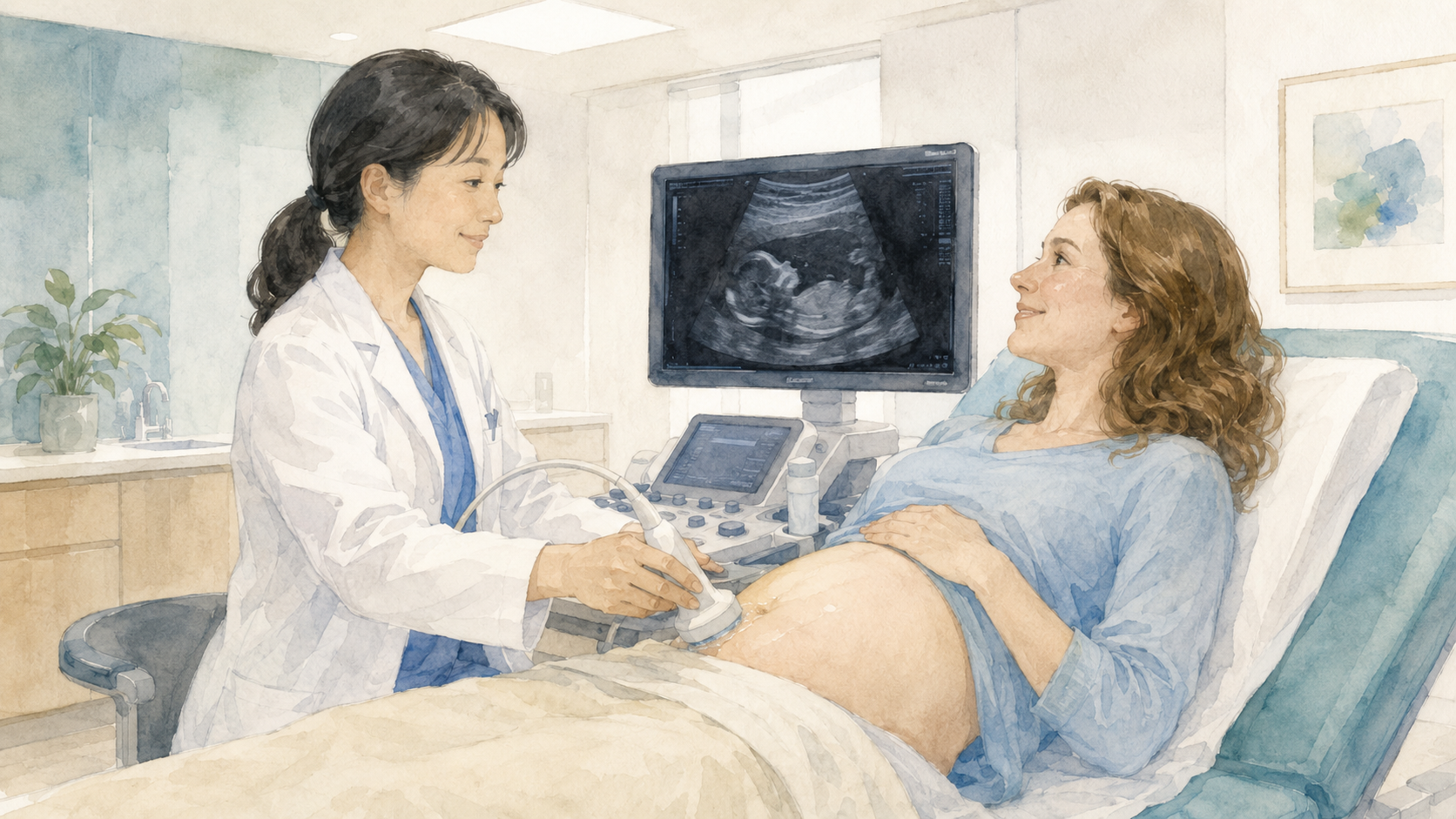
Japan's official guidelines subsidize four ultrasound scans per pregnancy: two during early pregnancy through week 23, one between weeks 24 and 35, and one from week 36 to delivery.
In practice, many Japanese clinics perform ultrasound at every visit rather than just the four subsidized scans. The additional scans are billed directly to the patient — typically around 2,000 yen each — rather than being applied against the voucher. Scans that look for chromosomal conditions are a separate matter — see our guide to prenatal testing in Japan.
For context, the WHO's minimum standard for antenatal care recommends one ultrasound before week 24. Japan's approach, even counting only the subsidized scans, significantly exceeds that minimum.
Costs and the Voucher System
Prenatal checkups are not free, but the out-of-pocket cost at each visit is significantly reduced by the municipal subsidy. Here is how the voucher system works in practice:
- At municipal registration you receive a booklet of 受診票 vouchers alongside your 母子健康手帳
- At each checkup, you fill in the required fields on the voucher and hand it to the clinic
- The clinic records the examination and deducts the subsidy from your bill at checkout — you pay only the remainder

For a standard visit with no additional tests, the self-pay portion is typically around 3,000 to 5,000 yen. Visits with extra tests — such as the glucose tolerance screen — can run considerably higher. The initial pregnancy confirmation visit, before you have any vouchers, is 10,000 to 20,000 yen out of pocket.
The national average public subsidy per pregnancy is around 109,730 yen, based on こども家庭庁 data as of April 2024. All 1,741 municipalities in Japan subsidize at least 14 visits, though the total amount varies significantly by area — from around 80,000 yen in lower-subsidy areas to around 136,000 yen in the most generous ones.
If you move municipalities during pregnancy
Vouchers are issued by your home municipality and are generally only accepted at clinics within that area. If you move during pregnancy, return unused vouchers to your old municipal office and apply for new ones at your new address. The process is straightforward — bring your 母子健康手帳 and proof of your new address.
What to Bring
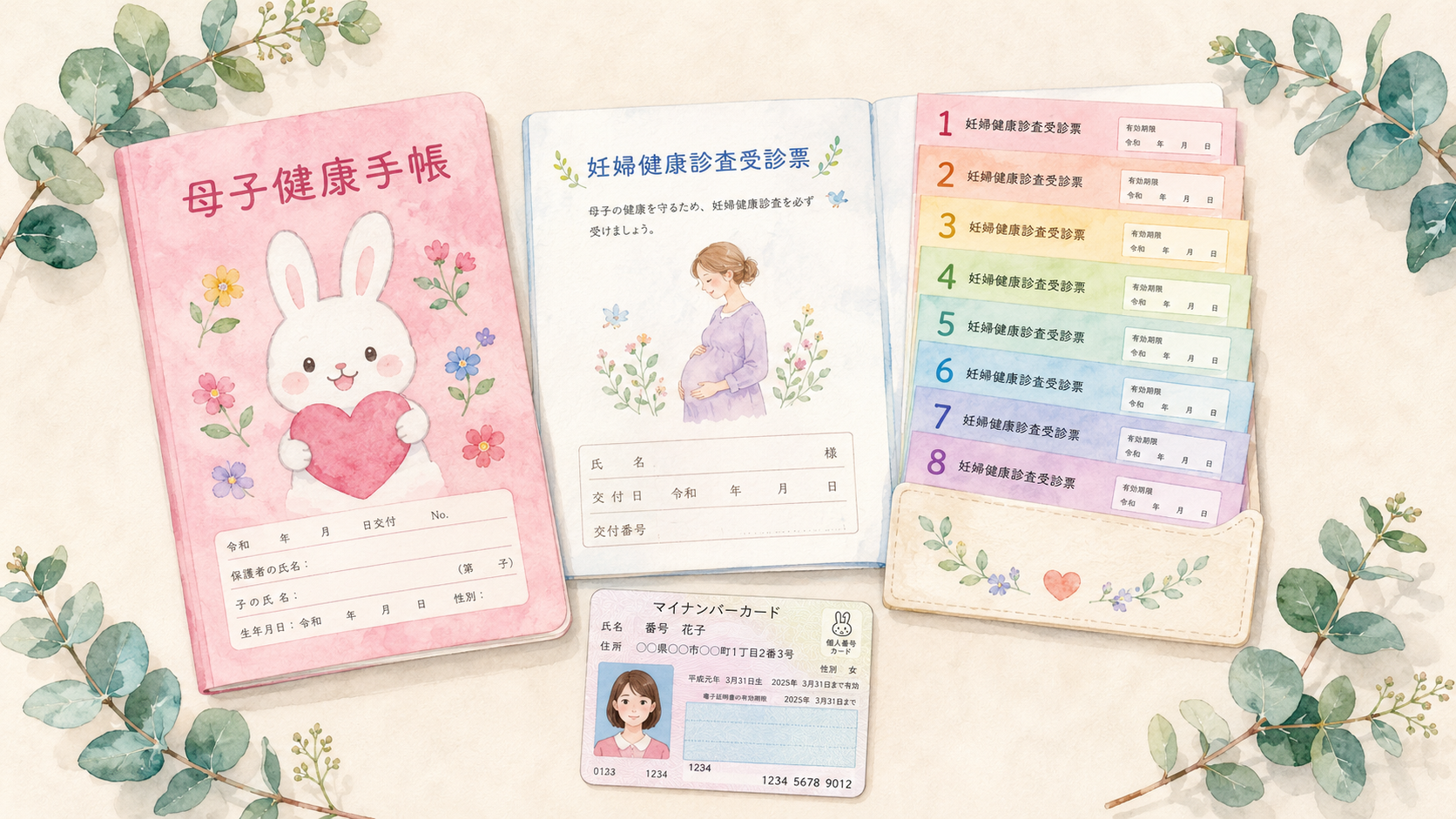
Every visit requires the same basic set of items:
- 母子健康手帳 — bring this to every appointment without exception
- 受診票 — the voucher for that visit
- My Number card (マイナンバーカード) — required as your health insurance ID (マイナ保険証) if medication or treatment is prescribed during the visit
For clothing: tops that are easy to remove make things smoother, since internal examinations are sometimes part of the visit. Avoid one-piece dresses for the same reason. Low-heeled shoes are practical — you step on and off a scale at every visit. Natural or no makeup is recommended; clinicians sometimes note skin color and complexion as part of the overall health check.
Japanese Vocabulary
| Japanese | Reading | Meaning |
|---|---|---|
| 妊婦健診 | ninpu kenshin | Prenatal checkup |
| 母子健康手帳 | boshi kenkō techō | Maternal and child health handbook — issued at municipal registration |
| 受診票 | jushinhyō | Prenatal checkup voucher — submitted at each visit to apply the municipal subsidy |
| 妊娠届 | ninshin todoke | Pregnancy notification form — submitted at the municipal office to register your pregnancy |
| 子宮底長 | shikyū tei chō | Fundal height — measured at every visit to track fetal growth |
| 腹囲 | fukui | Abdominal circumference — measured at every visit |
| 浮腫 | fushu | Edema / swelling — checked at every visit as a sign of possible hypertension |
| 超音波検査 | chōonpa kensa | Ultrasound scan |
| 産婦人科 | sanfujinka | OB/GYN clinic — the type of clinic that handles prenatal care in Japan |