Written and reviewed by Susumu
Born and raised in Japan · Checked against Japanese law and ministry guidance
Nearly all children catch RSV by age 2 — and there is no treatment. Learn how to protect your newborn with the options now available in Japan.
Affiliate Disclosure: This article contains affiliate links. If you click a link and make a purchase, we may earn a small commission at no extra cost to you. We only recommend products we genuinely believe are helpful. See our Terms of Use for full details.
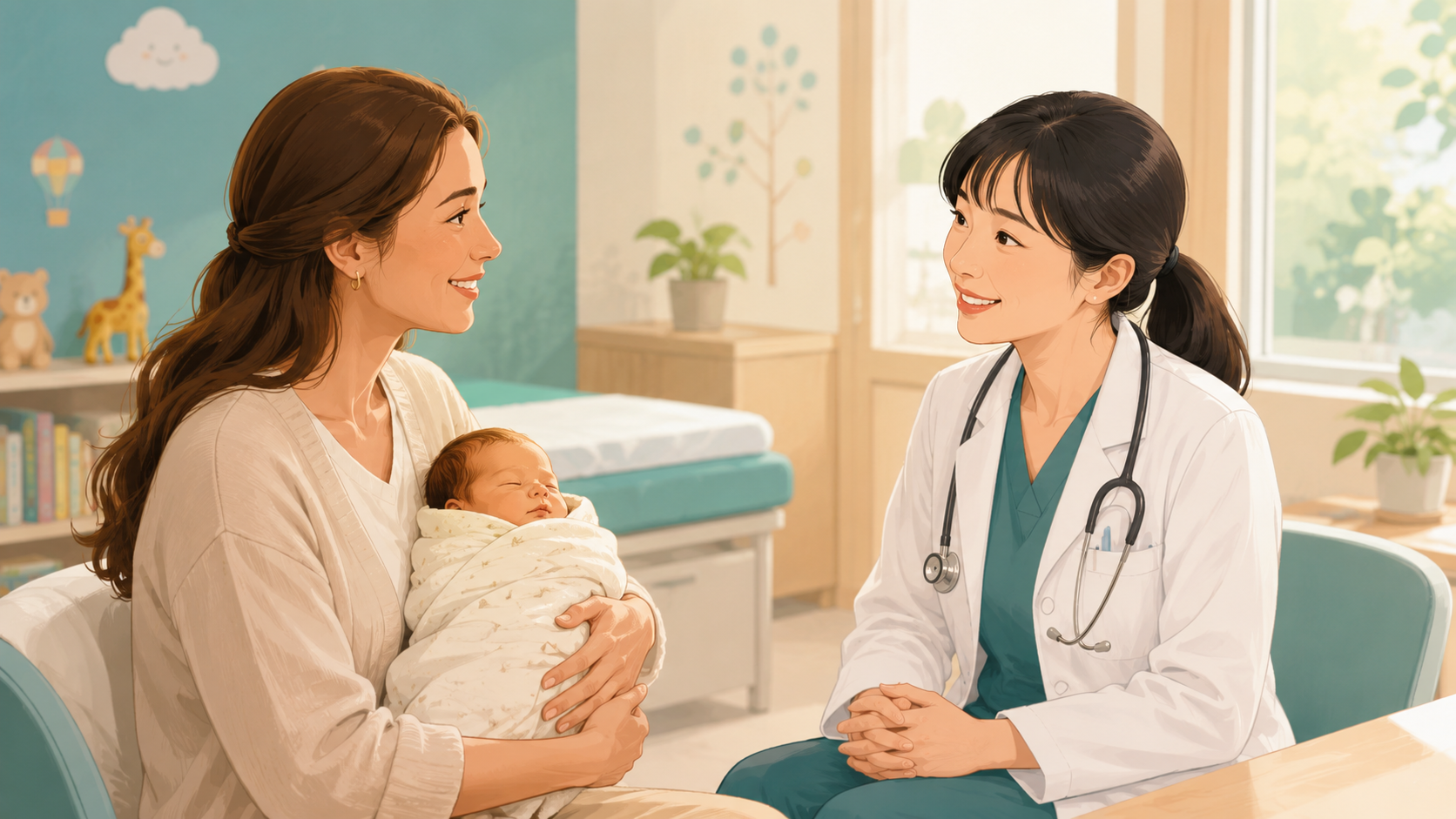
📌 Note: This article is for informational purposes only. Always consult your doctor or obstetrician for personalized advice about vaccines and medications for you and your baby.
What Is RSV?
RSV (Respiratory Syncytial Virus — RSウイルス — アールエスウイルス) is a common respiratory virus that causes cold-like symptoms in adults, but can be very serious — even life-threatening — in young babies.
According to Japan's Ministry of Health, Labour and Welfare, more than 50% of children are infected by age 1, and nearly 100% by age 2. RSV is one of the most important infections for new parents in Japan to be aware of, because there is no cure — only prevention.
| Key fact | Detail |
|---|---|
| Incubation period | 4–5 days after exposure |
| How it spreads | Droplets (coughing, sneezing) and contact (touching surfaces) |
| Season in Japan | Traditionally autumn–winter, but now also spreads in spring–summer |
| Deactivated by | Heat above 55°C, and disinfectants |
Why Is It Dangerous for Babies?
For healthy adults and older children, RSV usually feels like a mild cold. But for young babies — especially newborns — the same virus can cause severe breathing difficulties requiring hospitalization.
⚠️ Key statistic: Approximately 40% of RSV hospitalizations in Japan involve babies under 6 months old. Newborns are especially vulnerable because their immune systems and airways are still developing.
Babies at highest risk of severe illness:
- Newborns and babies under 6 months old
- Premature babies (早産児 — そうざんじ)
- Babies with congenital heart or lung conditions
- Babies with weakened immune systems
Infection from an older sibling or family member with a mild cold is one of the most common routes of transmission to newborns at home.
Symptoms & When to See a Doctor
RSV symptoms progress in two stages:
| Stage | Timing | Symptoms |
|---|---|---|
| Upper respiratory | Days 1–3 | Runny nose, mild cough, sneezing, low fever |
| Lower respiratory | Days 3–7 | Severe cough, wheezing, rapid breathing, difficulty feeding, high fever |
According to Japan's National Institute of Infectious Diseases, approximately 70% of first-time infected infants experience only mild upper respiratory symptoms and recover within a few days. However, around 30% progress to lower respiratory illness — including bronchiolitis (細気管支炎 — さいきかんしえん) or pneumonia (肺炎 — はいえん). RSV is also responsible for approximately 50% of all pneumonia cases in infants.
Go to the hospital immediately if your baby:
• Is breathing very fast or struggling to breathe
• Has a bluish tint around the lips or fingernails
• Cannot drink milk or is feeding very poorly
• Is unusually limp or unresponsive
• Has a high fever and is under 3 months old
There Is No Treatment Drug
This is the most important thing parents need to understand: there is no antiviral drug for RSV. Once a baby is infected, doctors can only provide supportive care — oxygen, IV fluids, and monitoring. There is nothing that targets the virus itself.
This is why prevention matters so much. Once your baby has RSV, you can only wait and manage the symptoms. Protecting your baby before they are exposed is the only effective strategy.
How to Protect Your Baby — 2 Medical Options
Because there is no treatment, Japan now has two medical options to prevent severe RSV illness in infants. Many parents — and even some doctors — are not fully aware of both.
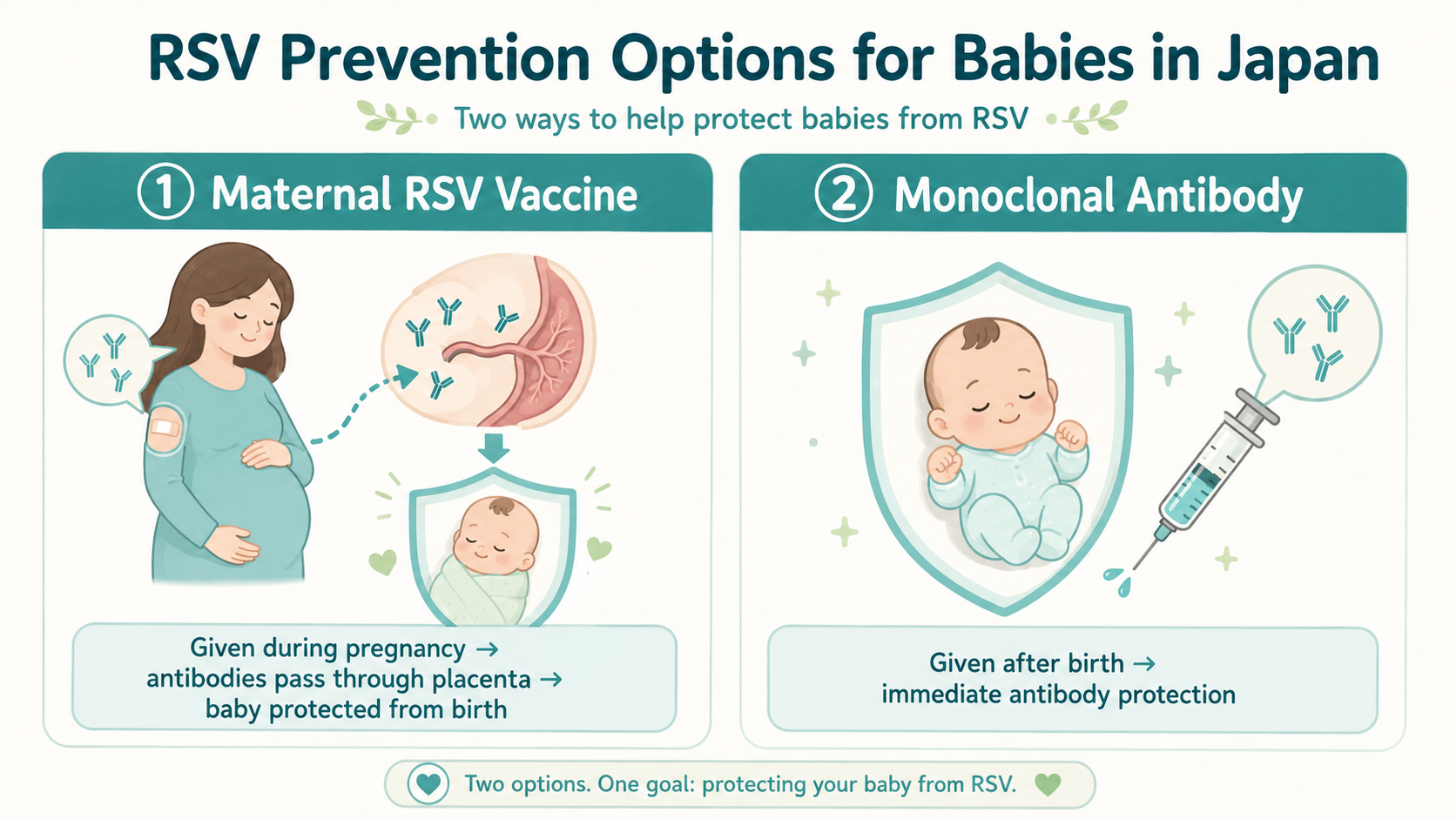
① RSV Vaccine for Pregnant Women (妊婦へのワクチン接種)
A vaccine given to the mother during pregnancy passes RSV-fighting antibodies through the placenta to the baby. This means your newborn is protected from birth — during the most vulnerable first months of life.
- When: Given during pregnancy (consult your obstetrician for timing)
- How it works: Maternal antibodies cross the placenta and protect the newborn
- Who it protects: The newborn, from the moment of birth
Ask your obstetrician: If you are pregnant, ask your doctor specifically about the RSV vaccine. It is not always proactively offered at prenatal checkups. Asking is the first step.
② Monoclonal Antibody for Newborns & Infants (新生児・乳児への抗体薬)
A monoclonal antibody injection (抗体薬 — こうたいやく) can be given directly to newborns and young babies to protect them against severe RSV illness. Unlike a vaccine, this is a ready-made antibody, not a live or inactivated virus.
- When: Given after birth, especially at the start of RSV season
- Who it is for: All newborns and infants — especially high-risk babies (premature, heart/lung conditions)
- How it works: Provides immediate antibody protection without requiring the baby's immune system to respond
Note: Whether these options are available and covered by insurance at your hospital may vary. Ask your obstetrician or pediatrician for details specific to your situation.
Daily Prevention at Home
Even without medical intervention, there are important steps every family can take:
For the whole family
- Handwashing — thorough handwashing before touching the baby, especially after being outside
- Ventilation — keep rooms well ventilated
- Masks — any family member with cold symptoms should wear a mask around the baby
- Avoid taking newborns to crowded places, nurseries, or places with sick siblings during RSV season
For the baby's environment
- If possible, keep the baby's sleeping area separate from siblings who may have colds
- Regularly disinfect surfaces that are frequently touched
More information: For official information about RSV in Japanese, visit the Ministry of Health, Labour and Welfare (厚生労働省) or the National Institute of Infectious Diseases (国立感染症研究所). For vaccine options, consult your obstetrician or pediatrician directly.
RSV protection works differently from the routine childhood vaccines. For what the standard schedule covers and what it doesn't, see our guide to Japan's childhood vaccination schedule.
📖 Japanese Vocabulary
Key terms for speaking with doctors or hospitals in Japan about RSV.
| 日本語 | ひらがな | English |
|---|---|---|
| RSウイルス感染症 | アールエスウイルスかんせんしょう | RSV infection |
| 細気管支炎 | さいきかんしえん | Bronchiolitis |
| 肺炎 | はいえん | Pneumonia |
| 抗体薬 | こうたいやく | Monoclonal antibody medication |
| 早産児 | そうざんじ | Premature baby |
| 飛沫感染 | ひまつかんせん | Droplet transmission |
| 接触感染 | せっしょくかんせん | Contact transmission |
| 潜伏期間 | せんぷくきかん | Incubation period |
| 産科医・産婦人科医 | さんかい・さんふじんかい | Obstetrician |