Written and reviewed by Susumu
Born and raised in Japan · Checked against Japanese law and ministry guidance
The autumn health screening every child has before starting first grade. What is checked, what to take, what happens if something is found — and why it is not a test your child can fail.
Affiliate Disclosure: This article contains affiliate links. If you click a link and make a purchase, we may earn a small commission at no extra cost to you. We only recommend products we genuinely believe are helpful. See our Terms of Use for full details.
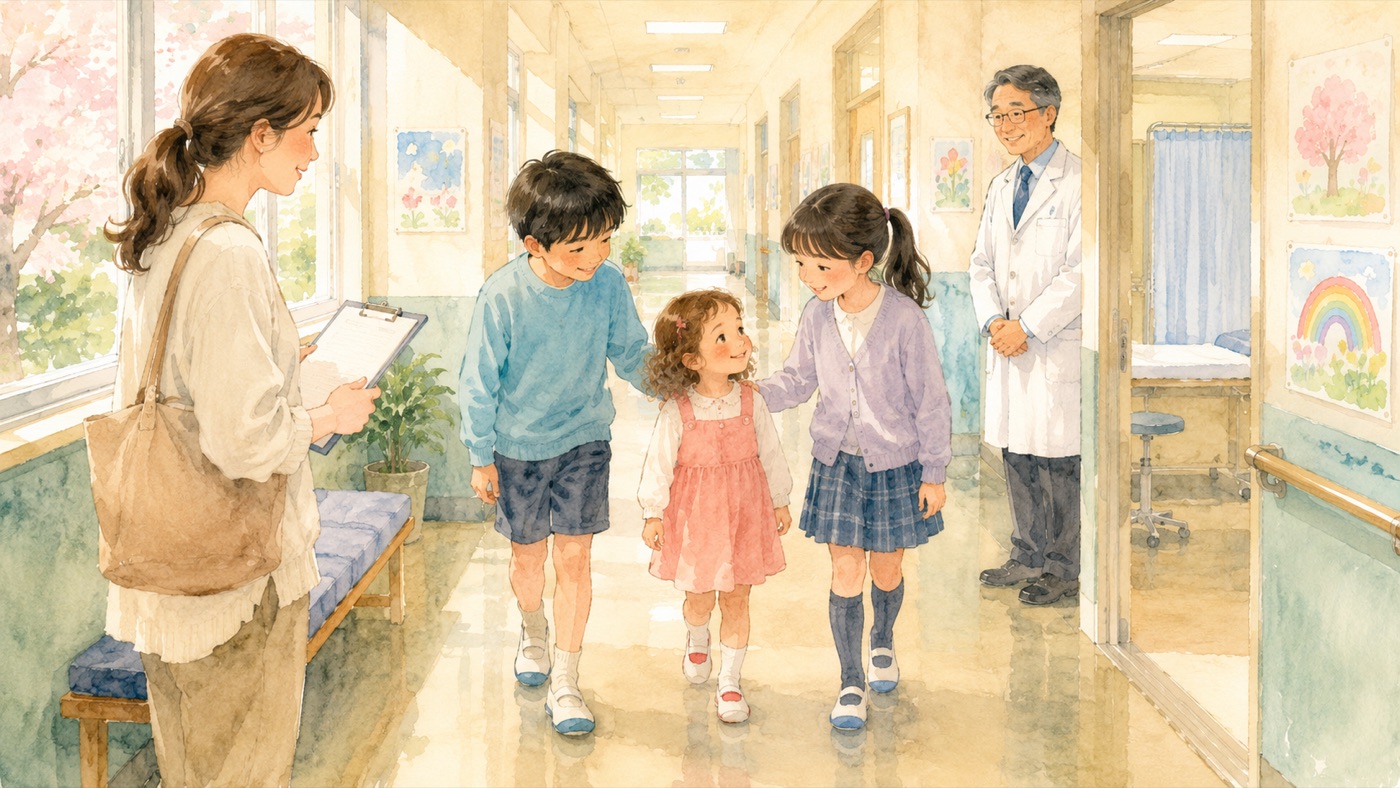
A letter turns up in the autumn before your child is due to start first grade, calling you to a health checkup at the local elementary school. For a family new to Japan it can read like a test your child has to pass to get in. It isn't. The pre-enrollment checkup (就学時健診, shūgakuji kenshin) is a screening the board of education runs to catch health issues early and flag any support a child might need before April. Here's how it works, what happens on the day, and what to watch for if you're new to the system.
What the Checkup Is
The pre-enrollment checkup is a health screening for every child due to start elementary school the following April. It's run not by a hospital but by the local board of education (教育委員会, kyōiku iinkai), which is required to hold it under the School Health and Safety Act. The board pulls the list of children from the local register, so if your child is the right age and registered as a resident, a notice is meant to reach you automatically.
The important thing to understand from the start: this is not an entrance exam, and there is no passing or failing. Your child's place at the local public school does not depend on the result. The checkup exists to spot things — a vision or hearing problem, teeth that need work, a developmental concern — early enough to act on them before school starts, and to point families toward help where it's needed. Treat it as a health check, not a gate.
When It Happens and How You Hear About It
The checkup is held in the autumn before enrollment — the year before your child starts school. By law it has to be done by November 30, though some municipalities run into December. The notice usually lands in the mail around October, giving you a date, a time slot, and the location, which is normally the elementary school your child is expected to attend.
There's one point that catches families new to Japan off guard. The notice is generated from the resident register, and for a child who isn't a Japanese national, enrollment in a public school is not automatic. Depending on the municipality, you may need to let the board of education know that you intend to send your child to a local public school before they will send the checkup notice. If autumn is approaching and nothing has arrived, don't wait — contact the board of education's school affairs desk (学務課) and ask. For the wider enrollment process this fits into, see our guide to enrolling in elementary school.
What Gets Checked
The exact stations vary by area, but the checkup is usually run by the school doctor, the school dentist, and teachers, and covers the following:
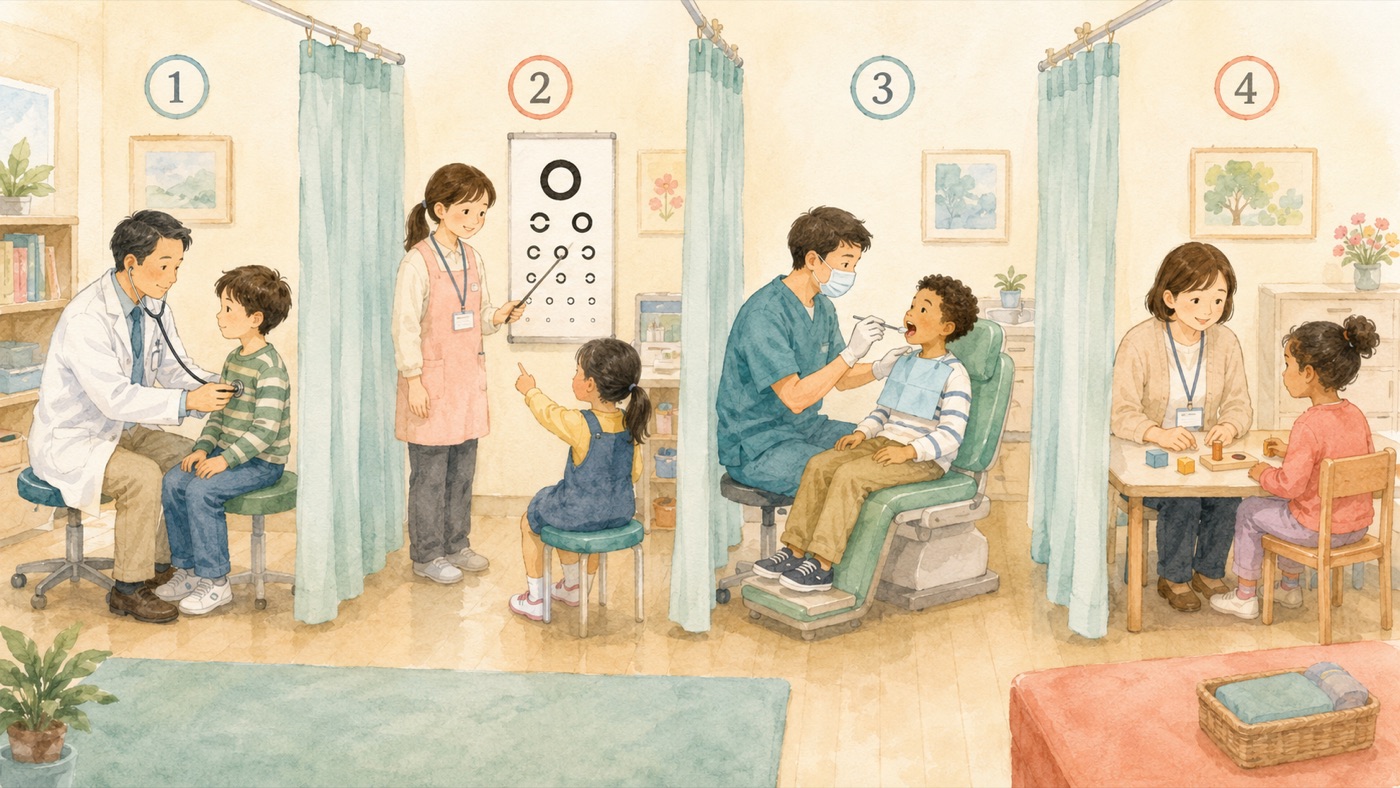
- General health (内科). The school doctor looks the child over — listening to the chest, checking posture and general nutrition, and looking for skin or other conditions — and notes allergies, existing illnesses, and vaccination history.
- Vision and eyes (視力・眼科). Sight is tested with the Landolt ring — a "C" shape where the child points to show which way the gap faces — along with a look for any eye problems.
- Hearing and ENT (聴力・耳鼻科). Hearing is checked where needed, along with the ears, nose, and throat.
- Teeth (歯科). The school dentist checks for cavities and other dental issues.
- Development and an interview (知能検査・面接). There's usually a short, simple screening of language and development, and in many areas a brief interview — sometimes just the child with a teacher, sometimes the child and parent together. Some municipalities don't do the interview at all.
How the Day Flows
You arrive at the school at your assigned time and check in at reception. From there, a pattern many families find surprising: the children are often walked from station to station by the school's fifth- and sixth-graders, or by teachers, while the parents are taken to a separate room for a briefing about starting school. Some schools instead keep parent and child together through the checkup — the notice will tell you which.
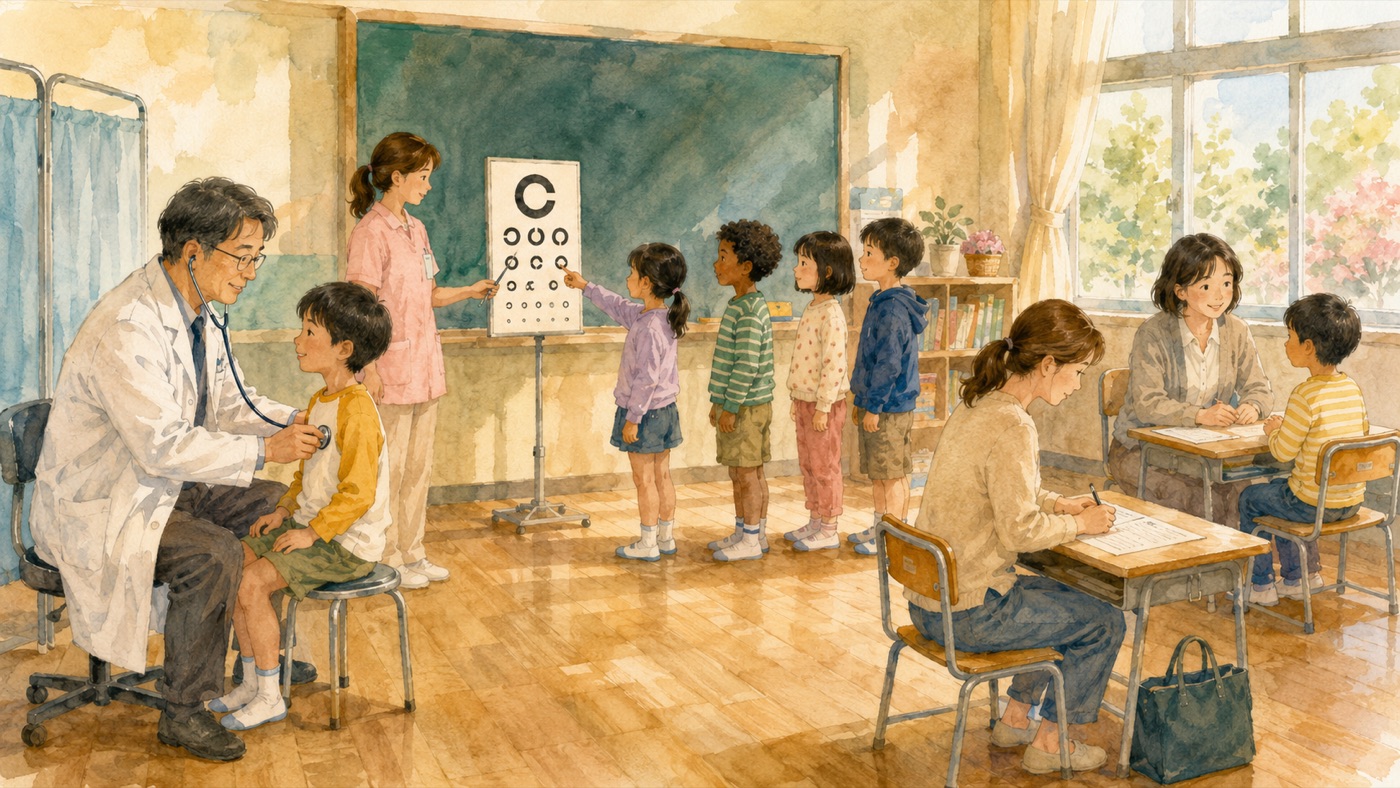
The whole thing usually takes a couple of hours, and it doubles as a first, low-key look at the school your child will walk into in April. If your child is nervous, it can help to frame it beforehand as a visit to their new school rather than a doctor's appointment.
What to Bring
The notice will list what to bring, but it almost always comes down to a few things:
- The notice and its form, filled in beforehand. It usually asks about your child's health history, so it's worth doing calmly at home rather than in the entrance hall. A growing number of municipalities now have you complete this questionnaire online, from a phone, instead of on paper — the notice will tell you which.
- The Mother and Child Health Handbook (母子健康手帳), if your area asks for it — it's used to confirm growth, medical history, and vaccination record, and it's handy for filling in the health form even where it isn't strictly required. Some municipalities ask you to bring it, others don't, so check the notice. For what this book is and why it matters, see our guide to the boshi techō.
- Indoor shoes (上履き) for your child and slippers for yourself, plus a bag to carry your outdoor shoes — standard for stepping inside any Japanese school.
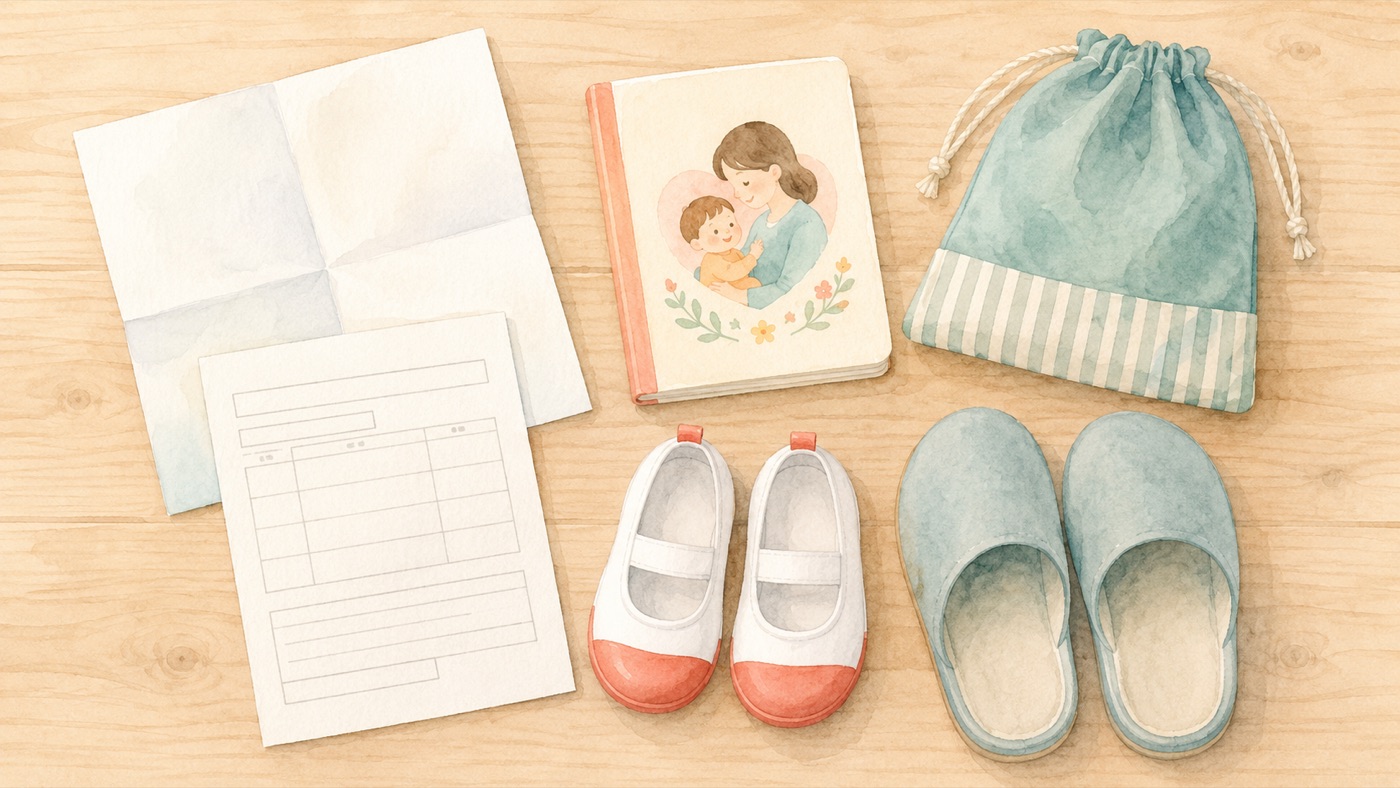
One small tip the notices themselves usually flag: dress your child in clothes that are easy to slip on and off, since the general-health check involves undressing a little.
If your child can't make the assigned date because of illness or a clash, don't just skip it. Call the designated school ahead of time — ask for the school nurse-teacher (養護教諭) or the vice-principal — and they'll arrange a makeup, often at another school or on another day.
After the Checkup
If the checkup turns something up — say a vision issue or a cavity — you'll be advised to see a doctor or dentist and, where possible, sort it out before April. Getting glasses or dental work handled over the winter means one less thing to manage in the first weeks of school. Again, a finding doesn't affect whether your child can enroll.
The checkup is separate from the formal enrollment notice (就学通知書, shūgaku tsūchisho), which tells you which school your child is assigned to and the date to enroll. By law that notice has to reach you by the end of January, and in many places it arrives around then — though some municipalities send it earlier, even in the same envelope as the autumn checkup notice. Either way, it's a separate document doing a different job from the health check.
When a Child May Need Extra Support
One quiet purpose of the checkup is to notice children who might do better with extra support at school. If a health or developmental concern comes up, families are usually guided toward an enrollment consultation (就学相談, shūgaku sōdan) — a separate, unhurried process where the board of education, specialists, and the family talk through the options together.
Those options run from a regular class with support, to a special-needs class (特別支援学級, tokubetsu shien gakkyū) within a mainstream school, to a special-needs school. The consultation isn't a verdict handed down on the day, and the family's own wishes carry real weight in where a child ends up. If you have concerns of your own, you don't have to wait for the checkup to raise them — you can contact the board of education directly.
A note for families who are still finding their footing with Japanese: the checkup and the briefing are conducted in Japanese, and interpreter support varies a lot from one municipality to the next. If you'd like language help, ask the board of education when the notice arrives rather than on the day — some areas can arrange it with notice. And if your child will attend an international school and won't be enrolling in a public school, let the board know so the paperwork matches your plans.
Japanese Vocabulary
| Japanese | Reading | Meaning |
|---|---|---|
| 就学時健康診断 | shūgakuji kenkō shindan | Pre-enrollment health checkup — often shortened to 就学時健診 |
| 教育委員会 | kyōiku iinkai | The local board of education, which runs the checkup |
| 学務課 | gakumu-ka | The school affairs desk to ask about enrollment and notices |
| 母子健康手帳 | boshi kenkō techō | Mother and Child Health Handbook — bring it to the checkup |
| 上履き | uwabaki | Indoor shoes worn inside the school building |
| 視力検査 | shiryoku kensa | The vision test, done with the Landolt "C" ring |
| 知能検査 | chinō kensa | A short screening of language and development |
| 養護教諭 | yōgo kyōyu | The school nurse-teacher; contact them if you can't attend |
| 就学通知書 | shūgaku tsūchisho | The formal enrollment notice, sent later (usually January) |
| 就学相談 | shūgaku sōdan | Enrollment consultation about the right support and setting |
| 特別支援学級 | tokubetsu shien gakkyū | A special-needs class within a mainstream school |