
Written and reviewed by Susumu
Born and raised in Japan · Checked against Japanese law and ministry guidance
Japan's varicella (chickenpox) vaccine is free in two doses for children aged 1–3. The vaccine was developed in Japan and is now the WHO global standard. Here's what international families need to know about the schedule, side effects, and keeping the window open.
Affiliate Disclosure: This article contains affiliate links. If you click a link and make a purchase, we may earn a small commission at no extra cost to you. We only recommend products we genuinely believe are helpful. See our Terms of Use for full details.
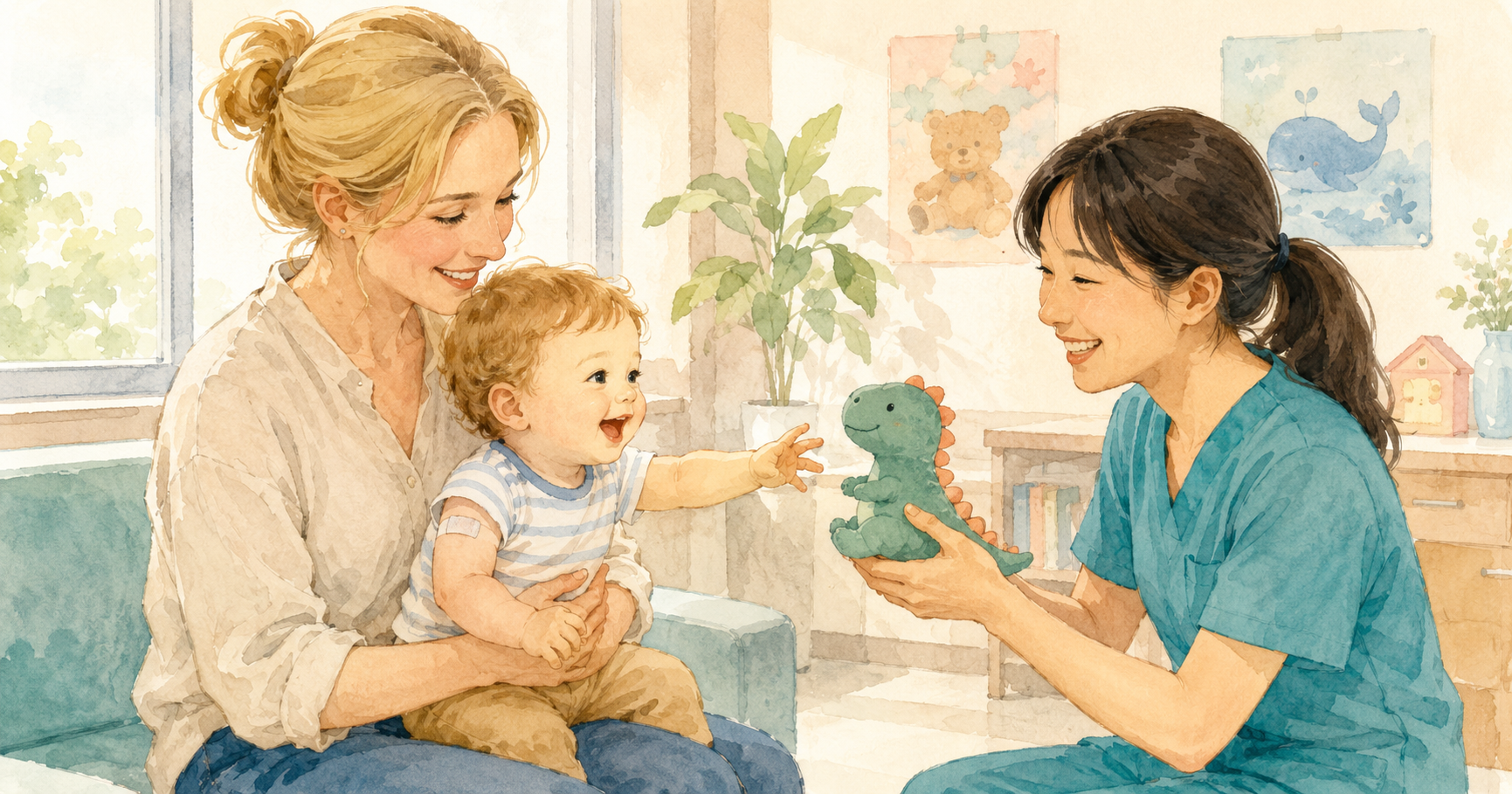
Free in two doses before age 3: The varicella (chickenpox) vaccine has been part of Japan's routine free vaccination schedule since October 2014. Two doses are given in the first three years of life — the window closes on your child's third birthday.
What Is Chickenpox?
Chickenpox — 水痘 (suito) in formal Japanese, or みずぼうそう (mizubousou) in everyday speech — is a highly contagious viral illness caused by the varicella-zoster virus (VZV). It spreads easily through the air and by direct contact with the blisters of an infected person. The incubation period (the time between exposure and first symptoms) is around 14 days, ranging from 10 to 21 days.
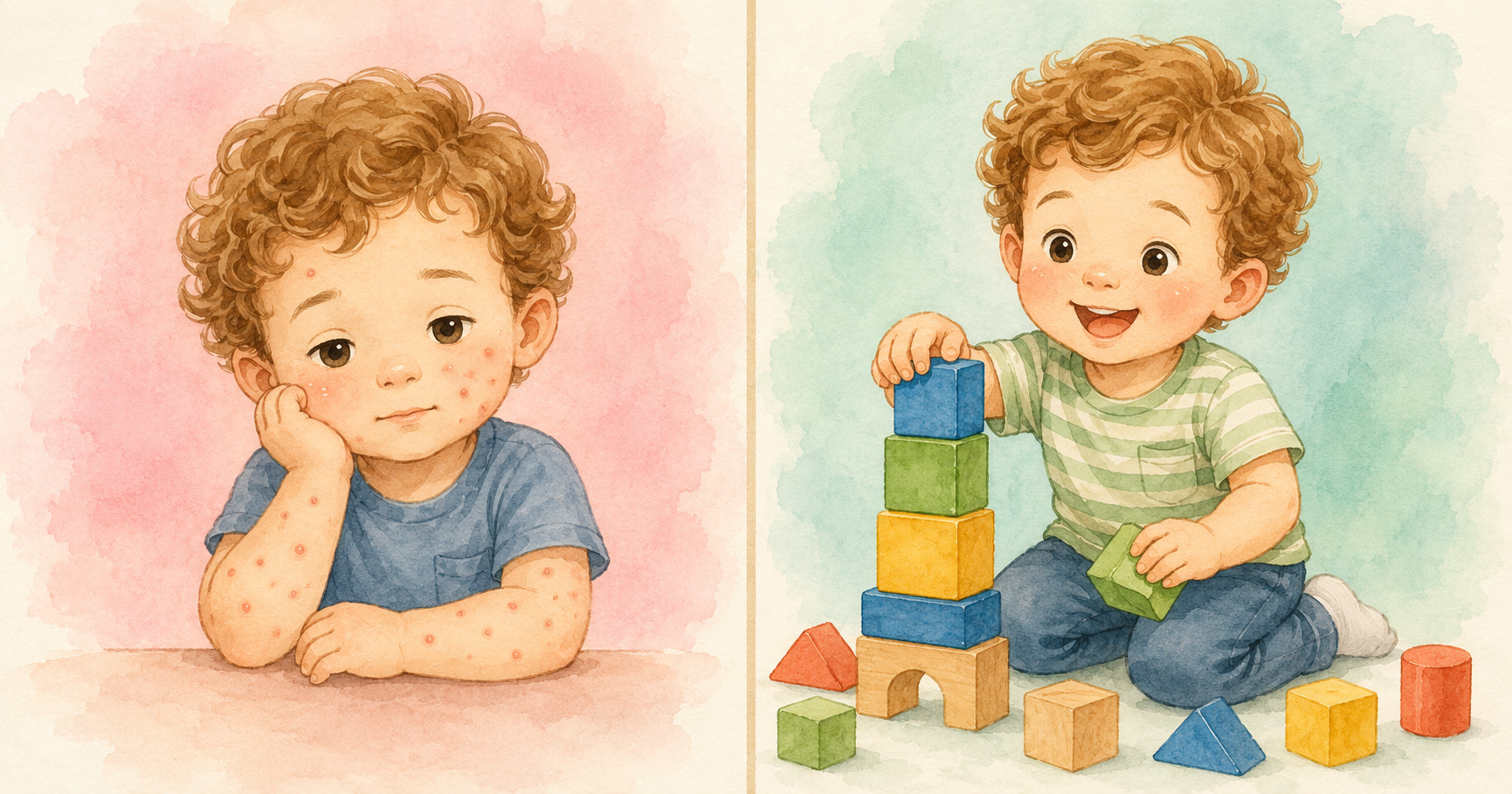
The illness typically begins with a mild fever, followed by an itchy rash that starts on the trunk and spreads to the face, scalp, and limbs. The rash progresses through several stages — red spots, fluid-filled blisters, and finally crusts — over about a week. Children often have several hundred spots across the body.
Before Japan's routine vaccination program began in 2014, chickenpox was extremely common — around one million cases per year, resulting in approximately 4,000 hospitalizations and 20 deaths annually. Since the two-dose routine program began, incidence has dropped steadily — by around 73–77% by 2017, approximately 80% by 2019, and close to 88% by 2020. Case numbers have risen again since 2025, but remain far below pre-vaccination levels.
⚠️ 2025–2026 update: Chickenpox cases in Japan surged in 2025 — the highest level in five years — with an age shift toward school-age children (5–14 years), reflecting vaccination gaps in older cohorts. In 2026, case numbers have remained elevated above the five-year average, with hospitalizations continuing to be reported across the country (JIHS, 速報値). Ensuring your child is up to date with both doses is especially important right now.
Complications
In most healthy children, chickenpox is unpleasant but resolves without lasting problems. Complications are more likely in infants under one year, adolescents, adults, and anyone who is immunocompromised (has a weakened immune system).
| Complication | Notes |
|---|---|
| Secondary bacterial skin infection | The most common complication — caused by scratching open the blisters |
| Cerebellar ataxia (小脳炎) | Inflammation affecting balance and coordination — the most common nervous system complication, usually with a good outcome |
| Encephalitis (脳炎) | Inflammation of the brain — occurs in approximately 2.7 per 10,000 cases; more common in adults than children |
| Pneumonia (肺炎) | Rare in healthy children; risk increases significantly in adults and immunocompromised individuals |
Important: Never give aspirin to a child with chickenpox. Aspirin use during chickenpox infection is associated with a rare but serious condition called Reye syndrome (ライ症候群), which causes liver and brain damage. For fever, paracetamol (アセトアミノフェン) is the standard recommendation from Japan's Ministry of Health, Labour and Welfare — ask your doctor or pharmacist for the right dose for your child.
About the Vaccine
The varicella vaccine used in Japan is a live attenuated vaccine — meaning it contains a weakened but living form of the varicella-zoster virus that trains the immune system to recognize and fight the disease without causing it. It is given as a subcutaneous injection (皮下注射) — just under the skin, not into muscle.
The vaccine uses the Oka strain of the varicella-zoster virus — a strain developed in Japan in the early 1970s (completed around 1973–74, with first clinical use in 1974) by Dr Michiaki Takahashi at the Research Institute for Microbial Diseases of Osaka University. It has since been adopted by the WHO as the global standard and is used in varicella vaccines worldwide.
Two doses provide strong protection against severe chickenpox in nearly all recipients. Even when a vaccinated child does catch chickenpox, the illness is typically much milder — fewer spots, lower fever, and a shorter recovery time.
Vaccination Schedule
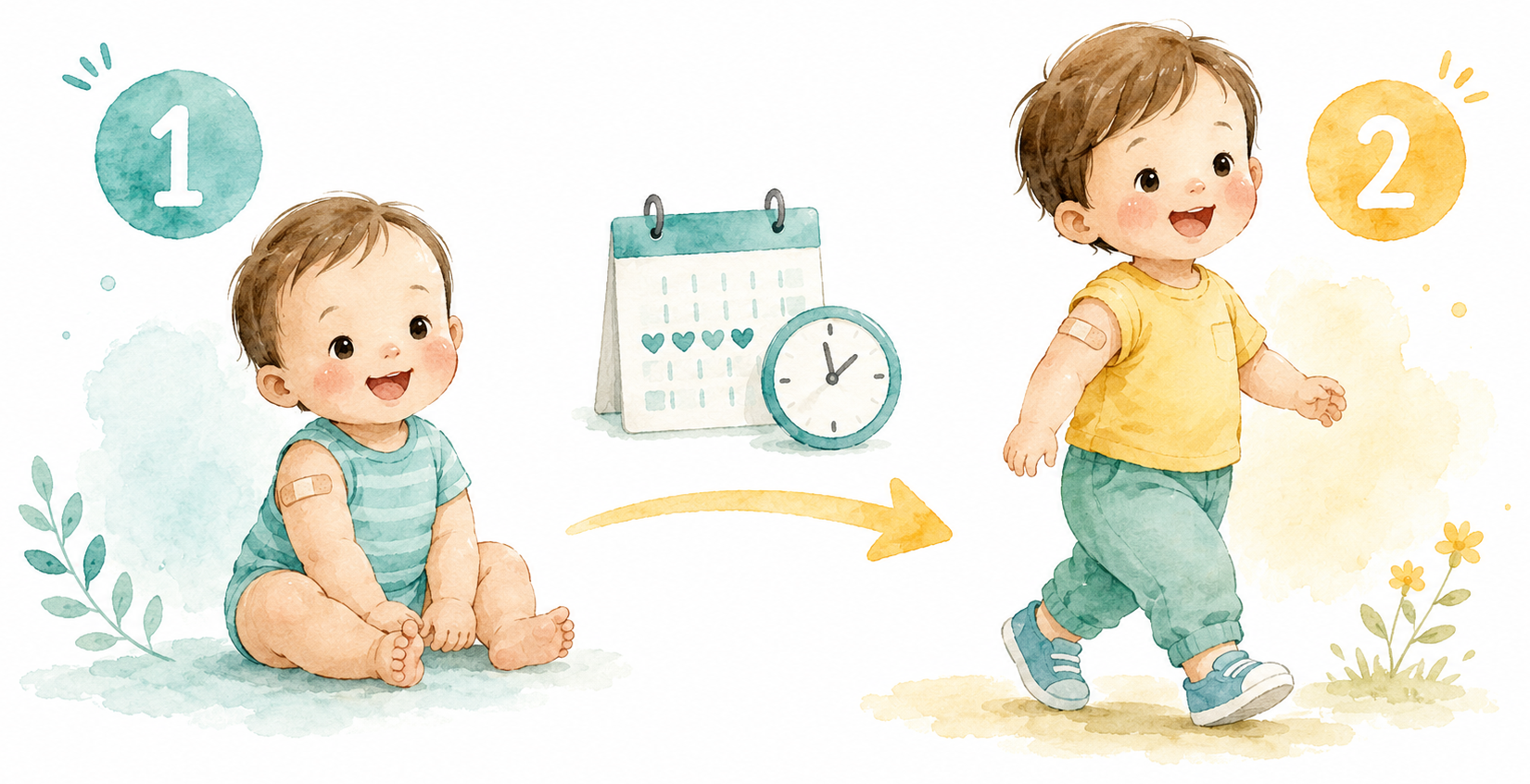
Two doses are given within the first three years of life. The gap between the two doses is longer than with most routine vaccines — at least three months, and ideally six to twelve months.
| Dose | Age Window | Notes |
|---|---|---|
| Dose 1 第1回 |
From the day before the first birthday | Standard timing: 12–15 months. Often given at the same appointment as the MR vaccine |
| Dose 2 第2回 |
At least 3 months after Dose 1, before the third birthday | Standard timing: 6–12 months after Dose 1 (around 18–24 months) |
⚠️ The free window closes at age 3. Both doses must be completed before your child's third birthday. After that, the vaccine is still available but must be paid for out of pocket. Give Dose 1 soon after the first birthday and plan Dose 2 well before the third.
Is It Free?
Yes — the varicella vaccine is a 定期接種 (teiki sesshu), meaning it's part of Japan's national routine vaccination program and is fully covered at no cost. It has been on the routine schedule since October 1, 2014.
Eligibility is based on 住民登録 (juumin touroku — resident registration), not nationality. If your child is registered at your local city or ward office, they are entitled to the same free routine vaccines as any Japanese child. Your municipality will send vaccination vouchers (接種券, sesshuken) by mail.
If you haven't received vouchers and your child is approaching their first birthday, contact your local health center (保健センター, hoken sentaa).
What Happens at the Appointment
Before the injection, the doctor will go through a pre-vaccination questionnaire (予診票, yoshinhyou) and give your child a brief check-over. The vaccine is given as a subcutaneous injection — a small shot just under the skin, usually in the outer upper arm. After vaccination, you'll be asked to wait at the clinic for 15–30 minutes before leaving.
At the Dose 1 appointment (around age 1), the MR (measles-rubella) vaccine is often given at the same visit. Both are live vaccines and can be given simultaneously without any problem. If they are not given on the same day, a gap of at least 27 days between any two live injectable vaccines is required.
Side Effects
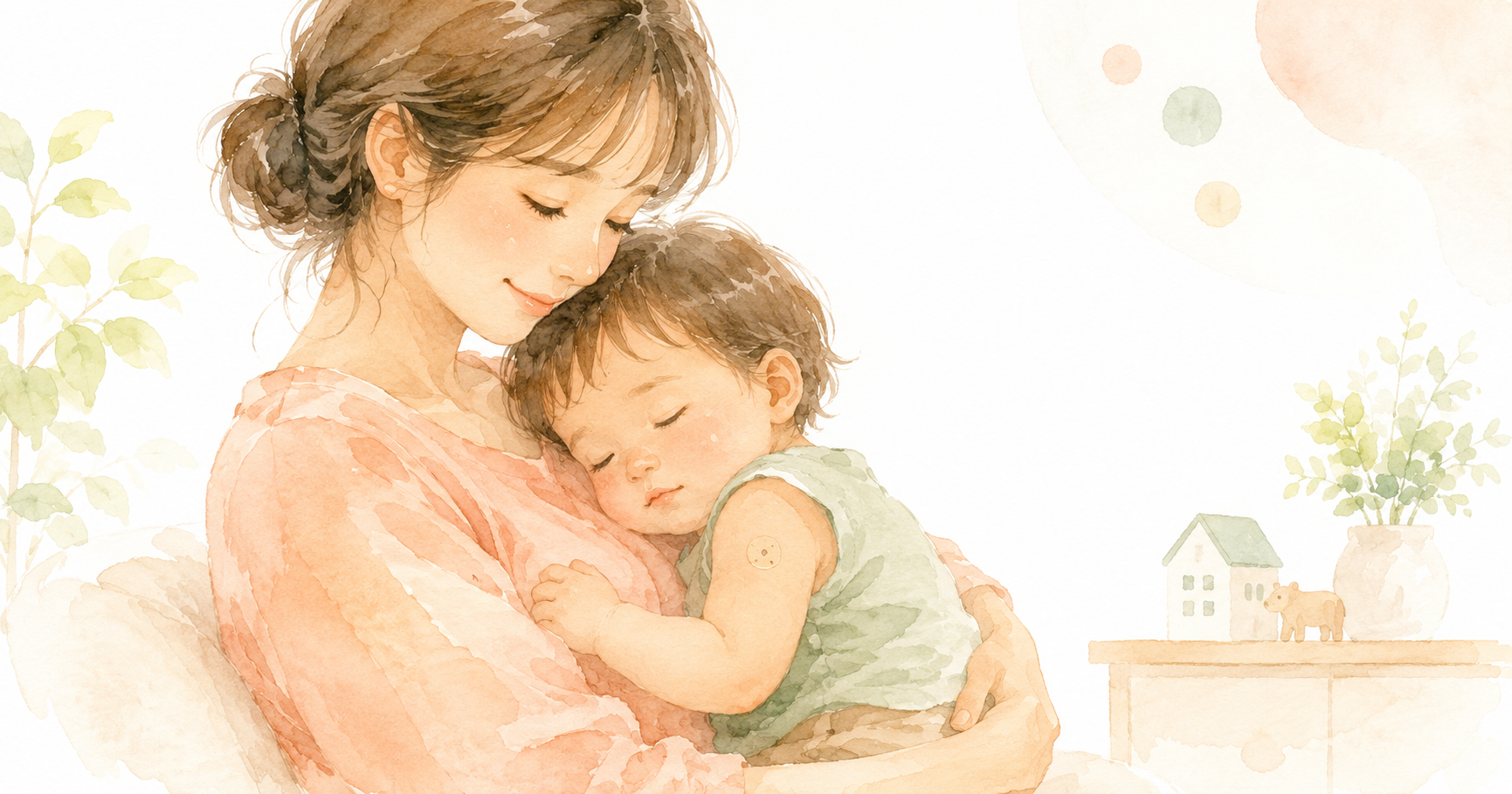
The varicella vaccine is generally well handled by toddlers. Most reactions are mild and resolve within a few days.
The most common effects are redness and swelling at the injection site, which occur in around 19% of children and 24% of adults. Some children develop a mild fever in the days after vaccination. Around 4–6% develop a small number of chickenpox-like spots (usually fewer than five, and much milder than the actual disease) — this is the vaccine virus producing a very mild immune response and is not a cause for concern.
Serious reactions are rare. A condition called ITP (immune thrombocytopenic purpura — a drop in blood platelets that can cause bruising or small red spots under the skin) has been reported in fewer than 0.1% of recipients. Anaphylaxis (severe allergic reaction) can occur with any vaccine, which is why clinics ask you to wait 15–30 minutes after vaccination. If your child develops unusual bruising or a spreading rash in the weeks after vaccination, contact your doctor.
Chickenpox and Shingles
After a chickenpox infection — or vaccination with the live attenuated vaccine — the varicella-zoster virus remains dormant (inactive) in the sensory nerve ganglia (clusters of nerve cells along the spine and skull). Decades later, if immunity declines due to ageing or illness, the virus can reactivate and cause shingles (帯状疱疹, taijouhoushin) — a painful blistering rash along a nerve pathway, sometimes accompanied by lasting nerve pain.
In Japan, approximately one in three people develop shingles by the age of 80. A shingles vaccine is available for adults aged 50 and over, though it is currently a voluntary (paid) vaccination.
Does the varicella vaccine increase shingles risk? No — research shows the opposite. Children vaccinated with the live attenuated vaccine have a lower risk of developing shingles later in life than children who had wild-type (natural) chickenpox. The vaccine strain can establish latency but reactivates far less often than the wild-type virus.
Notes for International Families
If your child was vaccinated abroad, the doses received overseas are taken into account. In Japan, prior voluntary or overseas vaccinations count toward the routine schedule — so a child who received one dose abroad would typically need only one more dose to complete the two-dose routine series. Bring documented vaccination records to your pediatrician and local health center for review.
MMRV vaccine. Many countries — including the US and Australia — use an MMRV combination vaccine that covers measles, mumps, rubella, and varicella in a single injection. Japan does not use MMRV. The varicella component of an MMRV dose received abroad counts as a varicella dose, but your pediatrician and municipality will need to assess your child's specific situation.
If vaccination history is unclear, your doctor can arrange an antibody test (抗体検査) — a blood test that shows whether your child already has immunity to varicella. This can help decide whether any further doses are needed.
If your child has already had chickenpox, they have natural immunity and generally do not need the vaccine. However, natural infection does not satisfy the formal 定期接種 requirement — discuss this with your pediatrician.
Note for parents of premature babies: The varicella vaccine is given based on chronological age (actual weeks since birth), not corrected age (which adjusts for prematurity). Discuss the timing with your pediatrician if your baby was born very early.
What to Bring
- 母子手帳 (boshi techou) — your Mother and Child Health Handbook. The clinic records every vaccination in here.
- 接種券 (sesshuken) — the vaccination voucher sent by your municipality. Without this, you may be charged.
- 予診票 (yoshinhyou) — the pre-vaccination health questionnaire. Some municipalities send this with the voucher; others provide it at the clinic.
- マイナ保険証 — your My Number health insurance card. If you don't have one, bring your 資格確認書 (shikaku kakunin-sho), the alternative certificate issued by your insurer. The old health insurance card (健康保険証) was abolished in December 2024.
- A spare set of clothes for your child — just in case.
Chickenpox became a routine vaccine relatively recently, and the two doses are spaced months apart. Our complete guide to Japan's childhood vaccination schedule shows both doses in context.
Japanese Vocabulary
| Japanese | Reading | Meaning |
|---|---|---|
| 水痘ワクチン | suito wakuchin | Varicella (chickenpox) vaccine |
| 水痘 / みずぼうそう | suito / mizubousou | Chickenpox (varicella) |
| 帯状疱疹 | taijouhoushin | Shingles (herpes zoster) |
| 定期接種 | teiki sesshu | Routine (free) vaccination |
| 皮下注射 | hika chuusha | Subcutaneous injection |
| 抗体検査 | koutai kensa | Antibody test (blood test for immunity) |
| 接種券 | sesshuken | Vaccination voucher |
| 予診票 | yoshinhyou | Pre-vaccination questionnaire |
| 小脳炎 | shounou-en | Cerebellar ataxia (balance/coordination complication) |
| 保健センター | hoken sentaa | Local health center |