

Written and reviewed by Susumu
Born and raised in Japan · Checked against Japanese law and ministry guidance
Birth methods in Japan explained — vaginal birth, epidural pain relief, cesarean section, freestyle birth, sophrologie, and water birth. What each involves and how to choose.
Affiliate Disclosure: This article contains affiliate links. If you click a link and make a purchase, we may earn a small commission at no extra cost to you. We only recommend products we genuinely believe are helpful. See our Terms of Use for full details.
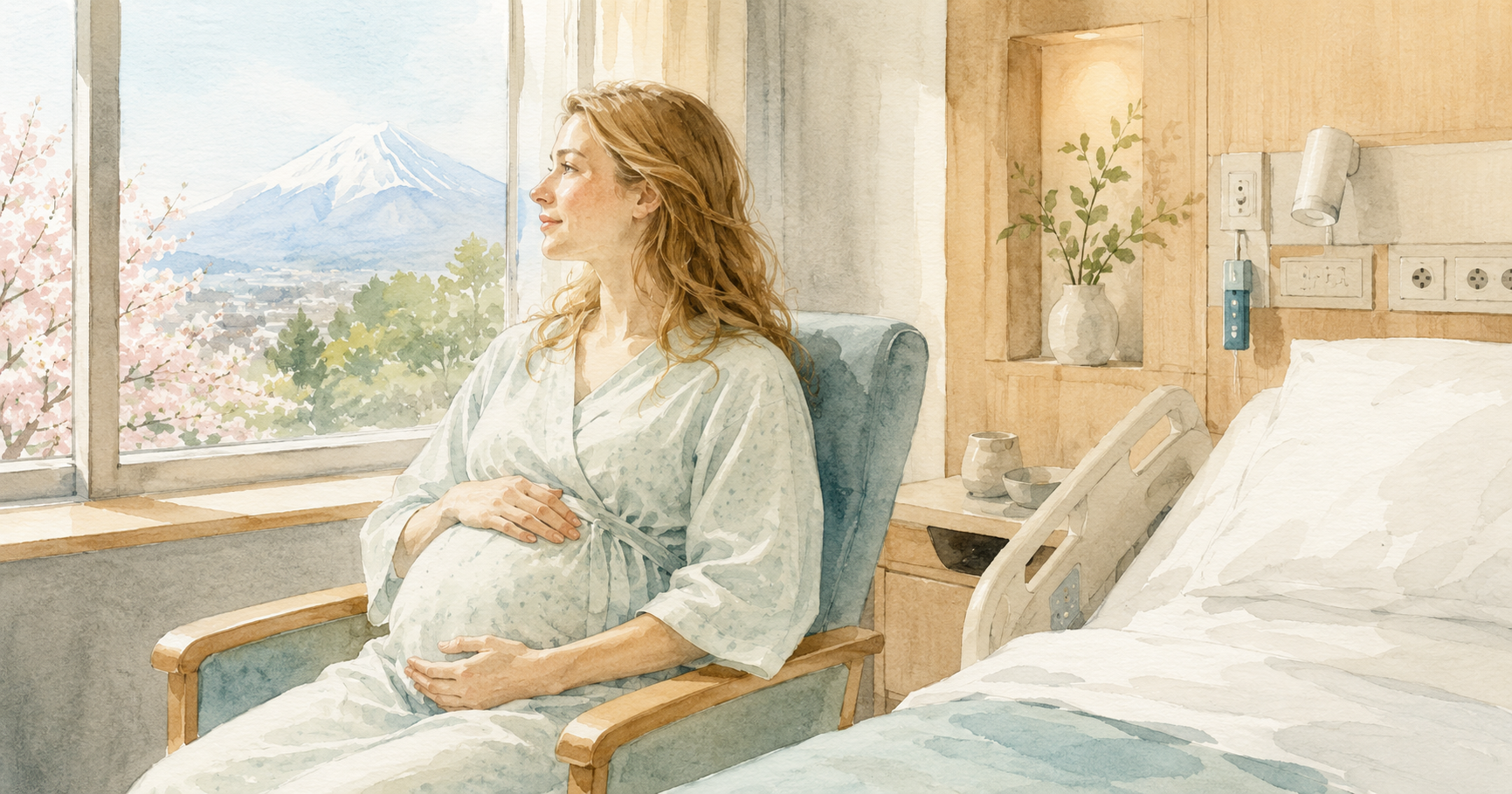
Birth in Japan — what to know going in. Most births in Japan take place at a hospital or clinic (産院), and most are vaginal. Epidural pain relief is available but not universal — only around one in three birth facilities offers it, and you will need to request it in advance. Cesarean sections, both planned and emergency, are not uncommon. This article explains each option so you can have an informed conversation with your care team.
Overview: Three Broad Types
Birth methods in Japan fall into three broad categories. The first is natural vaginal birth (自然分娩) — giving birth through the birth canal, with or without various medical supports. The second is medicated birth (医療行為を伴う分娩), which most commonly means epidural pain relief. The third is cesarean section (帝王切開), where the baby is delivered through a surgical incision in the abdomen.
Within the vaginal birth category, there is room for quite a lot of variation — the position you labor in, the breathing techniques you use, whether your partner is present, and whether you opt for a pool or a traditional delivery bed. These individual styles are covered below.
The hospital's approach matters. Not all birth facilities in Japan offer the same options. Some clinics do not offer epidural pain relief at all; others have policies about partner attendance or delivery positions. Ask your chosen hospital or clinic what they offer before you are far into your third trimester.
Vaginal Birth (経腟分娩)
Vaginal birth — where the baby is born through the birth canal (産道) — is the most common type of birth in Japan. It is the default approach when there are no medical reasons to recommend a cesarean.
In most Japanese hospitals and clinics, labor begins in a labor room (陣痛室) and the mother moves to a delivery room (分娩室) when it is time to push. The delivery position is typically lying on your back on a delivery table (分娩台), which is designed to allow medical staff to monitor and assist easily.
LDR Rooms
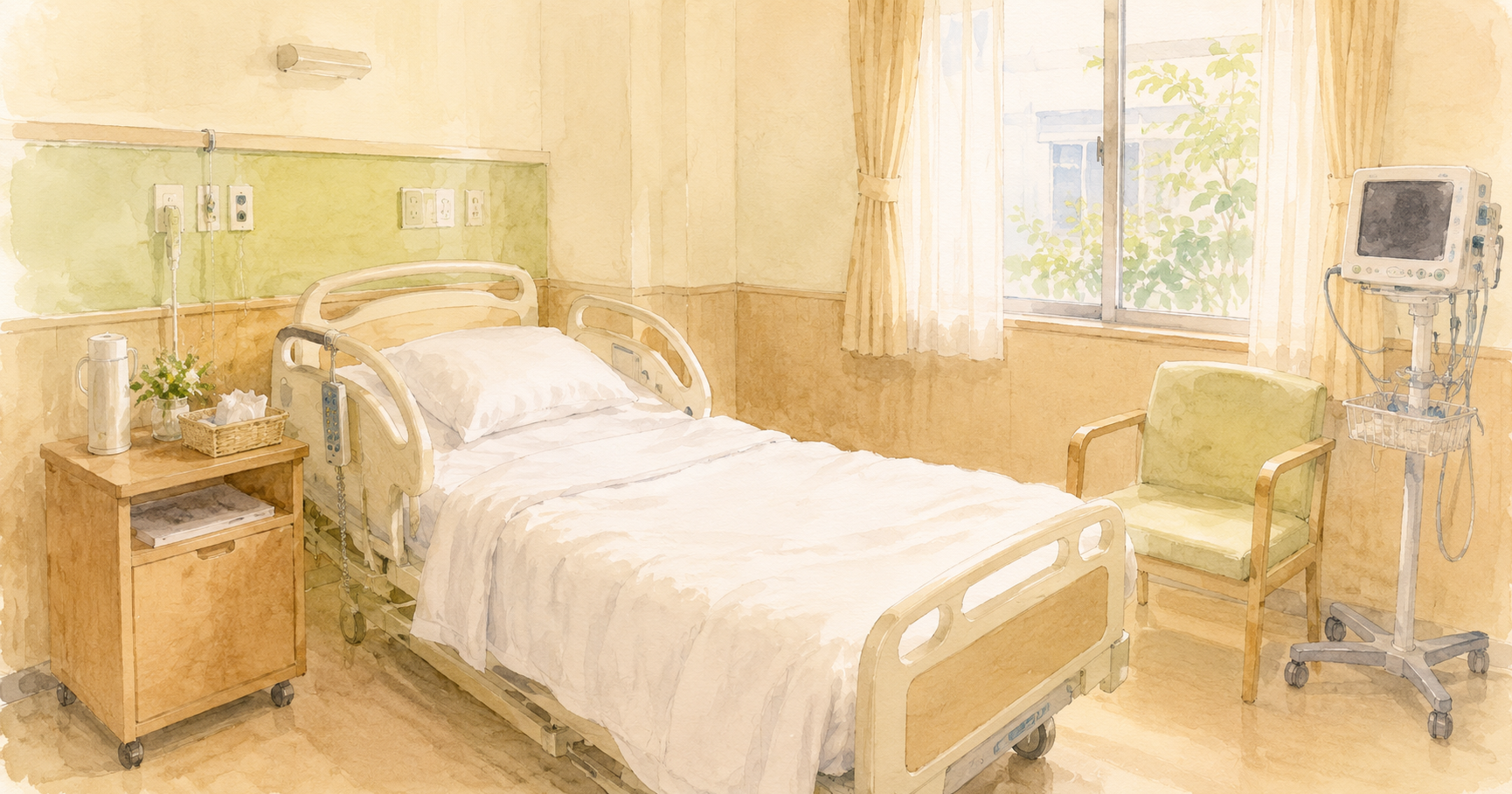
Some facilities offer LDR rooms (Labor, Delivery, Recovery — 陣痛・分娩・回復室). In an LDR setup, you labor, give birth, and recover in the same room without being moved. The room is designed to feel more like a private bedroom than a clinical space, with medical equipment stored out of sight. After the birth, you stay in the same room with your baby and any family members who are present.
LDR rooms are available at many modern hospitals and maternity clinics, but not universally. If this matters to you, confirm availability when booking. Whichever room you are in, a set of routine procedures may come up during labor — monitoring, an IV, an episiotomy — and our guide to what happens during labor in Japan explains what each one is and when it is used.
Epidural Birth (無痛分娩)
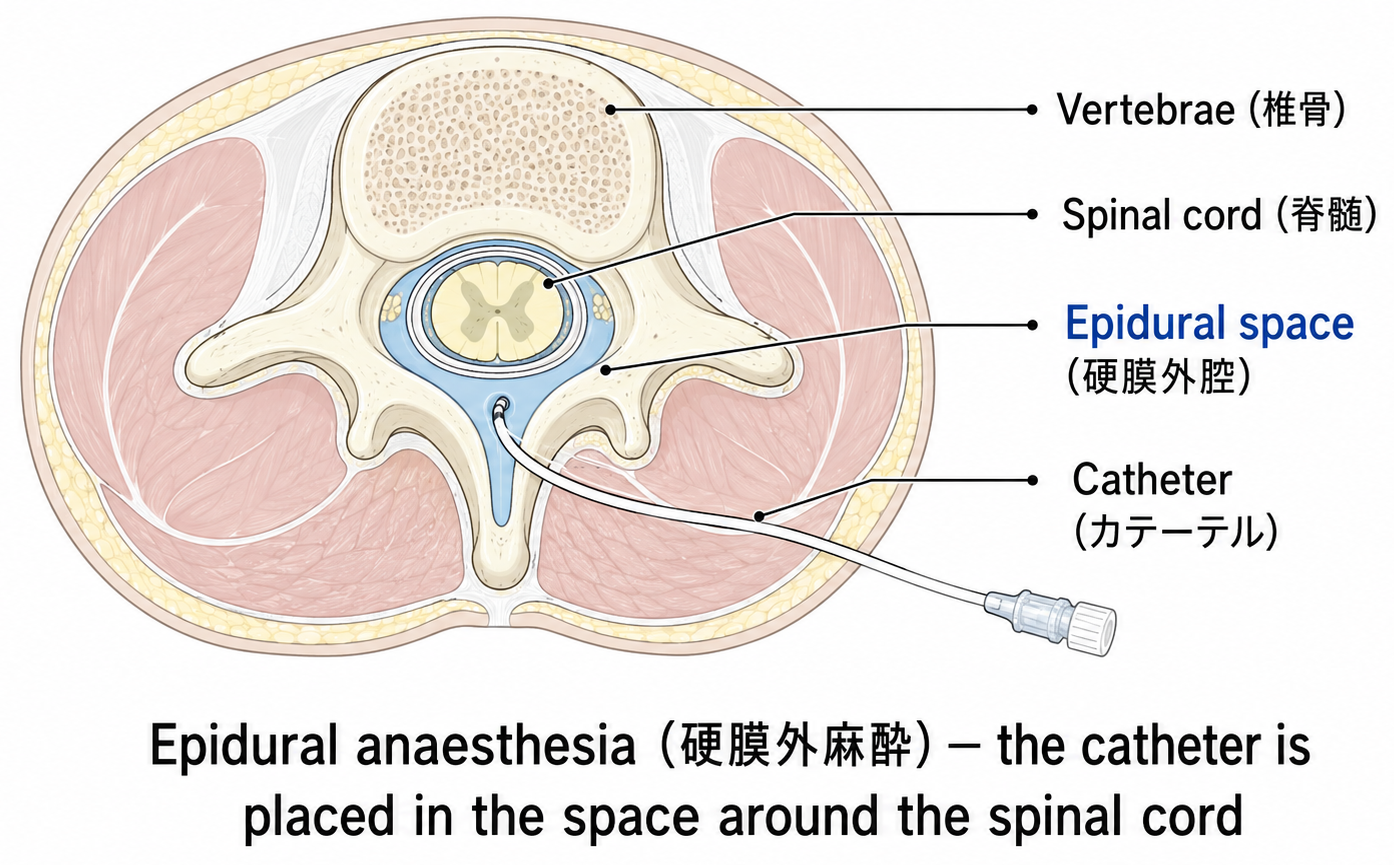
Epidural birth — called 無痛分娩 (mutsū bunben, literally "painless birth") or sometimes 和痛分娩 (watsū bunben, "pain-easing birth", implying reduction rather than elimination) in Japan — uses regional anaesthesia to reduce the pain of contractions. A thin catheter (カテーテル) is placed into the epidural space (硬膜外腔) around the spinal cord in the lower back. Pain-relieving medication is delivered through this catheter throughout labor.
The procedure is performed with the mother either lying on her side or sitting and curling the back forward. The injection site is numbed first with local anaesthetic. The catheter is left in place throughout labor so medication can be topped up as needed. Contractions continue — you will feel the tightening sensation of the uterus working — but the sharp pain is significantly reduced or absent.
Two Approaches to Timing
There are two main ways epidural birth is arranged in Japan:
- After contractions begin — the most common approach. You are admitted when labor starts, and the anaesthetic is placed once contractions are established and painful. An anaesthesiologist is called at that point, so availability depends on the time of day and the facility.
- Planned admission (計画無痛分娩) — the admission date is agreed in advance (typically from 37 weeks onwards, once the cervix — the lower opening of the uterus — is soft and beginning to open). You come in the day before, and labor is gently induced so that the birth happens on the planned day. This allows the anaesthesia team to be prepared and available.
How Common Is It?
According to the Ministry of Health, Labour and Welfare's 2023 Medical Facility Survey (令和5年医療施設静態調査), 13.8% of vaginal births in Japan involved epidural pain relief — up from 8.6% in 2020. The rate at hospitals (病院) was 13.2%, and at clinics (診療所) 14.6%. Availability varies considerably by region: in Tokyo, Chiba, Kanagawa, and Kumamoto prefectures, around one in four vaginal births involved an epidural; in some rural prefectures, no epidural births were recorded in the same survey period.
Benefits
According to the Ministry of Health, Labour and Welfare, epidural birth is offered in particular to women with high blood pressure (高血圧), heart conditions (心疾患), and cerebrovascular conditions (脳血管障害 — conditions affecting blood flow to the brain), as it reduces the cardiovascular load (the strain placed on the heart and blood vessels) on the mother during labor. It is also widely chosen by women who want effective pain relief during contractions.
Considerations and Risks
As with any anaesthetic procedure, epidural birth carries potential risks alongside its benefits. The specific risks and whether epidural birth is appropriate for your situation depend on your individual health history. Your obstetrician and anaesthesiologist will discuss this with you in detail before the procedure. If you are considering epidural birth, raise it early with your care team — well before your due date — so there is time for a thorough discussion.
Not available everywhere. Epidural birth requires an anaesthesiologist to be present. Nationally, only around one in three birth facilities (34.1% as of 2023, according to the Ministry of Health) offers it, and availability varies significantly by region and time of day. If this option matters to you, confirm that the facility offers it before booking — and ask specifically about out-of-hours availability.
Cesarean Section (帝王切開)
A cesarean section (帝王切開, teiō sekkai) is a surgical delivery in which an incision is made through the abdomen and uterus to deliver the baby. In Japan, cesarean sections are typically performed under regional anaesthesia (spinal or epidural — anaesthesia that numbs the lower body rather than putting you fully to sleep), so the mother is awake for the birth.
There are two types: planned cesarean sections (予定帝王切開), decided in advance, and emergency cesarean sections (緊急帝王切開), which are performed when complications arise during labor.
Reasons for a Planned Cesarean
A cesarean may be planned in advance for several reasons, including:
- Breech presentation (さかご / 骨盤位) — baby lying feet or bottom first
- Multiple pregnancy (多胎妊娠) — twins or more
- Placenta praevia (前置胎盤) — where the placenta partially or fully covers the cervix
- Low-lying placenta (低置胎盤) — where the placenta is positioned near the bottom of the uterus, close to the cervix
- A previous cesarean section
- Certain infections where vaginal birth would carry a risk of transmission to the baby
Even when a cesarean is planned, labor may begin before the scheduled date. In that case, the surgical team will act accordingly — either proceeding with the planned surgery early or, in some cases, reassessing the situation.
Reasons for an Emergency Cesarean
An emergency cesarean may become necessary during labor when the safety of the mother or baby is at risk. Common reasons include:
- Abnormal fetal heart rate (胎児心拍異常)
- Failure to progress (分娩停止) — when labor stalls and the baby is not moving down through the birth canal
- Placental abruption (常位胎盤早期剥離) — the placenta separating from the uterine wall before delivery
- Umbilical cord prolapse (臍帯脱出) — the cord dropping through the cervix ahead of the baby
- Sudden severe rise in blood pressure
How Common Is It?
According to the Ministry of Health, Labour and Welfare's 2023 Medical Facility Survey (令和5年医療施設調査), cesarean sections accounted for 29.1% of births at hospitals (病院) and 15.3% at clinics (診療所) in Japan. The proportion has been rising steadily: at hospitals, the cesarean rate was 24.1% in 2011 and 27.4% in 2020. Planned and emergency cesareans are counted together in these figures.
General Flow on the Day
| Step | What Happens |
|---|---|
| Move to the operating room | You are taken to the operating room (手術室) |
| Anaesthesia | Spinal or epidural anaesthesia is administered; the lower body goes numb |
| Incision | A horizontal incision (横切り) is made low on the abdomen, above the pubic bone |
| Birth | The baby is delivered through the incision |
| Closure | The uterus and abdomen are sutured (縫合 — stitched closed) |
| Recovery | You return to your room to recover |
For a planned cesarean, pre-operative tests are usually done about two weeks before the surgery date, and you are admitted the day before. The surgical team will explain the procedure and the anaesthesia in advance.
Cesarean sections are covered by national health insurance. Because a cesarean is a surgical procedure, it qualifies for health insurance coverage in Japan — unlike routine vaginal birth, which is not covered. This typically makes the out-of-pocket cost comparable to or lower than a standard vaginal birth, even accounting for the longer hospital stay.
Other Birth Styles
Beyond the standard delivery table, a number of birth styles are practiced in Japan, mostly within the category of vaginal birth. Availability varies significantly by facility — midwifery-led clinics (助産院) tend to offer more flexibility, while larger hospitals may have more fixed protocols.
Freestyle Birth (フリースタイル分娩)
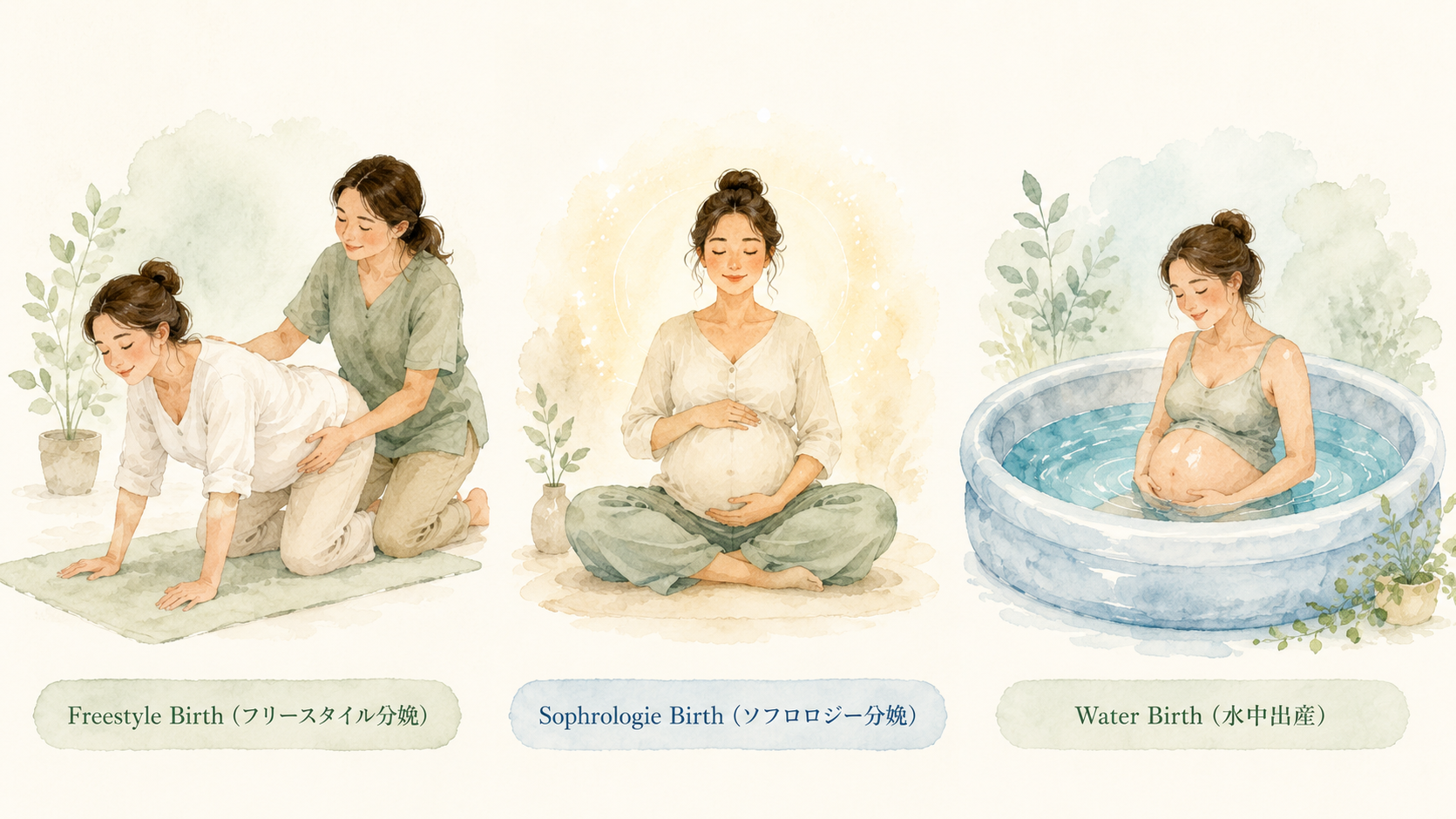
Freestyle birth is part of what is called active birth (アクティブバース) — an approach where the mother takes an active role in choosing her position and movement during labor and delivery, rather than lying passively on a delivery table. Positions can include kneeling on all fours, sitting upright, standing and leaning against a partner, or squatting. Many midwifery clinics in Japan practice freestyle birth as their default.
Sophrologie Birth (ソフロロジー分娩)
Sophrologie is a method originating in France that uses breathing exercises and guided imagery to change how contractions are perceived. Contractions are reframed as the body's energy working to bring the baby out, rather than pain to be endured. Preparation typically begins during pregnancy, through regular breathing and visualization practice. The aim is to arrive at labor in a calm, relaxed state, with a practiced set of mental tools to draw on.
Water Birth (水中出産)
Water birth involves laboring and giving birth in a pool of warm water. The buoyancy and warmth are intended to ease contraction pain and help the mother relax. The baby is born into the water and lifted out immediately. Water birth is available at a limited number of facilities in Japan and is not suitable for all pregnancies — your midwife or obstetrician can advise whether it is an option for you.
Check your facility's policies early. Freestyle, sophrologie, and water birth are not available everywhere. If a particular birth style matters to you, it is better to choose a facility that supports it rather than request it at a facility that does not. Hospital policies can also change, so confirm again closer to your due date.
Having a Birth Partner (立ち会い出産)
Partner-attended birth (立ち会い出産, tachiai shussan) — where a partner, family member, or support person is present throughout labor and delivery — has become more common in Japan over the past few decades, though it is not universal. Our guide to partner-attended birth covers who is allowed in, what facilities ask for, and how to check your hospital's policy.
A birth partner can provide physical support — massage, holding hands, helping with position changes — and emotional reassurance through a long and demanding process. Many parents who are present at the birth say it changes their sense of connection to the child and their involvement in childcare in the weeks that follow.
That said, not every hospital or clinic allows partners in the delivery room, and some require attendance at a prenatal preparation class (両親学級) beforehand. It is also worth having an honest conversation with your partner about what the experience involves — being present at a difficult moment is not comfortable for everyone, and it is better to know that in advance.
Note for international families. Partner attendance policies vary between hospitals, and some facilities restrict access outside certain hours or only for certain stages of labor. Confirm the rules at your chosen hospital well in advance — including whether the partner needs to be registered in advance, and whether they can be present for a cesarean section.
Japanese Vocabulary
| Japanese | Reading | Meaning |
|---|---|---|
| 経腟分娩 | keichitsu bunben | Vaginal birth |
| 自然分娩 | shizen bunben | Natural birth (without medical intervention) |
| 無痛分娩 | mutsū bunben | Epidural birth (painless birth) |
| 和痛分娩 | watsū bunben | Pain-reduced birth (a softer term for epidural birth) |
| 硬膜外麻酔 | kōmakugai masui | Epidural anaesthesia |
| 帝王切開 | teiō sekkai | Cesarean section |
| 予定帝王切開 | yotei teiō sekkai | Planned cesarean section |
| 緊急帝王切開 | kinkyū teiō sekkai | Emergency cesarean section |
| 分娩台 | bunbendai | Delivery table |
| LDRルーム | LDR rūmu | Labor, Delivery, Recovery room |
| フリースタイル分娩 | furīsutairu bunben | Freestyle birth (active birth in any position) |
| ソフロロジー分娩 | soforrojī bunben | Sophrologie birth (breathing and visualization method) |
| 水中出産 | suichū shussan | Water birth |
| さかご(骨盤位) | sakago (kotsuban-i) | Breech presentation |
| 立ち会い出産 | tachiai shussan | Partner-attended birth |