

Written and reviewed by Susumu
Born and raised in Japan · Checked against Japanese law and ministry guidance
In Japan, visiting a kindergarten before you apply can mean three different things — a tour, an information session, or a trial class your child joins. How to tell them apart, book the right one, what to look for, and why a visit is never the same as a place.
Affiliate Disclosure: This article contains affiliate links. If you click a link and make a purchase, we may earn a small commission at no extra cost to you. We only recommend products we genuinely believe are helpful. See our Terms of Use for full details.
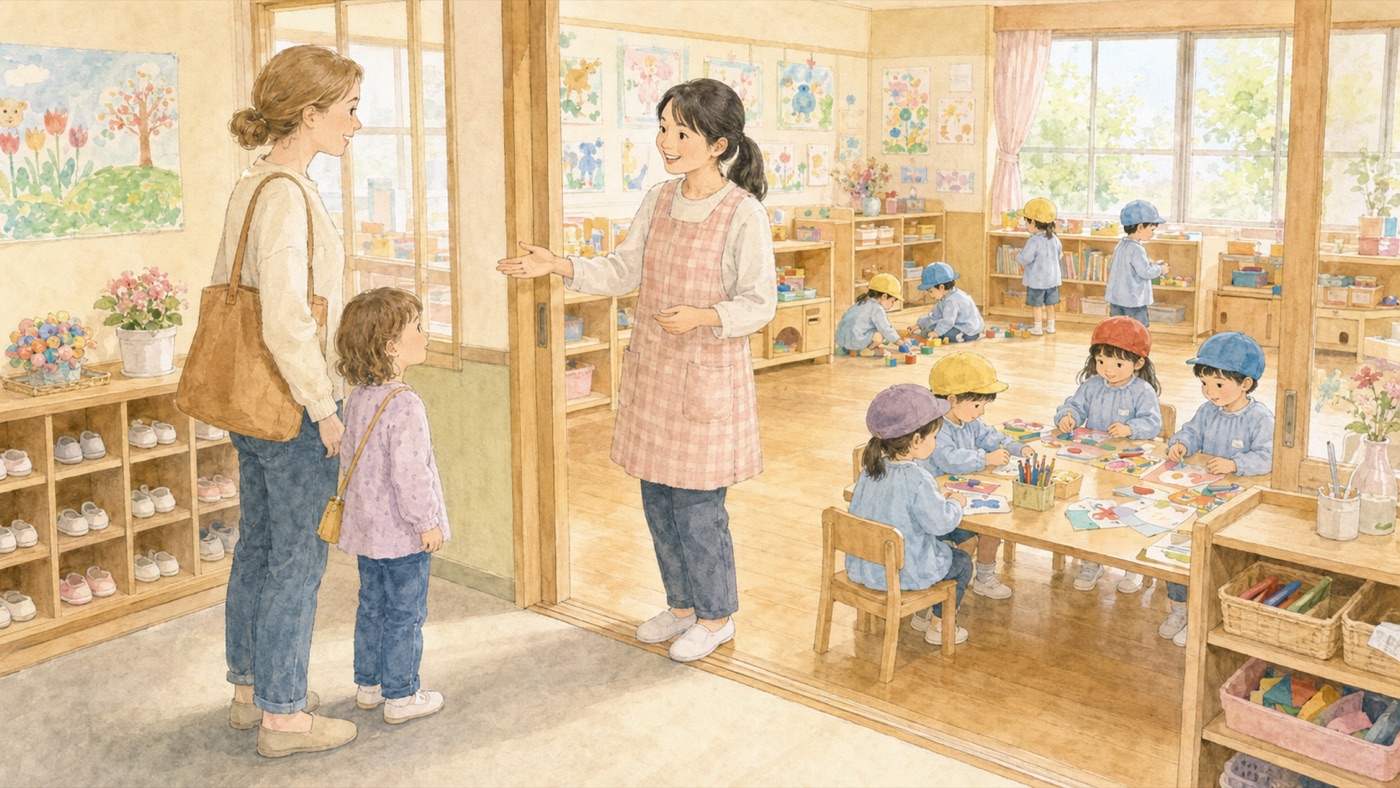
Before you apply to a Japanese kindergarten, you visit it — but "a visit" can mean three quite different things: a walk-through tour, a sit-down information session, or a trial class your child actually joins. Which one a kindergarten offers, when, and how you book it are all decided school by school, with no national calendar to rely on. This guide explains the three event types, how to book one, what to look for while you are there, and why a good visit is never the same thing as a place.
Three Kinds of Visit
When a kindergarten (幼稚園, yōchien) invites prospective families in, the invitation can mean one of several things, and they are not interchangeable. Knowing which one you are signing up for saves a wasted morning.
| Event | What it is | What to expect |
|---|---|---|
| 見学会 (kengakukai) | A tour or open day | You walk through the building, classrooms, and playground, and if the timing allows, watch the children's activities. |
| 説明会 (setsumeikai) | An information session | The staff explain the school's approach, daily schedule, fees, events, rules, and how to apply. Often for adults only. |
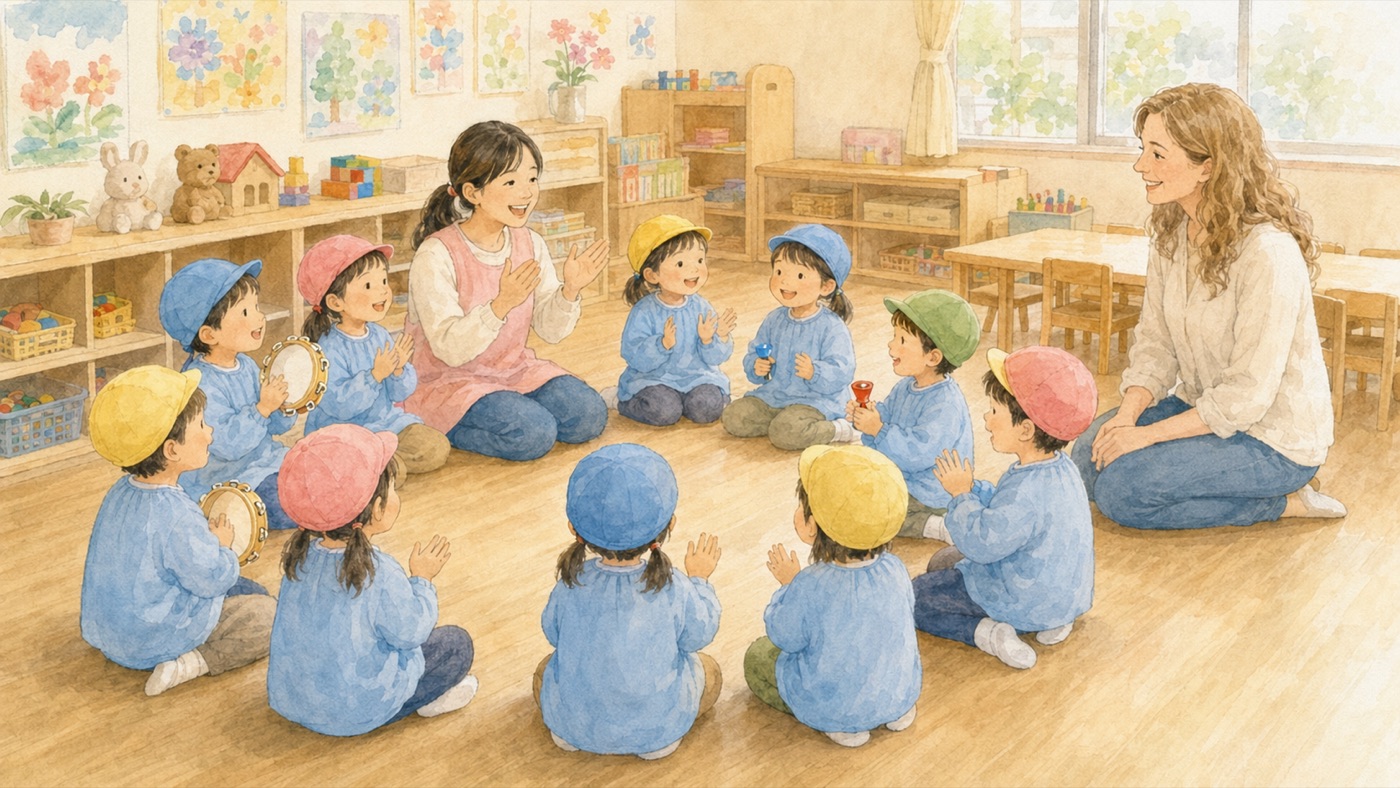
| プレ保育 / 未就園児教室 | A trial class for children not yet enrolled | Your child joins songs, crafts, or play with other prospective children. It is an experience, not an entrance exam, and is often a series rather than one day. |
Some kindergartens combine a short tour with an information session; others run a trial class over several weeks through the year. The names are not standardized, so the safest habit is to ask what a given event actually includes before you commit to a date.
Booking a Visit
Start with the kindergarten's own website, and call the office if the notice is unclear or missing. There is no national schedule for any of these events: the date, the booking method, the eligible ages, and the number of places are all set locally, and popular schools fill up. A few things are worth pinning down when you book:
- Which event it is — a tour, an information session, a trial class, or a combination.
- Whether your child should come — an information session may be easier to attend alone; a trial class is built around the child.
- Whether booking is required — some take online reservations, others want a phone call.
- The child's age band — some trial classes are only for children entering the following school year.
- What to bring — indoor shoes, socks, a drink, or a change of clothes come up for different events.
幼稚園の見学について、日程と申し込み方法を教えていただけますか?
Yōchien no kengaku ni tsuite, nittei to mōshikomi hōhō o oshiete itadakemasu ka?
Could you tell me the dates and how to book a kindergarten visit?
What to wear and bring
There is no dress code. Clean, comfortable clothes and shoes that slip off easily are the practical choice, since you will take your shoes off inside. For a trial class, dress your child in something that can get paint or sand on it. If the kindergarten sends its own instructions, follow those. It helps to bring your booking confirmation, indoor shoes if they were requested, a way to take notes, and a drink and spare clothes for a child who is joining an activity.
What Happens on the Day
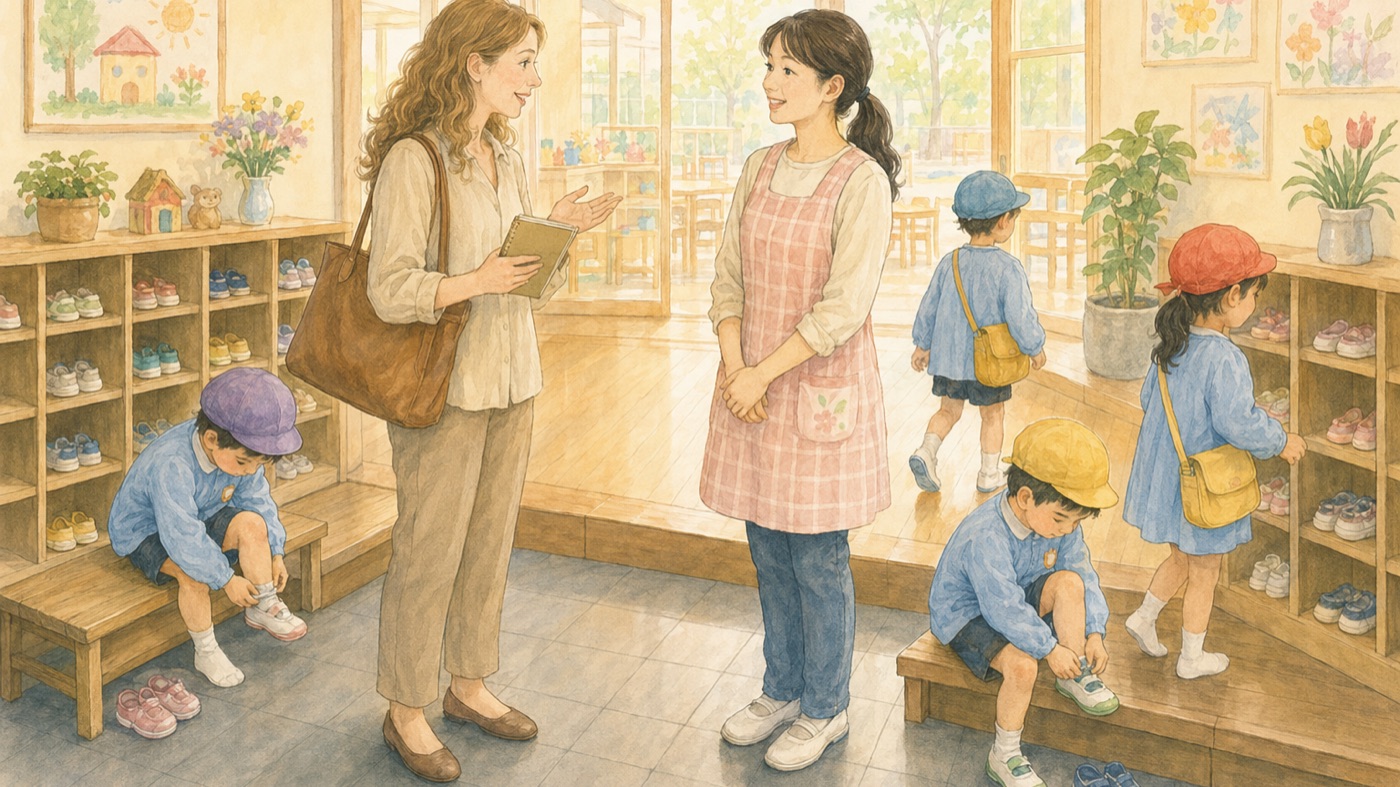
The shape of the day depends on the kindergarten, but a visit usually opens with a reception desk and a shoe change, then a short talk. From there you might tour the rooms and the yard, watch an activity, or sit in on a question-and-answer session; a trial class runs its own schedule of songs and play. Treat the visit as one step in choosing a school, and hold on to a few practical questions so they do not slip your mind while you are watching your child.
Before you leave, it is worth confirming four things, because they are the ones families most often go home without:
- the date of the next information session or the application window;
- where and when the application form (願書, gansho) is handed out;
- which documents or fees the application needs; and
- who to contact when you have a question in another language.
What to Look For
The point of a visit is not to find a perfect kindergarten. It is to see whether this one's daily life fits your child and your household. Three things are easiest to judge in person:
- The atmosphere. How do teachers speak to a child who needs help? Is there room for free play as well as group activities? Does the pace look comfortable for a child like yours?
- The routine. What time does the day start and end? Is there a bus? Does the school serve lunch, expect a bento, or both? What happens when a child has a fever or an allergy?
- The family commitment. How often are parents expected at events, or asked to make things at home? Which costs sit outside the basic fee — uniform, bus, meals, materials? Is extended care (預かり保育, azukari hoiku) available after hours and during the long holidays?
These vary widely between schools. The national framework sets out what kindergarten education is for, but it does not make every school run the same hours, uniform, lunch system, or parent commitments, which is exactly why the visit is worth making.
Questions Worth Asking
You do not need to ask everything. Pick the handful that would change your daily life most.
| English | Japanese |
|---|---|
| Is this a tour, an information session, or a trial class? | これは見学会、説明会、プレ保育のどれですか? |
| May my child take part? | 子どもも参加できますか? |
| When is the application form handed out and due? | 願書の配布と提出はいつですか? |
| Is extended care available during school breaks? | 長期休暇中も預かり保育を利用できますか? |
| How does the school contact parents day to day? | 保護者への連絡はどのように行いますか? |
For International Families
A kindergarten may have experience with children who are still learning Japanese, but nothing in the national curriculum guarantees it, so ask about the school in front of you rather than assuming. The questions that matter most are practical ones about communication: how notices and urgent calls reach parents, whether important information can come in a language you read, who to turn to when a notice is unclear, and whether there are moments (an accident, an illness) when a parent is expected to speak with a teacher in Japanese.
Do not assume translation support exists. Ask the kindergarten, and ask your municipal office what language help is available locally. For enrollment, health, and safety information, lean on an official translation or a qualified interpreter rather than guessing.
After the Visit
Write down your impressions before they fade: daily hours and holidays, lunch and allergies, the bus, extended care and its extra charges, and how the school communicates. It helps to separate what you actually saw from what you still need to confirm.
One thing to be clear about: attending a 見学会 or a trial class does not mean your child has a place. The visit and the formal application are separate, and some kindergartens also hold a short interview. Keep the application deadline, the required documents, and any interview date apart from the visit schedule in your own notes. For the formal process, from documents and timing to the interview and fees, see our guide to applying for kindergarten in Japan. If you are still weighing kindergarten against daycare, our overview of preschool options lays out the difference.
Japanese Vocabulary
The words you will see on kindergarten notices and event pages:
| Japanese | Reading | Meaning |
|---|---|---|
| 見学会 | kengakukai | A tour or open day at a kindergarten |
| 説明会 | setsumeikai | An information session, often for adults only |
| プレ保育 | pre-hoiku | A trial class for children before they enroll |
| 未就園児教室 | mishūenji kyōshitsu | A class for children not yet in kindergarten |
| 願書 | gansho | The application form, handed out on a set date |
| 預かり保育 | azukari hoiku | Extended care beyond the standard kindergarten day |