Written and reviewed by Susumu
Born and raised in Japan · Checked against Japanese law and ministry guidance
How to apply for yochien (kindergarten) in Japan — application timeline, required documents, entrance interview tips, and what to prepare before April.
Affiliate Disclosure: This article contains affiliate links. If you click a link and make a purchase, we may earn a small commission at no extra cost to you. We only recommend products we genuinely believe are helpful. See our Terms of Use for full details.
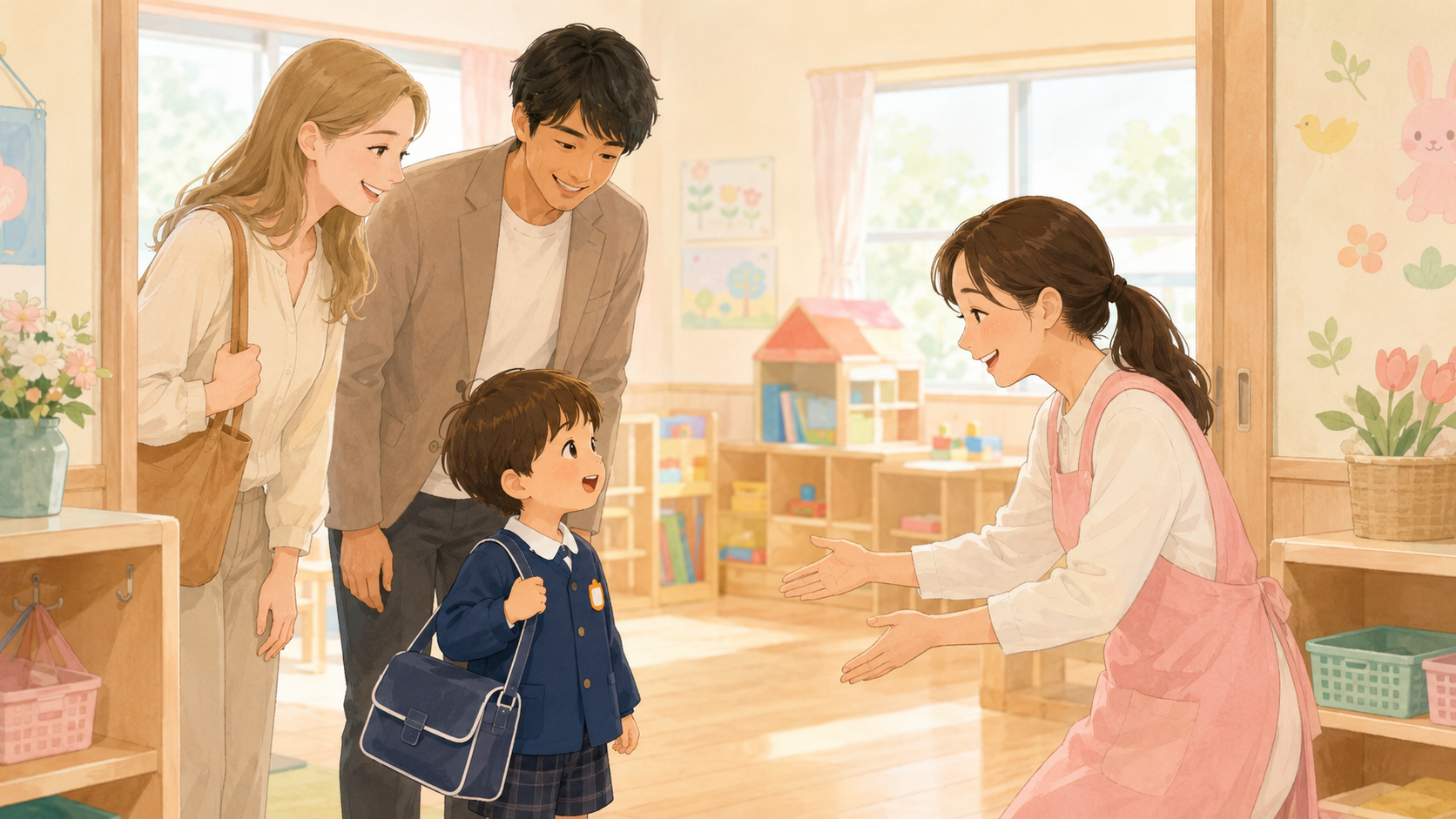
📌 Note: Application timelines and procedures vary by school and municipality. This guide covers the general process for private yochien, which is the most common type for international families. Always confirm details directly with the school.
What Is Yochien?
Yochien (幼稚園) is Japan's kindergarten — a preschool for children aged 3 to 5, running from April to March each year. Unlike hoikuen (daycare), yochien is an educational institution under the Ministry of Education, typically finishing around 2pm. Many schools offer extended care for working parents, but the core hours are shorter than hoikuen.
If you're still deciding between hoikuen and yochien, our Preschool in Japan article covers the full comparison.
The Application Timeline
The yochien application cycle follows the Japanese academic year, which starts in April. Here's roughly how it plays out:
| When | What to Do |
|---|---|
| Spring – Summer | Research schools. Attend open days (見学会) to see the school in action. |
| September – October | Attend information sessions (説明会). Pick up application forms. |
| October – November | Submit application. Entrance exam or interview (if required). |
| November | Receive results. Pay enrollment fee to secure your place. |
| December – March | Prepare uniform, school bag, and supplies. Attend orientation. |
| April | First day of kindergarten (入園式 — nyuuenshiki). |
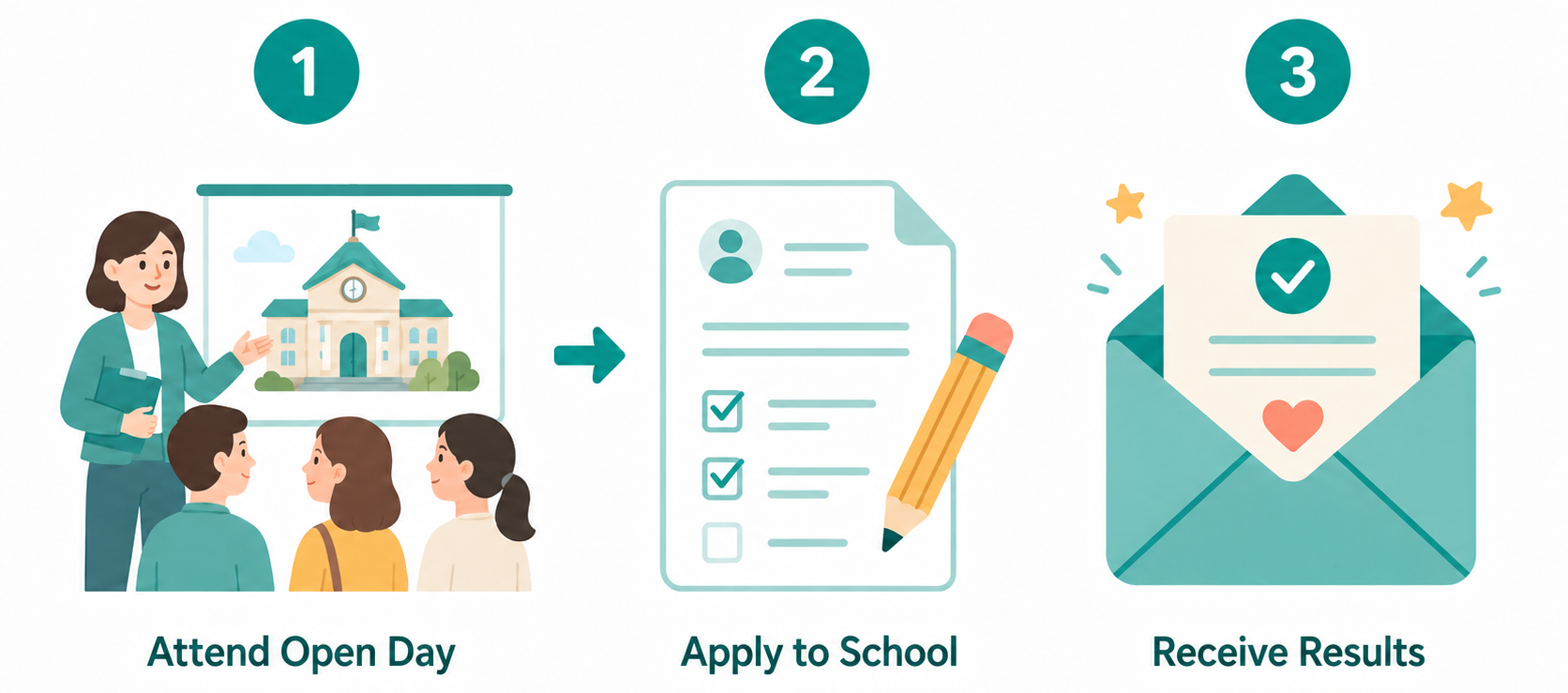
Start early. Popular private yochien in cities can fill up fast. If you have your eye on a specific school, try to attend their open day in spring — it's also a good way to get a feel for whether the school is the right fit.
Types of Yochien
Not all kindergartens are the same. Japan has three main types:
- Public yochien (公立幼稚園) — run by the local government, lower fees, simpler application process. Hours are typically shorter and there's less variety in curriculum.
- Private yochien (私立幼稚園) — independently operated, wider range in teaching philosophy, hours, and cost. Most families in cities go private. Some offer English classes or special programs.
- Kodomoen (こども園) — a hybrid of yochien and hoikuen, combining education with longer daycare hours. Worth considering if both parents work.
What to Look For
Once you start visiting schools, there's a lot to take in. Our guide to kindergarten open days and trial classes covers how to book a visit and what to watch for; below are the things most parents end up caring about once their child is actually enrolled:
- Distance from home — most children walk or take a school bus. Check whether the school offers bus service (スクールバス) and where the stops are.
- Hours and extended care — standard yochien ends around 2pm. If you work, check whether the school offers 預かり保育 (azukari hoiku) — extended care after hours.
- Teaching style — some schools are play-focused, others are more academic. Visit and watch how the teachers interact with the children.
- English support — if your child doesn't speak Japanese, ask whether the school has experience with non-Japanese children. Some private schools have bilingual teachers.
- Cost — private yochien fees vary widely. Factor in the uniform, school bag, materials, and any activity fees on top of tuition.
Documents You'll Need
Requirements vary by school, but most private yochien will ask for:
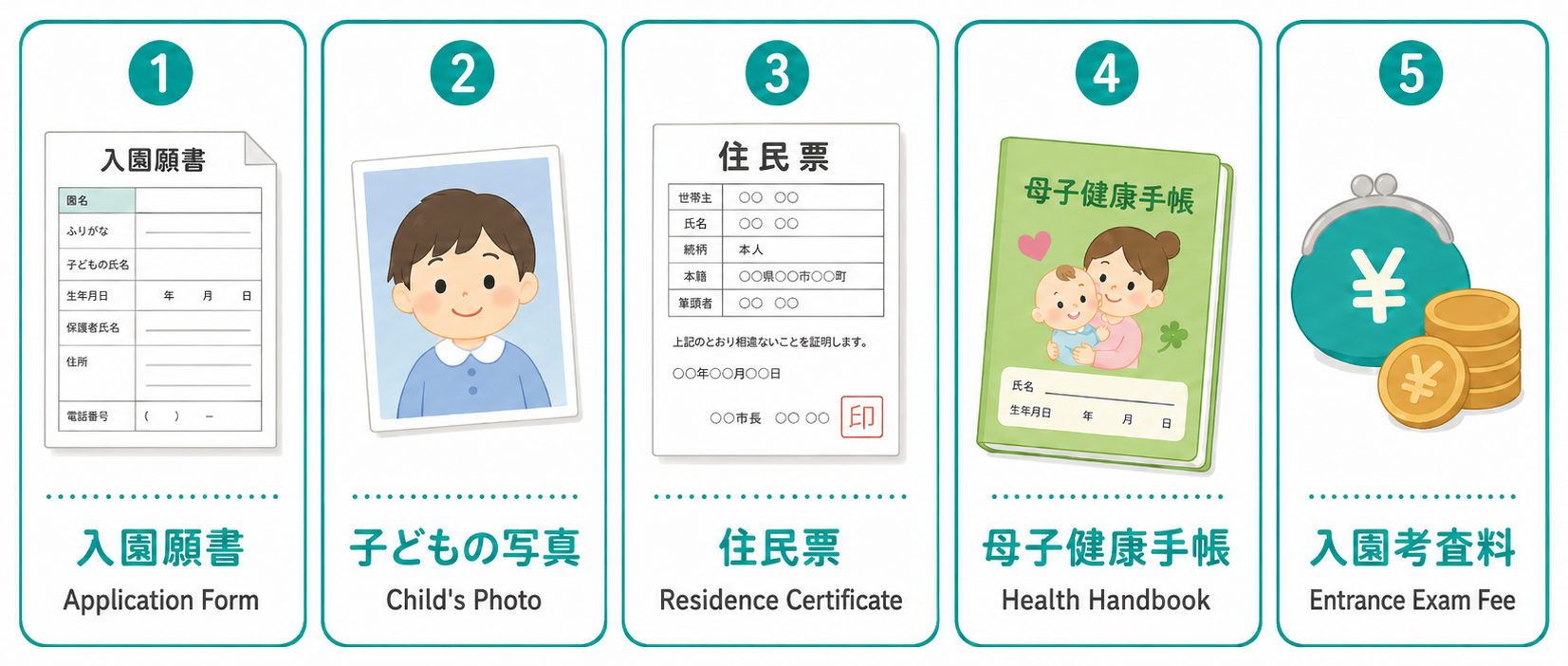
- Application form (入園願書) — picked up from the school, usually from October
- Child's photo — attached to the application form
- 住民票 (jūminhyō) — residence certificate, obtained from your city hall
- 母子健康手帳 (Boshi Techou) — your child's health record
- Entrance exam fee (入園考査料) — typically ¥3,000–¥10,000, non-refundable
Some schools may also ask for a brief family essay or questionnaire. These typically cover why you chose the school and your hopes for your child's development. Keep it honest and straightforward — there's no need to overthink it.
The Entrance Exam & Interview
Most private yochien hold some form of entrance assessment — though for 3-year-olds, it's rarely a formal exam. It's usually a short observation session where the staff watch how your child interacts, plays, and follows simple instructions. Some schools also interview the parents separately.
What they're generally looking for:
- Whether your child can follow basic instructions
- How they interact with unfamiliar adults
- Whether the family's values seem aligned with the school's approach
Rejections do happen. Popular schools in cities can be oversubscribed. Apply to two or three schools rather than putting all your hopes on one. Having a backup plan takes the pressure off significantly.
Costs & Subsidies
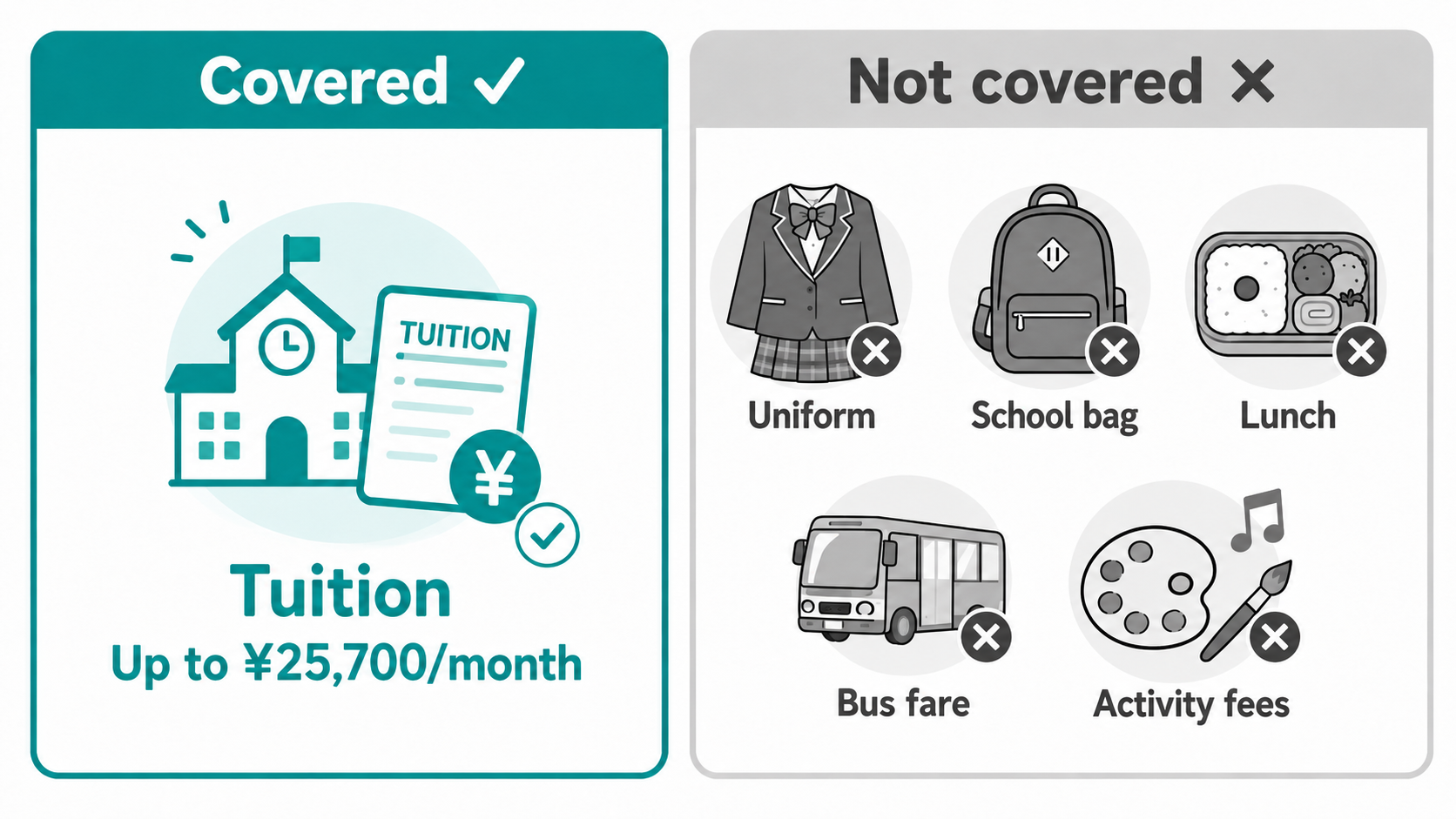
Since October 2019, preschool education has been free for children aged 3 to 5 under Japan's 幼保無償化 (yoho mushōka) policy. This applies to both Japanese and international residents enrolled in Japanese public health insurance and the residence system.
However, "free" comes with a cap:
- Public yochien — fully covered
- Private yochien — up to ¥25,700/month covered; anything above that is your responsibility
- Not covered — uniform, school bag, activity fees, lunch, bus fare, and extended care fees
The subsidy is applied automatically once your child is enrolled and your municipality has confirmed eligibility. You don't need to apply separately in most cases.
After Acceptance
Once you receive the acceptance notice and pay the enrollment fee, the school will contact you about orientation (説明会) — usually held in February or March. This is where you'll get the full list of items to prepare.
Typical items needed for April:
- Uniform (制服) — ordered through the school, often expensive
- School bag (通園バッグ) — either specified by the school or a standard size
- Indoor shoes (上靴) — plain white canvas shoes for use inside
- Name labels — everything your child brings needs their name on it, including individual crayons
- Smock or art apron — for craft activities
It can feel like a lot at once, but the school's orientation will walk you through each item. Other parents in the same intake are going through exactly the same thing. For the full run-through — what to buy, why to wait for the school's list, and how to label it all — see our guide to getting ready for kindergarten.
📖 Japanese Vocabulary
Useful terms for the yochien application process.
| 日本語 | ひらがな | English |
|---|---|---|
| 幼稚園 | ようちえん | Kindergarten |
| 入園願書 | にゅうえんがんしょ | Application form |
| 見学会 | けんがくかい | Open day / school visit |
| 説明会 | せつめいかい | Information session / orientation |
| 入園考査料 | にゅうえんこうさりょう | Entrance exam fee |
| 預かり保育 | あずかりほいく | Extended care (after standard hours) |
| 幼保無償化 | ようほむしょうか | Free preschool policy (ages 3–5) |
| 制服 | せいふく | School uniform |
| 入園式 | にゅうえんしき | Enrollment ceremony (first day) |
| スクールバス | すくーるばす | School bus |