Written and reviewed by Susumu
Born and raised in Japan · Checked against Japanese law and ministry guidance
Your child has a place at a Japanese kindergarten — now the getting-ready begins. What to prepare before April: the bag, indoor shoes, smock, cap, and bento gear, why to wait for the school's own list, and how to label every last crayon.
Affiliate Disclosure: This article contains affiliate links. If you click a link and make a purchase, we may earn a small commission at no extra cost to you. We only recommend products we genuinely believe are helpful. See our Terms of Use for full details.
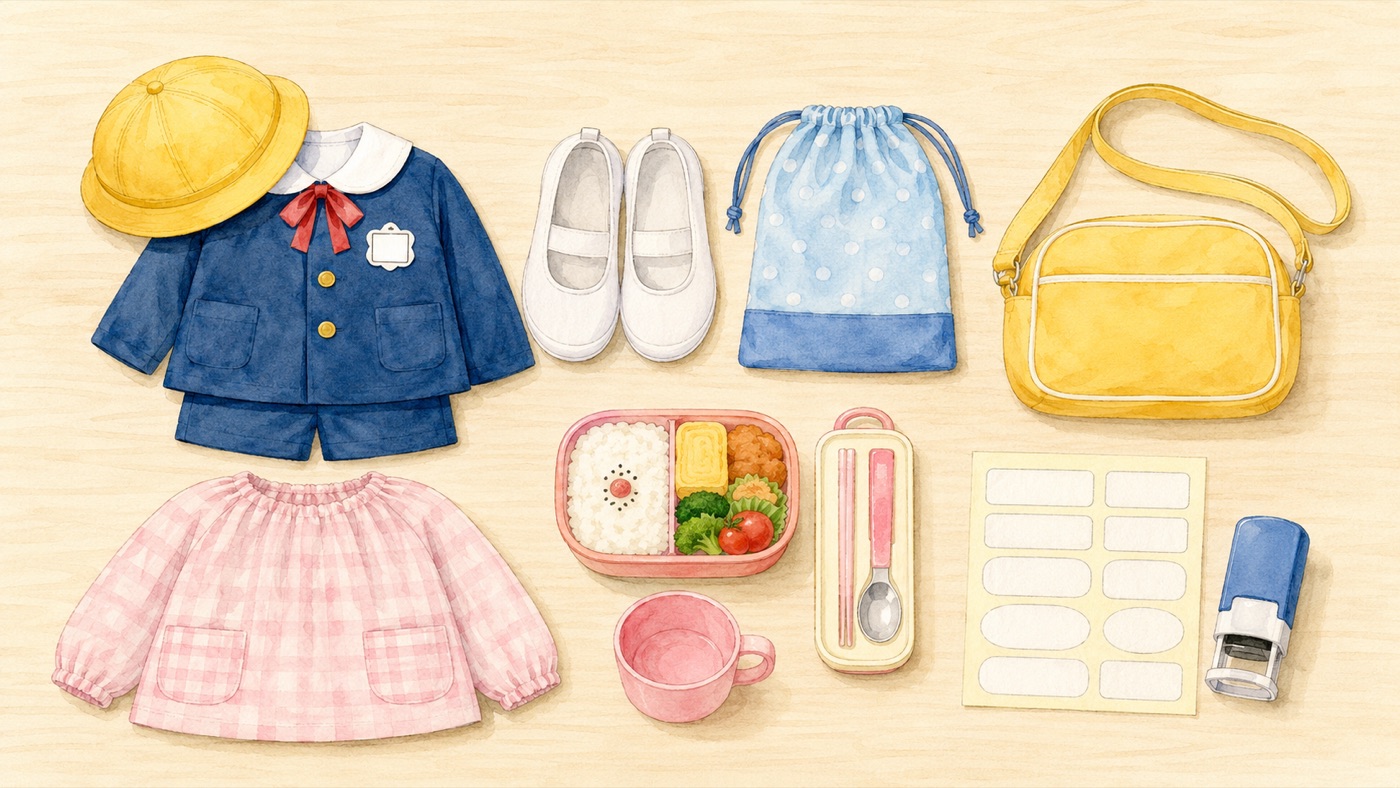
The run-up to April is busier than a first-time family expects. Between the bag, indoor shoes, a smock, often a uniform and cap, lunch gear, and labeling everything down to a single crayon, the list adds up fast — and the one rule that saves the most money and stress is to wait for the school's own list before buying. This guide covers what you will gather, how to label it, what to tell the school about your child, and what the first weeks actually look like.
Once You Have a Place
Choosing a kindergarten (幼稚園, yōchien) and being accepted is the hard part; this guide picks up afterward, in the run-up to the April start. If you are still at the earlier stages, see our guides to visiting a kindergarten and applying for one. Here the job is practical: gather the right things, label them, tell the school what it needs to know, and help your child into the routine.
One thing worth knowing up front: a kindergarten's standard education time is about four hours a day, so the day is shorter than daycare, and mornings and pickups will be built around that unless the school offers extended care (預かり保育, azukari hoiku). How much the school hands off to parents (handmade bags, daily lunch, washing smocks) varies widely, which is why the school's own instructions matter more than any general list.
Wait for the Official List
The most common and most expensive mistake is buying a full set of supplies from a generic online list before the school gives you its own. Kindergartens differ on sizes, colors, and what they sell versus what you buy yourself — a bag or lunch box that seems perfect can turn out to be the wrong size for the school's shelf or cubby.
The real list arrives at the pre-start orientation (説明会, setsumeikai), usually held in the weeks before April. That meeting is where you learn the uniform details, the supply list, lunch rules, the bus schedule, and which forms to return. When it comes, it is worth asking for the full fee schedule in the same breath — entrance charges, uniform, bag and shoes, lunch or bus fees, materials, and extended-care costs. That way nothing arrives as a surprise later.
A rough order of events helps avoid a last-minute rush: after acceptance, save the school's contacts and calendar; at the orientation, collect the list and forms; a month or two ahead, order any made-to-order uniform early; in the weeks before, label everything and let your child practice the small skills below; and the week before, pack the first-day bag exactly as the school instructs.
Clothing and Daily Items
There is no national packing list, but a kindergarten's clothing and daily items usually draw from the same set. Confirm each against your school's list, since some schools require specific items and others accept ordinary ones from a store.
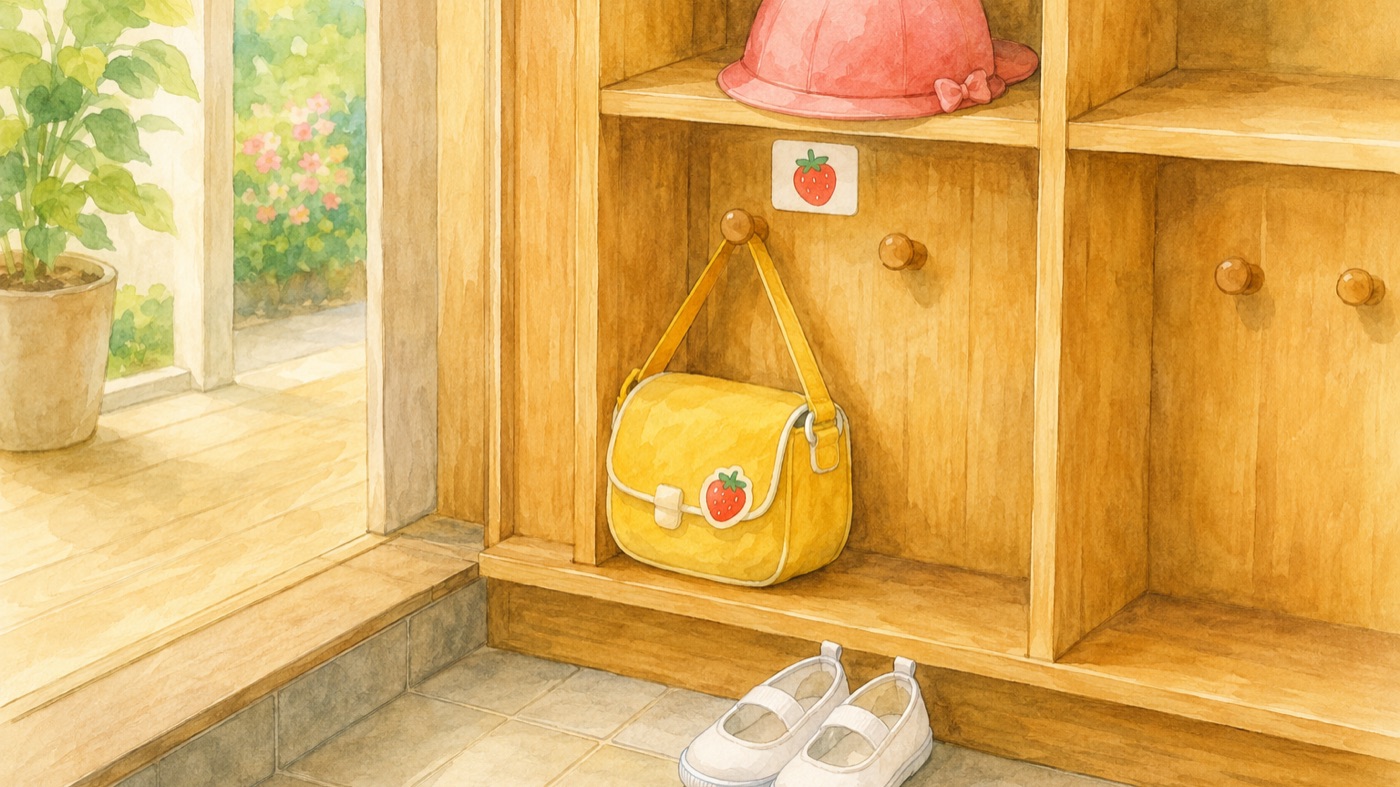
- Uniform, cap, or smock, if the school uses them — the cap (通園帽, tsūenbō) is often color-coded by class.
- Indoor shoes (上履き, uwabaki) and a drawstring bag to carry them in; children change into them at the entrance.
- A kindergarten bag (通園バッグ, tsūen baggu), sometimes a specific shoulder bag the school designates.
- Spare clothes, socks, and underwear, kept at school in the format the school asks for.
- A hand towel and handkerchief, and tissues, carried daily.
- A water bottle and rainwear, if the school's rules call for them.
Lunch and Class Supplies
Most kindergartens serve a school lunch (給食, kyūshoku), either every day or on set days of the week. But bento days are common alongside it, and some schools are bento every day, so the arrangement is genuinely school-by-school. Find out which yours does and how many bento days there are each week, and ask how it handles allergies or foods your child cannot eat. On the days a bento is needed, the items below come into play, along with a few class supplies specific to Japanese kindergartens.
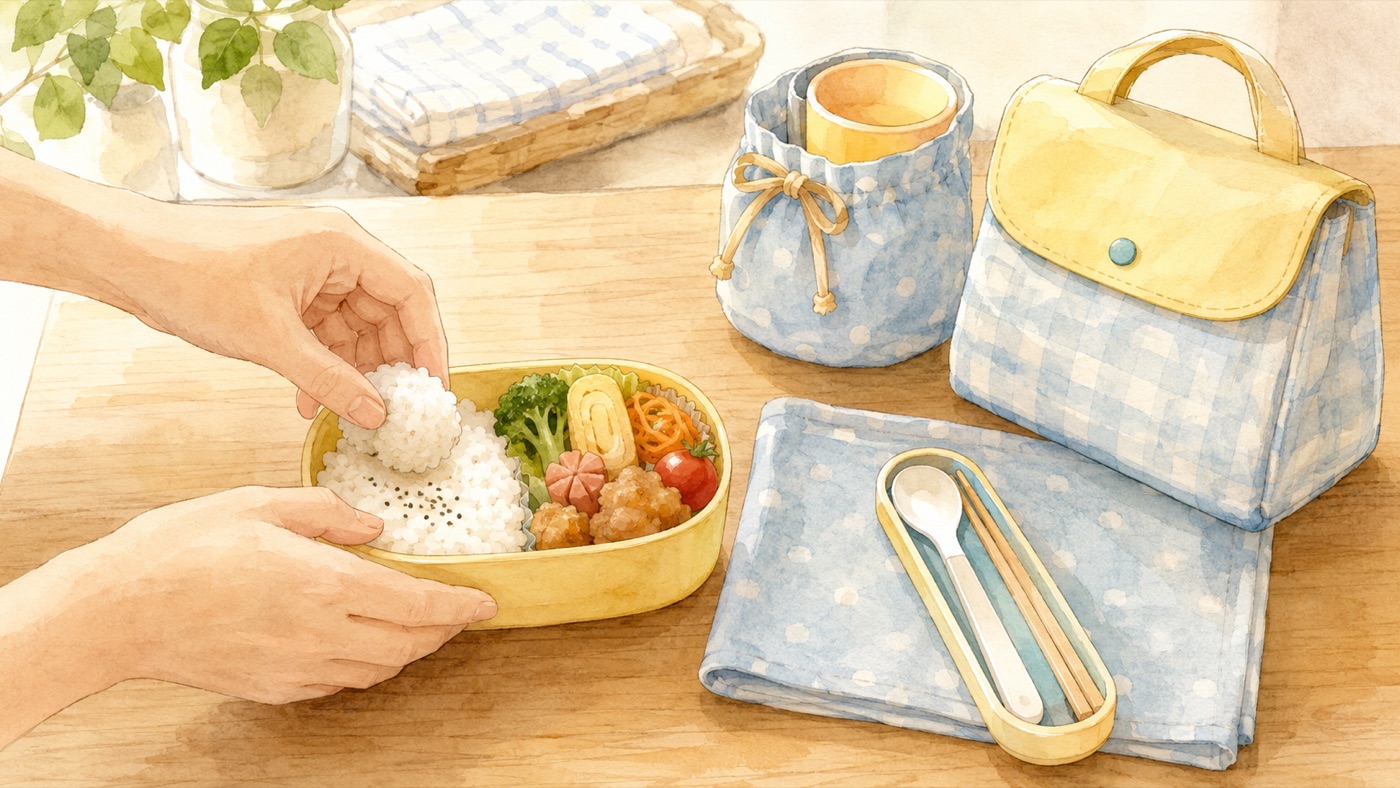
- A bento box, plus chopsticks or a spoon and fork in a utensil case, on bento days.
- A lunch bag and a small cloth placemat (ランチョンマット, ranchon matto) to set the meal on.
- A cup and a drawstring cup bag, if children drink from their own cup.
- A play smock (スモック, sumokku) or art apron for painting and messy activities.
- A supply box (お道具箱, o-dōgu-bako) holding crayons, scissors, and glue, if the school asks you to provide one.
Sizes matter more than you would expect: a bento box needs a lid small hands can actually open, and a bag has to fit the school's cubby. This is another reason to buy after the list, not before.
Label Everything
Almost everything your child brings needs their name on it — not just the bag and shoes, but socks, towels, the cup, and often each individual crayon. It feels excessive until you see thirty near-identical items on a shelf. A name stamp (お名前スタンプ, o-namae sutanpu) or iron-on labels save hours over writing by hand.
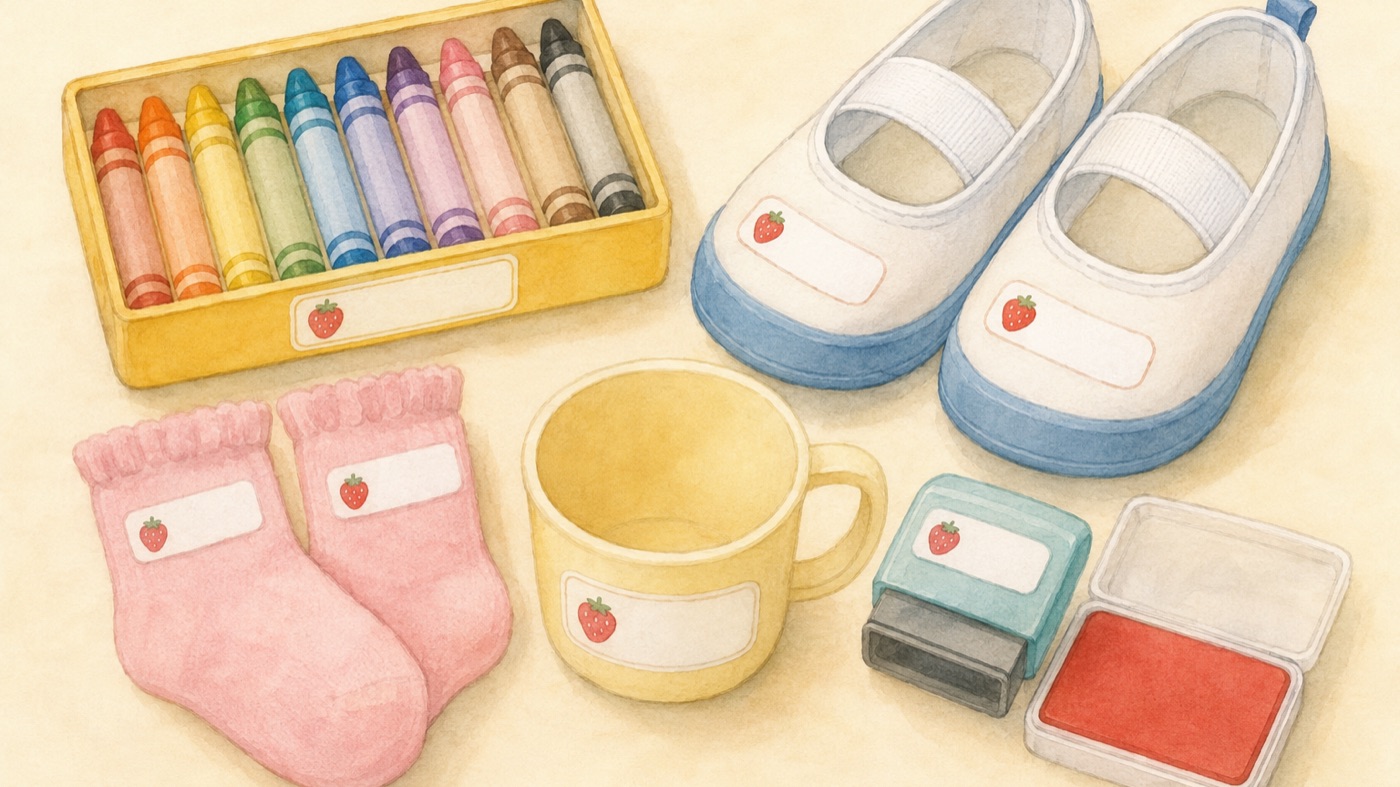
For children too young to read, many kindergartens assign a personal mark (個人マーク, kojin māku) — a small picture like a strawberry or a car — so a child can find their own locker, hook, and cup before they can read their name. If the school uses one, put it on belongings alongside the name. Our guide to name labeling covers the wider naming culture, but your school's rules on where and how to label come first.
What to Tell the School
Before the first day, tell the kindergarten anything that shapes your child's day: allergies, regular medication, dietary or religious restrictions, toileting needs, and sensory sensitivities. Ask which forms or medical notes the school needs, and do not assume a quick word at the entrance ceremony will reach the classroom teacher — put it in writing.
Toileting expectations vary. Some schools happily take children who are still becoming independent; others ask families to work toward a certain level first. Ask what happens after an accident and how soiled clothes come home, and pack spare clothes the way the school requests.
Write a short family note. One page with your child's name, home languages, allergies, key routines, and how to reach you gives the teacher a reference. If your child is still learning Japanese, add a few words they already understand and how your family prefers to communicate — but ask first whether the school has its own form.
The First Day and the Weeks After
The first day is usually the entrance ceremony (入園式, nyūenshiki): families attend together, children wear a uniform or formal clothes, and the day is much shorter than usual. The school will tell you where to gather, what to bring, and whether parents stay.
In the first weeks, a child has a lot to learn at once: the route, the shoe change, where the bag goes, the lunch and toilet routines. Many kindergartens ease in with shorter days at first. This is not hoikuen's formal settling-in period (慣らし保育, narashi hoiku), so ask your school what its own plan is, and expect to keep pickup and work arrangements flexible until the full day settles.
The ongoing work is real too, and worth knowing before it starts: checking the bag and app for notices each day, washing towels and smocks, replacing spare clothes as your child grows, reporting absences, and turning up for open-class days, ceremonies, and the occasional parent duty. If two adults share the pickups, both should know how to report an absence and read the school's notices — which matters most when the communication is mainly in Japanese.
Japanese Vocabulary
The words you will meet on the supply list and around the start of kindergarten:
| Japanese | Reading | Meaning |
|---|---|---|
| 通園バッグ | tsūen baggu | The daily bag a child carries to kindergarten |
| 上履き | uwabaki | Indoor shoes changed into at the entrance |
| 通園帽 | tsūenbō | The kindergarten cap, often color-coded by class |
| スモック | sumokku | A play smock worn over clothes for messy activities |
| お道具箱 | o-dōgu-bako | A box holding crayons, scissors, and glue |
| 個人マーク | kojin māku | A picture symbol so pre-readers can find their things |