

Written and reviewed by Susumu
Born and raised in Japan · Checked against Japanese law and ministry guidance
If a doctor signs you off work before maternity leave begins, employer health insurance can pay roughly two-thirds of your salary for that gap. Who qualifies, how much it pays, and how to file the claim.
Affiliate Disclosure: This article contains affiliate links. If you click a link and make a purchase, we may earn a small commission at no extra cost to you. We only recommend products we genuinely believe are helpful. See our Terms of Use for full details.

Severe morning sickness, threatened miscarriage, threatened premature labor — if a doctor tells you to stop working before your official maternity leave starts, there's a gap where you'd normally go unpaid. 傷病手当金 (shōbyō teatekin), Japan's sickness and injury allowance, can cover part of your salary during that gap.
Not the same as 出産手当金
出産手当金 (shussan teatekin — maternity allowance) only covers the 42 days before your due date and 56 days after birth. 傷病手当金 (shōbyō teatekin — sickness and injury allowance) is a general health insurance benefit for any illness or injury that keeps you from working — including pregnancy complications that arise before that 42-day window opens. See our maternity allowance guide for the childbirth-specific benefit.
What Is 傷病手当金?
傷病手当金 (shōbyō teatekin) is a cash benefit paid by your health insurer — the Japan Health Insurance Association (協会けんぽ) or your company's health insurance society (健康保険組合) — when you're unable to work due to illness or injury unrelated to your job. It replaces part of your salary while you're off work and not being paid.
It's a general-purpose benefit, not a pregnancy-specific one. Most people use it for things like surgery recovery or a long illness. But because pregnancy complications are certified by a doctor the same way any other medical condition is, they qualify too.
When Pregnancy Complications Qualify
The gap this fills: 出産手当金 only starts 42 days before your due date (98 for a multiple pregnancy). If your doctor orders you to stop working earlier than that — for example at 20 weeks — you have no maternity-allowance coverage for that earlier period. 傷病手当金 is what covers it, provided a doctor certifies that you're medically unable to work.
Commonly certified pregnancy conditions
- Threatened miscarriage (切迫流産, seppaku ryūzan) — explained in our guide to miscarriage and threatened miscarriage in Japan
- Threatened premature labor (切迫早産, seppaku sōzan)
- Severe morning sickness / hyperemesis gravidarum (重症妊娠悪阻, jūshō ninshin oso)
- Pregnancy-induced hypertension or other complications requiring bed rest or hospitalization
Your obstetrician can issue a 母性健康管理指導事項連絡カード (bosei kenkō kanri shidō jikō renraku kādo) — a standard form that communicates your doctor's instructions (such as "requires rest" or "reduced working hours") to your employer. It isn't required for the 傷病手当金 application itself, but it's useful for getting your employer to formally recognize the need for leave.
Who Qualifies
Eligible
- The insured person (被保険者) in employer health insurance — full-time, part-time, or contract, as long as you're enrolled
- You are medically certified as unable to work
- You are absent from work for at least 3 consecutive days, and you remain unable to work on the 4th day
- You are not receiving salary for the days you're claiming, or your salary is lower than the benefit amount
Not eligible
- People enrolled in municipal National Health Insurance (国民健康保険) — self-employed, freelancers, unemployed. Some trade-specific National Health Insurance associations (国保組合) offer 傷病手当金 as an optional benefit, but most municipal plans don't
- Dependents on a spouse's employer health insurance — you must be the primary insured person
- Days already covered by 出産手当金 (see the overlap rule below)
- Days your salary from your employer equals or exceeds the benefit amount
The 3-Day Waiting Period
Before payments start, you need a 待期期間 (taiki kikan) — 3 consecutive days off work. These 3 days don't need to be paid days off; weekends, public holidays, and paid leave all count toward them. What matters is that they're consecutive and that you were unable to work on each of them. Payment starts from the 4th consecutive day of inability to work.
Two examples of how the waiting period counts (top row = Case 1, bottom row = Case 2)
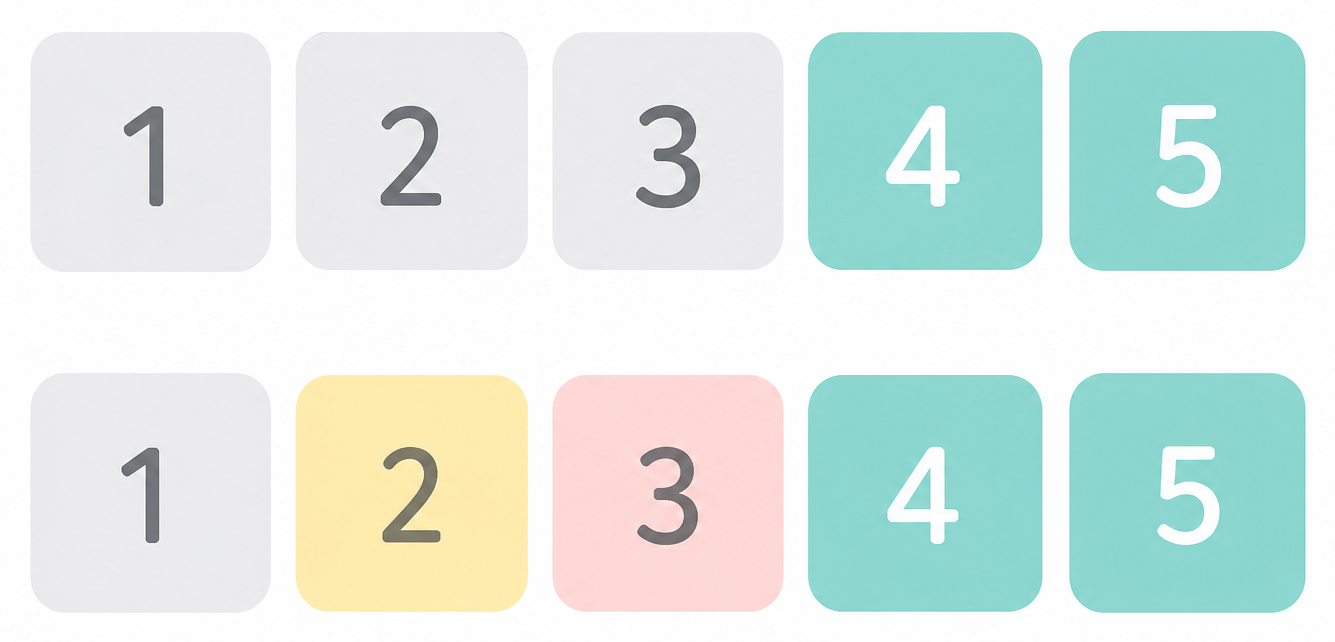
Case 1: Absent, absent, absent, then still unable to work.
Days 1–3 form the waiting period. Payment starts from day 4.
Case 2: Absent, public holiday, paid leave, then still unable to work.
Still 3 consecutive days off work — the public holiday and paid leave both count. Payment starts from day 4.
On the application form
Write your first day of absence (day 1) as the start of "period unable to work" on the application — not the 4th day when payment actually begins. Entering the wrong start date can shrink the number of days counted toward your claim.
How Much Will I Receive?
The calculation is identical to 出産手当金:
Daily benefit amount
Average standard monthly salary (past 12 months) ÷ 30 × 2/3
Your standard monthly salary (標準報酬月額, hyōjun hōshū getsugaku) is the bracket your insurer uses to calculate premiums. If you've been enrolled in employer health insurance for less than 12 months, your insurer uses whichever is lower: the average of your actual months of coverage, or the national average standard monthly salary (320,000 yen for benefit periods starting April 2025 or later).
Example calculation
Monthly standard salary: 300,000 yen (consistent over the past 12 months). Doctor certifies 30 days of bed rest for threatened premature labor, starting after the 3-day waiting period.
- Daily standard: 300,000 ÷ 30 = 10,000 yen/day
- Daily benefit: 10,000 × 2/3 = 6,667 yen/day (rounded to the nearest yen)
- Total for 30 covered days: 6,667 × 30 = 200,010 yen
The benefit period for any single illness or condition runs up to 1 year and 6 months in total from the day payments started, counted cumulatively — days you return to work and stop claiming don't count against that total, so the clock effectively pauses whenever you're not claiming.
If You Also Qualify for 出産手当金
Once you reach the 42-day prenatal window and become eligible for 出産手当金, that benefit takes priority — 傷病手当金 payments stop for any day covered by it. If 出産手当金 pays less per day than 傷病手当金 would (this is rare, since both use the same formula, but it can happen if your standard salary changed between the two benefit periods), you can claim the difference.
In practice, this means the two benefits work together as a continuous safety net: 傷病手当金 for medically-certified time off before your due date approaches, and 出産手当金 for the standard prenatal and postnatal period.

How to Apply
The application form is called 健康保険傷病手当金支給申請書. It's a 4-page form split into three parts:
- Your section (pages 1–2) — personal details, bank account, and your work attendance and any salary received during the period you're claiming for
- Employer section (page 3) — confirms your absence and any salary paid during that time
- Doctor's section (page 4) — your physician certifies the diagnosis and the period you were unable to work
You can download the form from your health insurer's website or get it from your company's HR or general affairs (総務) department. Once complete, it's mailed to the branch of your health insurer where you're enrolled — an online application option is also available through 協会けんぽ. In practice, your HR department usually coordinates the submission, since they need to fill in their own section anyway. Because the doctor's section requires an in-person or follow-up visit, plan to submit each claim in batches — for example, once a month — rather than waiting until your leave ends.
Claim deadline
Each day's benefit must be claimed within 2 years of the day after it was due. Submitting in regular batches avoids losing any of it to the deadline.
Japanese Vocabulary
| Japanese | Reading | Meaning |
|---|---|---|
| 傷病手当金 | shōbyō teatekin | Sickness and injury allowance |
| 健康保険傷病手当金支給申請書 | kenkō hoken shōbyō teatekin shikyū shinseisho | The official application form for the sickness and injury allowance |
| 待期期間 | taiki kikan | Waiting period — the 3 consecutive days off work before payments begin |
| 切迫流産 | seppaku ryūzan | Threatened miscarriage |
| 切迫早産 | seppaku sōzan | Threatened premature labor |
| 重症妊娠悪阻 | jūshō ninshin oso | Severe morning sickness / hyperemesis gravidarum |
| 母性健康管理指導事項連絡カード | bosei kenkō kanri shidō jikō renraku kādo | A doctor's form communicating required work accommodations (rest, reduced hours, leave) to your employer |
| 標準報酬月額 | hyōjun hōshū getsugaku | Standard monthly salary (the bracket used to calculate insurance premiums) |