

Written and reviewed by Susumu
Born and raised in Japan · Checked against Japanese law and ministry guidance
Daycare does not start at full days. Almost every hoikuen eases new children in over one to two weeks, which affects when you can realistically return to work. A typical schedule, and how to plan around it.
Affiliate Disclosure: This article contains affiliate links. If you click a link and make a purchase, we may earn a small commission at no extra cost to you. We only recommend products we genuinely believe are helpful. See our Terms of Use for full details.
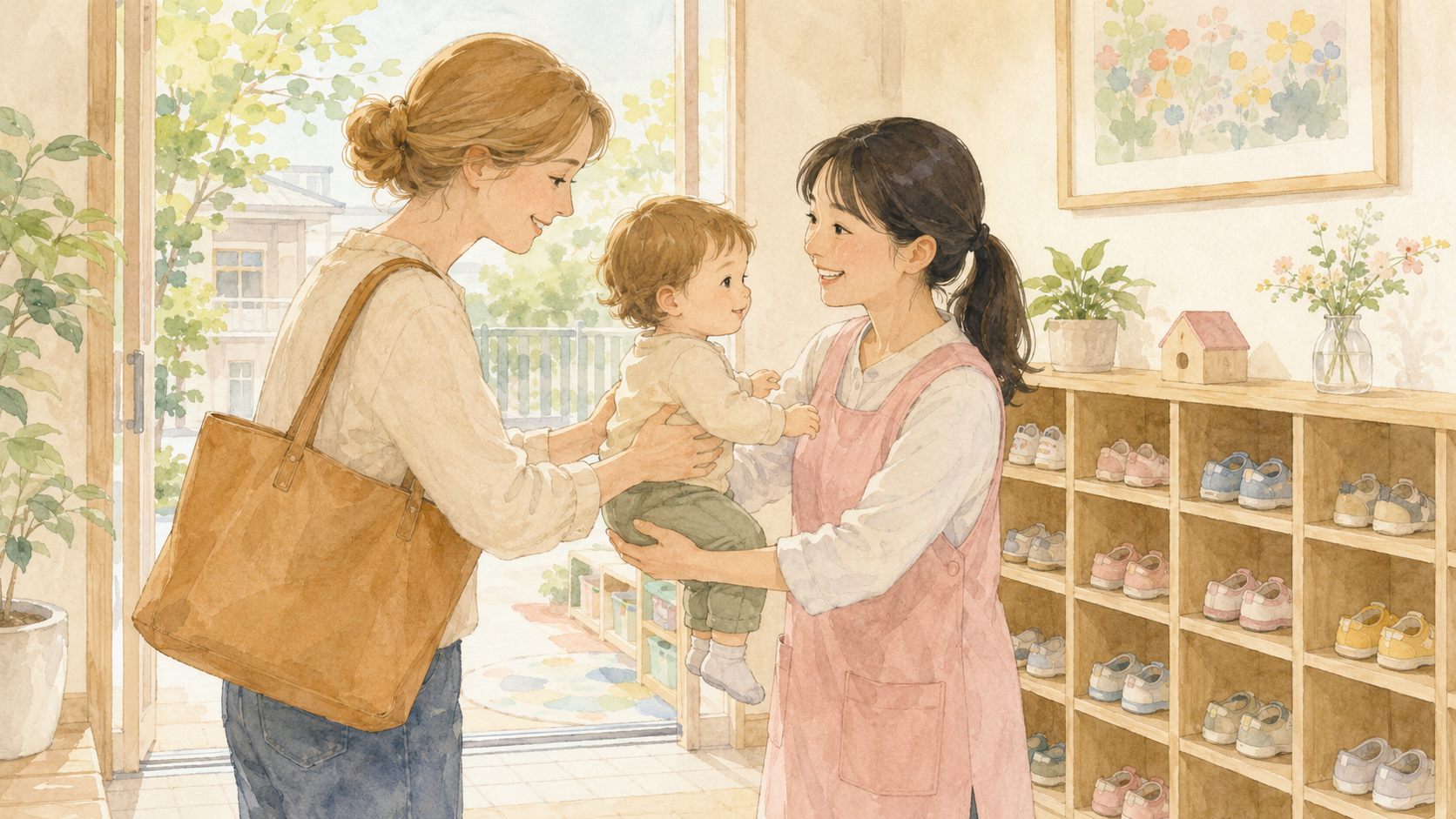
Your child got a hoikuen spot — but don't book that first full workday yet. Nearly every daycare in Japan starts new children on 慣らし保育 (narashi hoiku), a gradual adjustment period where your child attends for just an hour or two at first. It usually takes one to two weeks, and knowing how it works makes planning your return to work far less stressful.
What Is 慣らし保育?
慣らし保育 (narashi hoiku) literally means "getting-used-to childcare." Instead of starting with full days, your child begins with very short visits — often just one hour — and the daycare gradually extends the time over one to two weeks: first through the morning, then through lunch, then past nap time, until your child is comfortable staying the full day.
It's not optional, and it's not a sign the daycare has doubts about your child. Every 保育園 (hoikuen) does this with every new child, regardless of age. 幼稚園 (yōchien) and smaller or company-run daycares tend to ease children in gradually too, though the length is less predictable there.
The part that surprises many international parents
Getting a daycare spot from April 1 does not mean full-day care from April 1. For the first week or two, someone still needs to be free to drop off mid-morning and pick up an hour or two later. If you plan to start a new job or return full-time in the first week of April, you'll almost certainly hit a scheduling conflict.
Why Japanese Daycares Do This
For a baby or toddler whose whole world has been home, a room full of unfamiliar adults and children is a big change. The short-visits approach lets a child build trust with their assigned teachers, get used to new smells and sounds, and learn that a parent who leaves always comes back — a little at a time, instead of one abrupt nine-hour separation on day one.
The practice has official recognition. A Ministry of Health, Labour and Welfare notice describes narashi hoiku as care provided "for shorter hours than regular care, for purposes such as adjusting to group life," and notes that it typically lasts around one to two weeks. The same notice acknowledges that parents usually can't work normal hours during this period — which is why the rules below about parental leave exist.
There's a practical side for you as well. Those short first days are when you learn the daycare's routines: how the 連絡帳 (renrakuchō — the daily communication notebook) works, how drop-off flows, what needs a name label, and who to talk to about food or health questions. Parents who have been through it often say the adjustment period was as much for them as for the child.
How Long It Takes: A Typical Schedule
There's no national rule for how narashi hoiku has to be scheduled. Each daycare sets its own plan and teachers adjust it to your child, but most plans follow roughly the same shape:
| Days (approx.) | Time at daycare | What's new |
|---|---|---|
| 1–2 | 1–2 hours | Playtime only; pickup before lunch |
| 3–5 | Until early afternoon | First 給食 (kyūshoku — school lunch); pickup after eating |
| 6–8 | Until mid-afternoon | First nap (お昼寝, ohirune) at the daycare |
| 9–10 and beyond | Full day | Afternoon snack, then your regular contracted hours |
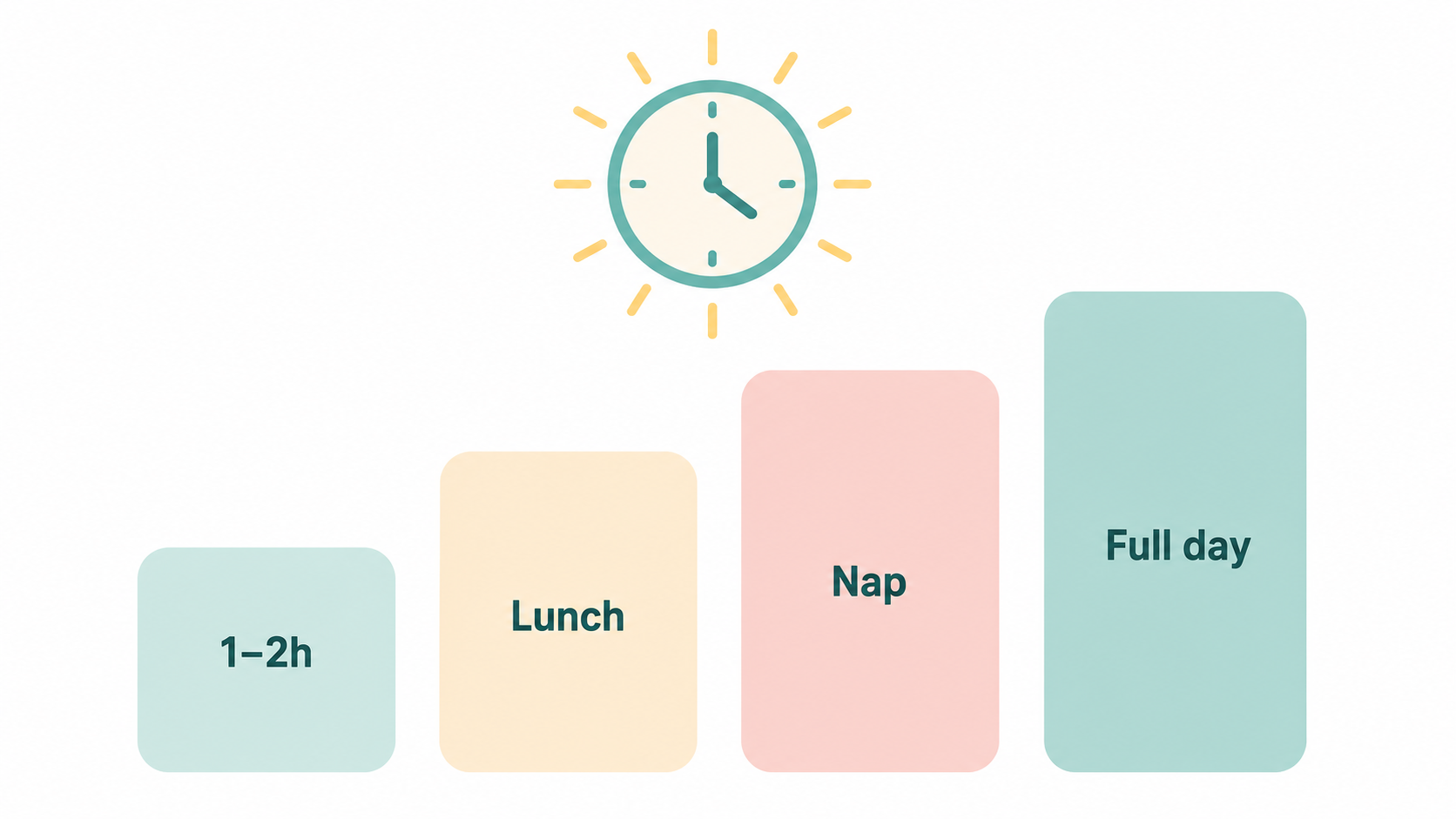
Two weeks is a common target, but the real range is wide: a confident two-year-old might finish in a few days, while a baby who refuses the bottle or can't sleep at the daycare might need three or four weeks. Teachers watch three milestones — eating, napping, and settling after drop-off — and extend each stage until they're met. If your child misses days with a fever, some daycares restart from a shorter schedule rather than picking up where you left off.
Ask for the plan in writing before the first day
At the intake interview (usually February–March for April entry), ask: "How many days is the standard narashi hoiku plan, and what are the pickup times for each stage?" Daycares hand out a printed schedule — knowing the exact pickup times lets you plan work, and shows the daycare you understand the system.
Planning Your Return to Work
A lot of parents set their first day back at work for the same day their child starts daycare, then spend that week scrambling. Work backward instead: start from the day you genuinely need to be at your desk full-time, and give yourself a cushion.
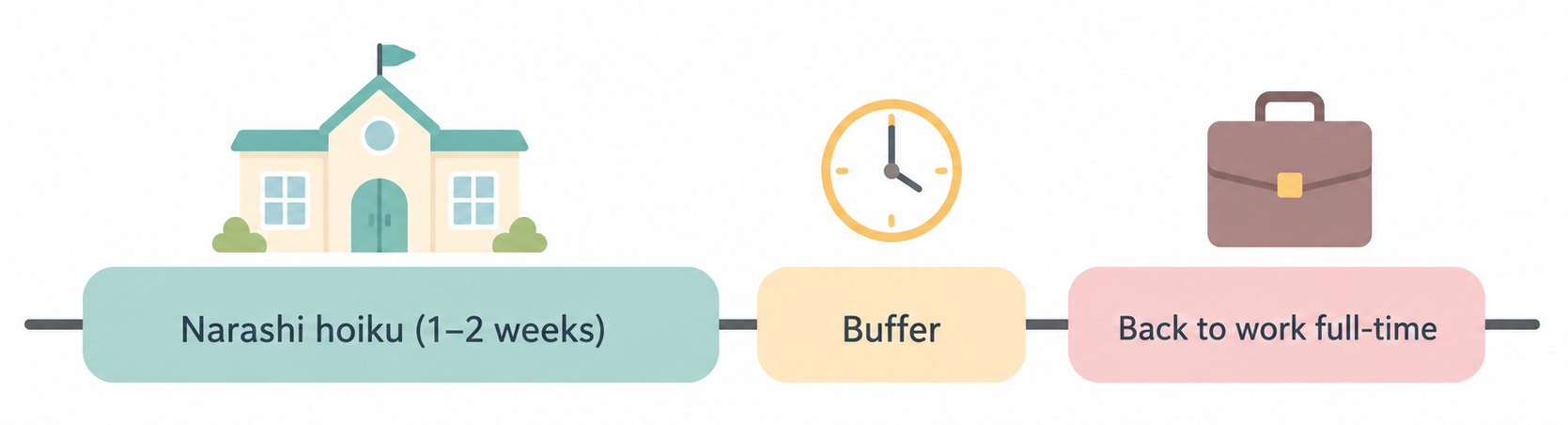
That cushion between the end of narashi hoiku and your first full day back is the piece parents most often skip — and the one they most often wish they'd kept. Here's what to plan around:
- Assume two weeks of short days, even if the daycare says it might go faster. It's much easier to return early than to push a deadline back.
- Leave a gap of a few days between the planned end of narashi hoiku and your first full workday. The first weeks of group childcare almost always bring a fever or two, and a small buffer absorbs the first 呼び出し (yobidashi — the daycare's "please come pick up your child" call).
- Check your city's return-to-work deadline. Municipalities that admit a child on the condition that a parent returns to work set a deadline for actually returning — for April entry, many set it around the end of April or early-to-mid May, and they require a 復職証明書 (fukushoku shōmeisho — proof-of-return-to-work certificate) from your employer afterward. Miss the deadline and the child can lose the spot. The exact rule is municipality-specific, so confirm it when you accept the placement.
- Watch out for Golden Week. With April entry and a late-April return, your child barely settles in before a week of holidays hits, and a lot of them slip back a little afterward. That's normal — just expect early May to be bumpier than you'd like.
If You're on Parental Leave
You don't have to end parental leave before narashi hoiku starts. The government accepts that parents can't work normal hours during the adjustment period, so a child can enroll and begin narashi hoiku while the parent is still on 育児休業 (ikuji kyūgyō — parental leave), with the return-to-work date set for after the adjustment period ends — as long as it's within the municipality's deadline.
On the money side, three things to keep straight:
- Parental leave benefit continues during narashi hoiku as long as you're still officially on leave — the benefit is tied to your leave status, not to whether the child is at home. See our maternity and parental leave guide for how the benefit itself works.
- The benefit ends at the child's first birthday (or at the end of an approved extension period). Being in the middle of narashi hoiku does not extend it — so if your child enters daycare right around their first birthday, expect a possible unpaid gap between the benefit ending and your first paycheck.
- "Still doing narashi hoiku" is not a valid reason to extend parental leave benefits. Extensions exist for parents who applied for a daycare place in good faith and couldn't get one — and since April 2025, you have to show the application was genuinely aimed at returning to work. Once you have a spot, the clock runs normally. Our parental leave guide covers the current extension rules.
Talking to Your Employer
Japanese employers with parenting employees generally know what narashi hoiku is — you usually won't need to argue for its existence, just agree on logistics. If you work for a foreign company or a manager unfamiliar with the system, explain it as a mandatory phased start that every Japanese daycare uses, and bring the daycare's printed schedule as backup.
Common ways parents cover the period:
- Timing the end of parental leave so the whole adjustment period falls inside it — the cleanest option when possible
- Paid leave (有給, yūkyū) for the first week, then half-days or remote work for the second
- Remote work with reduced hours, if the job allows — drop-off and pickup eat the middle of the day, so full remote days rarely work either
- Splitting days with a partner — one parent covers mornings, the other pickups; also worth considering if grandparents or a trusted sitter can take some handoffs once the child has settled a little
Whatever you choose, tell your employer the schedule is approximate. If your child needs longer, the daycare will not rush them — and a fever in week one can push everything back several days.

Getting Through It
A few things that genuinely help — most of this is what daycare teachers end up telling new parents every spring:
- Crying at drop-off is expected and normal. Most children stop within minutes of the parent leaving — teachers will tell you honestly how long it took, and you can see the day's mood in the 連絡帳. Long goodbyes usually make it harder; a short, warm, consistent goodbye routine works better.
- Practice the daycare's rhythm at home a couple of weeks early: similar lunch and nap times, and — for babies — drinking from a bottle or cup if you've been exclusively nursing, since refusing all milk at daycare is one of the most common reasons the schedule stretches out.
- Expect illness. The first months of group care bring a parade of colds and fevers. It isn't a sign the daycare is careless; it's every child's first exposure to shared germs. Line up backup care if you can, and see our guide to handling a sick child in Japan.
- Label everything and pack doubles. Narashi hoiku is also your trial run for the daily-prep routine — see our name labeling guide and hoikuen daily schedule guide for what those days look like once things settle.
- It ends. Almost every parent who dreaded week one is watching their child wave them off cheerfully a month later. It's slow on purpose, and it works.

Japanese Vocabulary
| Japanese | Reading | Meaning |
|---|---|---|
| 慣らし保育 | narashi hoiku | Gradual adjustment period when starting daycare |
| 保育園 | hoikuen | Daycare / nursery school |
| 育児休業 | ikuji kyūgyō | Parental leave |
| 復職証明書 | fukushoku shōmeisho | Certificate from your employer proving you returned to work — many municipalities require it after enrollment |
| 給食 | kyūshoku | Lunch served at the daycare |
| お昼寝 | ohirune | Nap time (also written 午睡, gosui, in daycare documents) |
| 連絡帳 | renrakuchō | Daily communication notebook between parents and teachers |
| 呼び出し | yobidashi | The daycare's call asking you to pick up your child early (usually for a fever) |
| 有給 | yūkyū | Paid leave (short for 有給休暇, yūkyū kyūka) |
| 入園式 | nyūenshiki | Entrance ceremony held at the start of the daycare year |