

Written and reviewed by Susumu
Born and raised in Japan · Checked against Japanese law and ministry guidance
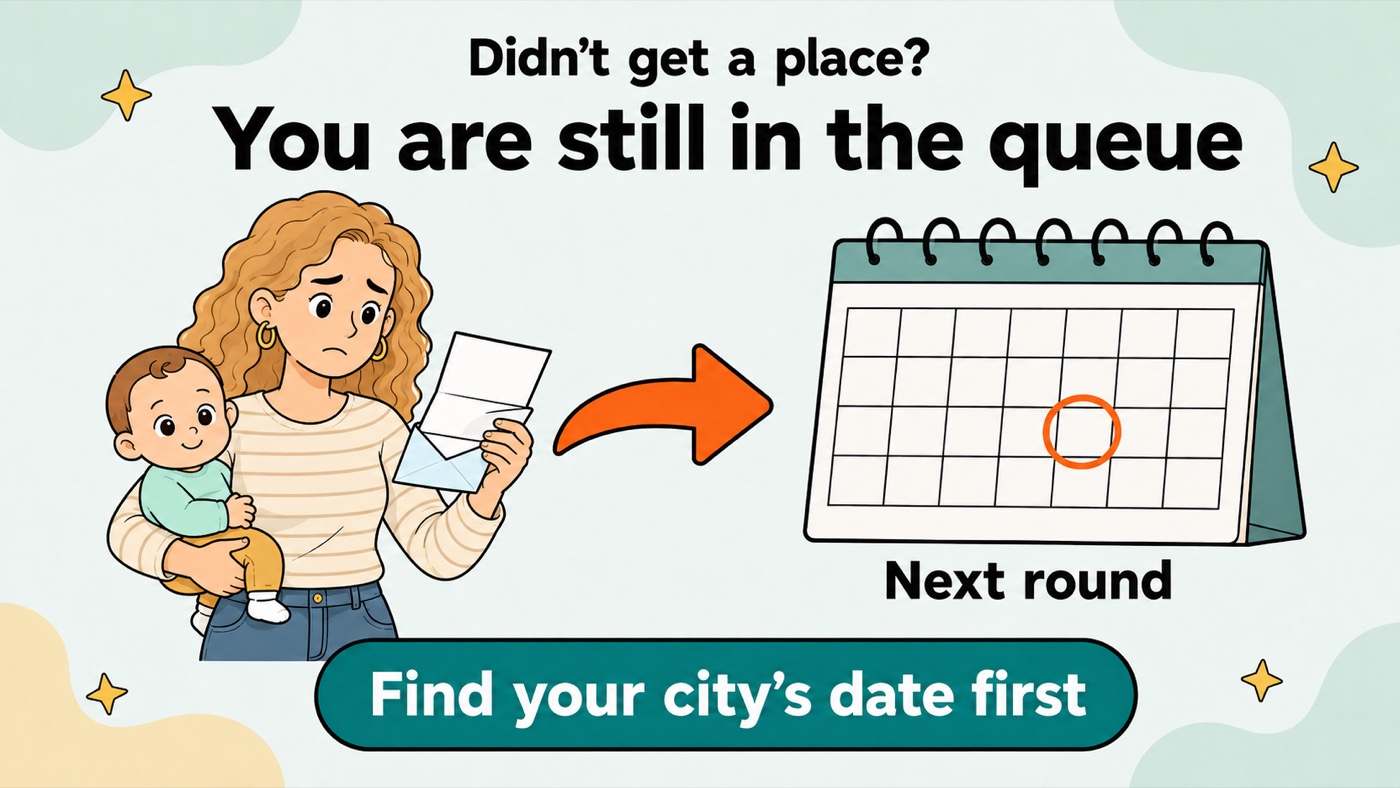
A letter arrives from the city office and your child did not get a place. It reads like a refusal, and in most cities it is not one — your application keeps going into the next round on its own. What to do first, what the letter is really for, and the two documents you now need alongside it if you are extending parental leave. One of them is a copy of the application you handed in months ago.
Affiliate Disclosure: This article contains affiliate links. If you click a link and make a purchase, we may earn a small commission at no extra cost to you. We only recommend products we genuinely believe are helpful. See our Terms of Use for full details.
The short version
- You are still in the queue. In most cities the application keeps going into the next round on its own.
- Do one thing today: find the date of the next round on your city's website.
- If this letter is meant to extend your parental leave, you now need two more documents besides the letter. One of them is a copy of your original application.
What the Letter Means
A letter comes from the city office and your child did not get a place. The word many people know for it is 不承諾通知 (fushōdaku tsūchi), which sounds like a refusal.
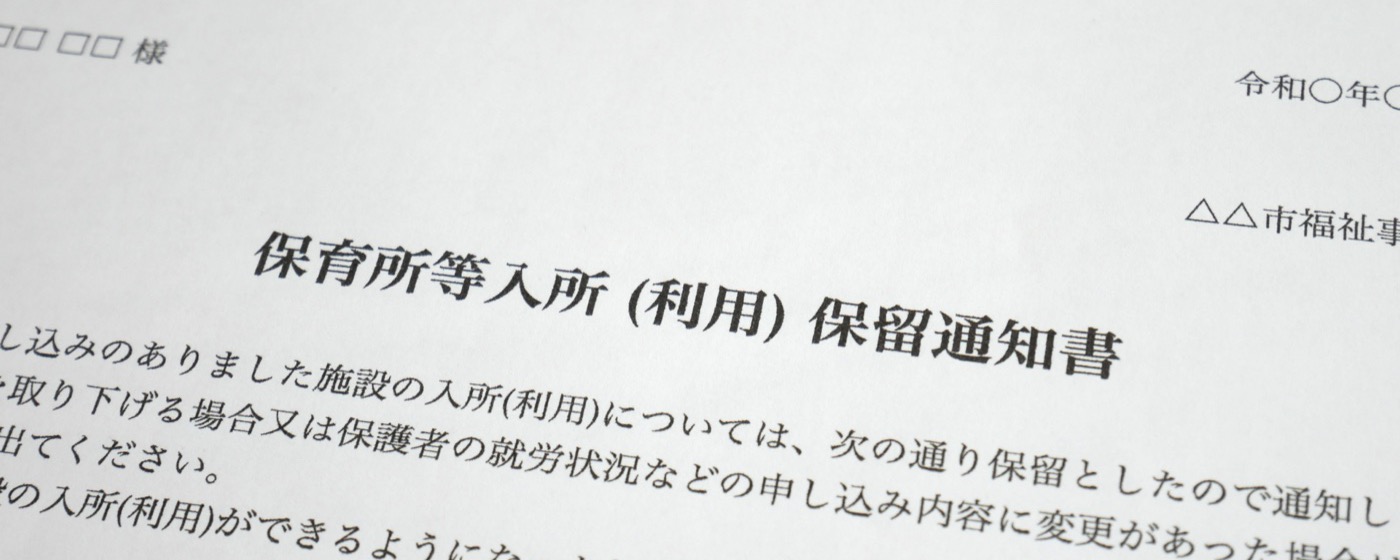
The official name was changed in 2016, out of consideration for how it lands on parents. Most cities now call it 入所保留通知 (nyūsho horyū tsūchi) — a notice that the place is on hold. A few cities use other names. It is the same letter.
The gentler word is closer to the truth. In most cities your application stays in the running. Unless you withdraw it, it goes into the next round automatically, in many places right through to the end of the school year.
Look at the letter itself before you file it away. The same national notice that renamed it asks cities that score applications to print your own score on it. Many do, and that number is your starting point for the next round — our guide to how nursery places are scored explains what it means.
You were not thrown out. You were not near the front of the queue this time.
Three Things to Do Now
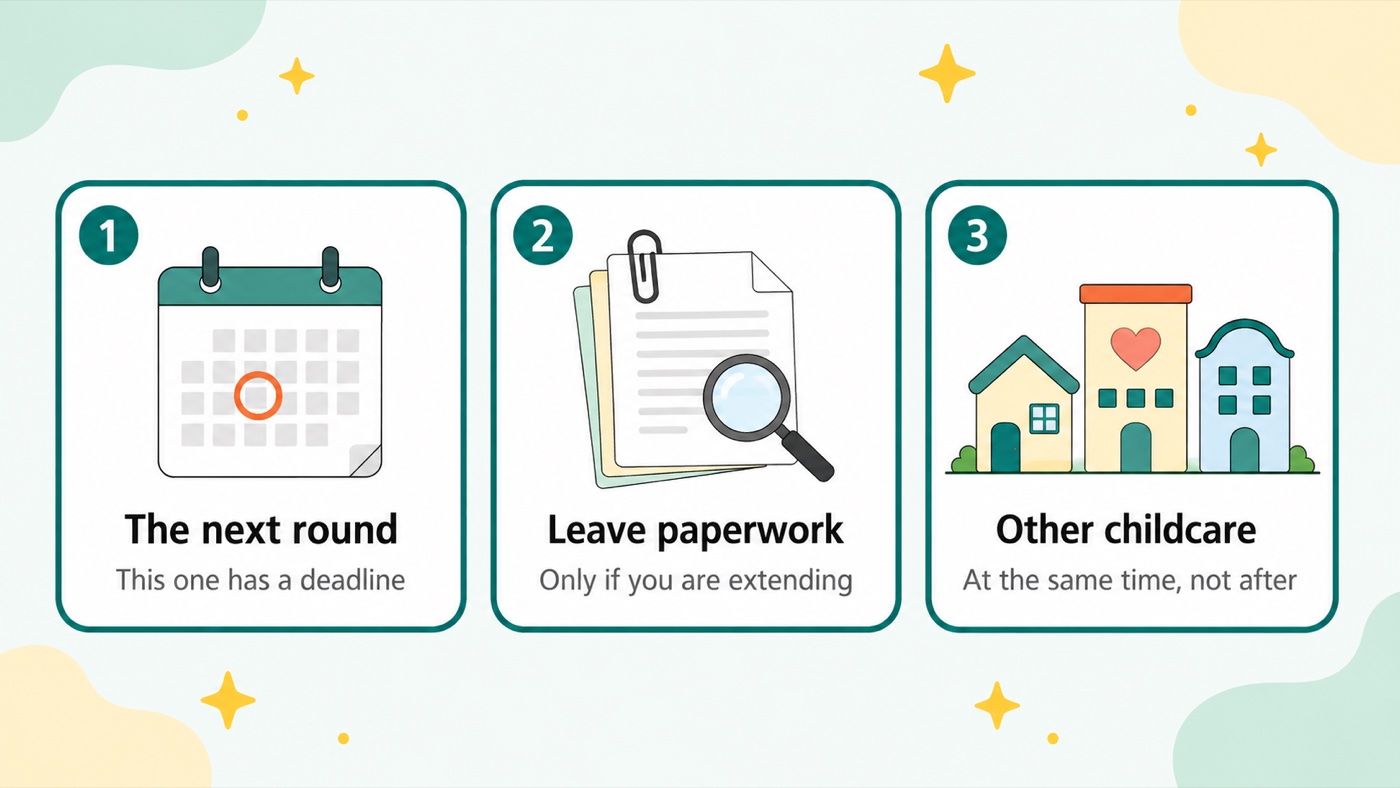
- Find the next round's date. Your city runs more rounds after the first one, each with a cut-off. For April entry the first letters land in late January or February, and second-round deadlines often close only a few weeks later. This is the one thing here that can pass you by while you are thinking. It is on the city website, and the childcare desk will tell you if you call.
- If you were counting on extending parental leave, start now. The letter alone is no longer enough, and one of the documents you need has to come from your own records. The next section is only about this.
- Look at other childcare at the same time. Not after the next round fails as well. In parallel.
One phone call covers the first two. The childcare desk hears both questions every February:
次の選考はいつですか。申込書のコピーもいただけますか。
Tsugi no senkō wa itsu desu ka? Mōshikomisho no kopī mo itadakemasu ka?
When is the next selection round? And could I also have a copy of my application?
If You Need to Extend Parental Leave
For many families this letter is really about work, not about the nursery. It is the document that lets parental leave and its payments continue past the child's first birthday — to eighteen months, and on a second extension to two years.
Until 2025 the letter was enough by itself. From April 2025 it is not. Hello Work now also checks one thing:
Did you apply to the nursery because you were trying to get back to work?
So three documents go in with the claim now:
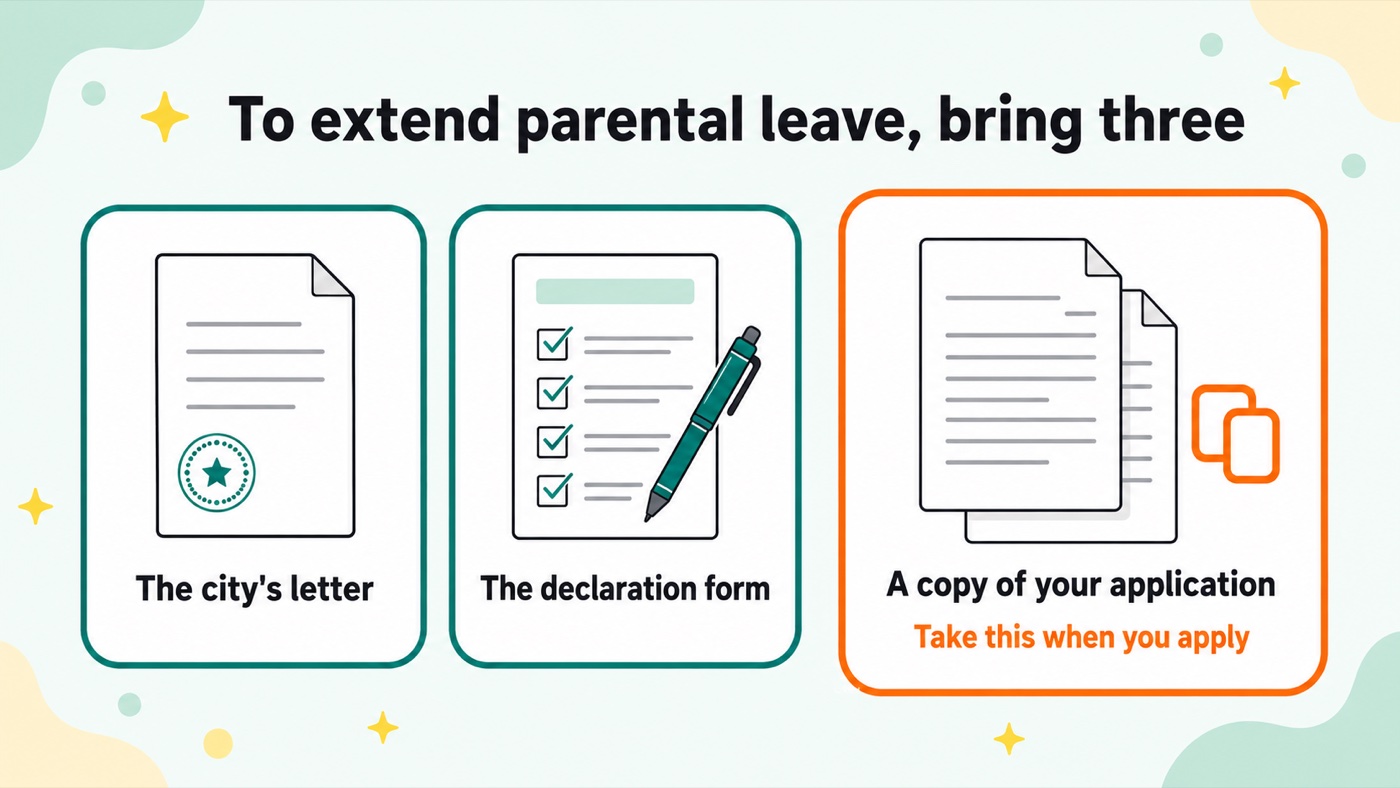
- The letter from the city.
- A declaration form for the extension. Your employer's HR team will have it.
- A copy of the nursery application you gave the city — all of its pages.
The copy is what catches people out. The ministry asks families to photocopy the application when they hand it in, months before anyone needs it. Nobody mentions this at the counter.
If you did not keep one, ask the city office that took your application, and ask now rather than in the week the claim is due. If you applied online, a printout of what you submitted works.
Beyond the paperwork, a claim can fail on a handful of things. They are worth reading once:
- Applying too late. The application has to be dated before your child's first birthday — the birthday itself is already too late. Not applying at all because the city said a place looked unlikely also fails.
- Asking for a start date later than the first birthday, which reads as not being in a hurry to return.
- Applying only to nurseries more than 30 minutes from home. There are accepted reasons for going further — it sits on your commute, nothing is closer, the near ones do not open at your working hours, a sibling already goes there.
- Writing on the form that you would rather not be given a place. Some cities used to offer a box for this and have now removed it.
- Turning down a place you were offered, without a solid reason.
- Handing in a letter that is too old. It has to show the position around the first birthday, so if yours has aged, ask the city for a current one.
One warning from the ministry's own leaflet. If the copy you submit does not match what you actually filed with the city, it is treated as a wrongful claim. The money can be ordered back, and in serious cases a further sum on top of it.
None of this is aimed at families who wanted the place. It exists because some applications were made without wanting one. The risk for you is the opposite — losing an extension you were entitled to over a copy nobody told you to keep.
Your employer files the claim, so tell HR early. Our guide to maternity and parental leave in Japan covers how the payments work.
Childcare While You Wait
Licensed nurseries are not the only childcare here, and the others have their own doors.
- 認可外 (ninkagai) — unlicensed facilities. You apply to them directly instead of through the city.
- 小規模保育 (shōkibo hoiku) — small licensed nurseries for under-threes, included in the same city application.
- 企業主導型保育 (kigyō shudōgata hoiku) — employer-sponsored nurseries, which often keep some places for local families as well as staff.
- 一時預かり (ichiji azukari) — care by the day or the hour. It holds a work pattern together rather than replacing a full place.
Since April 2026 there is also a national system of hourly childcare open to families whether or not they work. It is a small number of hours a month, so treat it as breathing room rather than a solution.
Before the Next Round
Your application usually carries over on its own. Sending it unchanged tends to produce the same result, so two things are worth a look.
Your list of nurseries. A short list of popular ones is the most common reason for a hold. Adding places you had ruled out improves the odds — while keeping the 30-minute point above in mind if a leave extension is also in play.
Your score. Places go by points, and what moves them is written down — the scoring guide covers what your city counts. If anything in your situation has changed since you applied — hours, a new job, a move — tell the city, because it can move the number. How to apply for licensed daycare covers the forms.
One practical detail: some cities send the hold letter for the first month only, and expect you to ask if you need a later one. If you need a current letter, ask for it.
Japanese Vocabulary
The words on the letter and at the counter:
| Japanese | Reading | Meaning |
|---|---|---|
| 入所保留通知 | nyūsho horyū tsūchi | The letter saying a place is on hold — the current official name |
| 不承諾通知 | fushōdaku tsūchi | The older name for the same letter, still widely used |
| 利用調整 | riyō chōsei | The process that decides who gets a place |
| 育児休業給付金 | ikuji kyūgyō kyūfukin | The parental leave payment this letter can extend |
| 申込書の写し | mōshikomisho no utsushi | A copy of your nursery application, required since April 2025 |
| ハローワーク | harō wāku | The public employment office that approves the extension |
| 認可外 | ninkagai | Unlicensed childcare, applied for directly |
| 一時預かり | ichiji azukari | Care by the day or the hour |
The extension rules here come from the Ministry of Health, Labour and Welfare's guidance for claims from April 2025. Selection rounds, letter names and re-issue rules are set by each municipality and differ. Confirm the current terms with your city office and with Hello Work.