
Written and reviewed by Susumu
Born and raised in Japan · Checked against Japanese law and ministry guidance
Since April 2026 every municipality in Japan must offer licensed childcare to children aged six months to three, whether or not the parents work. It is not a new kind of facility — your child attends an ordinary nursery in your neighborhood, on a place the system creates. The first route into daycare that does not ask you to prove a need, and most families, Japanese included, have never heard of it.
Affiliate Disclosure: This article contains affiliate links. If you click a link and make a purchase, we may earn a small commission at no extra cost to you. We only recommend products we genuinely believe are helpful. See our Terms of Use for full details.
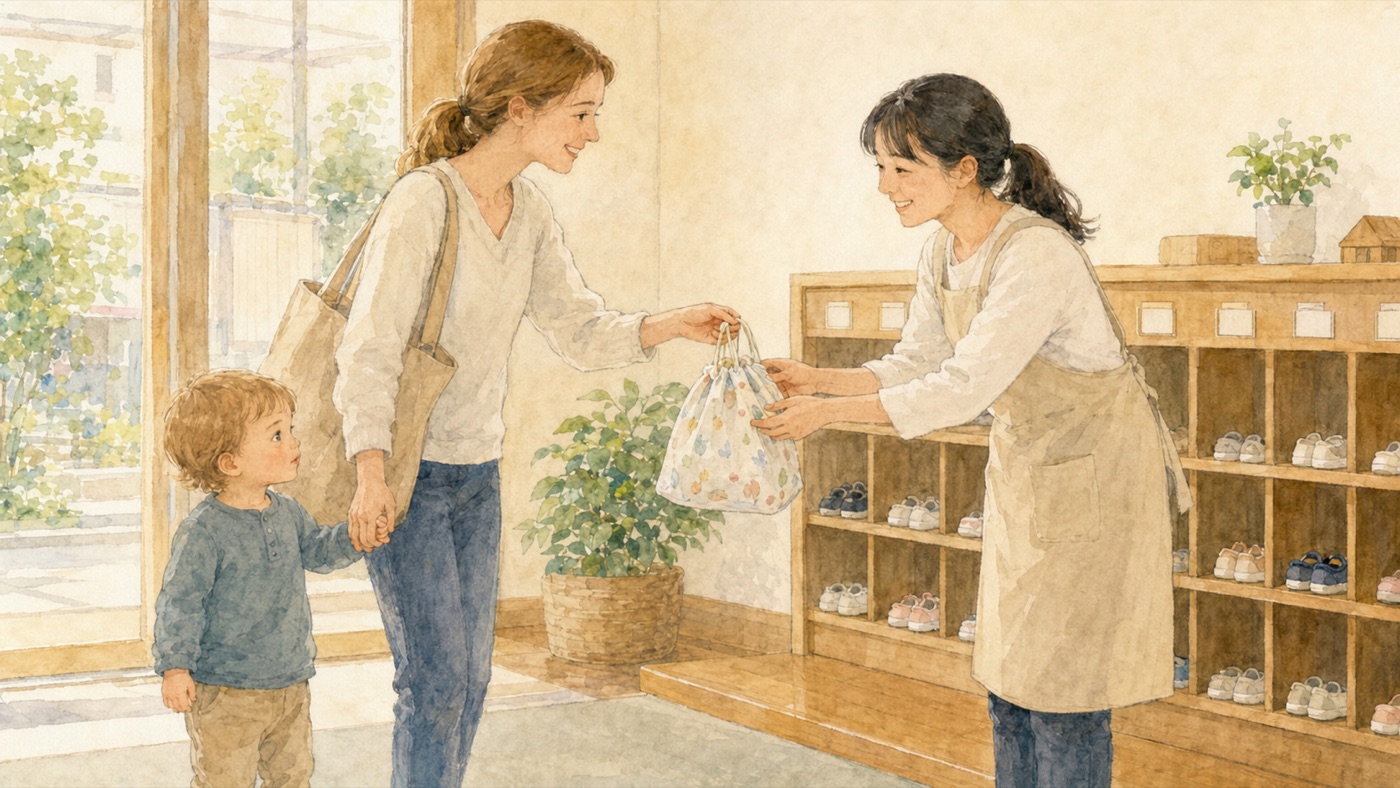
Japan's licensed daycare was built to do one job well: to place children whose families cannot care for them during the working day. Because places were scarce, they went to families who could show a need — a job, study, illness, caregiving. A parent at home has not usually qualified, however much a few hours would have helped.
April 2026 added something alongside it. A new national system opens licensed childcare to children aged six months to three who do not already have a place, whether or not either parent works.
One thing to be clear about from the start: this is not a new kind of facility. No new buildings, no separate centers. Your child attends an ordinary nursery or kindergarten in your neighborhood — the system creates places in the ones that already exist. It is new enough that many Japanese families have not heard of it either, so this guide starts from the beginning.
What This System Is
The name you will see is こども誰でも通園制度 (kodomo daredemo tsūen seido) — roughly, "the childcare-for-any-child system." Its formal name in the legislation is 乳児等通園支援事業, but almost nobody uses that outside official documents.
It was created by an amendment to the Child and Childcare Support Act (子ども・子育て支援法) passed in June 2024. It lets a child attend a licensed facility for a set number of hours each month without any work requirement attached.
That last part is the whole point. Everything else in Japan's licensed childcare system is built around 保育の必要性 — a demonstrated need for care, which in practice usually means employment. Our guide to applying for hoikuen covers how that points-based competition works. This new system sits outside it entirely.
Why it exists is easy to see in the government's own numbers. Children's and Families Agency (こども家庭庁) figures for fiscal 2024 estimate that about 53.5% of children aged 0 to 2 — roughly 1.25 million children — attend no facility at all. For three- to five-year-olds the equivalent figure is around 3%. The gap was the target.
The rollout has been gradual, which explains why so few people have heard of it:
| Year | Status | Where |
|---|---|---|
| 2024 | Pilot program | 118 municipalities |
| 2025 | Written into law, offered at each city's discretion | 252 municipalities |
| April 2026 | A national benefit (給付) | Every municipality in Japan |
Before April 2026, most families could not have used this even if they had wanted to — it did not exist where they lived. So if you ask a neighbor and get a blank look, that is why.
Where Your Child Actually Goes
The most common confusion about this system is that people go looking for a new building. There isn't one — nothing is built, and there is no such thing as a "kodomo daredemo tsuen center." There is still a place your child goes, though: you drop them off in the morning and pick them up afterward, the same as at any nursery. What the system creates is a right to attend the facilities that already exist.
The facilities allowed to take part are the ordinary ones in your neighborhood:
- Licensed daycare (保育所)
- Certified centers (認定こども園) and kindergartens (幼稚園)
- Small-scale and home-based licensed nurseries
- Community childcare support centers (地域子育て支援拠点)
- Child development support centers (児童発達支援センター)
So in practice your child goes to a nursery down the road — the same building, the same staff, and the same garden as the children who are enrolled full time. What differs is who your child spends the morning with, and there are only two answers:
| Your child is… | What that looks like |
|---|---|
| With the enrolled children | Your child joins an existing class for the morning — either on a place the class has free, or on one held back for this system. |
| In a separate group | The nursery runs a room for children using this system, with its own staff. They may still join the enrolled children for some activities. |
Ask which one your facility does. Joining an established class and spending the morning with other newcomers are quite different first days for a child.
On city websites you may meet three official categories: 余裕活用型, 一般型(在園児合同)and 一般型(専用室独立実施). The first two both put your child with the enrolled children; the third is the separate room. Staffing is regulated in every case. Where places are set aside for this system, at least half the adults must be qualified childcare workers, and never fewer than two. Where a class already has room, that class's normal nursery staffing applies.
Who Can Use It
There are two conditions, and they are simpler than anything else in Japanese childcare.
- Age. From six months old to under three (0歳6か月から満3歳未満) — nationally, the day before the third birthday. Some cities run it to the end of the school year in which the child turns three instead. If your child is close to the line, ask rather than assume.
- Not already enrolled. The child must not be attending a hoikuen, a certified kodomoen, a kindergarten, a small-scale or home-based licensed facility, or a company-led nursery. A child at an unlicensed facility (認可外), however, still qualifies — what closes the door is holding a place in the licensed system.
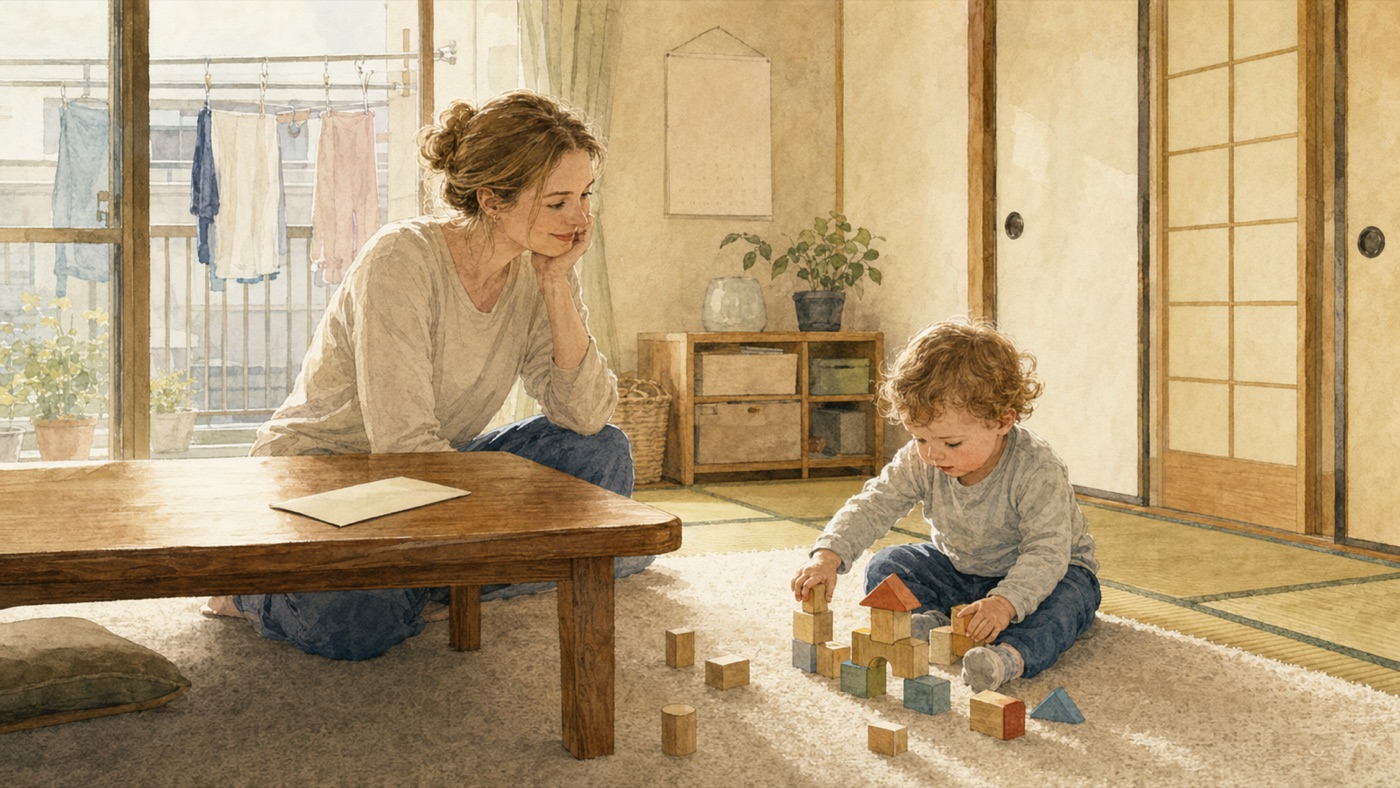
What is not a condition matters just as much. Neither parent needs to be working, studying, or ill. You do not need to prove a childcare need, submit an employer's certificate, or score points. A parent at home full-time qualifies exactly as much as anyone else.
The system is run by municipalities, and like other municipal services it works from the resident register — the city where you are registered as a resident is the city that authorizes you. Nationality is not listed as a condition anywhere in the national rules. If your residence status or registration situation is unusual in any way, ask your ward or city office directly rather than assuming; they are the ones who make the decision.
How Many Hours You Get
The national allowance is up to 10 hours per child per month, used in blocks instead of fixed full days. The government illustrates it as two hours once a week, or two five-hour visits in a month.
That is not a lot, and it is better to say so plainly. It covers a medical appointment, a regular few hours to yourself, or a child's first experience of being cared for in a group. It does not cover a job. If you arrived here hoping for something close to daycare, this is not that.
Ten hours is the standard, but check your own city. Most publish exactly that — Yokohama, Osaka, Funabashi and Shizuoka all do. Two things can move the number:
- Lower. For fiscal 2026 and 2027 a transitional measure lets a municipality set anywhere from 3 hours to under 10 by local ordinance, generally because it cannot staff more yet.
- Higher. A city can pay for extra hours out of its own budget, on top of the 10 the national benefit covers, and a few do. These top-ups are local decisions funded locally, and they can be reviewed from one year to the next. Treat anything above 10 as a bonus your own city happens to offer, not as something you are owed — no other city can be asked to match it.
How the hours are counted matters as much as the total. A visit shorter than an hour still counts as a full hour, and beyond that time is usually counted in 30-minute units. Unused hours do not carry over — Suginami states that plainly.
The shape of the booking varies too. Some cities let you reserve session by session, while others run it as a fixed weekly slot agreed for several months at a time. Ask which yours does: a standing Tuesday morning and an occasional booking whenever there is space are very different things to build a week around.
And a ceiling is not a guarantee of availability. You still need a facility near you with an open slot on a day that works.
What It Costs
This is not free childcare. People often assume it is, because Japan's free preschool policy for ages three to five is well known and this sounds like more of the same.
The national reference figure for what parents pay is ¥300 per hour — about ¥3,000 a month at the full allowance. But what your own city charges varies more than that suggests. Three real examples, all published by the municipalities themselves:
| City | What residents pay |
|---|---|
| Yokohama | Around ¥300 per hour |
| Funabashi | ¥300 for the first hour, then ¥150 per 30 minutes |
| Suginami, Tokyo | Free for ward residents — meals still charged separately |
One Tokyo ward waiving the fee entirely, while the city next door charges by the half hour, is the clearest argument there is for checking your own before assuming anything. Treat these as a snapshot of how wide the range runs, not as fixed figures — fees and local discounts are set year by year, so confirm the current one with your city.
Two things can push the real figure higher:
- Actual costs on top. Meals, snacks and ingredient costs, transport if the facility runs a bus, and materials are charged separately. If your session covers lunch, expect to pay for it.
- Facility-set charges. The rules allow a provider to collect an amount that reflects what it actually offers, so the hourly rate is not identical everywhere. Osaka's city page tells families to ask the facility they are interested in, which is the right instinct generally.
Reductions exist for households on public assistance and for low-income households in the resident-tax bracket the rules specify, applied by the facility. If money is the obstacle, raise it at the city office rather than ruling the system out.
What It Is Not
Four misunderstandings come up often, and clearing them away early saves disappointment.
It is not a replacement for hoikuen. Ten hours a month is a few sessions — enough for an appointment, a rest, or a child's first experience of a group, but not enough to support a job. If you need childcare in order to work, the regular hoikuen application process is still the route.
The two are applied for separately, and nothing stops you from applying for a regular place while using this system. The comparison at the end of this section shows how they fit together.
It is not early education. This one is stated unusually plainly in the official implementation guidance: turning these sessions into lesson-style content — rhythm classes, English lessons, swimming schools — and treating the system as a venue for early education is described as inappropriate. Care here follows the national childcare guidelines. If you are hoping to give a child an academic head start, this is not that.
It is not the same as 一時預かり. Temporary drop-in childcare (ichiji azukari) already existed and continues to exist, with its own rules, its own fees, and often its own reasons you need to give. The new system is a separate entitlement with a monthly allowance attached. A facility may run both.
It is not a babysitter. Nobody comes to your home. You take your child to a licensed facility, where qualified staff care for them in a group, for a fee your city publishes. Japan does have a national babysitter subsidy, but it reaches families through work rather than through the city — employers who sign up for it hand the vouchers to their own staff. If you are at home, this system is the one open to you.
The same nursery now has two doors
This is the part that confuses Japanese and international families alike, so here it is plainly. A single nursery can now take children by two completely separate routes, and the two have almost nothing in common except the building.
| Regular enrollment | This system | |
|---|---|---|
| Work requirement | Yes — you must show a need | No |
| How you get in | Points-based and competitive | Certification only, not a contest |
| How much time | Full days, Monday through Friday | Up to 10 hours a month |
| When you apply | An annual cycle, mainly for April | Any time |
| Your child's status | Enrolled — the place is theirs | Not enrolled — attending on an allowance |
You cannot use both at once. Eligibility for this system depends on your child not holding a place in the licensed system. If a regular place comes through, your child moves to the other route and stops using this one. That is the design, not a catch — the system exists for the children the licensed system is not yet carrying.
How to Apply, Step by Step
Start here: check whether anything exists near you. There is an official government site for exactly this — daretsu.cfa.go.jp, run by the Children's and Families Agency (こども家庭庁), the ministry responsible for this system. You pick your prefecture, then your city, from two dropdown menus.
The .go.jp ending is useful to recognize generally. Only Japanese government bodies can use it, so an address that ends that way is the official source, not a private site repeating the rules second-hand.
The site is in Japanese, but those two menus are all you need to operate, and it answers the question in about a minute. If the list comes back empty, that is your answer — call the city and ask what is planned, rather than assuming you did it wrong.
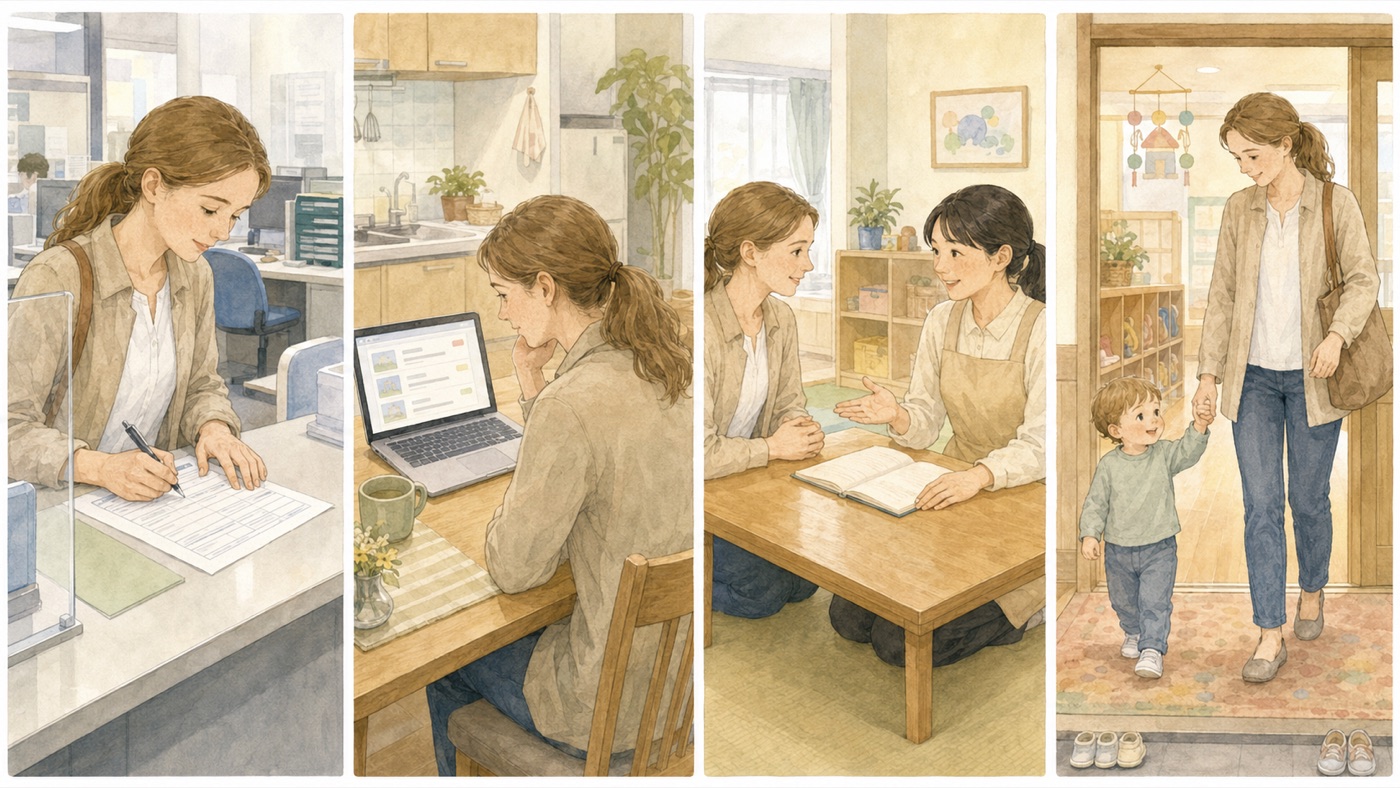
Once you know there is something within reach, the rest runs through a national booking system: the こども誰でも通園制度総合支援システム, known by its nickname つうえんポータル (tsūen portal). You search for facilities, request your first meeting, and make bookings through it. The steps below follow the process the Children's and Families Agency sets out.
Whenever you have to name it — on the phone, at a counter, or in a form — use the Japanese rather than an English description. The system is new, and a loose description like "a few hours of childcare without working" is easily heard as a question about babysitters or drop-in care. Those are different services handled by different desks, and you will be sent to the wrong one.
こども誰でも通園制度
If that draws a blank, the legal name on the paperwork is 乳児等通園支援事業. Between the two, a childcare desk should recognize what you are asking about.
- Apply for certification (認定申請). Many cities now take this as an online form rather than a counter visit, so check your city's page before making the trip. The desk responsible is the childcare section, and names vary — 保育課 and 保育入園課 are both common — so ask for 保育 (hoiku, childcare) and you will be pointed the right way. You are asking to be recognized as eligible, not booking anything yet.
- Wait one to two weeks while the city certifies you. Yokohama says up to about 10 business days, Funabashi one week to ten days, Suginami about two weeks. You then receive a login ID by email.
- Enter your child's details in the system — allergies in particular.
- Find a facility and request an interview. Search, choose, and apply for the 事前面談 (jizen mendan). The facility contacts you with a date.
- Attend the interview. Required before your child can use a facility for the first time. Facilities are funded to spend at least half an hour on it, so expect a real conversation rather than a formality.
- Book your sessions. You can see live availability; the facility confirms by email.
- Attend. A QR code records drop-off and pickup, and you pay for what you use.
This is not same-week childcare. Certification takes one to two weeks, and the interview and booking come after that. Allow about a month from deciding to your child's first morning — so start the month before you need it.
What to bring to the advance interview
What you are asked for is decided locally, so the list you are given may not match anyone else's. One thing is useful regardless:
- 母子健康手帳 (boshi kenkō techō) — the mother and child health handbook. It is the standard record of your child's growth and vaccinations in Japan, and childcare staff are used to reading it. Take it with you.
For everything else, ask your city rather than guessing. The list is theirs to set, so the childcare desk can tell you what it is and where the forms come from, and the facility will confirm it when your interview is arranged. Either is a fine place to put the question, and asking early costs nothing.
Some cities publish their forms as PDFs you fill in and print beforehand; elsewhere the facility hands them over. Funabashi, for example, asks for a consent form (承諾書) and a survey of what your child eats (食生活状況調査書), both downloadable from the city's own site — but those are Funabashi's forms. Yours may use different ones, or none at all.
Whatever the form is called, the food questions are the ones to take slowly. Allergies, anything you avoid for religious or cultural reasons, and foods your child simply refuses all belong there, and this is the one place they get written down.
Japanese You Can Use
If you would rather ask a person than work out a form, these will get you started. Showing them on your phone works as well as saying them.
| What you want to say | Japanese |
|---|---|
| I would like to apply for kodomo daredemo tsūen. | こども誰でも通園制度を利用したいのですが。 |
| How many hours a month does this city allow? | この市では月に何時間まで利用できますか。 |
| How much does it cost per hour? | 利用料は1時間いくらですか。 |
| Which facilities near here take part? | この近くで実施している施設はどこですか。 |
| How long does certification take? | 認定までどのくらいかかりますか。 |
| What should I bring to the interview? | 面談には何を持って行けばよいですか。 |
| Where can I get the forms? | 書類はどこでもらえますか。 |
| My child does not speak much Japanese yet. Is that all right? | 子どもはまだ日本語があまり話せませんが、大丈夫でしょうか。 |
If Your Family Is New to Japan
Three things here tend to surprise international families, in a good way.
The first is who counts as unenrolled. If your child attends an English-language or international preschool, check which category it falls under. Many are unlicensed facilities (認可外保育施設), and the guide is explicit that a child at one of those is still eligible.
Only a place in the licensed system, or a company-led nursery, rules you out. Families who missed a hoikuen place and settled for something private often assume this system is closed to them, and for many of them it is not.
The second is that you are specifically anticipated. The implementation guide tells facilities to plan, together with the municipality, for children needing individual support — and it names children of foreign nationality requiring language or cultural accommodation alongside children with disabilities and children with medical needs. You are not an awkward exception nobody considered. If a facility seems unsure, the municipal office is the right place to go.
The third is 親子通園 (oyako tsūen) — attending together. For a child who needs time to settle, the guidance allows a parent to attend with them, with the caveat that it is not meant to continue indefinitely. If your child has never been cared for by anyone outside the family, or has never spent time in a Japanese-speaking environment, ask about this at the interview.
Use the advance interview properly. It is built to run around half an hour, and it is the one moment when someone whose job is to care for your child sits down and asks about them. Some facilities give the general explanation to a group first and then see families individually for a shorter time. If your Japanese is limited, bring these in writing:
- Allergies, and foods your child does not eat
- Medical needs and any regular medication
- The languages spoken at home
- How your child signals hunger or discomfort
- What helps your child settle
A written note survives the conversation. A spoken explanation through a translation app may not.
Expect the paperwork and the booking system to be in Japanese. Some municipalities provide multilingual support or interpreters for childcare procedures and some do not, so ask at the counter what is available. And if this would be your child's first time in a Japanese-speaking group setting, a few hours a month is a gentle way to start. It is a good deal gentler than the first week of full-time enrollment, which our guide to the settling-in period describes.
Questions That Come Up Once You Start
Four things city websites tend not to answer. The national guidance requires someone — the facility or the city — to have an answer to each, so these are fair questions to ask. Ask them at the interview rather than finding out the hard way.
What if my child is sick on the day? Facilities set their own cancellation rules, so there is no single national answer. Two things are worth asking at the interview: the deadline for canceling, and whether the hours return to your monthly allowance or are lost.
On illness itself, the same thinking applies here as anywhere else in Japanese childcare. Our guide to when a child can go back to daycare covers the conditions with fixed exclusion periods.
What if my child becomes unwell while there? Facilities are required to have a documented plan for a sudden change in a child's condition, for accidents, and for a disaster, and to establish a working relationship with a medical provider.
Ask how they will reach you and how quickly. If your Japanese is limited, make sure they have a phone number they can actually get through on, and name someone else they may contact if you cannot be reached.
Can I use more than one facility? Yes, but each one you use for the first time needs its own advance interview — Suginami words the requirement as applying to any facility you have not used before. In practice that means setting up a second option early, before the day your first choice turns out to be full.
What if something goes wrong, or I am simply unhappy? Both the municipality and the facility are required to maintain a route for users who have concerns or questions, and to make sure users know it exists. If a facility feels wrong to you and raising it there is not working, the city office is not a last resort — it is the designated next step.
Japanese Vocabulary
Terms you will meet on city websites and in the booking system:
| Japanese | Reading | Meaning |
|---|---|---|
| こども誰でも通園制度 | kodomo daredemo tsūen seido | The system described in this guide |
| 乳児等通園支援事業 | nyūji-tō tsūen shien jigyō | Its formal name in the legislation |
| 認定申請 | nintei shinsei | The application to your city to be found eligible |
| 認定証 | nintei-shō | The certificate confirming you may use the system |
| 事前面談 | jizen mendan | The required first meeting with the facility |
| つうえんポータル | tsūen pōtaru | The national system for searching and booking |
| 親子通園 | oyako tsūen | Attending with your child while they settle in |
| 未就園児 | mishūenji | A child not enrolled at any facility |
The system exists everywhere in Japan now, it does not ask whether you work, and finding out what your own city offers takes one search or one question at the counter. The obstacle at the moment is not eligibility. It is that most of the families it was built for have never heard of it.