Written and reviewed by Susumu
Born and raised in Japan · Checked against Japanese law and ministry guidance
Your child has a fever, or the facility has called you to pick them up. Some exclusion periods are fixed by national law and identical everywhere; the rest are judged on symptoms by your facility. Which is which, and the two return forms — 意見書 and 登園届 — you may be asked for.
Affiliate Disclosure: This article contains affiliate links. If you click a link and make a purchase, we may earn a small commission at no extra cost to you. We only recommend products we genuinely believe are helpful. See our Terms of Use for full details.
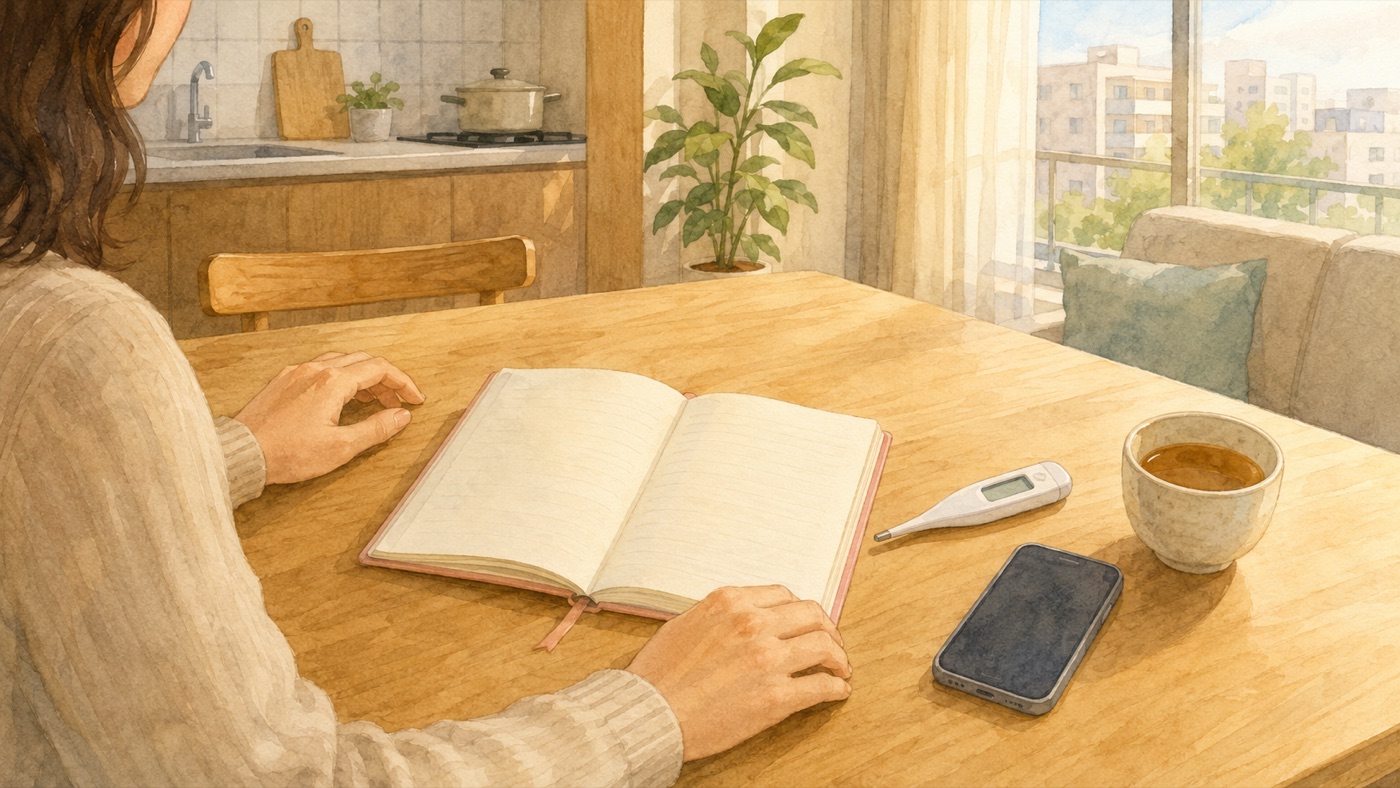
Sooner or later the call comes, or the morning temperature reads 37.8. Then the questions start: can she go in today, when can she go back, and does the facility need a piece of paper from a doctor? Some of this is fixed by national law and is the same everywhere in Japan. The rest is decided by your municipality and your facility, which is exactly why the answers you find online contradict each other. This guide separates the two.
Why Children Get Sent Home
Japanese daycare and kindergarten staff take temperatures during the day and watch for symptoms, and they will call you to come and pick up a child who is unwell. Most facilities work to a fever line — commonly 37.5°C (99.5°F), though the exact figure and how it is applied are set locally — and they also send children home for repeated vomiting or diarrhea, an unexplained rash, eye discharge, or simply a child who cannot join in.
This can feel strict if you have come from a system with a higher threshold. The reasoning is that a group of small children shares everything, several of them are too young to wash their own hands, and one infection moves through a room quickly. It is not a judgment on your parenting, and it is not negotiable at the door.
What matters practically is knowing the rules before you need them, because the rules split into two very different kinds.
Illnesses With a Legal Exclusion Period
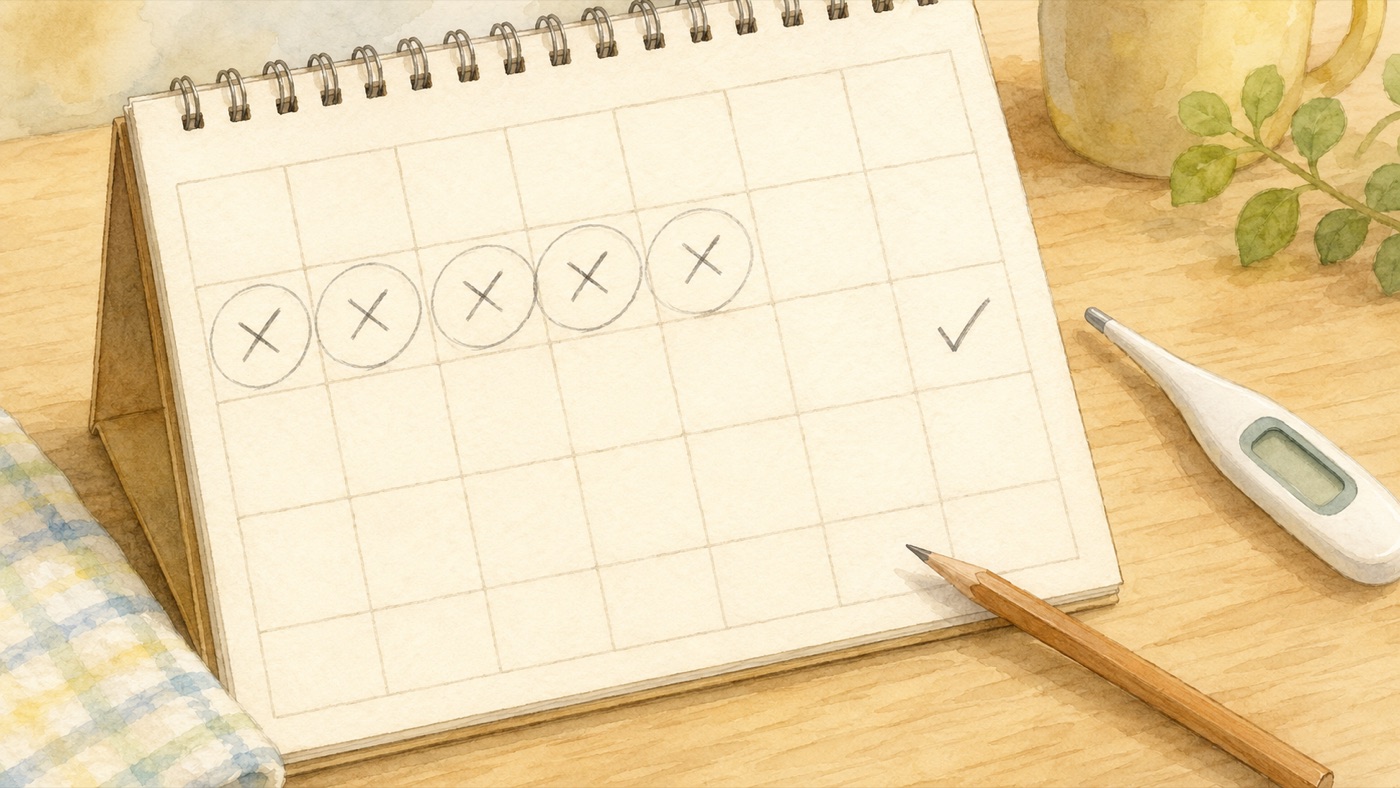
For a set list of infectious diseases, the exclusion period is written into national law: the School Health and Safety Act Enforcement Regulations (学校保健安全法施行規則), articles 18 and 19. It applies to kindergartens and, in practice, to daycare too. Your facility cannot shorten these, and explaining that you have a deadline at work will not change them. The one flexibility the regulation allows is medical, not parental: it includes a proviso that a doctor who judges a child to be no longer infectious can clear them before the standard period runs out. That call belongs to the doctor, and in practice it is used sparingly — but it is why the final word on a return date always comes from the clinic, in both directions.
| Illness | Stay home until |
|---|---|
| Influenza インフルエンザ, infuruenza |
5 days have passed since symptoms began and 3 days since the fever went — for preschool-age children. School-age children need only 2 fever-free days, so a sibling at elementary school may go back sooner. |
| Chickenpox 水痘, suitō |
All the blisters have crusted over. |
| Mumps 流行性耳下腺炎, ryūkōsei jikasen-en |
5 days after the swelling began, and the child is well again. |
| Measles 麻疹, mashin |
3 days after the fever has gone. |
| Rubella 風疹, fūshin |
The rash has cleared. |
| Whooping cough 百日咳, hyakunichizeki |
The characteristic cough has stopped, or five days of appropriate antibiotic treatment are complete. |
Summarized from the School Health and Safety Act Enforcement Regulations (学校保健安全法施行規則, articles 18–19). These are the standard periods: a doctor may keep a child home longer, or, under the regulation's proviso, clear a child sooner if they judge there is no risk of passing the illness on. Not a complete list — ask your facility or clinic about anything not shown here.
The influenza row is the one worth reading twice. Preschool children need three fever-free days, not two — the law sets a longer period for this age group than for school children. Parents with children at both a daycare and an elementary school are regularly caught out by this.
Illnesses Judged on Symptoms
Most of what actually goes around a daycare is not on that legal list. Hand, foot and mouth disease, the winter stomach bugs, RSV, and the common run of colds have no fixed number of days attached. Instead, the Children and Families Agency's guidelines on infection control in childcare (こども家庭庁「保育所における感染症対策ガイドライン」) describe the condition a child should be in before returning, and the facility applies it.
Hand, foot and mouth disease is the clearest example, and a useful one to understand because the intuitive answer is wrong. The guidance is that a child can return once the fever has gone, the mouth blisters no longer interfere with eating, and they are eating normally again. Remaining spots on the hands or feet are not by themselves a reason to stay home, and neither is the fact that the virus can still be shed for weeks afterward — keeping children home for that would mean keeping them home for a month, with little effect on spread. Our guide to hand, foot and mouth disease covers the illness itself.
For stomach bugs the practical test is similar: the vomiting and diarrhea have stopped, the child is drinking and eating, and their energy is back. Facilities are cautious here because these spread ferociously in a room of children in diapers.
Because these are judgment calls rather than fixed periods, this is where facilities genuinely differ, and where asking your own facility beats reading a general answer, including this one.
Do You Need a Form?
Start with the part most guides leave out: a form is not always needed. The Children and Families Agency guidelines are explicit that these documents should not be demanded across the board — whether one is asked for, and for which illnesses, is settled between each facility and local doctors, with the burden on the child and on clinics taken into account. Plenty of ordinary colds and stomach upsets need nothing more than telling the staff your child is better.
When something in writing is asked for, it will be one of two documents, and they are not interchangeable. Knowing which one your facility wants saves a clinic trip you did not need to make.
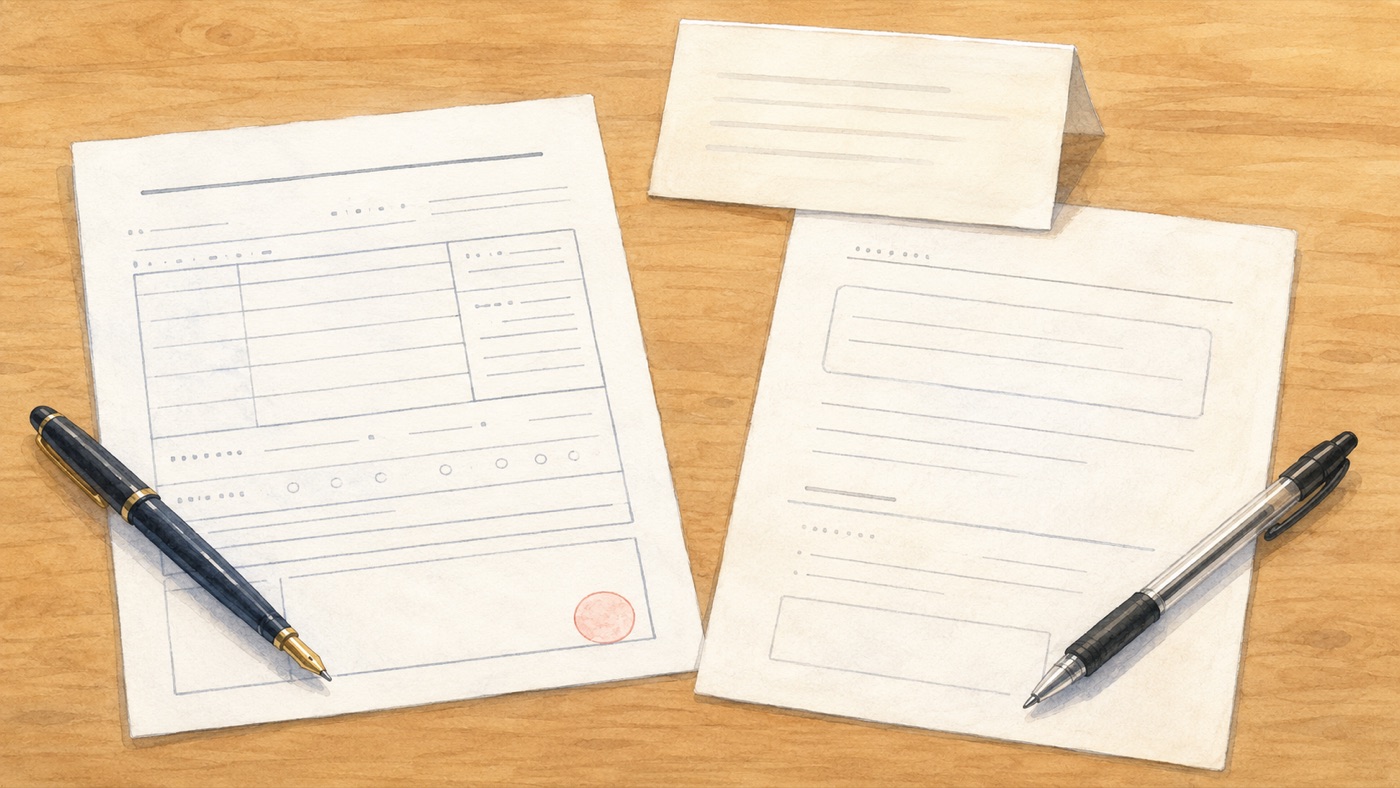
意見書 (ikensho) — the doctor's form
Completed and stamped by a doctor, confirming the child has recovered enough to return. Where a form is required at all, this is the one more often asked for after the illnesses with legal exclusion periods. Clinics normally charge a document fee for it, though some municipalities have arranged for it to be free.
登園届 (tōen-todoke) — the parent's form
You fill this one in yourself, after the child has been seen by a doctor, stating the illness and that they have recovered. No fee, no second clinic visit. Common for the symptom-judged illnesses such as hand, foot and mouth disease.
Which document applies to which illness is set locally, not nationally, and the forms are usually downloadable from the city website or handed out by the facility. The practical move is to ask the facility which form, if any, they need — ideally before you are ever ill, and certainly before you pay a clinic to write one. If a doctor's form is needed, ask for it while you are still at the appointment rather than going back a second time, and keep a printed copy of both forms at home, because you will not want to be hunting for a download at seven in the morning.
Deciding on the Morning
The everyday version of this problem is not a diagnosed illness but a child who is a bit off. A useful way to think about it: a facility is asking whether your child can get through a normal day (eat, sleep, play outside, cope with a group), not whether they are technically well.
Report an absence the way your facility asks, by phone or app, and by their cutoff time. Say what the symptoms are and when they started; if a doctor has diagnosed something, say what. This matters beyond politeness — facilities track what is going around, and your call is how they notice an outbreak building.
Don't wait on the facility's rules if your child is seriously unwell
Attendance rules are about infection control, not about how sick your child is. Get medical help right away, and call 119 for an ambulance, if your child has difficulty breathing, a seizure, will not wake properly or is unusually floppy, has a stiff neck with a fever, or a rash that does not fade when you press it. Ambulances are free in Japan, and 119 operators can bring an interpreter onto the line. Our guide to fever in babies covers the warning signs in more detail.
When Both Parents Work
The first year in group care is, for most families, a run of illnesses — and the exclusion periods mean each one can cost several days, not one. This is the part that breaks work plans, so it is worth arranging before it happens rather than during.
Three things help. Find out now whether your area has 病児保育 (byōji hoiku), sick-child care run by clinics or dedicated rooms. It usually requires registering in advance and a doctor's form, and the places go quickly, so registration is a thing to do while everyone is healthy. Register a backup adult with the facility, since most will only release a child to someone already on the list. And agree with your partner in advance how you will split the days, because the decision is much harder at 7am with a feverish child.
Our guide to getting ready for daycare covers what else to set up before the first day, and the daily notebook explains how the daily health reporting works.
Japanese Vocabulary
The words that appear on facility notices and clinic forms:
| Japanese | Reading | Meaning |
|---|---|---|
| 出席停止 | shusseki teishi | Exclusion from attendance for an infectious illness |
| 意見書 | ikensho | The doctor's form confirming a child may return |
| 登園届 | tōen-todoke | The form a parent completes to return a child |
| お迎え要請 | omukae yōsei | The call asking you to come and pick up your child |
| 病児保育 | byōji hoiku | Sick-child care, usually booked in advance |
| 解熱 | genetsu | The fever coming down — the point the countdown starts from |