
Written and reviewed by Susumu
Born and raised in Japan · Checked against Japanese law and ministry guidance
Open class, individual meeting, class meeting, home visit — five parent events, five very different expectations. This guide sorts out which is which, when each one falls in the school year, what to take with you, and what to wear.
Affiliate Disclosure: This article contains affiliate links. If you click a link and make a purchase, we may earn a small commission at no extra cost to you. We only recommend products we genuinely believe are helpful. See our Terms of Use for full details.
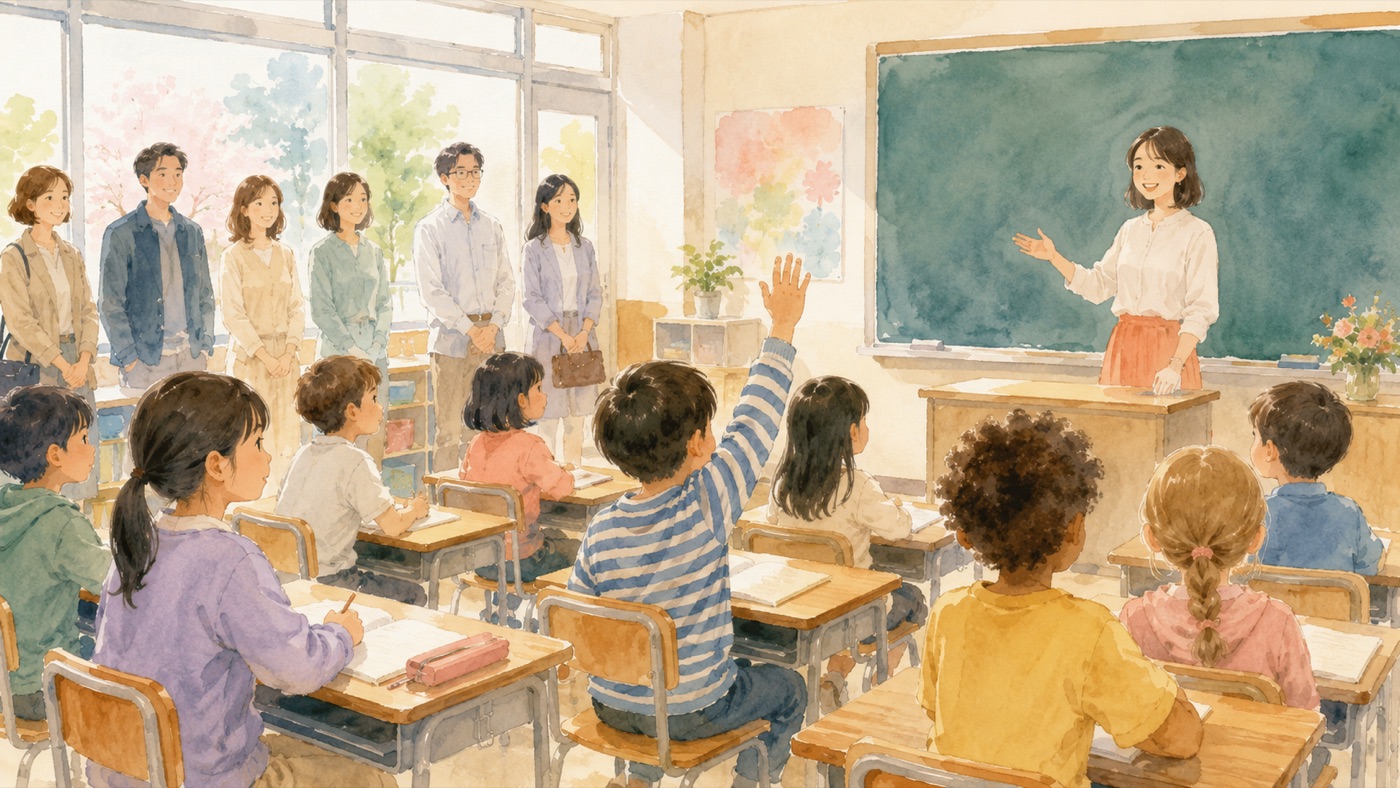
A notice comes home with a date, a room number, and a word you don't recognize. Is this the one where you sit at the back and watch? The one where you talk to the teacher alone? The one where the whole class's parents turn up? Getting it wrong means either taking a morning off work you didn't need to, or missing the meeting that mattered. Sorting out which is which takes about five minutes — and then you'll know for the next six years.
The Five Events, Sorted Out
Five names cover almost everything a Japanese elementary school will call you in for, and the useful way to tell them apart is to ask who is in the room and what it's for:
- 授業参観 (jugyō sankan) — open class. You watch a normal lesson from the back of the room. No conversation required.
- 個人面談 (kojin mendan) — individual meeting. You and the teacher, privately, about your own child.
- 保護者会・懇談会 (hogosha-kai / kondan-kai) — class meeting. A group briefing for all the parents in the class.
- 家庭訪問 (katei hōmon) — home visit. The teacher comes to you, where the school still does this.
- 三者面談 (sansha mendan) — three-way meeting. Parent, child, and teacher together. Mostly a junior-high and high-school thing; uncommon in elementary school.
None of this is set nationally. Which events a school holds, in which months, for which grades, and whether you're really expected to come — all of it is decided school by school. What follows is the shape of a typical year; your school's notice is what actually settles the details.
The Year at a Glance
The Japanese school year runs April to March, and the parent events cluster in a fairly predictable rhythm:
| When | What usually happens |
|---|---|
| April–May | The year's first open class, very often followed straight away by a class meeting where PTA roles are decided. Home visits, at schools that still hold them, fall here too. |
| Around July | Individual meetings toward the end of the first term. Afternoon lessons are usually shortened so teachers can see families one after another. |
| Autumn | Another open class, or at many schools a school open week (学校公開) instead — several days when you can drop in on any lesson. |
| December–March | A second round of individual meetings around December, and a final class meeting near the end of the year. |
Open classes are the ones that recur most; some schools hold them several times a year. July, December, and March tend to be thin, because those months have few school days to begin with.
Open Class (授業参観)
You turn up at the classroom for the period named on the notice, stand or sit at the back, and watch an ordinary lesson. That's the whole event. Nobody will ask you to speak or introduce yourself. Teachers tend to pick a lesson with plenty of hand-raising and group work, so there's something to actually watch.
The period is normally late in the morning or first thing after lunch — fourth or fifth period — so plan for about 45 minutes in the room, plus whatever follows.
Increasingly, though, schools run a school open day or open week (学校公開, gakkō kōkai) in place of the traditional single-period version. Instead of one lesson at one fixed time, the school opens for a day or a week and you drop in on whichever lessons suit you. Since the pandemic many schools have stretched this to around a week and allowed two adults per child. If the notice says 学校公開 rather than 授業参観, that's what you're being offered — more freedom over timing, and usually less of a crowd in the room.
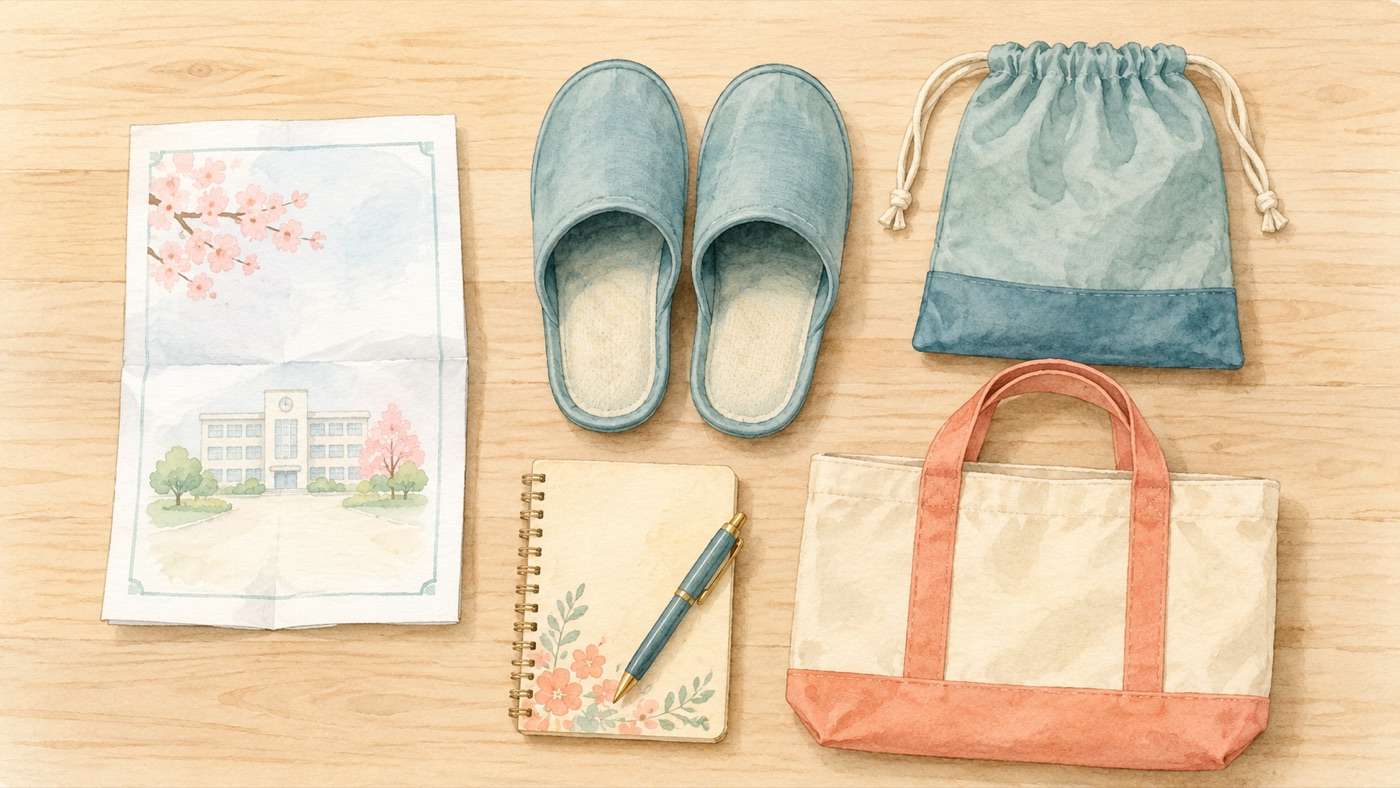
Two practical points. Take indoor shoes (上履き) and a bag for your outdoor ones; visitors are expected to change at the entrance like everyone else. And don't assume you can photograph: many schools ask parents not to take pictures or video during an open class, because other people's children are in the room.
Individual Meetings (個人面談)
This is the one that matters most if you have something to discuss. An individual meeting is a private conversation between you and your child's teacher, usually in the classroom, in an assigned time slot. Schools typically shorten the school day for a week or so and run families through one after another, so slots are short — expect somewhere around ten to fifteen minutes, and treat the appointment time as firm.
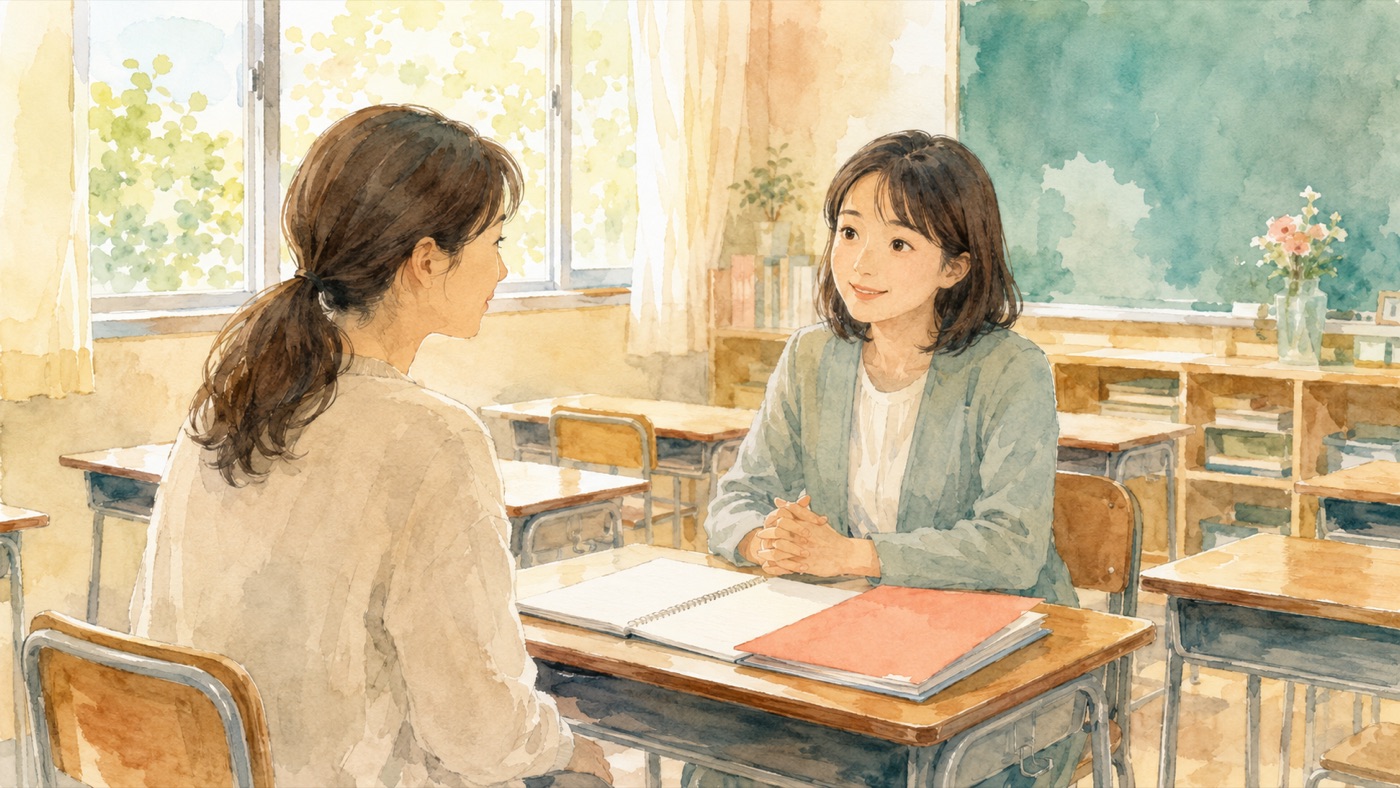
Ten minutes goes fast, and it goes faster if you spend the first half waiting for the teacher to raise the thing you actually came to ask about. Bring two or three questions on paper. These ones usually get you a real answer:
- How is my child getting on in class day to day?
- What is something they're doing well that I might not see at home?
- Is there anything we should be practicing at home?
- How are things going with classmates?
- If I can't read a notice from school, who should I ask?
Home Visits (家庭訪問) — and Why They're Fading
The home visit is the event that unsettles international families most, and it's also the one most likely not to happen at all. Traditionally the class teacher came to each family's home in April or May, partly to talk and partly to learn the route children walk to school.
That practice has been shrinking for several years. It thinned out during the pandemic and hasn't fully returned, and it's been pushed further by the drive to reduce teachers' working hours and to spare working parents an awkward weekday appointment. Parents have not exactly mourned it: in one large survey, roughly seven in ten said home visits were unnecessary, mainly because the ground covered duplicates the individual meeting, and because preparing the house was a burden.
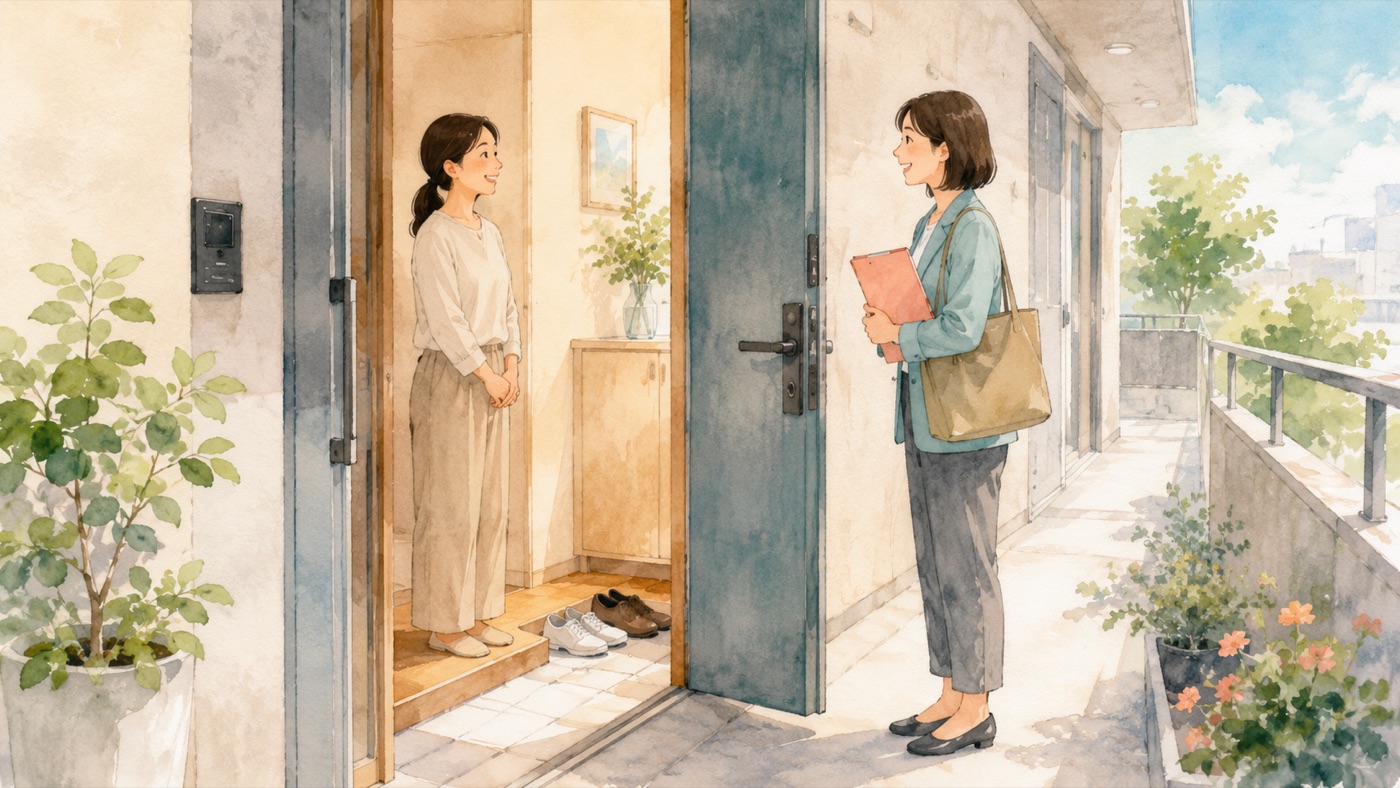
So where visits survive, they've often changed shape. Many schools now keep them to a short conversation at the entrance (玄関先) without the teacher coming inside, and others have replaced them with an online meeting or simply with the regular individual meeting. Some have dropped them entirely.
The practical question, then, is which version your school runs. The notice usually says — look for whether the visit is at the entrance or inside, and how long it's expected to take — and if it doesn't say plainly, the class teacher will tell you. That one detail decides whether you're tidying the entrance or the living room.
Class Meetings (保護者会・懇談会)
A class meeting is a group session for the parents of one class, run by the teacher. The agenda is practical: how the class is being run, what's coming up in the term, how homework and communication work, and what the school would like families to do. It is not the place to raise something personal about your own child — that's what the individual meeting is for.
The word 保護者会 can cover more than one layer. A school may open with a whole-school session, move to a year-group session, and finish with the class-level meeting — the 学級懇談会 (gakkyū kondankai). The class-level part is the one that affects you most directly, and on a busy schedule it's sometimes the only one held.
The one to be ready for is the meeting that follows the first open class in April. That's typically where PTA roles for the year get decided, and the process can move faster than you expect if you're still finding your feet in Japanese. Our guide to the PTA in Japanese elementary schools covers how roles are assigned and what each one involves.
You may also hear the term 三者面談 (sansha mendan), a three-way meeting with the child present. It belongs mostly to junior high and high school, where it's tied to decisions about the next stage of education. If an elementary school calls one, it's usually for a specific reason — worth asking what the meeting is about and whether your child should come.
What to Bring, Wear, and Ask
Whichever event it is, the preparation barely changes:
- Indoor shoes and a shoe bag. Standard for stepping inside any Japanese school, and easy to forget the first time. See our guide to getting ready for elementary school for the wider kit.
- The notice itself, plus any slip you were asked to fill in and return. Check the grade and class on it — a notice may apply only to 1年 (first grade), 低学年 (lower grades), 全学年 (all grades), or 希望者 (families who ask for it).
- Smart-casual clothes. Neat and unremarkable is the target for an open class or a meeting. Save the formal outfit for the entrance and graduation ceremonies.
- Your questions, written down. In Japanese if you can manage it, English if not — either beats trying to compose them on the spot.
If Japanese is still hard going, raise it early rather than on the day. Ask the school, or the board of education's school affairs desk, whether an interpreter, translated notes, or an online meeting is possible. Support varies a great deal between municipalities, but the ones that can help usually need some notice to arrange it — which is the whole argument for asking as soon as the notice arrives rather than the week of.
For the wider picture of what the first years of Japanese school involve, see our overview of elementary school in Japan.
Japanese Vocabulary
| Japanese | Reading | Meaning |
|---|---|---|
| 授業参観 | jugyō sankan | Open class — parents watch an ordinary lesson |
| 学校公開 | gakkō kōkai | School open day or week; drop in on any lesson, increasingly used instead of 授業参観 |
| 個人面談 | kojin mendan | A private meeting between one family and the teacher |
| 保護者面談 | hogosha mendan | Another name for the parent–teacher meeting |
| 家庭訪問 | katei hōmon | Home visit by the class teacher; increasingly rare or doorstep-only |
| 玄関先 | genkan-saki | At the entrance — how many home visits are now done |
| 保護者会 | hogosha-kai | Class meeting for the parents of one class or grade |
| 懇談会 | kondan-kai | The same kind of group meeting, more informal in tone |
| 学級懇談会 | gakkyū kondankai | The class-level part of a parents' meeting — the layer that concerns you most |
| 三者面談 | sansha mendan | Three-way meeting with the child; mainly junior high onward |
| 上履き | uwabaki | Indoor shoes; visitors need a pair too |
| 希望者 | kibōsha | "Those who wish" — the event is opt-in, not for everyone |