Written and reviewed by Susumu
Born and raised in Japan · Checked against Japanese law and ministry guidance
When flu spreads, a whole class is sent home for several days, healthy children included. Why it happens, how it differs from being sent home sick, the return-to-school rules, and the leave working parents can use.
Affiliate Disclosure: This article contains affiliate links. If you click a link and make a purchase, we may earn a small commission at no extra cost to you. We only recommend products we genuinely believe are helpful. See our Terms of Use for full details.
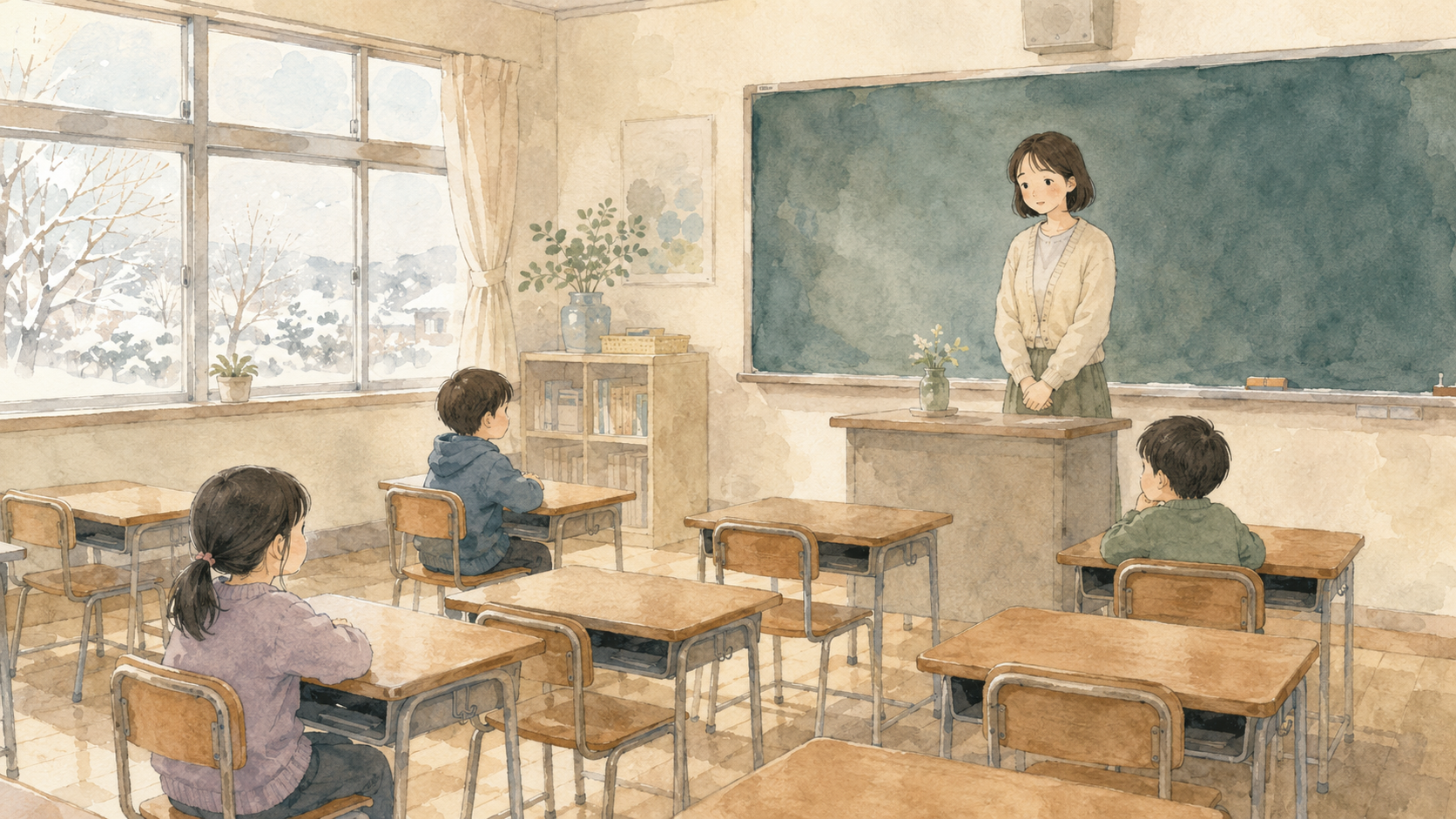
You get a message from the school in the middle of a workday: your child's class is closed for the next three days. Your child feels completely fine. This is a 学級閉鎖 (gakkyū heisa), a class closure — a normal part of the Japanese school year, especially in winter. It catches a lot of international parents off guard the first time, so here's what it means, why it happens, and what you actually need to do.
What a Class Closure Is
A class closure is when the school temporarily shuts down one class because too many children in it are out sick with a contagious illness — most often influenza. The point is to break the chain of infection before it spreads through the whole class and beyond. Every child in that class stays home for a set number of days, whether they are sick or not.
This is done under a specific law, the School Health and Safety Act (学校保健安全法), which gives the body that runs the school — for a public school, the local board of education — the authority to suspend all or part of it when it's needed to prevent the spread of an infectious disease. The law's own word for this is 臨時休業 (rinji kyūgyō); when a whole school closes, people more often say 臨時休校 (rinji kyūkō). In practice the principal handles the call on the advice of the school doctor (学校医) and under the board's standards. It is not something an individual family requests or opts out of.
Three Levels: Class, Grade, Whole School
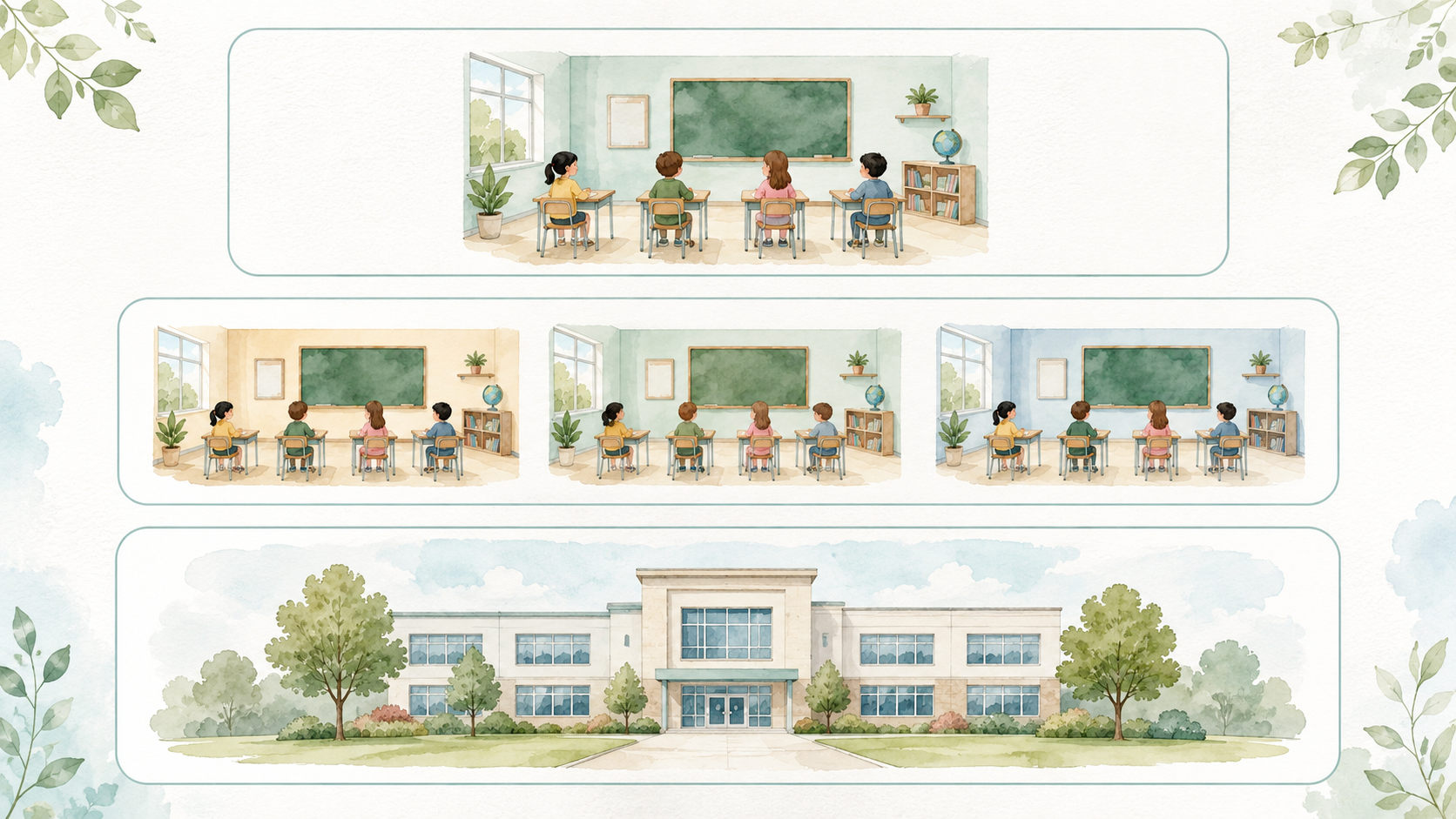
"Closure" can happen at three different scales, and the words look similar, so it helps to tell them apart:
学級閉鎖 (gakkyū heisa) — class closure
The most common one. A single class is closed while the rest of the school runs normally. If you have children in different classes, only the affected one stays home.
学年閉鎖 (gakunen heisa) — grade closure
When several classes in the same school year are hit, the whole grade is closed together — for example, all the second-grade classes at once.
休校 / 学校閉鎖 (kyūkō / gakkō heisa) — whole-school closure
The whole school closes. This is the rarest of the three and is reserved for a widespread outbreak across many classes.
Why and When It Happens
Closures cluster in the cold months, roughly December through March, when influenza is going around. A wave of children calls in sick over a day or two, the school watches the numbers, and at some point it decides the class needs to pause.
There is no single national cutoff for when a class closes — the law leaves the judgment to the school and the local board of education. In practice, schools act when absences from a contagious illness reach somewhere around 10–20% of the class; some prefectures publish a rough guideline, such as Tokyo pointing to about 20% and Osaka to about 15%, but the exact trigger and the details are decided locally, case by case. The school doctor's read on the situation matters too.
When it happens, the closure is short — typically two to four days, sometimes up to about five, often bridged over a weekend. The aim is just to put enough distance between children for the current wave to die down.
Closure vs. Being Sent Home Sick (出席停止)
These two get confused constantly, and the difference matters. A class closure shuts the whole class, healthy children included. A 出席停止 (shusseki teishi) is aimed at one child: when your child actually catches a designated infectious disease, the school directs that individual child to stay home until they're no longer contagious.
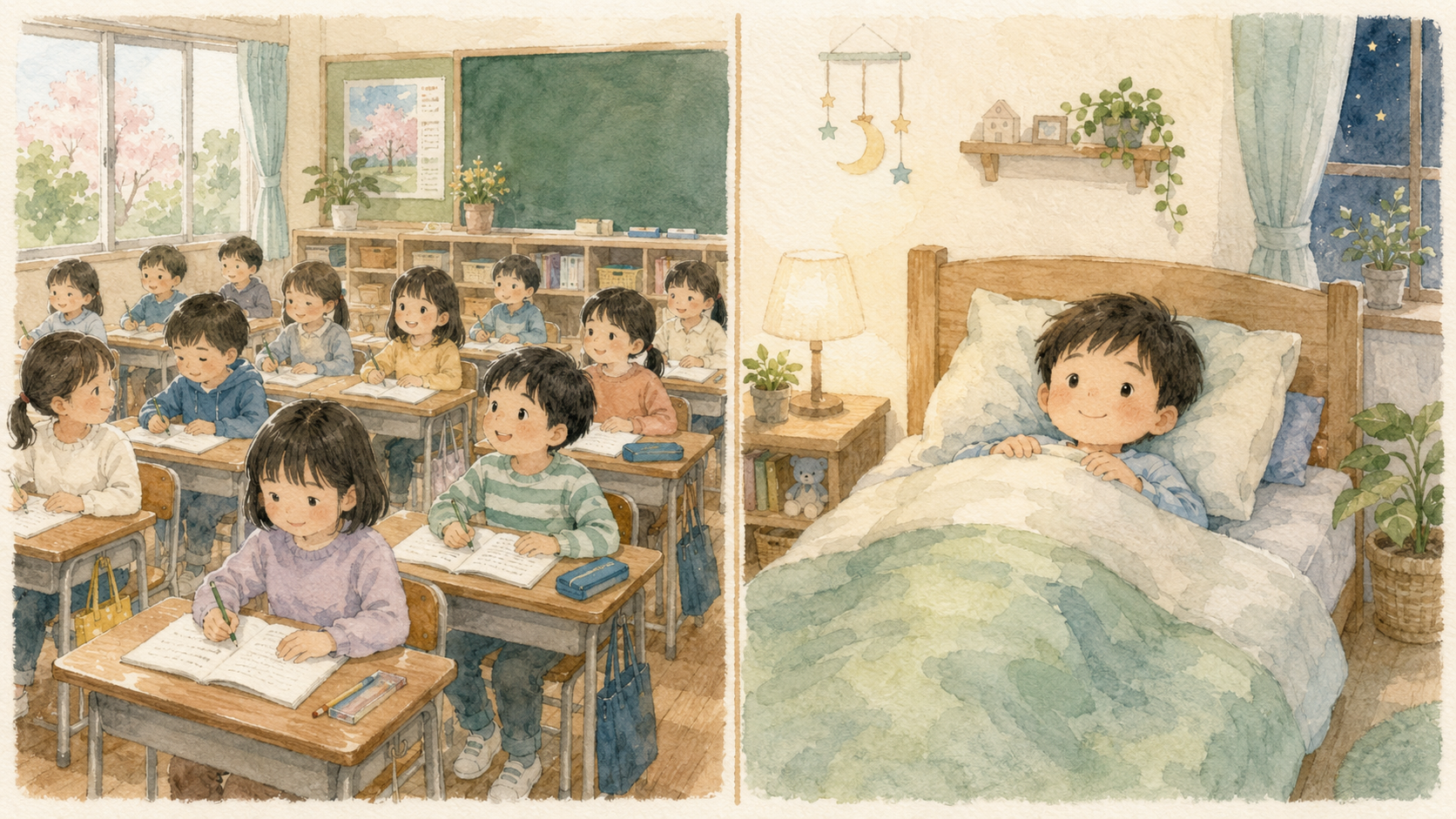
One reassuring thing they share: neither is recorded as an absence (欠席) on your child's record. Days missed for a class closure or an official attendance suspension are treated separately from ordinary absences, so there's no need to worry about your child's attendance being marked down for something outside their control.
If Your Own Child Is the Sick One
When your child is the one who comes down with a contagious illness, they can't return the moment the fever drops — there are set periods they must stay home, defined by the same law. Tell the school the same way you would report any absence, then agree the return date with them. Influenza is the one most families run into:
Influenza: when a child can go back
Not until 5 full days have passed since symptoms began, and at least 2 days have passed since the fever broke (3 days for preschool-age children). You count whichever of the two lands later. Counting the day symptoms started as "day 0" trips a lot of parents up, so check the exact return date with the school rather than guessing.
Influenza is one of a group of illnesses — the law's "second category," which also includes measles, rubella, mumps, chickenpox, whooping cough, and COVID-19 — that each carry their own stay-home period. If a doctor confirms one of these, ask how many days apply.
Coming back to school usually needs a piece of paper, but exactly which one varies by school. Many schools now accept a short form the parent fills in and signs confirming the child has recovered; others still ask for a note from the doctor. Check your child's school's rule early in the year so you're not caught out — chasing a doctor's certificate on the morning your child is due back is a bad surprise. If you're weighing the annual flu shot, see our guide to the influenza vaccine in Japan, and for the illness that most often closes younger classes, our guide to hand, foot and mouth disease.
What to Do During a Closure
A closure is not a holiday, and it comes with a couple of quiet expectations:
- Keep your child home and low-key. The whole point is to stop the spread, so a closed class isn't a chance to send a healthy-feeling child to a lesson, a friend's house, or a crowded play spot. Families are expected to hold back on outings for the closure days.
- Expect schoolwork. Children are usually sent home with worksheets or an assignment to keep up with, and increasingly some classes switch to online lessons for the closed days. Watch the school's notices for what's expected.
- Watch how the school contacts you. The word usually comes through a school messaging app or email, or a note in the renrakuchō — the daily home–school notebook. Closures are announced with little warning, sometimes the afternoon before, so it pays to check the channel your school uses.
The Working-Parent Problem
Here's the part that stings for working families: your child is healthy, out of school for several days, and you may need to be at work. The usual sick-child options don't fit neatly — sick-child daycare (病児保育) is set up for children who are actually ill, not a well child whose class happens to be closed, and the after-school club (gakudō) will often close alongside the class or grade rather than take those children in.
There is one piece of support that many families miss. Japan's child-nursing leave, 子の看護等休暇 (ko no kango-tō kyūka), was expanded in April 2025 and now explicitly covers class closures, not just a sick child. Under the current rules:
- It can be used when a child's class is closed for infectious disease, or when a child is under an attendance suspension — alongside the original use of caring for a sick or injured child.
- It covers children up to the end of the third grade of elementary school (raised from the old preschool-only limit).
- It's up to 5 days a year for one child, and 10 days for two or more, and can be taken in units as small as one hour.
One caveat: the law gives you the right to take this leave, but it does not require your employer to pay for it, so whether the days are paid depends on your company — check your workplace rules. If your family relies on two incomes, sort out your fallback plan for closure days before flu season, rather than in the scramble of a same-day notice. For the wider set of allowances and support for raising children here, see our overview of parenting benefits in Japan.
Japanese Vocabulary
| Japanese | Reading | Meaning |
|---|---|---|
| 学級閉鎖 | gakkyū heisa | Class closure — one class is closed to stop an infection spreading |
| 学年閉鎖 | gakunen heisa | Grade closure — all classes in one school year are closed together |
| 休校 / 臨時休校 | kyūkō / rinji kyūkō | Whole-school closure — 臨時休校 is the everyday word people use for it |
| 臨時休業 | rinji kyūgyō | The formal legal term (School Health and Safety Act) covering all three closures; in daily speech people say 臨時休校 for a school |
| 出席停止 | shusseki teishi | Attendance suspension — one sick child is kept home until no longer contagious |
| 欠席 | kesseki | An ordinary absence (a closure or suspension is not counted as this) |
| 学校医 | gakkō-i | The school doctor, who advises on closure decisions |
| 学校保健安全法 | gakkō hoken anzen hō | School Health and Safety Act — the law behind closures and suspensions |
| 登校届 | tōkōtodoke | A return-to-school form a parent fills in after a child recovers (schools vary) |
| 子の看護等休暇 | ko no kango-tō kyūka | Child-nursing leave; since 2025 it also covers class closures |